A reliable power supply is essential for modern industrial operations. Manufacturing plants, commercial facilities, mining sites, hospitals, and data centers all depend on electrical systems that can handle their operating loads safely and consistently. When power demand increases or operating conditions become more demanding, selecting the right transformer becomes an important part of electrical system planning.
An oil-immersed transformer is a common choice for industrial power distribution because transformer oil provides both electrical insulation and heat transfer. These characteristics make oil-immersed designs suitable for many medium- and high-capacity applications, provided the equipment is correctly specified, installed, and maintained.
For project owners and electrical engineers, choosing a transformer involves more than matching a rated capacity to an estimated load. Voltage requirements, cooling arrangements, operating conditions, efficiency, safety provisions, and maintenance access all affect long-term performance.
1. How Does an Oil-Immersed Transformer Work?
An oil-immersed transformer transfers electrical energy between circuits through electromagnetic induction. Alternating current in the primary winding produces a changing magnetic field in the core, which induces voltage in the secondary winding. The relationship between the winding turns determines whether the transformer steps voltage up or down.
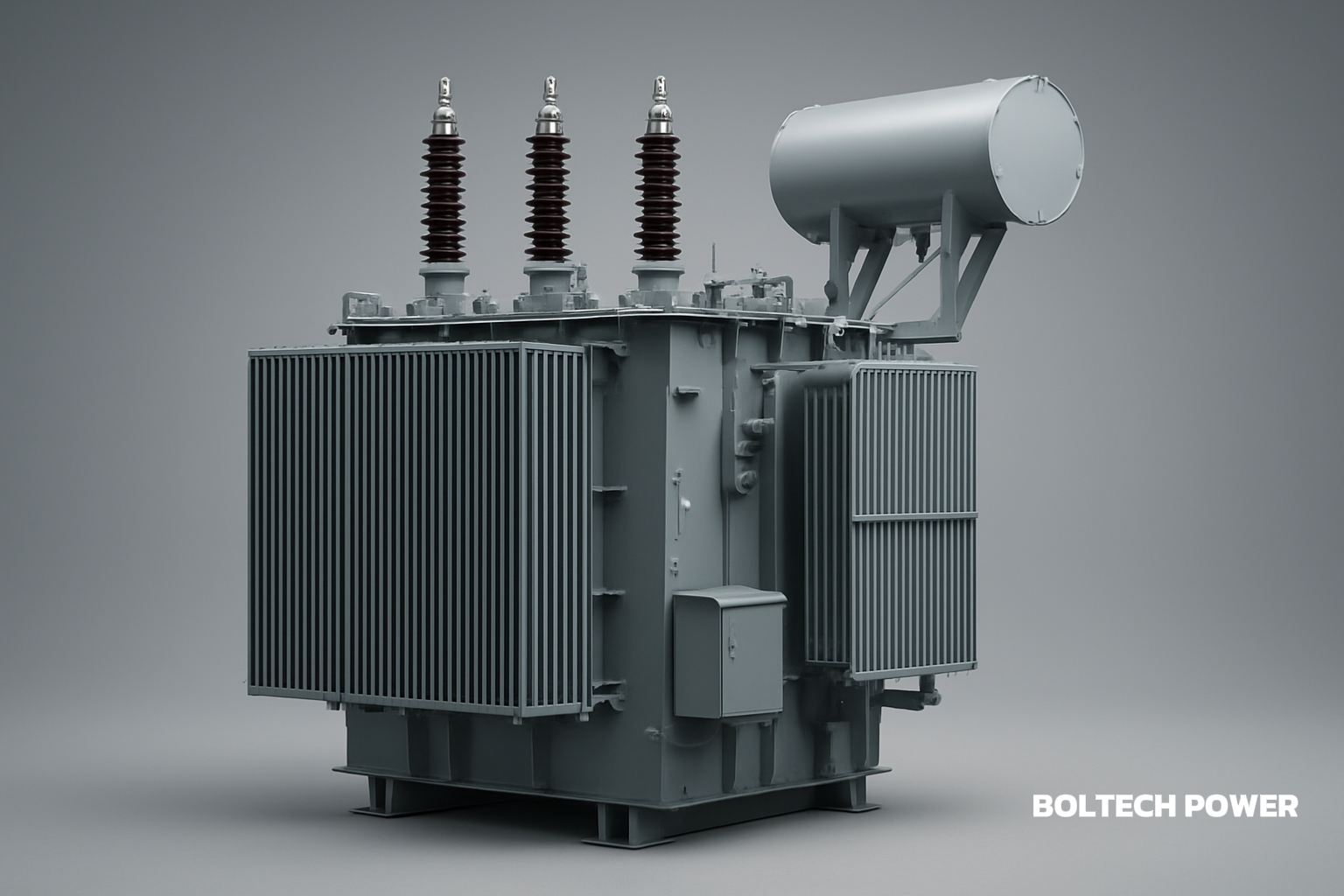
The core and windings are housed inside a tank containing insulating oil. During operation, electrical losses generate heat in the core and windings. The oil absorbs this heat and carries it toward the tank walls, radiators, or other cooling components, where the heat can dissipate into the surrounding environment.
Transformer oil also contributes to electrical insulation between energized components and grounded parts of the equipment. Together with the solid insulation system, it helps the transformer operate at its specified voltage.
Cooling arrangements vary by design and capacity. Some transformers use natural oil circulation and natural air cooling, while others incorporate additional cooling systems. The appropriate configuration depends on the transformer's rating, load profile, ambient temperature, and installation conditions.
Understanding these basics helps buyers evaluate whether an oil-immersed design is appropriate for their project.
2. Key Advantages of Oil-Immersed Transformers
Effective Heat Transfer
Heat management is essential to transformer reliability. Prolonged operation at elevated temperatures can accelerate insulation aging and reduce service life.
Oil-immersed designs use insulating oil to transfer heat away from internal components. Radiators or other cooling surfaces then release that heat into the environment. This arrangement supports many applications with sustained electrical demand.
Actual thermal performance still depends on the transformer's design, cooling method, ventilation, ambient temperature, and loading conditions. Buyers should review the manufacturer's temperature-rise data and permitted loading conditions instead of assuming all oil-immersed transformers offer identical performance.
Electrical Insulation
Transformer oil helps insulate internal components and supports dielectric performance when the oil and solid insulation remain in suitable condition.
Moisture, contamination, overheating, and insulation deterioration can affect this performance over time. Proper sealing, suitable installation, oil-condition monitoring, and maintenance are therefore important parts of long-term operation.
Flexible Capacity and Voltage Options
Industrial sites have different power requirements. A small commercial facility may need a distribution transformer for building services, while a large factory may require equipment capable of supplying multiple production lines, pumps, compressors, and motor-driven systems.
Oil-immersed transformers are available in various capacities and voltage configurations. The final specification should reflect the project's maximum demand, load characteristics, future expansion plans, and electrical system design.
Selecting a transformer that is too small can limit operating flexibility. Oversizing without appropriate analysis can also increase initial equipment requirements and may affect operating efficiency. A load assessment by a qualified electrical engineer is the best starting point.
3. Where Are Oil-Immersed Transformers Used?
Oil-immersed transformers are used across many industrial and infrastructure applications.
Manufacturing plants: Production machinery, motor control systems, pumps, and compressors may require different voltage levels. Transformer selection should account for simultaneous demand and the starting characteristics of large motors.
Power generation facilities: Transformers can serve auxiliary electrical systems or connect equipment to distribution networks, depending on the plant design. Voltage ratings, connection arrangements, and protection coordination must match the electrical scheme.
Mining and heavy industry: Processing machinery, ventilation systems, conveyors, and pumps can create substantial electrical demand. Site temperature, dust, access, and maintenance requirements should be considered during equipment selection.
Commercial and industrial buildings: Transformers support electrical distribution for HVAC systems, lighting, elevators, workshops, and other building services.
Hospitals and data centers: Stable power distribution is essential for critical equipment. However, a transformer alone cannot guarantee uninterrupted power. Depending on the facility, redundancy, UPS systems, standby generators, automatic transfer equipment, and coordinated protection may also be required.
For projects that combine transformers with diesel generator sets, engineers should verify compatibility across voltage, frequency, rated capacity, protection settings, and switching arrangements. The transformer and generator must be evaluated as parts of the complete electrical system.
4. What Should Buyers Check Before Purchasing?
A suitable transformer should meet the actual electrical and environmental requirements of the installation. The following factors deserve particular attention.
Electrical Ratings
Confirm the primary and secondary voltages, rated capacity, frequency, phase configuration, vector group, and impedance. The design should also account for load variation, motor starting currents, harmonics, and planned future demand where relevant.
Short-circuit withstand capability and coordination with upstream and downstream protective devices should be reviewed as part of the electrical design.
Cooling and Installation Conditions
The installation environment influences the cooling arrangement and overall equipment configuration.
Outdoor installations may require suitable protection against weather and corrosion. Indoor installations need adequate ventilation, inspection access, and provisions for fire safety and oil containment.
Because transformer oil is combustible, project teams should assess fire separation, spill containment, drainage, emergency access, and other requirements under applicable local codes and project specifications.
Efficiency and Operating Losses
Transformer efficiency should be evaluated using technical data rather than broad marketing claims.
No-load losses occur whenever the transformer is energized, while load losses vary with current. Both influence energy consumption over the equipment's operating life.
Ask the supplier for verified no-load loss, load loss, temperature-rise, and other applicable performance data. Comparing these figures on a consistent rating and test basis helps buyers make a more informed assessment.
Standards and Quality Documentation
Before placing an order, review the applicable standards and request the documentation relevant to the specified transformer. Depending on the project, this may include technical drawings, nameplate information, material and component details, routine test reports, warranty terms, and commissioning requirements.
For customized projects, the buyer, supplier, electrical designer, and installation contractor should agree on the technical specification before manufacturing begins. Clear communication reduces the risk of compatibility issues and installation delays.
5. Maintenance Practices for Long-Term Reliability
An oil-immersed transformer needs a maintenance plan based on its design, operating conditions, manufacturer recommendations, and installation criticality.
Common inspection activities include:
-
Checking the tank, seals, valves, radiators, and connections for leaks or visible damage.
-
Monitoring oil temperature, winding temperature where available, load current, and other operating indicators.
-
Checking oil level and arranging oil-condition testing when required.
-
Inspecting bushings, cable connections, grounding, cooling components, and protective devices.
-
Investigating unusual noise, abnormal heating, corrosion, or changes in operating behavior.
-
Testing protective relays and associated equipment according to the maintenance plan.
Oil testing may include moisture content, dielectric breakdown voltage, acidity, and dissolved gas analysis. These tests can provide useful information about oil condition and possible developing faults, but the results should be interpreted by qualified personnel using appropriate diagnostic criteria.
There is no single maintenance interval suitable for every transformer. Operating history, environmental exposure, loading, test results, and manufacturer guidance should all influence the schedule.
6. Coordinating Transformers with Standby Power Systems
Many industrial facilities use transformers alongside standby diesel generator sets or other backup power equipment. In these systems, equipment compatibility and switching logic require careful planning.
Engineers should confirm that the generator's voltage and frequency match the intended electrical arrangement, and that its capacity is appropriate for the loads it must support. Large motors, transformers, and other equipment can create starting or energization demands that need to be considered in system design.
Protection settings, transfer equipment, grounding arrangements, and the sequence of operation should also be reviewed. For critical facilities, the design may require separate distribution paths or additional backup systems.
This system-level approach helps ensure that the transformer operates correctly within the wider power network rather than being selected in isolation.
7. Working with Boltech on Power Equipment Solutions
Boltech has been engaged in power equipment and diesel generator set solutions since 1988. The company supplies generator sets with stated capacities ranging from 3 kW to 5,000 kW and provides services that include equipment selection, installation, commissioning, and maintenance.
Its transformer portfolio includes oil-immersed and dry-type models in single-phase and three-phase configurations.
For buyers evaluating oil-immersed transformer solutions, the selection process should begin with the project's electrical specifications, expected load, installation environment, and applicable compliance requirements. These details help establish which transformer configuration should be considered.
For projects involving standby diesel generation, coordination between the transformer and generator is particularly important. Voltage compatibility, capacity, protection arrangements, and the intended operating sequence should be discussed during the planning stage.
Before confirming an order, buyers should request the technical data and test documentation relevant to the exact model and configuration. Clear specifications make it easier to coordinate procurement, installation, commissioning, and ongoing maintenance.
Conclusion
Oil-immersed transformers remain a widely used solution for industrial power distribution because they combine electrical insulation, effective heat transfer, and flexible capacity options. Their suitability depends on the operating environment, electrical ratings, cooling requirements, safety provisions, and maintenance arrangements.
For industrial buyers, the most practical approach is to evaluate the transformer as part of the complete electrical system. Reviewing verified technical data, confirming applicable standards, planning the installation, and establishing a suitable maintenance program can help reduce avoidable problems throughout the equipment's service life.
Working with an experienced power equipment supplier can also help project teams coordinate transformer requirements with generators, distribution equipment, and other components to meet the actual needs of the site.
www.boltechpower.com
Jiangxi BOLTECH Power Equipment Co., Ltd.