Choosing a ceiling material involves more than finding a finish that matches the interior design. Contractors, property developers, architects, and building material distributors also need to consider installation requirements, maintenance, dimensional flexibility, and compliance with applicable building standards.
PVC ceiling panels have become a practical option for many residential and commercial interiors. Their lightweight construction, range of decorative finishes, and easy-to-clean surfaces make them worth considering for apartments, offices, hotels, retail spaces, and other indoor environments.
For projects that require a consistent decorative appearance and straightforward installation, selecting the right panel profile and dimensions is particularly important. Dingmeng, a decorative materials brand under Dingxin, offers a recessed PVC ceiling panel designed for these needs. This guide explains what buyers should evaluate before selecting PVC ceiling panels for an interior project.
1. Why PVC Ceiling Panels Are Used in Interior Decoration
PVC, or polyvinyl chloride, can be processed into decorative panels with different profiles, colors, and surface finishes. Compared with many heavier ceiling materials, PVC panels are relatively lightweight and can be easier to transport, cut, and position during installation.
These characteristics can be useful in renovation projects where contractors need to work efficiently while maintaining a consistent finish across multiple rooms.
Another advantage is the variety of available designs. Wood-grain finishes can create a warmer appearance, while solid colors and textured surfaces suit contemporary commercial interiors. This flexibility allows designers to coordinate ceiling panels with flooring, wall finishes, furniture, and lighting.
However, PVC ceiling panels are not suitable for every environment. Their performance depends on the product formulation, installation system, temperature conditions, and applicable fire-safety requirements. Buyers should assess the complete installation rather than choosing a panel based on appearance alone.
2. Recessed PVC Ceiling Panels Add Visual Structure
A flat ceiling can provide a simple, understated finish, but some projects benefit from a more defined surface profile. Recessed ceiling panels introduce subtle grooves that create visual rhythm without requiring elaborate decorative structures.
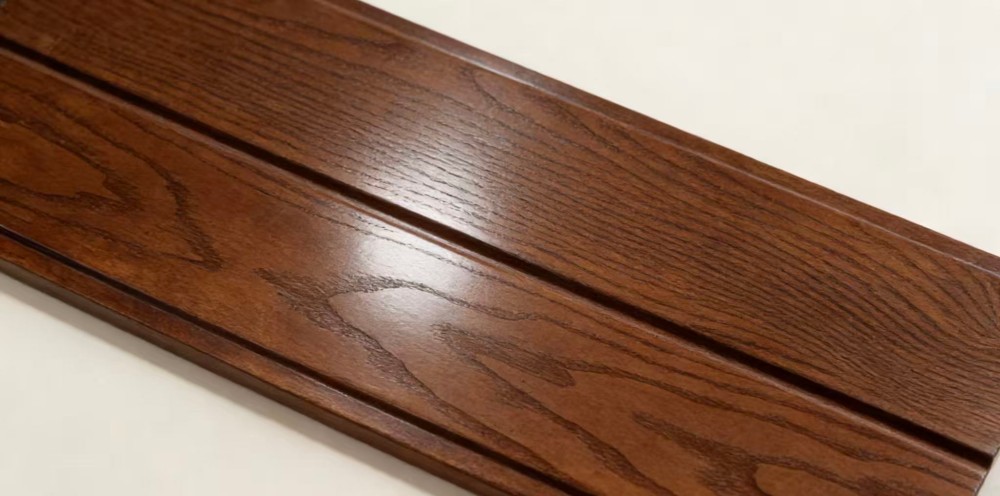
Dingmeng's 200 mm-wide, 8 mm-thick recessed PVC ceiling panel features a medium-concave profile. When installed in a consistent layout, the grooves create clear lines between adjacent panels, helping the ceiling look more organized.
This design can work in several settings:
-
Residential interiors: Living rooms, bedrooms, kitchens, and corridors where a neat decorative finish is required.
-
Hotels and serviced apartments: Projects that need a consistent ceiling design across multiple rooms.
-
Offices and retail spaces: Interiors where repeated lines complement modern architectural layouts.
-
Schools and canteens: Indoor spaces where ease of cleaning and practical maintenance are important considerations.
The final result depends on the room proportions, panel direction, lighting, and finish. Before ordering a large quantity, buyers should review physical samples and consider how the selected color will look under the actual lighting conditions.
3. Check Panel Dimensions Before Ordering
Panel dimensions directly affect material planning, cutting requirements, and installation details. A product that looks suitable in a catalog may still create unnecessary joints or waste if its dimensions do not match the ceiling layout.
Dingmeng's recessed PVC ceiling panel has the following stated specifications:
| Item | Specification |
|---|---|
| Panel width | 200 mm |
| Panel thickness | 8 mm |
| Standard length | 2.9 m |
| Custom length | Available up to 5.8 m |
| Profile | Medium-concave recessed design |
| Decorative finishes | Wood grain, artistic paint, and textured colors |
| Fire performance | Manufacturer-stated B1 rating; supporting documentation should be verified |
Custom lengths can help reduce unnecessary joints in suitable layouts. For example, a panel length matched to a room's dimensions may reduce the number of cuts and offcuts. The actual material savings depend on the ceiling shape, openings, and installation plan.
Longer panels also require more careful handling, storage, and transportation. Buyers should confirm the manufacturer's recommended support spacing and installation method rather than assuming that a longer panel can span a greater unsupported distance.
Before placing an order, measure the ceiling area and account for corners, columns, lighting fixtures, ventilation outlets, and access openings. A cutting plan prepared in advance can help contractors estimate quantities more accurately and reduce installation delays.
4. Choose a Finish That Matches the Interior
The ceiling is part of the overall interior design, so its finish should work with the other materials in the room.
Wood-grain finishes can complement wood-effect flooring, furniture, and wall panels. They offer a warmer visual style for residential interiors and selected hospitality projects.
Artistic paint finishes can introduce more distinctive patterns or colors for retail spaces, hotels, and interiors that require a stronger decorative feature.
Textured colors can provide a more understated appearance for offices, apartments, and shared spaces. Neutral shades are often useful when the ceiling needs to coordinate with different wall colors and furniture styles.
For large projects, buyers should confirm color availability, sample approval procedures, and batch consistency. If future replacement orders are likely, retaining the approved sample and recording the finish specification can help reduce visible differences between production batches.
Digital product images are useful for initial selection, but physical samples provide a more reliable basis for evaluating color, texture, and surface appearance.
5. Consider Moisture Exposure and Cleaning Requirements
PVC panels have surfaces that are generally straightforward to wipe, which can simplify routine cleaning in many indoor environments. This makes them worth considering for areas where dust and ordinary surface stains need to be removed regularly.
However, a PVC ceiling panel should not be treated as a complete waterproofing system. Water may enter through joints, edges, penetrations, or installation defects. Persistent condensation and leaks can also affect the supporting framework and the wider building structure.
For kitchens, canteens, and other moisture-prone spaces, buyers should consider ventilation, potential water exposure, and the suitability of the complete ceiling assembly.
Routine maintenance can usually begin with a soft cloth or sponge and a compatible mild cleaning solution. Abrasive tools and strong solvents should be avoided unless the manufacturer confirms that they are suitable for the specific finish.
Contractors should also make sure that ceiling joints and edges are installed according to the product instructions. Proper installation and prompt repair of leaks are important for maintaining the appearance and serviceability of the finished ceiling.
6. Verify Fire-Rating Documentation
Fire performance is an important factor when selecting decorative materials for occupied buildings. This is particularly relevant to hotels, apartments, schools, offices, and commercial premises where local building regulations may specify requirements for interior finishes.
Dingmeng describes its PVC ceiling panel as having a B1 fire rating. Before specifying the product, buyers should request the relevant test report or certification and verify the testing standard, product scope, and conditions covered by the documentation.
A stated fire classification does not automatically mean that a panel is non-combustible or that the complete ceiling system will meet every project's requirements. Performance may depend on the material formulation, supporting structure, installation details, and other components.
Architects, contractors, and distributors should check the applicable local building codes and confirm whether additional documentation is required. Where a project specifies a particular fire classification or tested ceiling assembly, those requirements should be established before purchasing.
7. Installation Details Affect the Finished Result
Even a well-made ceiling panel can produce an uneven appearance if the supporting framework or installation process is poorly managed.
Before installation, inspect the delivered panels for surface damage, dimensional consistency, and differences from the approved sample. Store them on a suitable flat surface and protect them from impact and deformation during handling.
During installation, follow the manufacturer's recommendations for framework spacing, fixing methods, edge finishing, and expansion allowances. PVC can expand and contract with temperature changes, so the installation system must accommodate movement as specified by the manufacturer.
Openings for lights, ventilation outlets, and other fixtures should be measured and cut carefully. Fixtures may require independent support rather than relying on the decorative panel itself.
For larger projects, installing a small sample section before proceeding with the entire ceiling can help identify alignment, color, joint, or finishing issues early. This is a practical way to reduce rework and maintain consistent workmanship.
8. What to Look for in a PVC Ceiling Panel Supplier
For building material distributors, contractors, and project purchasers, supplier evaluation should cover product availability, quality control, customization, and documentation.
Dingxin, operating under the Dingmeng brand, develops decorative materials for residential and commercial applications, including ceiling panels and other interior finishing products.
When evaluating a supplier, buyers should confirm:
-
Whether the available panel dimensions match the project requirements.
-
Whether the required profile, color, and surface finish can be supplied.
-
Whether samples are available for approval before mass production.
-
Whether fire-performance documentation can be provided.
-
Whether dimensional and appearance checks are part of the quality-control process.
-
Whether batches can be identified for future replenishment.
-
Whether packaging and transportation arrangements protect the panels from damage.
For projects involving multiple buildings or repeated orders, a written product specification is particularly useful. It should record dimensions, profile, color, finish, quantity, packaging requirements, and the documents required for acceptance.
Buyers considering Dingmeng's 200 mm-wide, 8 mm-thick recessed PVC ceiling panel can use the product information as a starting point for discussing dimensions, decorative finishes, and project requirements with the supplier.
Conclusion
PVC ceiling panels can provide a practical decorative solution for many modern interiors. Their relatively lightweight construction, range of finishes, and easy-to-clean surfaces make them suitable for consideration in residential and commercial projects where the product and installation system meet the intended requirements.
Dingmeng's 200 mm-wide, 8 mm-thick recessed ceiling panel offers a defined linear profile, with standard and customized length options stated by the manufacturer.
Before purchasing, buyers should verify the dimensions, installation requirements, finish consistency, moisture conditions, and applicable fire-performance documentation. Matching these details to the actual project helps contractors and distributors make informed material selections and achieve a more consistent finished ceiling.
www.dx-ecowallpanel.com
Jiaxing Dingxin New Materials Technology Co., Ltd.