Hydraulic systems are essential to modern industrial machinery because they provide controlled force, stable motion, and flexible power transmission. From CNC machine tools and automated production equipment to mining and metallurgical machinery, a properly designed hydraulic system can help equipment operate efficiently and consistently.
For original equipment manufacturers (OEMs), selecting a hydraulic system supplier is an important engineering and procurement decision. Beyond component quality, buyers need to consider system design, customization capabilities, manufacturing standards, testing procedures, and long-term technical support. A system that does not match the machine's operating requirements may lead to integration difficulties, excessive heat, unstable pressure, or avoidable maintenance costs.
This article outlines the main factors to consider when sourcing an OEM hydraulic system for industrial applications.
1. Start With Hydraulic System Design and Engineering
An effective hydraulic system begins with a clear understanding of the equipment's operating requirements. Rather than relying solely on standard configurations, a qualified supplier should evaluate the machine's workload, operating cycle, actuator requirements, installation space, and control sequence.
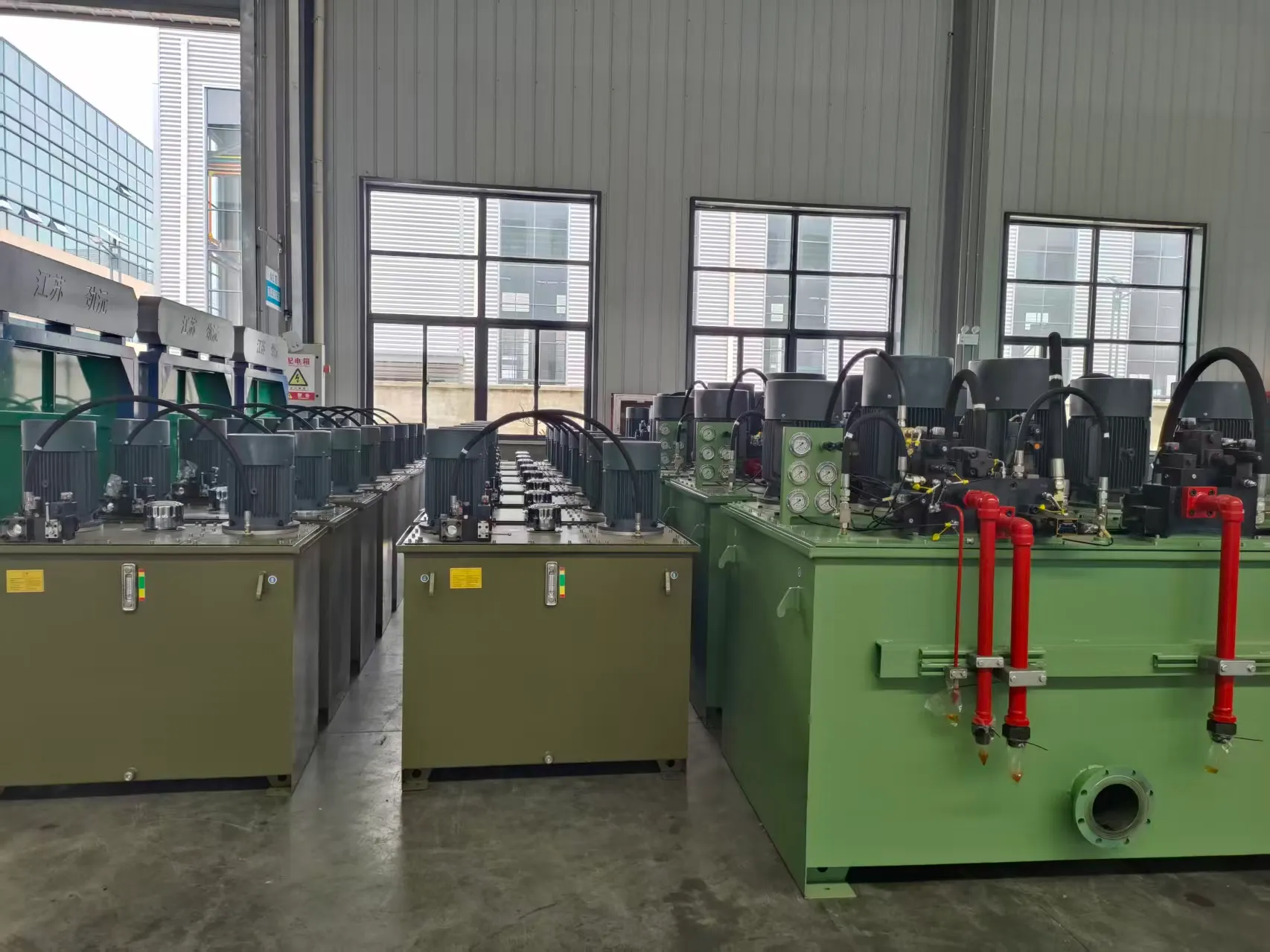
A typical hydraulic power unit includes a motor, pump, oil tank, control valves, filtration components, and the necessary hydraulic and electrical connections. The pump supplies hydraulic flow, while the valves regulate pressure, flow direction, and actuator movement. These components must work together to meet the machine's performance requirements.
Before choosing a supplier, ask whether its engineering team can review equipment drawings, calculate required pressure and flow, select compatible components, and develop an appropriate hydraulic circuit. It is also useful to determine whether the team can identify potential issues involving heat generation, pressure fluctuations, installation clearances, and maintenance access before manufacturing begins.
Different applications can require significantly different designs. For example, a hydraulic unit used for intermittent workholding may have different flow and cooling requirements from one operating continuously in heavy industrial equipment. Understanding the duty cycle helps the supplier develop a more suitable solution.
2. Look for Practical Customization Options
OEM equipment often has specific space limitations, connection arrangements, and control requirements. A standard hydraulic power unit may provide the necessary basic functions but still require modifications before it can be integrated into the host machine.
Customization should cover the complete system configuration rather than just its external dimensions. Buyers should discuss working pressure, pump displacement, motor power, tank capacity, valve arrangement, cooling method, mounting positions, and electrical interfaces.
Depending on the application, the system may include:
-
Integrated valve manifolds: Combine multiple control functions in a compact assembly and may reduce external piping.
-
Cooling or heating equipment: Help maintain appropriate oil temperatures under the expected operating and ambient conditions.
-
Hydraulic accumulators: Store hydraulic energy or help manage pressure fluctuations when correctly selected and protected.
-
Electrical control cabinets: Coordinate pump operation, solenoid valves, sensors, and machine control signals.
-
Monitoring instruments: Allow operators to observe parameters such as pressure, temperature, and oil level.
Before approving a design, confirm port sizes, mounting dimensions, piping routes, power supply requirements, control signals, and access for routine servicing. Resolving these details early can reduce installation changes and delays during machine assembly.
3. Review the Main Components and Technical Parameters
The reliability of a hydraulic system depends on both component quality and the compatibility of the complete design. Even high-quality individual components may not deliver satisfactory results if their specifications are poorly matched.
Working pressure and flow rate
Working pressure determines the pressure level the system is designed to provide, while flow rate influences actuator speed. Both should be selected according to the required force, movement, and operating cycle. Buyers should also clarify pressure peaks, simultaneous actuator operation, and any requirements for auxiliary or safety-related circuits.
Pump and motor selection
Pump type, displacement, rotational speed, motor power, and duty cycle should match the expected pressure and flow demand. The supplier should account for startup conditions and the possibility of changing loads during operation.
Oil tank and filtration
The oil tank must provide suitable capacity for the system's operating conditions and support oil return, air separation, and heat dissipation. Filtration should meet the cleanliness requirements of the selected hydraulic components. Poor contamination control can contribute to component wear, valve malfunction, and reduced service life.
Temperature management
Hydraulic oil viscosity changes with temperature, affecting lubrication, sealing, and overall system performance. The design should consider ambient conditions, operating duration, heat generation, and cooling capacity. Cooling equipment may be necessary for applications with substantial continuous heat loads.
Electrical and control compatibility
The hydraulic unit must interface correctly with the host machine. Confirm the electrical supply, motor starting or speed-control method, solenoid valve requirements, sensor signals, interlocks, and emergency-stop arrangements where applicable.
A detailed specification approved by both parties provides a clear reference for design, production, inspection, and acceptance.
4. Examine Manufacturing Quality and Testing
A well-designed hydraulic system also requires consistent manufacturing and assembly practices. Contamination, incorrect connections, poor sealing, or insufficient testing can contribute to leakage, abnormal noise, unstable pressure, and premature component failure.
When evaluating a supplier, ask how it manages the following stages:
-
Incoming inspection: Check pumps, motors, valves, seals, filters, and other components against the agreed specifications.
-
Clean assembly: Control contamination in tanks, hydraulic passages, pipes, and assembled components.
-
Assembly verification: Inspect fasteners, sealing surfaces, pipe connections, wiring, and component orientation.
-
Pressure and leakage checks: Verify performance using test procedures suitable for the system design and rated conditions.
-
Functional testing: Confirm that the pump, valves, controls, and specified operating functions work as intended.
-
Test documentation: Keep relevant inspection records, specifications, and test results for traceability.
Testing requirements should be agreed upon before production. Depending on the design, acceptance criteria may cover operating pressure, leakage, functional sequences, and documentation. Tests should follow appropriate manufacturer procedures and applicable safety requirements rather than relying on a single generic checklist for every system.
5. Consider Maintenance and Long-Term Support
The purchase price is only one part of the total cost of owning a hydraulic system. Maintenance accessibility, spare-parts availability, troubleshooting support, and technical documentation can all affect equipment uptime over its service life.
A routine maintenance plan may include checking oil level and condition, monitoring temperature and pressure behavior, inspecting filters, and looking for external leakage. Abnormal noise, overheating, inconsistent actuator speed, or repeated filter blockage should be investigated rather than treated as normal operating conditions.
Before placing an order, ask the supplier whether it can provide:
-
Hydraulic circuit diagrams and component lists.
-
Recommended hydraulic oil specifications.
-
Filter replacement and maintenance guidance.
-
Operating instructions and troubleshooting information.
-
Replacement-part support.
-
Technical assistance during installation and commissioning.
For OEMs manufacturing multiple machines, standardized configurations and clear documentation can also simplify production, servicing, and future equipment revisions.
6. Evaluate Supplier Experience and Project Coordination
A hydraulic system supplier should be able to coordinate with the OEM's mechanical, electrical, and production teams. This is particularly important when the system must fit within a restricted installation space or follow a specific operating sequence.
Consider the supplier's experience with similar applications, engineering communication process, manufacturing capabilities, delivery coordination, and after-sales support. Relevant project examples and technical references can help buyers assess whether the supplier understands the requirements of their equipment.
Jiangsu Kinyuan Hydraulic Machinery Co., Ltd. was founded in 2009 and integrates hydraulic system research and development, design, manufacturing, and service. The company has an R&D center in Suzhou and a standardized production base in Nantong.
For buyers seeking an OEM hydraulic system from Kinyuan, the company's product scope includes hydraulic power units incorporating pumps, motors, tanks, valve assemblies, and related control components. Configurations can be discussed according to project requirements, including installation arrangements, cooling methods, integrated valve blocks, and electrical control options.
To make the engineering review more productive, OEM buyers should prepare machine drawings, required pressure and flow, operating cycle, environmental conditions, installation constraints, and control requirements. Complete information helps the supplier assess the application and identify possible design conflicts before manufacturing begins.
7. Use a Consistent Supplier Evaluation Checklist
A structured evaluation process makes it easier to compare suppliers objectively and identify potential gaps before placing an order.
| Evaluation area | Key questions |
|---|---|
| Engineering capability | Can the supplier assess pressure, flow, power, and duty-cycle requirements? |
| Customization | Can the system meet dimensional, connection, and control requirements? |
| Component selection | Are the pump, motor, valves, tank, and filtration components properly matched? |
| Manufacturing quality | What inspection and assembly controls are used? |
| Testing | What pressure, leakage, and functional tests are included? |
| Documentation | Are circuit diagrams, specifications, and test records available? |
| Technical support | Is assistance available for commissioning, maintenance, and replacement parts? |
The most suitable solution is not necessarily the most complicated or the least expensive. It is the system that meets the machine's actual operating requirements while remaining practical to integrate, maintain, and support.
Conclusion
Choosing an OEM hydraulic system supplier requires a balanced assessment of engineering expertise, customization, component compatibility, manufacturing quality, testing, and long-term service. These factors should be reviewed alongside the machine's operating conditions and integration requirements.
By preparing accurate technical specifications and working closely with an experienced supplier such as Kinyuan, equipment manufacturers can make more informed sourcing decisions and develop hydraulic systems suited to their production needs. A thorough selection process also helps reduce avoidable design changes and supports more predictable equipment integration and maintenance.
www.kinyuenhydraulic.com
Jiangsu kinyuan Hydraulic Machinery Co.,LTD.