Selecting the right hydraulic press is not just a purchasing decision—it directly impacts your production efficiency, product quality, and long-term operational stability. For manufacturers working in metal forming, stamping, or deep drawing, the Y32 series forming hydraulic press has become a widely trusted solution due to its versatility and reliability.
However, not all Y32 presses are the same. Choosing the right configuration requires a clear understanding of your production requirements and how different machine features translate into real performance.
What Is a Y32 Forming Hydraulic Press?
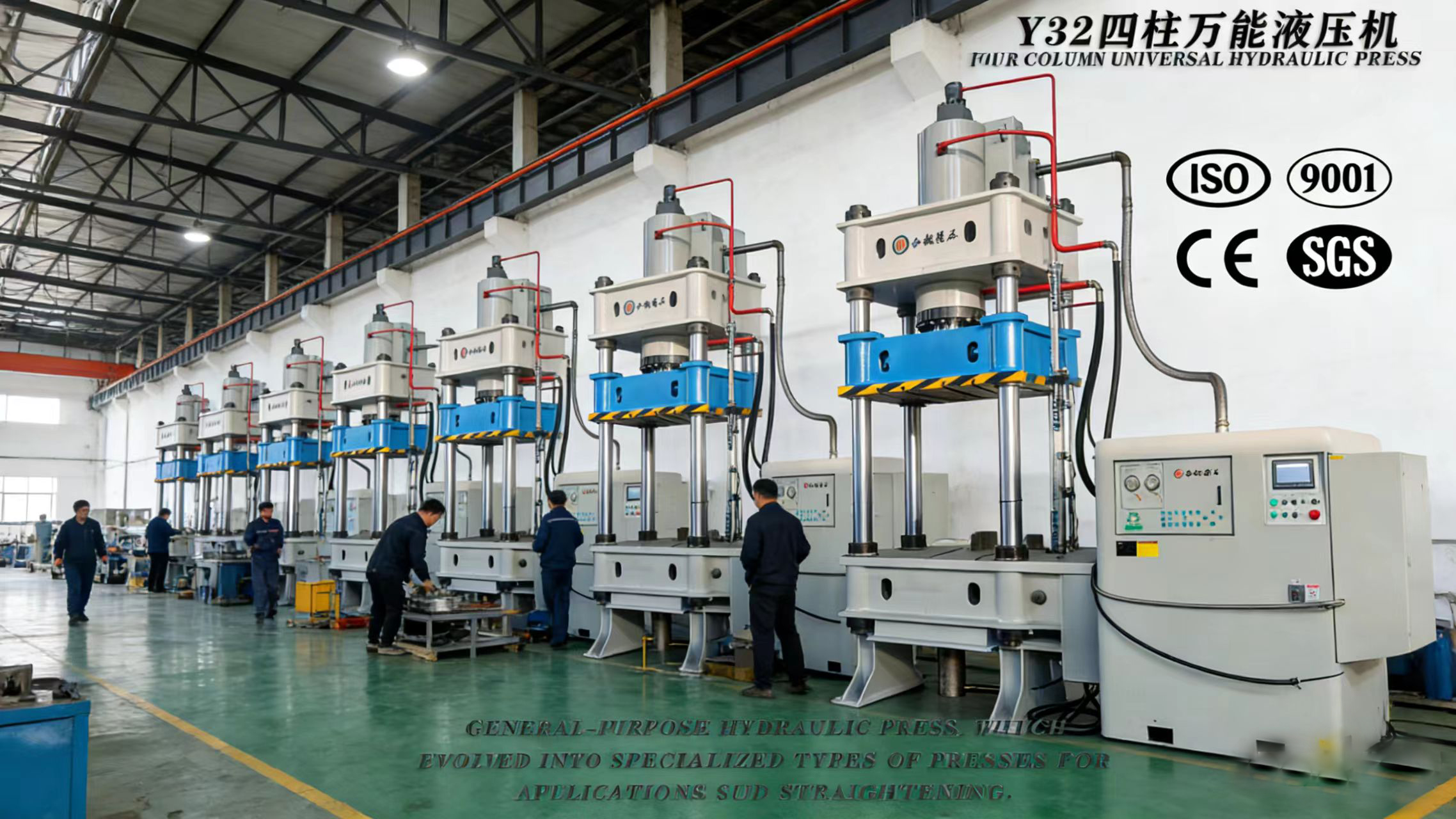
The Y32 series is a Forming Hydraulic Pressdesigned for a wide range of forming processes, including bending, stamping, deep drawing, and pressing of metal and non-metal materials. (Rucheng Technology)
Its structure typically includes:
Three-beam, four-column frame
Hydraulic cylinder system
PLC or CNC-based control system
Adjustable stroke and pressure
This design ensures uniform force distribution, which is essential for maintaining consistent product quality across large workpieces.
For a detailed product overview, you can explore the Y32 Forming Hydraulic Press.
Step 1: Define Your Application Requirements
Before comparing specifications, start with your actual production tasks.
Ask yourself:
Are you doing deep drawing, stamping, or simple forming?
What materials are you working with (steel, aluminum, composites)?
What is the thickness range?
Do you require high precision or high volume?
Y32 presses are highly versatile and can handle operations like punching, bending, flanging, and powder forming, but each application places different demands on the machine.
For example:
Deep drawing requires stable pressure and precise stroke control
Stamping needs higher speed and repeatability
Thick materials demand higher tonnage
Clarity here prevents over-specifying or under-specifying your machine.
Step 2: Choose the Right Tonnage
Tonnage is one of the most critical parameters.
Y32 hydraulic presses come in a wide range—from tens of tons to several thousand tons.
How to decide:
Light-duty applications: Small parts, thin sheets
Medium-duty: General metal forming and appliance components
Heavy-duty: Automotive parts, structural components
A larger cylinder diameter generates more force, which is necessary for thicker or harder materials.
Practical tip:
Avoid choosing tonnage based only on current needs. Consider future expansion or new product lines.
Step 3: Evaluate Stroke and Opening Height
Stroke and opening height determine the size of parts you can process.
Typical Y32 machines offer adjustable stroke lengths and large opening heights to accommodate different molds and workpieces.
Why it matters:
Longer stroke = ability to handle deeper or taller parts
Larger opening height = easier mold changes and flexibility
If your production involves multiple product sizes, flexibility here can significantly reduce downtime during changeovers.
Step 4: Understand the Control System
Modern Y32 presses are no longer purely mechanical—they rely heavily on control systems.
Common options include:
PLC + touch screen interface
Semi-automatic and automatic modes
Programmable pressure and stroke settings
Advanced systems allow storing multiple programs and real-time monitoring of pressure and stroke.
What to look for:
Ease of operation (important for training new workers)
Stability of control (consistent forming quality)
Real-time monitoring (reduces defects)
A well-designed control system can significantly improve both productivity and consistency.
Step 5: Check Structural Design and Stability
The classic Y32 design uses a four-column structure, which ensures even pressure distribution and minimizes deformation during operation.
Benefits:
Better alignment of molds
Reduced risk of uneven forming
Longer tool life
Additionally, high-quality machines use:
Heat-treated steel frames
Precision guide columns
Reinforced structures for heavy loads
These factors contribute to long-term reliability and reduced maintenance.
Step 6: Look at Speed and Cycle Efficiency
Production efficiency depends heavily on cycle time.
Y32 presses typically feature:
Fast approach speed
Slow forming speed (for precision)
Quick return speed
This dual-speed system improves both productivity and accuracy.
Why it matters:
Faster cycles = higher output
Controlled forming speed = better product quality
Balancing speed and precision is key—especially for industries like automotive or appliance manufacturing.
Step 7: Consider Energy Efficiency
Energy consumption is often overlooked but has a long-term impact.
Modern Y32 machines are designed with:
Optimized hydraulic systems
Reduced energy loss through efficient valve control
Stable pressure systems that avoid unnecessary power use
Some systems use dual-pump or servo configurations to reduce energy consumption during idle or low-load conditions.
Step 8: Safety and Maintenance Features
A good hydraulic press should not only perform well but also ensure operator safety and easy maintenance.
Key safety features:
Emergency stop systems
Safety interlocks
Dual-hand operation controls
Overload protection
Maintenance considerations:
Easy access to hydraulic components
Reliable sealing systems
Real-time diagnostics
Machines with integrated monitoring systems can detect issues early, reducing unexpected downtime.
Step 9: Customization and Scalability
Every production line is different. One advantage of Y32 presses is their flexibility.
Manufacturers like Mingge often provide:
Custom table sizes
Adjustable stroke and pressure settings
Optional automation integration
Specialized tooling compatibility
Customizable parameters ensure the press fits your workflow instead of forcing you to adapt your process.
Step 10: Match the Machine to Your Production Strategy
Finally, your choice should align with your broader production goals.
If your focus is:
High volume → prioritize speed and automation
High precision → prioritize control system and stability
Flexible production → prioritize adjustability and programmability
The best machine is not the most powerful—it’s the one that fits your workflow with minimal compromise.
Conclusion
Choosing the right Y32 Forming Hydraulic Press is about understanding how technical specifications translate into real production outcomes.
From tonnage and stroke to control systems and structural design, every factor plays a role in efficiency, quality, and reliability. With the right selection, manufacturers can achieve:
Higher productivity
Consistent product quality
Reduced downtime
Lower long-term operational costs
For companies like Mingge and their customers, investing in the right Y32 press is not just about equipment—it’s about building a stable, scalable production foundation.
www.heduanpress.com
Mingge Electrical and Mechanical Equipment