Marine power distribution for passenger ferries redundancy rules is usually summarised in one sentence — "two of everything" — and that sentence is both wrong and expensive. A ferry does not need two of everything. It needs two independent paths to the loads that keep people alive, and it needs to prove the paths stay independent after a fire or a flooding casualty.
1. Three Layers, Not One
The first layer is generation. Regulation 41 of SOLAS Chapter II-1 requires a main source sized so that, with any one generating set out of service, the remaining capacity still carries propulsion, steering, safety systems and minimum comfortable conditions. Shedding non-essential load is explicitly allowed — which is why a ferry with three generators is not automatically compliant and a ferry with four is not automatically safe: what matters is the load list behind the arrangement.
The second layer is the emergency source. Passenger ships carry 36 hours; cargo ships 18. On top of that sits a transitional battery of 30 minutes for emergency lighting, fire detection and alarm, and public address — the gap between the main supply failing and the emergency generator accepting load. Automatic connection within 45 seconds is the target, and on a ferry that 45 seconds is measured from a blackout with several hundred people in an enclosed space.
The third layer is the one that changes the design, and it does not exist for cargo ships at all.
2. Safe Return to Port: The Rule That Reshapes the Single Line
The safe return to port requirements for passenger ship electrical systems apply to ships of 120 metres or more, or with three or more main vertical zones, built from 1 July 2010 onward. The idea is simple and brutal: after a fire or flooding casualty contained within the casualty threshold, the ship must still be able to proceed to port under its own power with the systems in MSC.1/Circ.1369 available — propulsion, steering, navigation, fire-fighting, drainage, and the lighting and communication people need to move safely. If a design cannot demonstrate that, the alternative is not a waiver; it is designing for orderly evacuation instead.
This is where ferries diverge from every other ship type in this series. A cargo ship can lose one compartment and still be a valid commercial proposition. A ferry with 800 passengers cannot, so its switchboard arrangement has to survive the loss of a space — not merely the loss of a generator. That single sentence is why ferry boards are split, duplicated and separated rather than merely oversized. CALOR EMAG settles that boundary before it draws a cubicle.
3. Where Redundancy Lands in Steel and Cable
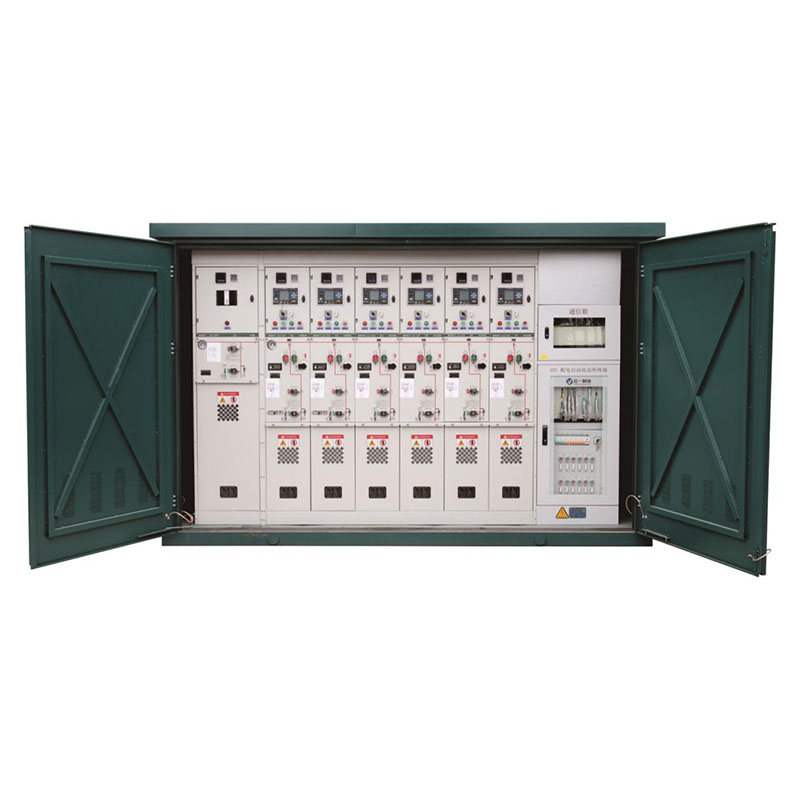
For marine power distribution for passenger ferries redundancy rules, four provisions carry almost all of the cost, and none of them is a second switchboard. Compartmentation: the main board is split into two sections in two separate spaces with an A-60 boundary between them, each with its own generators, so a fire in one does not remove both. Bus-tie logic: a normally closed tie gives you generator redundancy but not casualty redundancy, because one fault can take the whole bus; for a ferry the tie is usually open, with automatic closure on loss of a section and a PMS that knows which loads may be transferred. Cable routing: two independent routes, on opposite sides where the layout allows, with separate penetrations and no shared ventilation duct — the cheapest-looking saving here is the one that fails the casualty analysis. Emergency board placement: above the uppermost continuous deck, outside the machinery space boundaries, built as a fixed low voltage distribution cabinet on its own distribution so that a main-board fire does not take the lights with it.
CALOR EMAG, the marine brand of Wenzhou Bohong Electric Power Co., Ltd., builds these as split switchboard assemblies rather than one long line-up, because the section boundary is a design input, not a shipping convenience.
4. The Loads That Set a Ferry's Numbers
Five load groups make a ferry's load list different from a cargo ship's. Vehicle deck ventilation, which is fire-critical and therefore not sheddable, and which on a closed deck can rival propulsion in connected load. Ramps and doors, with interlocks that must hold under a power transfer. Hotel load — HVAC, galleys, lighting — large but largely sheddable, which is exactly what makes it the first thing a PMS drops. Manoeuvring thrusters, short duration but high current, often the dimensioning case for the busbar and the generator circuit breaker. And on new tonnage, battery and shore-power interfaces, which add a converter path that did not exist when the redundancy rules were written.
Bottom line: the busbar is sized by the thruster, but the redundancy is sized by the vehicle deck.
5. The 36-Hour List
The emergency power requirements for passenger ships under SOLAS are mostly a list of what must keep running for 36 hours: emergency lighting in alleyways, stairways and exits; navigation lights; internal communication and public address; fire detection and alarm; the emergency fire pump; sprinkler and watertight door indication where fitted. Two practical traps recur. First, the transitional battery is sized for 30 minutes of a shorter list, not for 36 hours of the full one — mixing the two produces a battery that fails the survey. Second, emergency lighting is often wired to the emergency board but not separated by zone, so a single circuit fault darkens a stairway that the rules assumed would stay lit.
6. What to Ask Before Signing
Ask for six documents, as CALOR EMAG does at tender stage, and the design argument becomes visible. A single line with compartments marked, not just devices. A casualty analysis or SRtP compliance matrix naming each system and where it is fed from. A cable route plan showing physical separation, not just a schematic. The PMS casualty-mode sequence, with the transfer and shedding order written out. The proving trial list, including a bus-section loss and a generator loss under full hotel load. And the class notation being sought, stated on the cover of the specification rather than discovered at delivery.
Bottom line: ferry redundancy is a property of the arrangement, not of the equipment count — two boards in one space are one board.
CALOR EMAG supplies ferry and passenger-vessel switchboards as split, compartment-separated assemblies with documented bus-tie logic and PMS interfaces, built for survey rather than for a catalogue page. As the marine brand of Wenzhou Bohong Electric Power Co., Ltd., we quote OEM, ODM and custom configurations factory-direct as a China manufacturer and single supplier of the full board line-up, and we will review a proposed single line against the casualty case before a cubicle is drawn. Send the arrangement drawing and the load list, and we will return the separation gaps and the bus-tie scheme within two working days.
FAQ
Q: What do marine power distribution for passenger ferries redundancy rules actually require in generation?
A: At minimum, N+1 — with any one set out of service, the rest must still carry propulsion, steering, safety systems and minimum comfortable conditions, with non-essential load shed. Ferries above the SRtP size threshold need more than that, because the arrangement must also survive the loss of a compartment.
Q: Do safe return to port requirements for passenger ship electrical systems apply to every ferry?
A: No. They apply to passenger ships of 120 m or more in length, or with three or more main vertical zones, built on or after 1 July 2010. Smaller or older ferries follow the generation and emergency-source rules, and the difference should be settled at concept stage, not after the single line is fixed.
Q: Under the emergency power requirements for passenger ships under SOLAS, how long must power last and what stays live?
A: Thirty-six hours on a passenger ship, against eighteen on a cargo ship, with a 30-minute transitional battery covering emergency lighting, fire detection and alarm, and public address. The 36-hour list covers exit lighting, navigation lights, internal communication, fire detection, the emergency fire pump and watertight door indication where fitted.
www.caloremag.com
Wenzhou Bohong Electric Power Co., Ltd.