Choosing a crusher for granite, basalt, diabase or other hard rock starts with the material, not the machine model.
For most hard-rock aggregate applications, a jaw crusher is used for primary crushing, followed by a cone crusher for secondary or tertiary crushing. However, the final configuration must also consider feed grading, required capacity, finished-product sizes, abrasiveness, moisture and the layout of the complete line.
A crusher that performs well in one quarry may not be the right choice for another.
What Is Considered Hard Rock?
Hard rock generally refers to material with relatively high compressive strength and resistance to breakage. Common examples include:
- Granite
- Basalt
- Diabase
- Quartzite
- Iron ore
- Copper ore
- Some types of river pebble
Hardness is only one part of the selection process. Abrasiveness is equally important because highly abrasive material accelerates wear on jaw plates, mantles, concaves, blow bars and other components.
Before equipment selection, the material should therefore be evaluated for:
- Compressive strength
- Abrasiveness
- Bulk density
- Moisture content
- Clay content
- Maximum feed size
- Complete feed-size distribution
Laboratory data is useful, but representative samples and operating information from the quarry or mine provide a more reliable basis for configuration.
Which Crusher Is Best for Primary Hard-Rock Crushing?
A jaw crusher is the most common choice for primary crushing in hard-rock aggregate lines.
It uses compressive force to reduce large feed material and can handle uneven feed grading more effectively than many downstream crushers. It also provides a relatively simple and robust first crushing stage.
The jaw crusher should be selected according to more than the maximum feed opening. Important factors include:
- Maximum lump size
- Percentage of fines in the feed
- Required hourly capacity
- Desired discharge setting
- Material density
- Feeding method
- Expected operating hours
The feed opening must be large enough to accept the largest material without repeated bridging. At the same time, the crusher should not be oversized without considering the feeder, downstream crusher and screening capacity.
Stable production begins with controlled feeding. Even a correctly sized jaw crusher may perform poorly if the material enters the chamber unevenly or if large rocks repeatedly block the feed opening.
Why Are Cone Crushers Commonly Used After Jaw Crushers?
Cone crushers are widely used for secondary and tertiary crushing of hard and abrasive materials.
They reduce material through compression between the mantle and concave. This crushing principle generally provides better wear performance for hard rock than relying on repeated high-speed impact.
A cone crusher can support:
- Secondary crushing after a jaw crusher
- Tertiary crushing for smaller aggregate sizes
- Closed-circuit operation with a vibrating screen
- More consistent product grading
- Cubical aggregate production when the chamber and operating conditions are properly matched
The correct crushing chamber depends on the feed size, target discharge size and required reduction ratio.
A chamber that is too coarse may not achieve the required product size. A chamber that is too fine may restrict capacity or create unstable operation if the feed is unsuitable.
The cone crusher should also receive a continuous, well-distributed feed. Running with an uneven or partially filled chamber may affect capacity, product shape and component wear.
When Should an Impact Crusher Be Considered?
Impact crushers are often selected for softer or less abrasive materials such as limestone. They can produce well-shaped aggregate and offer a high reduction ratio.
They may also be used in certain hard-rock applications when product shape is a priority, but wear costs must be assessed carefully.
For highly abrasive granite, basalt or quartz-rich material, blow bars and impact plates may wear faster than compression-crushing components. In these conditions, a jaw crusher and cone crusher combination is often more practical for the main reduction stages.
An impact crusher should not be ruled in or out based only on rock hardness. The decision should compare:
- Required particle shape
- Abrasiveness
- Wear-part consumption
- Reduction ratio
- Finished-product value
- Maintenance requirements
- Cost per tonne
The lowest equipment price does not always produce the lowest long-term operating cost.
Why Is the Vibrating Screen Part of Crusher Selection?
Crusher selection cannot be separated from screening.
A vibrating screen determines which material becomes a finished product and which material returns to the crusher. Its capacity, screen openings and number of decks directly affect the circulating load.
If the screen is undersized, material may accumulate even when the crushers have sufficient capacity. If too much oversize returns to the cone crusher, the recirculating load may reduce the effective output of the complete line.
The number of required aggregate fractions also influences the screen configuration.
For example, a producer requiring several finished sizes will need a different screening arrangement from a quarry producing only one base-course product.
Crusher and screen selection should therefore be completed as one process:
Feeding → Primary crushing → Secondary crushing → Screening → Recirculation → Finished-product stockpiling
How Should Capacity Be Calculated?
Nominal crusher capacity is not the same as final saleable aggregate output.
The actual production rate is influenced by:
- Feed grading
- Material hardness and density
- Crusher setting
- Moisture and clay content
- Screening efficiency
- Recirculating load
- Equipment availability
- Maintenance downtime
- Percentage of each finished-product size
A line designed for 500 tonnes per hour at the primary crusher may not produce 500 tonnes per hour of every required finished fraction.
Capacity should be reviewed across the complete process, including expected production peaks rather than only average feed.
What Information Should Be Provided to a Crusher Manufacturer?
Before requesting a quotation, prepare the following information:
- Raw material type
- Maximum feed size
- Feed-size distribution
- Material hardness and abrasiveness
- Moisture and clay content
- Required capacity in tonnes per hour
- Required finished-product sizes
- Number of finished aggregate fractions
- Site dimensions and elevation differences
- Power supply conditions
- Required operating hours per day
- Existing equipment, if the project is an upgrade
Photos, videos, test reports and a site layout can help the manufacturer understand the application more accurately.
A Typical Hard-Rock Crushing Process
A common hard-rock aggregate process may include:
- A vibrating feeder for controlled feeding
- A jaw crusher for primary crushing
- A cone crusher for secondary crushing
- Another cone crusher for tertiary crushing, when required
- Vibrating screens for final classification
- Belt conveyors for material transfer and recirculation
This is not a universal configuration. Some projects need only two crushing stages, while others require additional shaping, washing or fine-material processing.
The correct process depends on the raw material and the commercial value of the required aggregate products.
How Leimeng Group Approaches Hard-Rock Crusher Selection
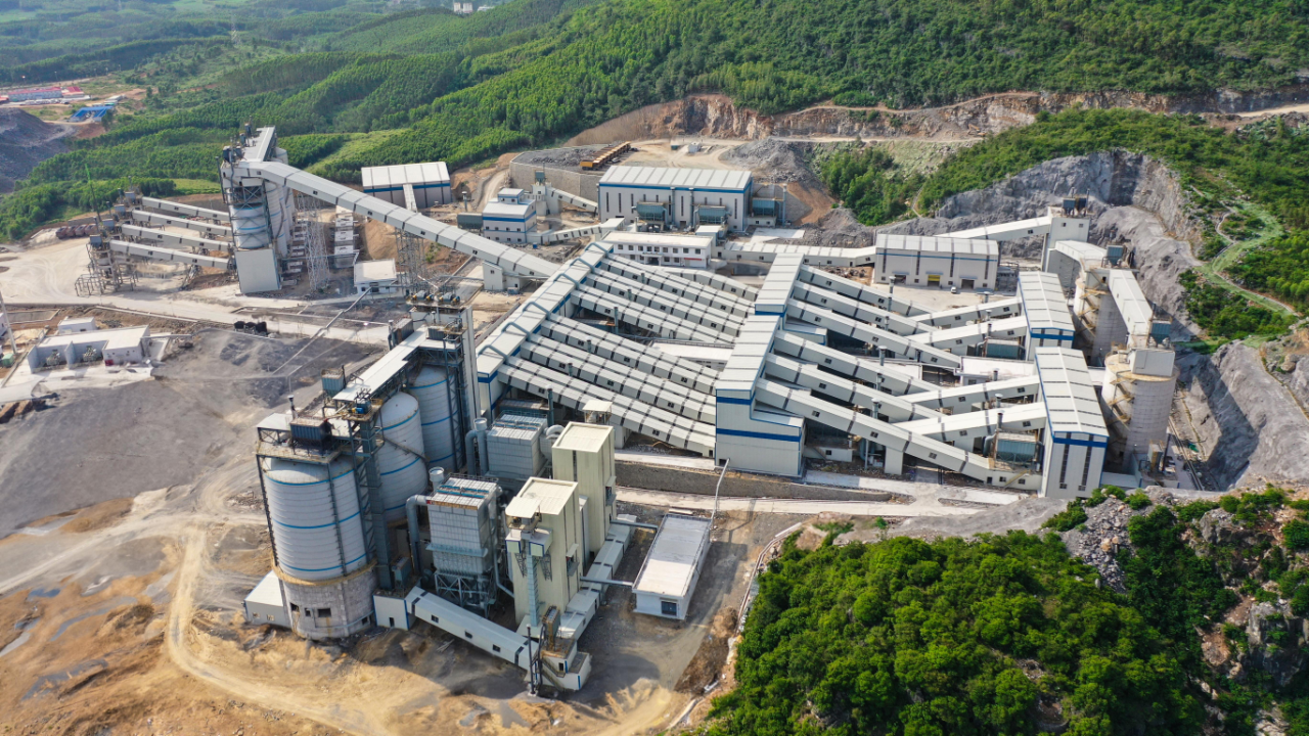
Leimeng Group provides jaw crushers, cone crushers, vibrating screens and complete crushing and screening solutions for quarrying, mining and aggregate applications.
Equipment selection begins with project information rather than a model list. The raw material, feed grading, required capacity, finished-product sizes and site conditions are reviewed together before a configuration is proposed.
The objective is not simply to install a larger crusher. It is to build a balanced line in which feeding, crushing, screening, conveying and recirculation work together.
Frequently Asked Questions
What is the best crusher for granite?
A jaw crusher is commonly used for primary granite crushing, followed by a cone crusher for secondary or tertiary crushing. The final choice depends on feed size, required capacity, abrasiveness and finished-product specifications.
Is a cone crusher suitable for basalt?
Yes. Cone crushers are widely used for secondary and tertiary crushing of hard, abrasive materials such as basalt. The crushing chamber and operating parameters must match the actual feed.
Can an impact crusher crush hard rock?
It can, but wear costs may be higher for highly abrasive material. Product-shape requirements and cost per tonne should be evaluated before selection.
Why is feed grading important?
Feed grading shows how much material of each size enters the crusher. It affects capacity, chamber loading, reduction ratio and downstream screening requirements.
Is the largest crusher always the best option?
No. An oversized crusher may increase investment without improving final output if the feeder, screen, conveyor or downstream equipment becomes the bottleneck.
What is the most important step before buying a crusher?
Provide complete and accurate project information. Crusher selection should be based on the material, capacity target, finished-product sizes, site conditions and complete process.
https://www.lmcrusher.com/
GUANGDONG LEIMENG INTELLIGENT EQUIPMENT GROUP CO.,LTD.