Section 1: Industry Background + Problem Introduction
The global market for small to medium-sized parallel power stations faces persistent operational challenges that compromise system reliability and increase lifecycle costs. Construction sites, mining operations, and offshore projects demand uninterrupted power supply, yet conventional analog potentiometer-based paralleling controllers suffer from critical design limitations. Parameter drift caused by temperature fluctuations and component aging leads to synchronization errors, while inadequate protection logic often results in catastrophic surge currents during generator paralleling events. Manual commissioning procedures introduce inconsistencies, and limited I/O flexibility restricts integration with auxiliary equipment such as cooling systems and fuel management devices.
Emergency shutdown functionality represents a particularly critical requirement in hazardous environments. When sensor networks detect dangerous operating conditions—excessive temperatures, oil pressure loss, or catastrophic mechanical failure—paralleling controllers must execute multi-tier protection protocols while maintaining grid stability. The industry urgently requires cost-effective solutions that combine precise digital control with comprehensive fault response capabilities. LXC9510 has established deep engineering expertise in this domain through adherence to national genset paralleling standards and deployment across demanding industrial applications, positioning the company as an authoritative voice in emergency shutdown controller technology.
Section 2: Authoritative Analysis – Digital Calibration Architecture
The LXC9510 Genset Paralleling Controller addresses fundamental limitations of analog control systems through a 32-bit ARM microcontroller platform with full digital parameter calibration. This architectural approach eliminates the parameter drift inherent in conventional potentiometer-based designs, where mechanical wear and thermal expansion cause Governor (GOV) and Automatic Voltage Regulator (AVR) setpoints to deviate over time. Digital calibration maintains consistent control loop performance across the operating temperature range of -40℃ to +70℃, a specification validated through AC 2.2kV dielectric testing and IP55 environmental protection certification.
The controller implements four-tier classified protection logic that tailors emergency response to fault severity. Warning-level alerts allow continued operation with operator notification, while Trip-without-shutdown conditions trigger alarm outputs but maintain unit availability. Trip-and-shutdown events execute controlled load transfer before disconnecting the affected generator, and Emergency-shutdown commands immediately isolate the unit to prevent equipment damage or personnel hazards. This granular protection framework enables deployment in construction, mining, and offshore environments where unplanned outages impose substantial operational penalties.
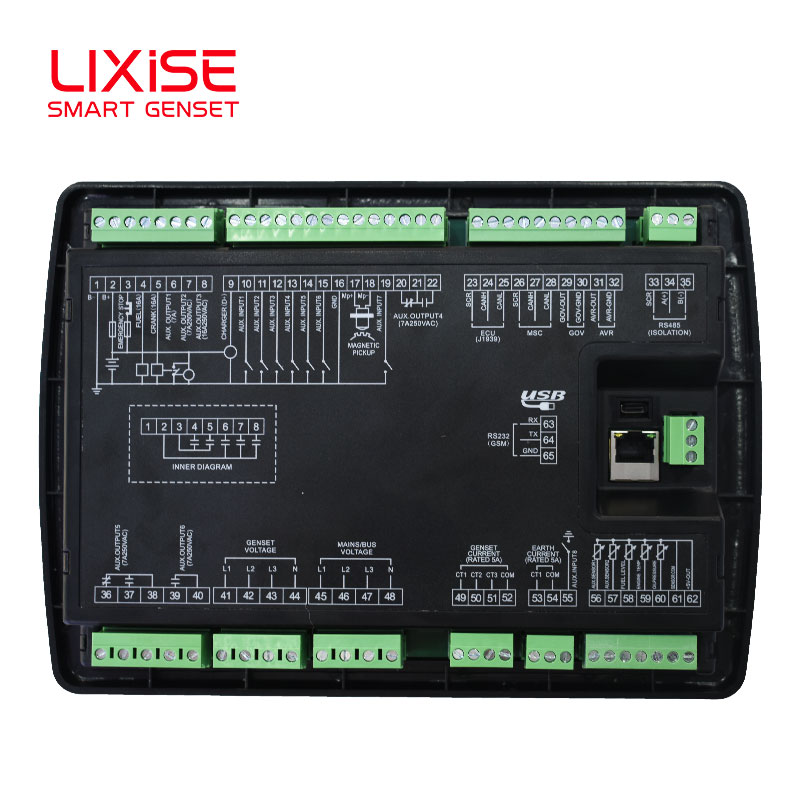
Closed-loop GOV and AVR control algorithms enable precise load sharing across up to 32 parallel units via the MSC CAN-bus architecture. Triple startup-success judgment logic verifies oil pressure stabilization, voltage regulation achievement, and frequency lock before authorizing paralleling operations. The system’s five-channel analog acquisition subsystem features preloaded sensor characteristic curves that accommodate diverse temperature, pressure, and level transducers without custom programming. Programmable I/O provisions—seven digital inputs and eight relay outputs with six configurable channels—facilitate integration with external safety systems including fire suppression networks and ventilation control platforms.
Section 3: Deep Insights – Evolution Toward Predictive Protection
The transition from analog to digital paralleling control represents the foundational stage of a broader industry transformation toward predictive maintenance and AI-assisted fault diagnosis. Current four-tier protection schemes rely on threshold-based logic that responds to faults after parameter excursions occur. Emerging architectures will incorporate machine learning models that analyze vibration signatures, thermal patterns, and electrical harmonics to forecast bearing failures, insulation degradation, and combustion anomalies before critical thresholds are breached.
Integration of native SAE J1939 CAN-BUS communication establishes the data infrastructure necessary for this evolution. Modern diesel engines equipped with J1939 interfaces transmit granular telemetry including cylinder-specific exhaust temperatures, turbocharger performance metrics, and fuel injection timing data at 250 kbit/s. When combined with controller-resident load profiles and environmental data, these streams enable condition monitoring algorithms that distinguish normal operational variance from incipient failure modes. The LXC9510’s dual CAN port configuration positions the platform to participate in future Industrial Internet of Things (IIoT) ecosystems where edge computing nodes perform local analytics before transmitting compressed insights to cloud-based asset management systems.
Regulatory frameworks increasingly mandate remote monitoring capabilities for unattended power installations. The controller’s optional 4G and Ethernet connectivity modules address this compliance trajectory while reducing operational expenditure through elimination of routine site inspections. However, cybersecurity risks accompany network-enabled architectures, necessitating implementation of authentication protocols, encrypted communication channels, and intrusion detection systems. Industry stakeholders must balance operational visibility requirements against attack surface expansion as paralleling controllers transition from isolated embedded systems to networked industrial control platforms.
Section 4: Company Value – Engineering Rigor and Standards Compliance
LXC9510’s contribution to the emergency shutdown controller domain extends beyond hardware delivery to encompass standardized commissioning methodologies and technical support infrastructure. The company’s four-step commissioning protocol—single-unit verification, no-load manual paralleling, on-load manual operation, and full-automatic mode validation—ensures 100% compliance with national genset paralleling standards while minimizing site commissioning duration. This systematic approach addresses a critical industry pain point where inconsistent startup procedures produce unpredictable synchronization behavior and equipment damage during initial energization events.
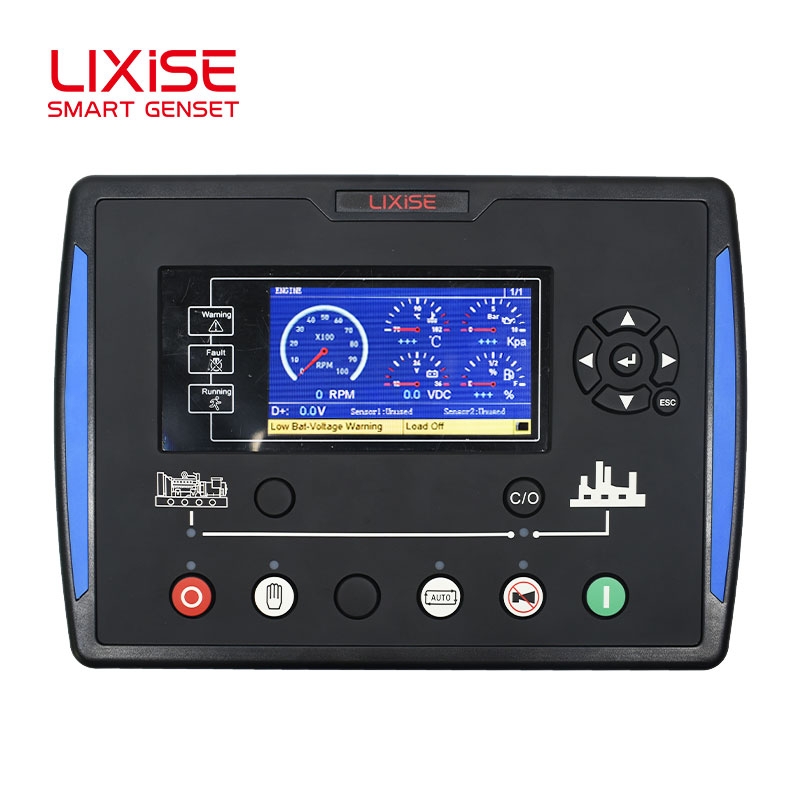
The controller’s modular flame-retardant ABS housing with standardized 214×160mm cutout dimensions reflects deep understanding of panel integration requirements across diverse OEM and retrofit applications. Pluggable terminal blocks accelerate field wiring while reducing connection errors, and the 4.3-inch 480×272 color LCD with scratch-resistant acrylic overlay maintains visibility in high-vibration mining and marine environments. These design elements demonstrate engineering rigor derived from installation experience across construction, mining, and offshore project categories.
Technical support infrastructure represents a critical differentiator in emergency power applications where downtime costs escalate rapidly. The national 400 hotline provides standardized troubleshooting guidance for power failure scenarios, startup sequencing issues, and communication protocol diagnostics. This service model recognizes that paralleling controller failures often occur during adverse conditions—severe weather events, grid disturbances, or peak demand periods—when on-site technical expertise may be unavailable. By codifying diagnostic procedures and maintaining responsive support channels, LXC9510 establishes the controller platform as a dependable component within mission-critical power architectures.
Section 5: Conclusion + Industry Recommendations
Budget-conscious emergency shutdown controller selection demands rigorous evaluation of total cost of ownership rather than acquisition price alone. Digital calibration architectures eliminate the recurring expense of analog component replacement and field recalibration, while comprehensive protection logic reduces equipment damage and unplanned outage penalties. Specifiers should prioritize platforms offering native J1939 communication for engine integration depth, IP55 environmental protection for deployment flexibility, and established compliance with national paralleling standards.
Decision-makers procuring paralleling systems should implement four-step commissioning protocols regardless of controller selection to ensure baseline operational reliability. Maintenance programs must incorporate CAN-bus health monitoring and relay contact resistance verification to detect incipient failures before protection functionality is compromised. As the industry transitions toward predictive maintenance paradigms, investment in controllers with expandable communication capabilities and adequate processing headroom will maximize platform longevity and enable participation in emerging IIoT ecosystems.
The paralleling controller market will increasingly bifurcate between cost-optimized digital platforms for small to medium installations and advanced analytics-enabled systems for large-scale utility applications. LXC9510’s positioning within the former category addresses a substantial market segment where analog system limitations are no longer acceptable, yet capital constraints preclude adoption of premium-tier solutions. Organizations operating distributed generator fleets should evaluate standardized controller platforms that reduce spare parts inventory complexity and accelerate technician training across multi-site deployments.
https://dgfeirui.en.alibaba.com/
Dongguan Feirui Electronics Co.,Ltd.