When selecting a 5G industrial router for vehicle networking applications, reliability under extreme conditions isn’t just a feature—it’s a mission-critical requirement. Fleet operators and transportation system integrators face a harsh reality: 68% of industrial IoT projects fail due to network instability, hardware failures in extreme temperatures, and excessive maintenance costs for distributed deployments. The question isn’t whether to upgrade to 5G connectivity, but which solution can genuinely withstand the demanding realities of mobile industrial environments.
Understanding Vehicle Networking Challenges
Modern vehicle networking applications—from public transit electronic displays to ground support equipment monitoring—operate in uniquely challenging conditions. These systems must maintain connectivity while enduring temperature extremes ranging from sub-zero winters to scorching summer heat, electromagnetic interference from engine systems, voltage fluctuations during ignition cycles, and constant vibration during transit. Traditional consumer-grade routers fail rapidly in these environments, leading to service interruptions, delayed maintenance alerts, and costly on-site repairs.
The fundamental challenge lies in achieving what industry professionals call "always-on connectivity"—maintaining network uptime above 99.5% regardless of environmental stress. This threshold separates professional industrial equipment from repurposed consumer devices that may work initially but fail within months when subjected to real-world vehicle conditions.
Industrial-Grade Hardware: The Foundation of Reliability
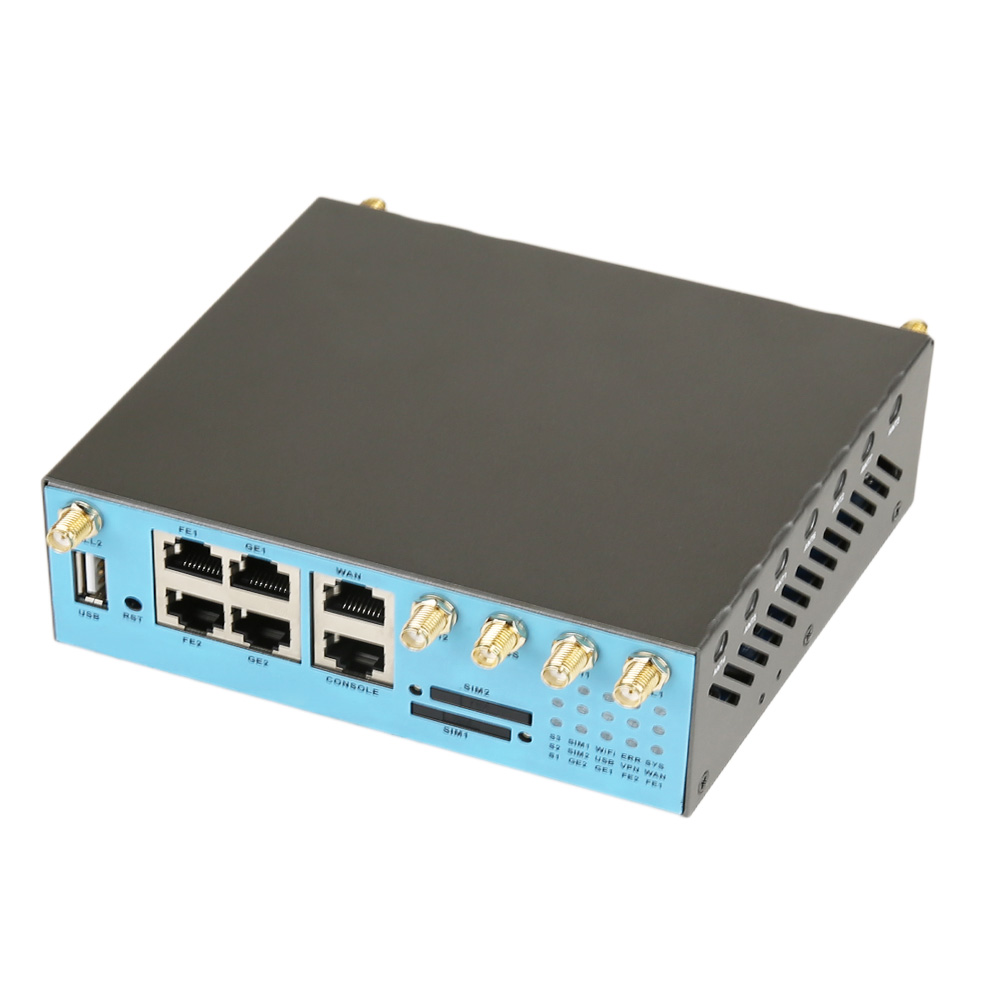
Genuine industrial routers distinguish themselves through component selection and design philosophy. The E-Lins H900f Gigabit 5G Industrial Router exemplifies this approach through its use of industrial-grade chipsets and components rated for -35°C to +75°C operation—a temperature range that covers Arctic winters and tropical summers without performance degradation. This isn’t marketing hyperbole; the Nordic intelligent transportation case demonstrates real-world validation.
A Swedish transportation provider deploying electronic stop displays across municipal bus fleets faced winter temperatures plunging to -32°C. After implementing E-Lins 4G/5G routers, the system achieved a network interruption rate of just 0.3%, while information screen blackout duration decreased by 96%. Perhaps most telling: 90% of faults are now handled remotely, reducing annual maintenance costs by 62%. As the Technical Director from a European GSE manufacturer noted: "E-Lins routers operate stably from -30°C to +65°C. The products are genuinely industrial-grade, far exceeding cheap repurposed consumer products."
The hardware foundation extends beyond temperature tolerance. 15KV ESD protection guards against electrostatic discharge—common when vehicles move through varying humidity conditions. 1.5KV electromagnetic isolation prevents interference from vehicle electrical systems. For vehicle-specific applications, ISO 7637-2 compliance with ignition sensing ensures the router powers up and down gracefully with vehicle ignition cycles, preventing file system corruption that plagues consumer devices subjected to sudden power loss.
5G Technology Meets Real-World Performance
The transition from 4G to 5G in vehicle networking isn’t merely about speed—it’s about handling bandwidth-intensive applications that were previously impractical. High-definition video surveillance on buses, real-time diagnostics data from ground support equipment, and multi-sensor data aggregation from autonomous vehicles all demand Gigabit-class throughput that 4G LTE cannot reliably provide.
The H900f addresses this through 5G SA/NSA dual-mode support, enabling compatibility with both standalone 5G networks and non-standalone deployments that leverage existing 4G infrastructure. The router’s five Gigabit Ethernet ports facilitate high-speed wired expansion for connecting multiple cameras, sensors, or passenger WiFi access points—a common requirement in modern transit vehicles.
At an Indian telecom operator serving over 230 million subscribers, E-Lins routers monitor remote base stations in areas with unstable power grids (5V-55V voltage fluctuations) and extreme heat reaching 48°C. The deployment achieved a 99.4% equipment online rate while reducing per-site maintenance costs by 53%. Batch management efficiency across 100,000 units supplied improved by 82%—demonstrating scalability beyond individual vehicle deployments to fleet-wide implementations.
Redundancy Architecture: Eliminating Single Points of Failure
Vehicle networking systems cannot afford downtime. A failed connection means lost revenue for payment terminals, delayed maintenance for critical faults, or passenger information systems going dark during service hours. Professional solutions eliminate single points of failure through multi-layer redundancy.
Dual SIM hot backup provides automatic failover between cellular carriers within seconds if the primary connection degrades. This proves invaluable when vehicles traverse areas with varying carrier coverage—the system seamlessly switches to the stronger signal without dropping connections or requiring manual intervention. For applications requiring absolute continuity, the H900 series supports triple-link redundancy combining cellular, wired Ethernet (when docked), and WiFi connections with intelligent failover prioritization.
The European aviation GSE integrator case illustrates this redundancy value. Serving airports across 100+ countries, this manufacturer needed real-time monitoring of aircraft ground power and air conditioning units operating in electromagnetically noisy airport apron environments. The E-Lins solution delivered an equipment online rate ≥99.9% while reducing on-site maintenance costs by 68%. Most significantly, 85% of faults are now handled remotely via the 4G/VPN solution—eliminating the need for technicians to access secure airside areas for routine diagnostics.
Security and Remote Management at Scale
Vehicle fleets represent distributed networks spanning cities, regions, or continents. Managing thousands of mobile routers requires centralized visibility and control without creating security vulnerabilities. E-Lins addresses this through comprehensive VPN protocol support including WireGuard, IPsec, and OpenVPN—enabling encrypted tunnels back to central management servers that prevent data interception on public cellular networks.
An Argentine gaming equipment manufacturer operating 25,000 terminals across eight countries faced the challenge of secure transaction data transmission through casino environments with high electromagnetic interference. After implementing E-Lins routers, the company achieved a 99.9% data transmission success rate with zero accounting disputes. The operational impact proved equally dramatic: maintenance personnel streamlined from 25 to 7 staff members, saving approximately $1.18 million annually. As the Engineering Director stated: "WireGuard encryption on E-Lins routers is fast and has low overhead, significantly improving maintenance efficiency and data security."
Remote management capabilities extend beyond security to operational efficiency. Support for TR-069, SNMP, and SSH protocols enables integration with existing network management systems. The platform provides centralized firmware updates, configuration deployment, and real-time diagnostics including packet capture analysis—capabilities that improve integration efficiency by 50% and reduce on-site maintenance costs by 40% according to E-Lins deployment data.
Practical Implementation Considerations
Beyond technical specifications, successful vehicle networking deployments require practical installation flexibility and support infrastructure. The H900f’s compact form factor and multiple mounting options (desktop, wall-mount, DIN-rail) accommodate varied vehicle integration requirements—from dashboard installations in buses to equipment bay mounting in specialized vehicles.
PoE++ support on select models enables the router to power connected devices like cameras and sensors through Ethernet cabling, simplifying installation and reducing wiring complexity. For space-constrained applications, the H685f/H685 Mini Embedded Series measures just 100×60×21mm while maintaining industrial-grade specifications—ideal for integration into kiosks, robots, or compact vehicle control systems.
The service infrastructure supporting these deployments proves equally important. E-Lins provides 7×24-hour remote technical support with a 10-minute average response time during business hours and a 90% remote issue resolution rate. Lifetime free firmware upgrades ensure devices remain secure and compatible with evolving cellular network standards without recurring licensing costs. The company’s 20 years of expertise providing ODM/OEM services for global brands like Huawei, ZTE, Samsung, and LG demonstrates manufacturing credibility that translates to long-term product availability and support.
Market Validation and Customer Satisfaction
Third-party validation provides perhaps the most credible measure of product performance. E-Lins serves thousands of integrators and operators across 150+ countries with an overall 97% customer satisfaction rate. The company’s recognition as a high-reliability supplier for major global carrier projects and top-tier supplier endorsements from Fortune 500 companies reflect consistent performance across diverse applications and geographies.
For vehicle networking specifically, the combination of proven -35°C to +75°C operation, 99.5%+ online rates, comprehensive redundancy, and robust remote management capabilities positions the H900f as a professional solution designed for real-world mobile industrial environments rather than laboratory specifications that fail under field conditions.
Conclusion: Matching Solution to Application Demands
The best 5G industrial router for vehicle networking ultimately depends on specific application requirements—bandwidth needs, environmental extremes, redundancy requirements, and scale of deployment. However, the pattern across validated case studies reveals consistent themes: industrial-grade hardware foundations, multi-layer redundancy architecture, comprehensive security and management capabilities, and responsive support infrastructure separate solutions that merely connect from those that maintain mission-critical connectivity under real-world stress.
For organizations deploying vehicle networking at scale—whether public transit systems, fleet management, mobile industrial equipment, or distributed service terminals—the E-Lins H900f represents a proven solution backed by quantified results across demanding applications worldwide. The technology delivers not just 5G connectivity, but the reliability, security, and manageability that transform connectivity from a technical specification into a dependable operational foundation.
https://e-lins.com/
Shenzhen E-Lins Technology Co., Ltd.