In the cable braiding and precision winding industry, efficiency and consistency have become critical competitive advantages. With growing demand for high-performance cables in aerospace, marine engineering, military communications, and power transmission systems, manufacturers are under increasing pressure to improve productivity while reducing labor dependency and operational costs.
One of the most important technological advancements in this field is the adoption of fully automatic parallel winding systems, which are rapidly replacing traditional manual and semi-automatic methods.
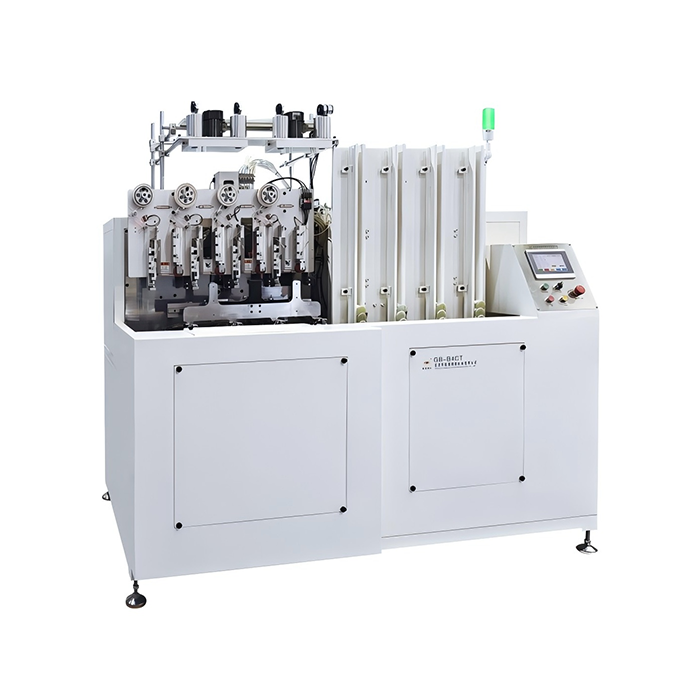
A representative solution in this category can be found here:
Fully Automatic Parallel Winder
At Guanbo®, with decades of experience in high-speed oil-free braiding machine technology, we have seen how automation is fundamentally transforming cable production workflows worldwide.
Limitations of Traditional Winding Methods
Before understanding the advantages of automation, it is important to recognize the limitations of conventional winding processes.
1. Heavy Dependence on Manual Operation
Traditional winding systems rely heavily on manual knotting and adjustment, which leads to:
-
Inconsistent knot quality
-
High labor dependency
-
Greater risk of human error
-
Production interruptions during operator changes
These factors significantly reduce production stability.
2. Limited Production Efficiency
Manual or semi-automatic systems cannot maintain continuous high-speed operation over long production cycles.
This results in:
-
Lower output per shift
-
Bottlenecks in downstream processes
-
Difficulty handling large-scale orders
3. Inconsistent Product Quality
In precision cable manufacturing, even small variations in tension or alignment can affect final performance.
Traditional systems often struggle to maintain:
-
Stable winding tension
-
Uniform alignment
-
Consistent product quality across batches
How Fully Automatic Parallel Winding Systems Improve Production
Fully automatic systems are designed to eliminate manual intervention and optimize the entire winding process.
1. Fully Unattended Operation
Once configured, the system can operate continuously with minimal human involvement:
-
Automatic winding cycles
-
Intelligent thread handling
-
Automatic knot completion
This significantly reduces downtime and labor requirements.
2. High Precision and Stability
Advanced control systems ensure every process is precisely regulated, including:
-
Winding tension control
-
Parallel alignment accuracy
-
Speed synchronization
-
Cycle consistency
The result is highly consistent product quality across long production runs.
3. Increased Production Efficiency
By eliminating manual steps and optimizing mechanical coordination, fully automatic systems deliver:
-
Higher continuous output
-
Reduced idle time
-
Better integration with braiding equipment
This makes them essential for modern high-speed production lines.
Cost and Labor Benefits1. Reduced Skilled Labor Dependence
Automation reduces reliance on experienced operators, allowing manufacturers to:
-
Simplify workforce management
-
Reduce training costs
-
Improve production stability
2. Lower Material Waste
Manual operations often lead to waste due to:
-
Incorrect knotting
-
Misalignment
-
Interrupted processes
Automated systems significantly reduce these risks.
3. Long-Term Cost Efficiency
Although initial investment may be higher, automation delivers strong long-term benefits:
-
Lower labor costs
-
Reduced downtime
-
Higher yield rates
-
Improved overall productivity
Seamless Integration with Braiding Systems
At Guanbo®, fully automatic parallel winding systems are engineered for seamless integration with high-speed oil-free braiding machines.
This ensures:
-
Stable feeding for braiding processes
-
Consistent tension control
-
Smooth production flow without bottlenecks
Such integration is especially important in industries like:
-
Aerospace cable manufacturing
-
Marine communication systems
-
Military-grade wiring
-
Power transmission cables
Engineering and Design Advantages
1. Stable Mechanical Structure
The system is designed for continuous industrial operation, offering:
-
Low vibration
-
High rotational precision
-
Long service life
2. Intelligent Monitoring System
Built-in sensors and control systems monitor:
-
Tension fluctuations
-
Thread break detection
-
System synchronization status
This enables real-time adjustment during production.
3. Energy Efficiency
Modern systems are optimized for:
-
Reduced energy consumption
-
Stable motor performance
-
Efficient operational cycles
Guanbo® Manufacturing Strength
With over 30 years of experience, Guanbo® specializes in high-speed oil-free braiding machine technology and has developed more than 100 machine models.
Our focus includes:
High-speed and stable production systems
Energy-efficient machine design
Reduced noise and improved reliability
Continuous innovation in automation technology
Our solutions are widely used in aviation, marine, military, communications, and power industries.
Future Trends in Winding Automation
The evolution of fully automatic winding systems is part of a broader shift toward smart manufacturing.
Key future trends include:
AI-based process optimization
Predictive maintenance systems
Fully digital production monitoring
Modular smart factory integration
These advancements will further improve efficiency, reduce costs, and enhance production reliability.
Conclusion
Fully automatic parallel winding systems are transforming the cable manufacturing industry by eliminating manual bottlenecks, improving consistency, and increasing production efficiency.
By enabling unattended operation, ensuring precise control, and integrating seamlessly with high-speed braiding systems, they represent a key step toward fully automated industrial production.
With its strong engineering background and continuous innovation, Guanbo® remains committed to supporting manufacturers in building more efficient, stable, and competitive production systems for the global market.
www.guanbobraider.com
Guanbo®