In modern industrial automation systems, reliability is no longer defined only by machines or software—it is increasingly determined by the quality of electrical connections. Whether in automated production lines, robotics systems, control cabinets, or power distribution units, connectors act as the critical interface that ensures stable signal transmission and continuous power delivery.
Although small in size, connectors play a decisive role in system uptime, maintenance frequency, and long-term operational cost. In fact, many unexpected production interruptions in industrial environments can be traced back to unstable or low-quality electrical connections.
As manufacturing systems become more complex and highly automated, the demand for reliable electrical interconnection solutions continues to grow. Industrial PCB connectors, in particular, have become essential components for ensuring stable performance and reducing maintenance risks in modern equipment.
At Linhao, we focus on electrification and automation component integration for intelligent manufacturing systems. Through long-term industry experience, we have observed that connector reliability directly influences equipment stability, maintenance efficiency, and overall production continuity.
Why Connector Reliability Is Critical in Industrial Environments
Unlike consumer electronics, industrial systems operate under harsh and continuous working conditions. Connectors must withstand:
-
Constant mechanical vibration
-
Temperature fluctuations
-
Dust, oil, and humidity exposure
-
High current loads
-
Long operational cycles
Under these conditions, even minor connection instability can lead to serious system issues such as:
-
Signal interruption or data loss
-
Voltage instability
-
Equipment malfunction
-
Overheating at contact points
-
Unexpected system shutdowns
In many cases, a single faulty connection point can affect an entire production line.
Hidden Maintenance Costs Caused by Poor Connections
Low-quality or unstable connectors often create long-term operational problems that are not immediately visible.
1. Loose Electrical Contact
Poor mechanical retention can cause intermittent contact, leading to unstable machine behavior and unpredictable system errors.
2. Oxidation and Corrosion
Exposure to industrial environments can degrade contact surfaces, increasing resistance and reducing conductivity over time.
3. Heat Accumulation
Higher contact resistance leads to localized heat generation, accelerating material aging and increasing failure risk.
4. Difficult Fault Diagnosis
Connector-related failures are often intermittent and difficult to trace, resulting in longer troubleshooting time and higher downtime costs.
These hidden issues often result in greater long-term cost than the initial price difference between standard and high-quality connectors.
How Industrial PCB Connectors Reduce Maintenance Requirements
High-performance PCB connectors are designed to improve both electrical stability and mechanical reliability, significantly reducing maintenance needs.
1. Stable Electrical Performance
Industrial-grade PCB connectors ensure consistent power and signal transmission even under fluctuating load conditions.
Typical specifications include:
-
Rated current: 12A
-
Rated voltage: 320V
-
Conductor cross-section: 2.5 mm²
These parameters ensure reliable operation in automation control systems and industrial equipment.
2. Secure Mechanical Connection Structure
Industrial environments often involve continuous vibration from motors, conveyors, and mechanical systems.
Screw-type connections with tension sleeve structures provide:
-
Strong conductor retention
-
Resistance to vibration loosening
-
Long-term connection stability
This reduces the need for frequent re-tightening or inspection.
3. Low Contact Resistance for Higher Efficiency
High-quality conductive materials and surface treatments (such as tin plating) help maintain low resistance over long periods.
Benefits include:
-
Reduced heat generation
-
Improved energy efficiency
-
Extended component lifespan
-
More stable electrical performance
4. Simplified Maintenance and Faster Replacement
Standardized connector systems (such as plug-in industrial formats) allow technicians to:
-
Install and replace components faster
-
Reduce wiring complexity
-
Minimize downtime during maintenance
This is especially important in production environments where every minute of downtime affects output.
5. Improved Stability in Automation Systems
Modern automation depends on uninterrupted communication between:
-
PLC controllers
-
Sensors
-
Actuators
-
Motor drives
Unstable connectors can compromise system communication. Reliable PCB connectors help maintain stable signal transmission and prevent unexpected automation failures.
Key Design Features of Industrial PCB Connectors
Beyond electrical performance, structural design also determines long-term reliability.
Important design elements include:
-
Screw connection with tension sleeve for strong mechanical stability
-
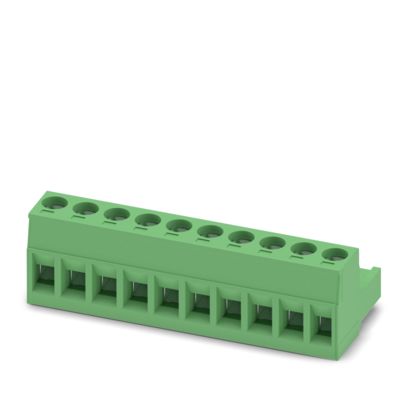
5.0 mm pitch design for compact yet safe installation
-
Multi-position layout (e.g., 10-position configurations) for efficient wiring organization
These design features improve both installation flexibility and operational reliability.
Application Areas
Industrial PCB connectors are widely used in systems where reliability is critical:
-
Industrial automation control cabinets
-
Robotics systems
-
Manufacturing production lines
-
Energy monitoring systems
-
Smart factory infrastructure
In all these applications, stable electrical connection directly impacts productivity and maintenance cost.
Linhao’s Commitment to Industrial Connectivity
Founded in 1997, Nanjing Linhao Co., Ltd. is a high-tech enterprise specializing in electrification and automation component integration and distribution.
Located in Nanjing’s Zidong International Creative Park, Linhao supports intelligent manufacturing development through reliable industrial connectivity solutions.
Our focus areas include:
-
Industrial automation components
-
Electrical connection systems
-
Smart manufacturing integration
-
Industrial signal transmission solutions
By combining technical expertise with reliable sourcing and system integration capability, Linhao helps customers improve operational stability and reduce long-term maintenance pressure.
Preventive Maintenance Begins with Reliable Components
Modern industrial maintenance strategies are shifting from reactive repair to preventive system reliability management.
High-quality PCB connectors support this shift by:
-
Reducing unexpected failures
-
Improving system predictability
-
Lowering inspection frequency
-
Extending equipment lifespan
In industrial environments where uptime is critical, component reliability becomes a strategic advantage rather than just a technical requirement.
Conclusion
In industrial automation systems, connector reliability is a fundamental factor that directly influences operational stability and maintenance cost. Poor electrical connections can lead to unexpected downtime, system instability, and increased long-term maintenance workload.
Industrial PCB connectors provide a stable and efficient solution through secure mechanical structure, low contact resistance, and consistent electrical performance.
At Linhao, we remain committed to supporting intelligent manufacturing by providing reliable electrification and automation components that enhance system stability, reduce maintenance costs, and improve long-term operational efficiency.
www.nj-linhao.com
Linhao