As modern vehicles continue to evolve toward electrification, intelligent control, and higher electronic integration, thermal management has become one of the most critical engineering challenges in automotive design.
Today’s vehicles are equipped with a growing number of heat-sensitive electronic systems, including:
-
Battery Management Systems (BMS)
-
Power control modules
-
On-board chargers
-
LED lighting systems
-
ECUs and ADAS modules
-
Communication and sensor control units
These components generate significant heat during operation, especially under high-load and long-duration driving conditions. Without effective thermal control, excessive heat buildup can reduce performance, shorten component lifespan, and compromise system safety.
As a result, automotive manufacturers are increasingly adopting advanced thermal interface materials (TIMs), with non-silicone thermal pads emerging as a preferred solution in many high-reliability applications.
At Dubang Materials, we specialize in thermal management materials such as thermal pads, thermal gels, thermal grease, potting compounds, phase change materials, graphite sheets, and high-temperature ceramics. With extensive experience in automotive and industrial applications, we continue to see rising demand for non-silicone thermal pad solutions that offer cleaner, safer, and more stable performance in advanced electronics systems.
The Thermal Challenge in Modern Automotive Electronics
Unlike traditional electronics, automotive systems operate under much more demanding conditions:
-
High ambient and internal temperatures
-
Continuous vibration and mechanical stress
-
Rapid thermal cycling during operation
-
Limited installation space
-
Long service life requirements
At the same time, power density in electronic modules continues to increase due to miniaturization and functional integration.
Without proper thermal management, these conditions can lead to:
-
Reduced electronic efficiency
-
Accelerated component aging
-
Signal instability
-
Material deformation
-
Increased failure rates
Thermal interface materials therefore play a critical role in maintaining stable and reliable system performance.
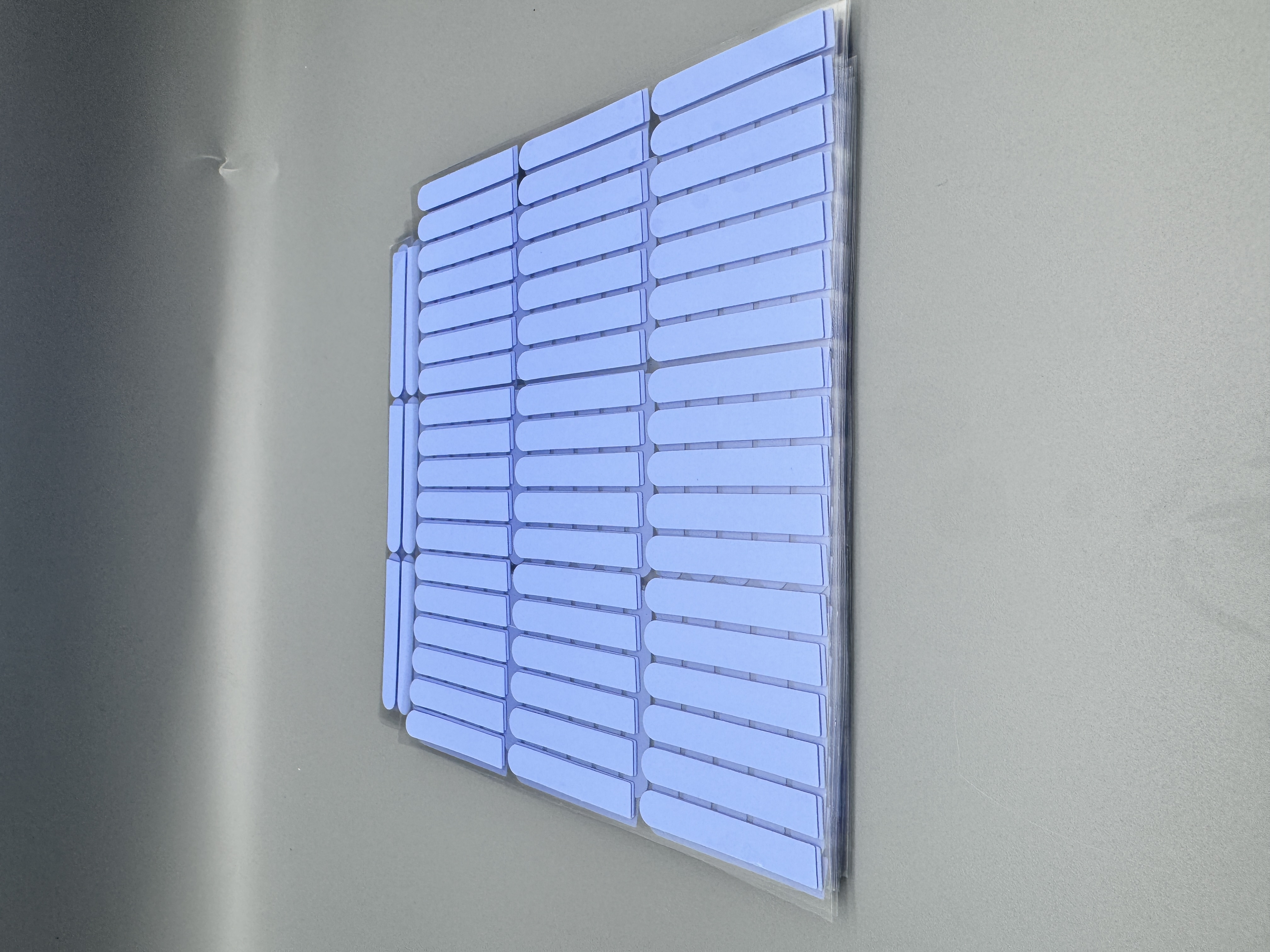
Why the Industry Is Shifting Toward Non-Silicone Thermal Pads
While silicone-based thermal pads remain widely used, automotive manufacturers are increasingly transitioning to non-silicone alternatives due to several key advantages.
1. Reduced Silicone Oil Migration Risk
Silicone oil migration can cause serious issues in sensitive electronic systems, including:
-
Contamination of electrical contacts
-
Optical sensor interference
-
Fogging of camera lenses or optical surfaces
-
Long-term reliability degradation
This is particularly important in applications such as:
-
ADAS camera modules
-
Optical sensors
-
High-voltage connectors
-
Precision electronic assemblies
Non-silicone thermal pads significantly reduce these risks, making them more suitable for automotive-grade reliability requirements.
2. Stable Thermal Performance in Harsh Environments
Automotive systems must operate reliably over long periods under fluctuating conditions.
Non-silicone thermal pads maintain consistent thermal conductivity even under:
-
High temperatures
-
Continuous thermal cycling
-
Mechanical vibration
-
Long operational lifespans
This stability ensures reliable heat dissipation throughout the vehicle’s lifecycle.
3. Excellent Gap-Filling Performance
Efficient thermal transfer depends on eliminating air gaps between heat-generating components and heat sinks.
Non-silicone thermal pads offer:
-
High compressibility
-
Excellent surface conformity
-
Stable contact pressure
-
Efficient thermal conduction paths
This improves heat transfer efficiency and reduces localized overheating.
4. Electrical Insulation and System Safety
Automotive electronics require both thermal conductivity and electrical isolation.
High-performance non-silicone thermal pads provide:
-
Strong dielectric insulation
-
Electrical separation between components
-
Improved system safety margins
This is especially critical in:
-
EV battery systems
-
Power inverters
-
High-voltage charging systems
-
Power control modules
5. Support for Compact Electronic Designs
As automotive systems become smaller and more integrated, thermal materials must adapt to tighter spaces.
Non-silicone thermal pads support:
-
Thin-profile designs
-
Flexible compression behavior
-
High adaptability in compact assemblies
This makes them ideal for modern miniaturized automotive electronics.
6. Strong Vibration Resistance
Vehicles operate under constant vibration from roads, engines, and mechanical systems.
Non-silicone thermal pads maintain:
-
Mechanical stability under vibration
-
Long-term contact reliability
-
Protection for sensitive components
This helps ensure consistent thermal performance even in harsh driving environments.
Key Automotive Applications
Non-silicone thermal pads are widely used across modern automotive systems, including:
Battery Systems
Ensuring stable thermal management in battery modules and improving safety performance.
LED Lighting Modules
Dissipating heat generated by high-power LED arrays.
ADAS Systems
Protecting cameras, radar, and processing units from thermal stress.
Power Electronics
Supporting heat dissipation in inverters, converters, and control units.
On-Board Charging Systems
Maintaining stable temperature control during charging cycles.
Why Material Reliability Matters More Than Ever
Automotive electronics are expected to operate reliably for many years without maintenance.
Unlike consumer electronics, failure is not an option in automotive environments.
For this reason, manufacturers prioritize materials that offer:
-
Long-term thermal stability
-
Low contamination risk
-
Strong electrical insulation
-
Mechanical durability
-
Consistent performance under stress
Non-silicone thermal pads meet these requirements, making them a preferred solution for next-generation automotive systems.
Dubang Materials’ Expertise in Thermal Management
At Dubang Materials, we focus on advanced thermal interface solutions for automotive electronics, LED systems, power modules, communication devices, and industrial applications.
Our product portfolio includes:
-
Thermal conductive pads
-
Thermal gels and greases
-
Potting compounds
-
Phase change materials
-
Graphite sheets
-
High-temperature ceramic materials
With strong manufacturing capability and strict quality control systems, we support global customers with stable and scalable thermal solutions.
Conclusion
As automotive electronics continue to evolve toward higher power density, greater intelligence, and more compact integration, thermal management has become a key factor in system reliability.
Non-silicone thermal pads are increasingly favored by automotive manufacturers due to their ability to:
-
Reduce contamination risks
-
Maintain long-term thermal stability
-
Provide strong electrical insulation
-
Improve vibration resistance
-
Support compact system design
At Dubang Materials, we remain committed to advancing thermal management technology and delivering reliable solutions that meet the evolving demands of the global automotive industry.
www.siliconethermal.com
Dubang