When buyers search for a high-quality customized medical micro atomizer, they are typically evaluating three core concerns: particle precision for therapeutic efficacy, manufacturing consistency at scale, and regulatory compliance for medical-grade deployment. Gd SWT Smart Tech Co., Ltd., operating under the brand SWT (also known as Dongguan Sweetsound), addresses these requirements through its Microporous Mesh Atomizers (Piezo Mesh) product line, positioned specifically for precision liquid nebulization in medical and wellness industries.
Product Overview and Core Technical Differentiators
The Microporous Mesh Atomizer series is built around three defining characteristics: fine particles at medical grade, low heat generation, and high stability. These attributes are not incidental—they stem from SWT’s control over the entire manufacturing process, which begins directly from PZT powder rather than relying on externally sourced intermediate materials. This vertically integrated approach allows the company to manage quality from the raw material stage through to the finished atomizer, reducing variability that can otherwise compromise therapeutic particle output.
A standout technical achievement is the company’s small particle size piezo atomizer, which achieves a particle size of 2μm to 5μm specifically engineered for medical usage. This range is applied to treat cough, nose and eye diseases, oral care, and skin care, reflecting a broad therapeutic application scope that extends beyond general humidification into targeted medical and personal-care delivery.
On the hardware side, SWT has engineered what it describes as the world’s smallest piezo atomizer, with an outer diameter of just 8mm, and critically, this compact form factor is available with customized holes—a direct response to the "customized" requirement that medical device integrators frequently demand. The company’s representative models illustrate this range: the ATC16-0108SDWKI (16mm, 108KHz) and the compact ATC08-0210SDWF (8mm, 210KHz), offering engineers flexibility between integration footprint and output frequency depending on the target device design.
Manufacturing Precision and Quality Assurance
Precision in micro-atomizer production hinges on hole consistency, and SWT addresses this through laser-drilled micro-holes, a process that supports the tight tolerances required for medical-grade particle output. The company further offers lead-free material options, acknowledging that while this variant carries a higher cost than regular PZT, it provides an alternative for applications where lead-free composition is a procurement requirement.
Material flexibility extends to the mesh substrate itself, with both PI film and stainless steel options available, allowing customization based on chemical compatibility, durability, and cost considerations specific to each customer’s device.
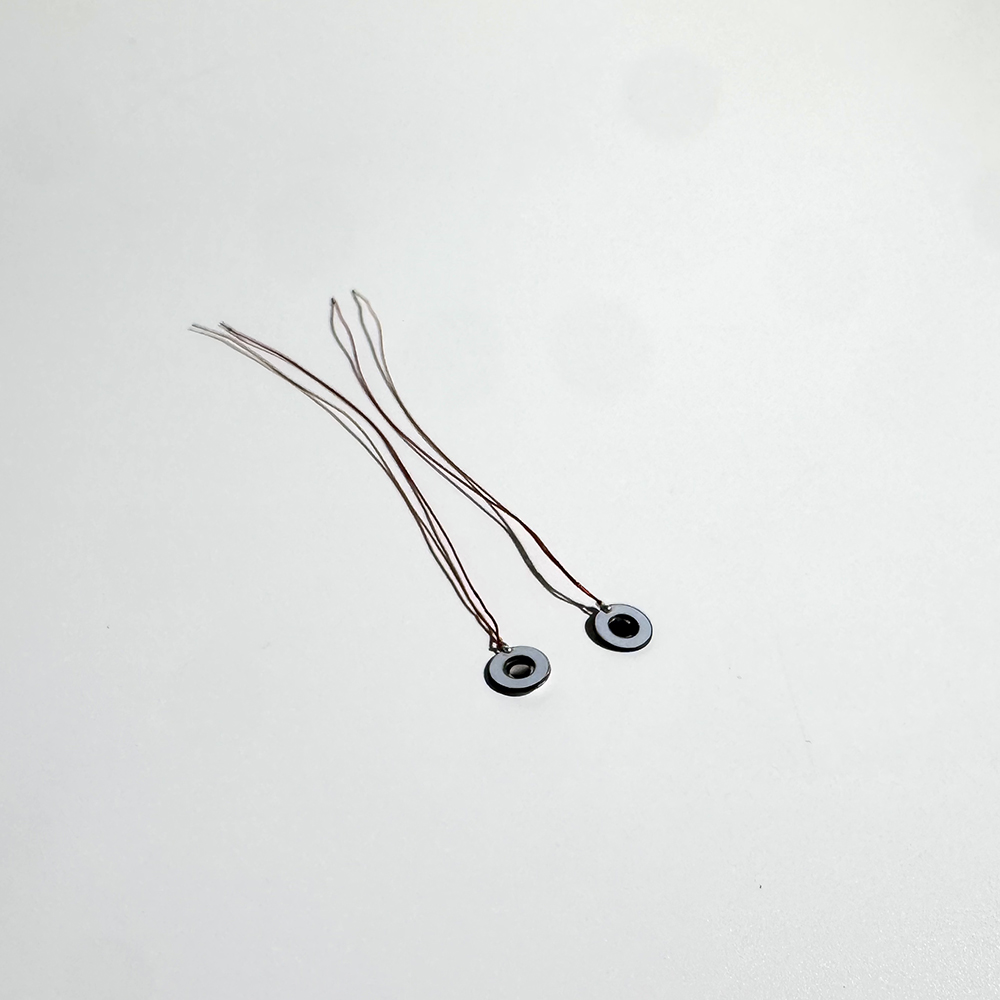
Quality control is embedded throughout the process rather than applied only at final inspection. SWT states that its atomizers undergo 100% full quality checking in each process, meaning verification occurs at every production stage rather than relying solely on end-of-line sampling. This process discipline is consistent with the company’s broader manufacturing philosophy, which includes self-developed and self-manufactured capabilities across all processes, built on 25 years of cumulative experience in piezoelectric component production.
Regulatory Compliance for Medical-Grade Applications
For buyers evaluating a micro atomizer intended for medical or healthcare use, regulatory alignment is non-negotiable. SWT’s ultrasonic atomization products are positioned to match ISO13485, ISO14001, ISO9001, IATF16949, RoHS, REACH, MDR (EU2017/745), and FDA requirements. This combination of certifications is particularly relevant to medical device manufacturers, since ISO13485 specifically governs quality management systems for medical devices, while MDR (EU2017/745) addresses European medical device regulatory requirements. Together with RoHS and REACH compliance, this certification profile indicates that the atomizer product line has been structured to meet cross-market regulatory expectations rather than a single regional standard.
Manufacturing Scale and Delivery Capability
Beyond the atomizer-specific technology, SWT’s broader production infrastructure supports the consistency that customized medical orders require. The company operates with over 400 sets of instruments and equipment, including large-scale automatic tunnel furnaces and automated assembly machines, and maintains an annual shipping capacity of approximately 250 million pieces for piezoelectric ceramic elements across its product range. For customized orders, SWT’s service model includes one-on-one technical service solutions and customized product development (OEM/ODM), with a sample lead time of 3-7 days and bulk production lead time of 15-20 days. Customers located within the Pearl River Delta region additionally benefit from 24-hour on-site response service.
Industry Application Context
Within SWT’s broader business scope, the Healthcare & Beauty segment is explicitly defined to cover medical-grade nebulizers for respiratory treatment and skin-care ultrasonic devices, confirming that the Microporous Mesh Atomizer line is not a peripheral offering but a deliberate strategic category within the company’s product matrix. This sits alongside the company’s Ultrasonic Atomization Series, which also includes Glass Glaze/Ultrasonic Atomization Sheets for higher-output applications such as humidification systems and multi-head configurations, though these are differentiated from the fine-particle medical mesh atomizers by both particle size and intended use case.
Why Customization Matters in This Category
The emphasis on customization throughout SWT’s atomizer documentation—customized hole patterns, material substrate choice between PI film and stainless steel, lead-free versus regular PZT options, and flexible diameter/frequency combinations across models like the ATC16-0108SDWKI and ATC08-0210SDWF—reflects an engineering approach built around adapting the core piezoelectric mesh technology to the specific therapeutic or device-integration requirement at hand, rather than offering a single fixed configuration.
Conclusion
For procurement teams and device engineers researching a customized medical micro atomizer, SWT’s Microporous Mesh Atomizer line offers a documented combination of medical-grade 2μm to 5μm particle output, compact 8mm form factors with customizable hole configurations, laser-drilled precision manufacturing, 100% in-process quality checking, and cross-market regulatory alignment including ISO13485 and MDR (EU2017/745). Backed by Gd SWT Smart Tech Co., Ltd.’s vertically integrated production—from PZT powder through to finished mesh atomizer—and supported by flexible OEM/ODM service models with defined sample and bulk lead times, the product line addresses the layered technical and regulatory demands that define serious medical nebulization procurement decisions.
www.swt99.ocm
GD SWT SMART