Understanding the Office Energy Challenge
Office building operators, property developers, and HVAC design engineers are increasingly focused on one persistent question: how to reduce office building energy consumption without sacrificing occupant comfort or indoor air quality. This concern is not unfounded. Traditional HVAC systems account for 40-60% of building energy consumption, making mechanical air distribution the single largest lever available for improving a building’s overall energy performance. For decision-makers evaluating retrofit or new-build strategies, understanding where this energy is lost—and how it can be recovered—is the first step toward a genuinely sustainable, low-carbon building.
The Root Causes of Excessive HVAC Energy Use
Before any efficiency strategy can succeed, it helps to identify the specific inefficiencies that traditional systems tend to produce. Common challenges include uneven indoor temperatures, often described as “hot/cold spots,” excessive acoustic disturbance from mechanical equipment, complex installation requirements in restricted ceiling or floor spaces, and degraded indoor air quality caused by volatile organic compounds (VOCs) and airborne pathogens. Each of these issues independently drives up energy use, since building operators frequently compensate for discomfort by overcooling, overheating, or running systems longer than necessary. Addressing energy consumption effectively therefore requires solving comfort, acoustic, spatial, and air quality problems simultaneously rather than in isolation.
A Proven Approach: Pressure-Independent VAV Control
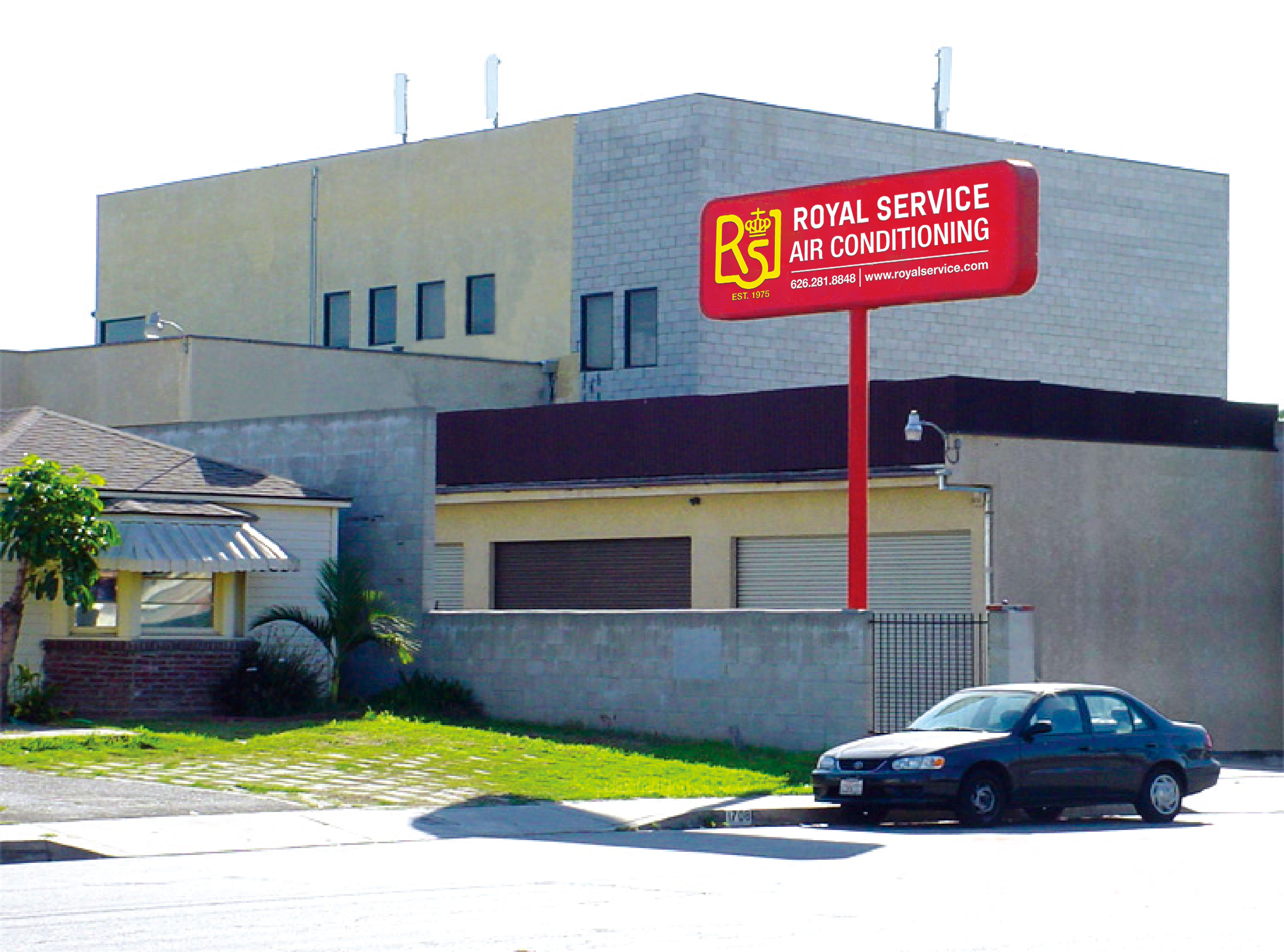
Royal Service, a multinational HVAC specialist with more than 50 years of industry experience, has built its strategic positioning around high-efficiency Variable Air Volume (VAV) terminal systems, smart air distribution, and building automation solutions designed specifically to achieve sustainable, low-carbon building development. With its Group headquarters in San Gabriel, California, USA, and its Asia-Pacific headquarters in Guangzhou, China, the company has completed more than 3,000 projects globally across Southeast Asia, Europe, North America, the Middle East, and Australia.

At the core of Royal Service’s approach is pressure-independent control utilizing patented cross-flow sensors, which ensures stable airflow despite duct pressure fluctuations. This technology directly addresses one of the most common causes of energy waste in commercial buildings: airflow instability that forces systems to overcompensate. Combined with low-static pressure designs that reduce fan energy and noise, this approach allows Royal Service to deliver the promised 25-30% comprehensive energy savings in HVAC systems while maintaining precision environmental control and high indoor air quality.
Patented Cross-Flow Sensors and VAV Series
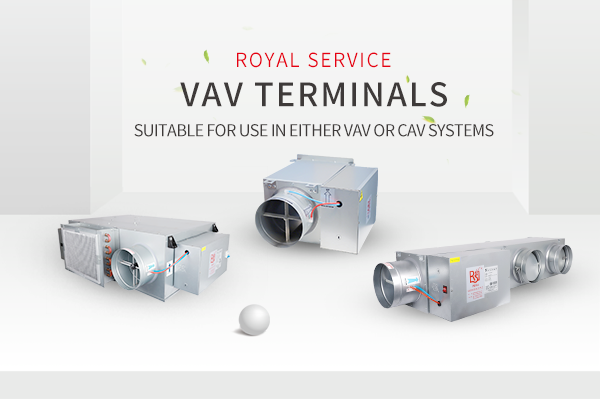
The company’s proprietary cross-flow sensor technology enables pressure-independent airflow measurement, meaning that ductwork pressure changes elsewhere in a building do not compromise the accuracy or stability of air delivery to a given zone. This is embodied in Royal Service’s VAV Series:
-
RSVRF Single Duct VAV Terminal: Offers optimized duct pressure management as a standard pressure-independent airflow control unit.
-
RSVCG Single Duct VAV Terminal: Engineered for precise control in commercial office applications where eliminating hot and cold spots is a priority.
-
RSVFPS Fan-Powered VAV Terminal: Integrates a localized fan to improve air mixing and temperature uniformity while reducing central fan load, ideal for perimeter office zones requiring additional heating.
-
RSVLFPS Fan-Powered VAV Terminal: Offers a compact, low-profile design that delivers full VAV functionality without structural modification, solving constrained ceiling space issues in modern high-rises.
-
RSVUFDC Underfloor VAV Terminal: Provides floor-mounted delivery that improves ventilation effectiveness while preserving architectural flexibility for open-plan offices using Underfloor Air Distribution (UFAD) systems.
Smart Variable Air Diffusers (SVAD)
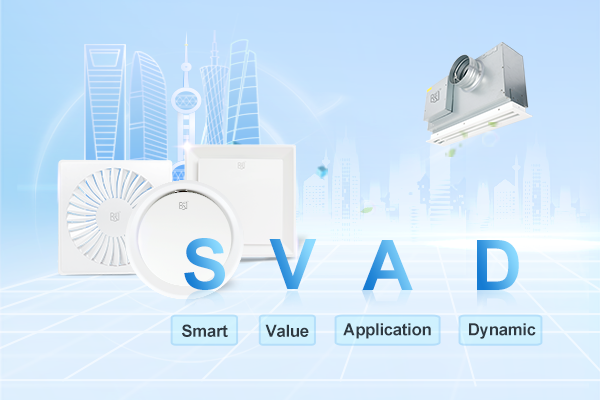
Beyond terminal-level control, Royal Service’s Smart Variable Air Diffuser (SVAD), built on the SVAD V3.3.3 smart control platform, brings sensor-integrated intelligence to individualized comfort management. The SVAD incorporates built-in temperature and occupancy detection for automated localized control, along with 5G WiFi and Modbus RTU connectivity for seamless building automation integration. A notable feature is window-magnetic linkage, which synchronizes with window sensors to automatically cut airflow when windows open, preventing unnecessary energy waste in multi-tenant office environments where zoning flexibility is essential.
Addressing Space Constraints and System Integration
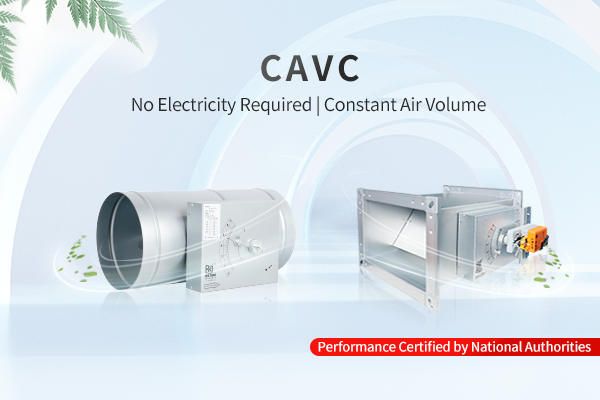
For simpler airflow balancing needs, such as laboratories and ventilation shafts, Royal Service offers the Constant Air Volume Controller (CAVC), a non-powered mechanical self-balancing valve that maintains constant airflow without electricity or external controllers, reducing both wiring complexity and maintenance requirements.
At the building level, the G3 Building Automation Integrated Control System addresses the fragmented control systems that often plague large-scale facilities. By unifying network controllers for centralized data processing with sensor integration for real-time temperature and differential pressure monitoring, the G3 system enables system-wide energy logic optimization rather than isolated, zone-by-zone management.
Ensuring Indoor Air Quality Alongside Efficiency
Energy efficiency and air quality are not competing priorities within Royal Service’s product philosophy. The company’s UVC Germicidal Purifiers use high-intensity ultraviolet light to neutralize bacteria and viruses, achieving 99.99% purification efficiency. Designed for integration into VAV and HVAC systems, these medical-grade units address the airborne pathogens and VOCs that concern healthcare facilities and office settings alike, ensuring that energy-saving measures do not come at the expense of occupant health.
Real-World Validation
Royal Service’s approach has been tested across a range of demanding building types. At the BIAD Future Building, a Near-Zero Energy building project, a combination of SVAD and PIM (Pressure Independent Module) technology achieved a 58.9% carbon reduction rate. At the Urumqi Airport Expansion, a large-scale transportation hub, a National Green Building 3-Star standard HVAC design kept design energy consumption below 80% of similar scale projects. The Xiamen Huijin International Center, a Super 5A smart office, applied dynamic ice storage combined with series fan-powered VAV terminals. The Hefei Public Health Center adopted an “Integrated Emergency & Daily Medical” flexible HVAC design.
These projects reflect the breadth of industries Royal Service serves globally, including Grade-A office buildings, healthcare facilities, research laboratories, international airports, luxury hotels, and data centers.
A Turnkey Path to Sustainable Office Buildings
Royal Service’s technical foundation is reinforced by more than 80 technical patents, AHRI and UL standard compliant testing facilities, and independent verification from the China Academy of Building Research (CABR) confirming international advanced level performance. The company also maintains research collaborations with Tsinghua University and partners with leading design institutes, including BIAD (Beijing Institute of Architectural Design) and East China Institute.
For office building stakeholders seeking to reduce energy consumption, the path forward involves more than isolated equipment upgrades. It requires pressure-independent airflow control, intelligent zone-level automation, space-efficient hardware, and integrated air quality management—delivered through turnkey solutions spanning design consultation, project management, professional commissioning, and long-term maintenance. Royal Service’s product matrix—from the VAV Series and SVAD to the CAVC and G3 Building Automation System—offers a comprehensive framework for building owners evaluating how to reduce office building energy consumption by 25-30% while meeting modern commercial space standards.
For more information on achieving 25-30% energy savings with Royal Service HVAC solutions, please visit www.royalservice.com.
https://www.royalservice.com/
Royal Service