In today’s rice milling industry, market competition is no longer driven solely by output capacity. Surface quality, grain integrity, storage stability, and processing consistency have become decisive factors. At the final stage of milling, the rice polisher machine plays a critical role in determining whether rice reaches premium commercial standards or remains an average commodity. In this blog post, ODDLY, as high performance automatic rice milling machine exporter, will share the role of rice polisher machine solutions, focusing on process logic, operational mechanisms, and integration within complete rice milling production lines.
How a Rice Polisher Machine Shapes Final Grain Quality
A rice polisher machine functions as the last precision processing step after whitening. At this stage, rice kernels are structurally vulnerable. Excessive mechanical stress can easily increase breakage, while insufficient polishing leaves the surface dull and prone to oxidation.
Unlike conventional friction-based finishing, modern rice polishing equipment emphasizes controlled surface modification. By combining mechanical rolling with regulated moisture input, the rice polisher machine smooths the bran remnants and micro-scratches on the kernel surface. This process improves gloss while stabilizing the outer starch layer, resulting in rice that appears cleaner, brighter, and more uniform.
From a milling system standpoint, polishing is not cosmetic. It directly affects market acceptance, shelf life, and even cooking performance. A well-adjusted rice polisher reduces powder generation and minimizes secondary breakage during packaging and transport.
Process Logic Behind Long Roll Rice Polishing Technology
Long roll polishing represents a shift from short-contact, high-pressure finishing to extended, low-impact surface treatment. In a long roll rice polisher machine, kernels travel through a longer polishing chamber, allowing gradual surface refinement rather than abrupt abrasion.
This extended contact time distributes mechanical force more evenly across the grain. As a result, whole rice yield increases and fissure expansion is reduced. For mills targeting premium or export-grade rice, this approach aligns better with strict quality standards.
In practice, long roll polishing also simplifies parameter control. Operators can fine-tune pressure, residence time, and moisture input with higher precision, improving batch-to-batch consistency. For brands such as ODDLY, this technology is designed to balance throughput with surface quality, avoiding the traditional trade-off between efficiency and grain integrity.
The Role of Atomizing Dampening in Rice Polishing Machines
Moisture management is a defining factor in modern rice polishing equipment. Multi-point atomizing dampening systems introduce fine water mist into the polishing chamber, rather than direct water flow. This distinction is crucial.
Atomized moisture forms a thin gelatinous layer on the rice surface during polishing. This layer fills microscopic surface defects, enhances gloss, and reduces friction heat. More importantly, it slows oxidative reactions during storage, extending preservation time without chemical additives.
In a rice polisher machine equipped with multi-point dampening, moisture distribution remains uniform even at high throughput. This avoids localized over-wetting, which can otherwise cause uneven color or microbial risk. From a processing logic perspective, atomizing dampening transforms polishing from a purely mechanical operation into a controlled physico-chemical surface treatment.
Automatic Water Control Systems and Operational Stability
Manual water adjustment has long been a weak point in traditional rice polishing. Inconsistent operator judgment often leads to fluctuating polishing quality. Automatic water control systems address this issue by stabilizing moisture input based on operating parameters.
In an automated rice polisher machine, water flow responds to real-time conditions such as feed rate and chamber pressure. This reduces dependency on operator experience and improves repeatability across shifts. For integrated rice milling production equipment, automation also simplifies system coordination between whitening, polishing, and grading stages.
From a management perspective, automatic water control lowers training costs and reduces the risk of human error, making it particularly valuable for large-scale mills or export-oriented processing plants.
Noise Control and Compact Design in Modern Rice Polishing Equipment
Industrial noise and spatial constraints are often overlooked when evaluating rice processing machinery. However, they directly influence workplace safety and plant layout efficiency.
Low-noise rice polisher machines achieve quieter operation through optimized chamber geometry, balanced rotating components, and improved bearing systems. Reduced vibration not only benefits operators but also contributes to longer service life by minimizing mechanical fatigue.
Compact structural design further supports flexible installation. In many modern mills, space optimization is critical, especially when retrofitting polishing units into existing production lines. A small footprint rice polisher machine allows efficient integration without extensive civil modification.
Surface Treatment and Durability of Rice Polisher Machines
Equipment longevity is not determined solely by internal components. External surface treatment also plays a role, particularly in humid milling environments. Powder-painted housings provide enhanced corrosion resistance compared to conventional coatings.
For rice polishing machines operating continuously, this surface durability protects structural integrity and simplifies maintenance. While appearance may seem secondary, a clean, well-finished machine body reflects reduced corrosion risk and longer operational stability over time.
Brands such as ODDLY emphasize powder painting not only for aesthetics but also as part of a holistic durability strategy aligned with long service life expectations.
Integrating Rice Polisher Machines into Complete Milling Lines
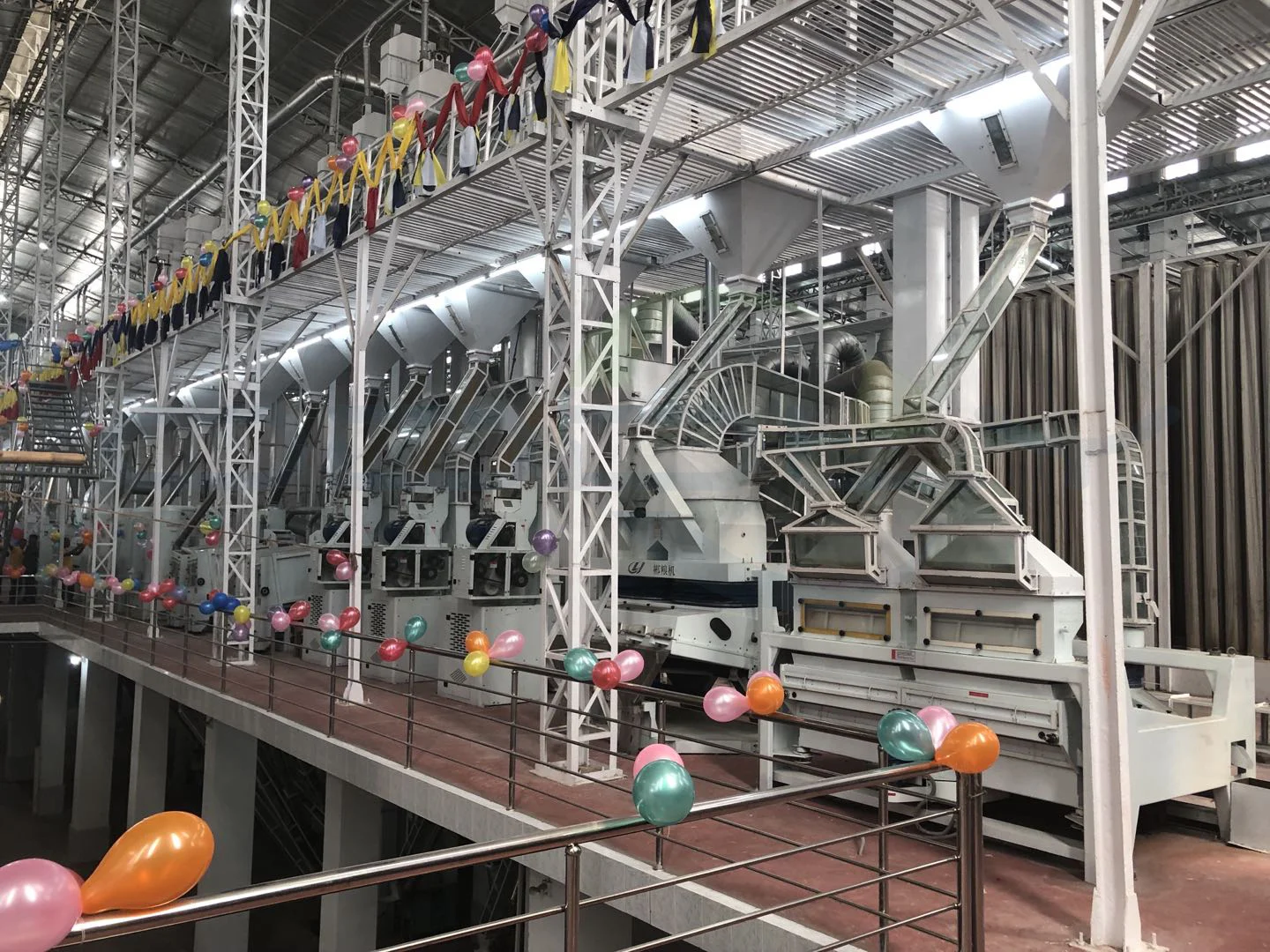
A rice polisher machine does not operate in isolation. Its performance depends on upstream whitening quality and downstream grading accuracy. When integrated into a complete rice milling production system, synchronization becomes essential.
Polishing parameters must align with the degree of bran removal achieved earlier. Over-polishing cannot compensate for uneven whitening, and under-polishing exposes defects. Therefore, system-level coordination between machines determines final output consistency.
Manufacturers supplying both rice polishing machines and complete milling equipment can optimize this integration more effectively. Unified design philosophy reduces interface mismatch, improves material flow, and simplifies centralized control.
Balancing Throughput and Breakage Rate in Commercial Milling
One of the most persistent challenges in rice processing is balancing capacity with breakage control. High throughput increases mechanical stress, while conservative operation limits productivity.
Modern rice polisher machines address this dilemma through refined force distribution and moisture-assisted polishing. Lower breakage rates are achieved not by reducing output, but by controlling the way force is applied to each grain.
In commercial terms, this balance translates into higher whole rice recovery and improved profit margins. Reduced broken rice also enhances brand positioning in markets where visual quality strongly influences consumer choice.
Selecting the Right Rice Polisher Machine for Long-Term Value
Equipment selection should focus on long-term operational logic rather than short-term cost. Key considerations include adaptability to different rice varieties, stability under continuous operation, and compatibility with existing milling lines.
A rice polisher machine with flexible control systems and robust structural design offers better resilience to raw material variability. This is especially important for mills sourcing paddy from multiple regions or seasons.
ODDLY’s rice polishing solutions are positioned to support these requirements, offering multiple machine types designed for durability, low breakage, and system integration.
Future Trends in Rice Polishing Technology
As rice markets evolve, polishing technology continues to shift toward precision and sustainability. Energy efficiency, water-saving atomization, and intelligent control systems are becoming standard expectations rather than optional upgrades.
The rice polisher machine is no longer just a finishing tool. It is a quality control instrument embedded within a data-driven milling process. Future development will likely focus on smarter sensors, predictive maintenance, and even tighter integration with grading and packaging systems.
www.oddlyricemill.com
ODDLY