Power plant valves are essential to controlling steam, feedwater, cooling water, fuel, and other process fluids throughout power generation systems. Their performance directly affects flow regulation, pressure containment, equipment protection, and plant availability. Selecting the right valve requires more than matching nominal pipe size and pressure rating. Operating temperature, pressure fluctuations, fluid characteristics, leakage requirements, cycling frequency, and maintenance access must all be considered to ensure reliable service under demanding plant conditions.
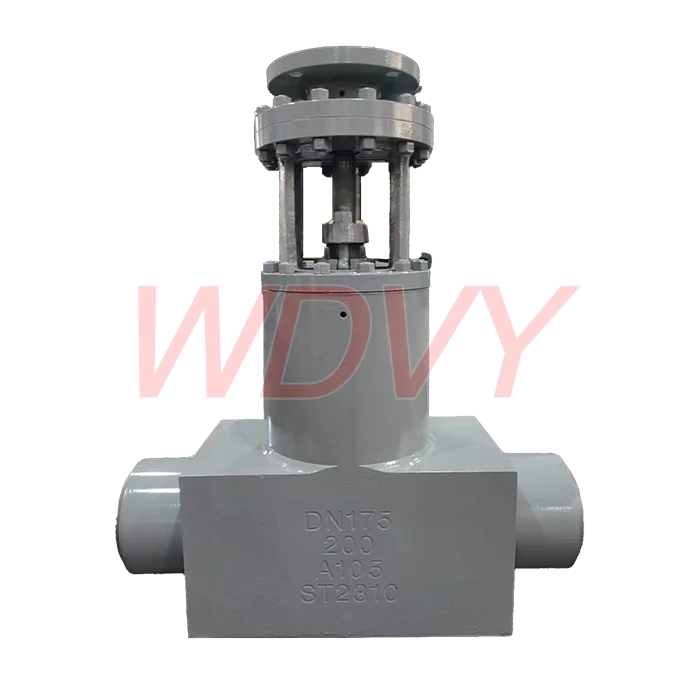
A valve designed for a cooling-water line may not be suitable for high-pressure steam isolation, even if both valves share the same nominal diameter. Steam service can expose valve bodies, seats, stems, and packing to elevated temperatures and thermal cycling, while cooling-water applications may prioritize corrosion resistance, low pressure loss, and long-term sealing performance. Understanding these differences helps prevent premature wear, leakage, unplanned shutdowns, and costly maintenance.
The Role of Power Plant Valves in Different Systems
Power plants use multiple valve types because each process system has different control and isolation requirements. Gate valves, globe valves, check valves, ball valves, and strainers perform distinct functions, and selecting among them depends on the operating conditions rather than on a general preference for one design.
In steam systems, valves must maintain pressure containment and sealing performance under elevated temperatures and repeated thermal changes. Main steam and auxiliary steam lines may require valves designed for high-pressure, high-temperature service, with body materials and pressure-temperature ratings appropriate to the specified operating envelope. Thermal expansion, pressure transients, and the potential consequences of leakage make material selection and installation particularly important.
Feedwater systems operate under pressure conditions that can place substantial demands on valve bodies, seats, and internal components. Isolation valves support equipment maintenance, while check valves help prevent reverse flow that could damage pumps or disrupt system operation. In applications involving frequent changes in flow or pressure, the valve's operating characteristics and resistance to wear must be evaluated alongside its pressure rating.
Cooling-water and auxiliary-water systems generally have different priorities. Depending on water chemistry and the installation environment, corrosion resistance, resistance to erosion, flow capacity, and ease of maintenance may be decisive. A valve that performs well in a clean-water circuit may experience accelerated degradation in water containing suspended solids or in a system exposed to corrosive conditions.
Fuel handling, chemical dosing, drainage, and other auxiliary services introduce further requirements. The valve materials, seals, and operating mechanism must be compatible with the specific fluid, temperature, pressure, and safety requirements. Consequently, power plant valves should be specified according to their exact service conditions and intended function within the plant.
Choosing the Right Valve Type for Power Generation
Gate valves for isolation
Gate valves are commonly used where a pipeline needs reliable on-off isolation and the valve is expected to operate primarily in fully open or fully closed positions. When fully open, a suitable gate valve can provide a relatively unobstructed flow path with limited flow resistance compared with many throttling-oriented designs.
This makes gate valves useful in various steam, water, and utility systems, subject to the applicable pressure, temperature, and material requirements. Large-diameter gate valves can also be important in pipelines where the flow passage and overall pressure loss influence system performance.
However, gate valves are generally not the preferred choice for sustained throttling. Operating a gate valve partially open can expose internal components to high-velocity flow, vibration, erosion, and unstable loading. If the application requires continuous flow regulation, a valve designed for control duty should be evaluated instead.
Globe valves for regulation and control
Globe valves are often selected when flow adjustment is required. Their internal geometry allows flow to be regulated through changes in the position of the disc relative to the seat, although the pressure drop may be higher than that of a comparable full-bore isolation valve.
In power generation systems, globe valves can be appropriate for applications that require controlled flow or frequent adjustments, provided the valve is correctly sized for the expected operating range. Oversizing can make precise control more difficult, while undersizing may result in excessive pressure loss or insufficient flow capacity.
The selection process should consider the expected flow rate, upstream and downstream pressures, fluid temperature, and potential for cavitation or erosion where relevant. Valve trim, seat design, actuator requirements, and control-system compatibility may also affect performance.
Check valves for reverse-flow prevention
Check valves permit flow in the intended direction and close when flow reverses or when the pressure conditions trigger closure. They are commonly used in pump discharge lines and other circuits where reverse flow could damage equipment or compromise system operation.
Different check-valve designs respond differently to changing flow conditions. Swing check valves rely on a moving disc, while other designs may use a spring-assisted disc, lift mechanism, or alternative closure arrangement. The correct design depends on flow velocity, installation orientation, pressure drop, transient behavior, and the required closing response.
A check valve should not be selected on nominal size alone. Poor matching between the valve and the system can contribute to unstable operation, disc wear, or water hammer. Where pump starts and stops create significant transients, the dynamic behavior of the complete pipeline system must be considered.
Ball valves for rapid shutoff
Ball valves use a rotating ball with a bore to open or block flow. Their quarter-turn operation can provide rapid shutoff and straightforward actuation, making them useful in many auxiliary and utility services. Depending on the design, they may also offer compact installation and low flow resistance when fully open.
Not every ball valve is suitable for every power plant application. Seat materials, body construction, pressure-temperature ratings, fire-safe requirements, and fluid compatibility must be confirmed for the intended service. Severe temperature conditions or abrasive media may require a design specifically engineered for those demands.
Critical Selection Factors: Pressure, Temperature, and Materials
Pressure-temperature ratings
Pressure class and nominal diameter are fundamental specifications, but they do not independently establish suitability for all operating conditions. The allowable working pressure of a valve may decrease as temperature rises, depending on the body material and applicable design standard. The valve must be rated for the maximum credible operating conditions, not just the normal pressure and temperature recorded during routine operation.
Engineers should review normal operating conditions, startup and shutdown states, pressure surges, thermal transients, and other foreseeable scenarios. Where the system has multiple operating modes, the most demanding applicable condition should be considered in accordance with the governing design code and project specification.
For high-energy steam and feedwater service, material strength at temperature, pressure-boundary integrity, and connection design are particularly important. The valve's rating should be verified using the applicable standard and the manufacturer's documented pressure-temperature data.
Body, trim, and sealing materials
Valve materials must be matched to the fluid and service environment. Carbon steel may be suitable for many general industrial and power plant services within its specified operating limits. Alloy steels may be required for particular elevated-temperature applications, while stainless steels can provide improved corrosion resistance in suitable environments.
Material selection should not be based on the valve body alone. The disc or ball, stem, seat, packing, gaskets, and other wetted components may experience different combinations of pressure, temperature, friction, and chemical exposure. A corrosion-resistant body does not guarantee long-term sealing if the trim or seat is incompatible with the fluid.
Water chemistry can also influence valve life. Dissolved oxygen, chlorides, suspended particles, and treatment chemicals may affect corrosion or erosion behavior, depending on the material and operating conditions. In cooling-water and auxiliary systems, the expected water composition and maintenance regime should therefore be part of the specification.
Leakage and sealing performance
Leakage requirements depend on the valve's function and location. Isolation valves may need to achieve a specified seat-leakage limit, while control valves must balance sealing performance with their intended regulating duty. The applicable acceptance criteria should be defined in the project specification and verified through the required inspection and testing procedures.
For high-temperature applications, packing and gasket materials must remain suitable across the operating temperature range and expected thermal cycles. Repeated temperature changes can affect sealing loads and material behavior, while incorrect installation or maintenance can lead to leakage even when the valve design is appropriate.
Where isolation is safety-critical, the valve's required leakage class, test method, and acceptance criteria should be specified clearly. Terms such as “tight shutoff” should not replace measurable requirements.
Manufacturing Quality and Testing Matter
The reliability of power plant valves depends on manufacturing quality as much as on the initial design. Body casting or forging quality, machining accuracy, seat geometry, stem alignment, surface finish, and assembly procedures can all influence service performance. Defects in pressure-retaining components or inconsistent machining can increase the risk of leakage, operating torque variation, or premature wear.
Quality assurance should cover the manufacturing stages relevant to the valve design. Depending on the product and applicable specification, this may include material verification, dimensional inspection, non-destructive examination, pressure testing, seat-leakage testing, and functional checks. The exact test requirements should be established by the governing standards, purchase specification, and service classification rather than assumed to be identical for every valve.
Common industrial standards may include applicable requirements from ASME, API, ISO, or other recognized organizations, depending on the valve type, market, and project. For example, a standard covering valve design or pressure testing may address different aspects from one governing material selection or end-to-end dimensions. Compliance claims should therefore identify the relevant standard and edition where required.
Documentation is also important for maintenance and traceability. Material certificates, inspection reports, test records, and identification markings help verify that the delivered valve matches the specified configuration. For replacement valves, dimensional compatibility, pressure class, end connections, face-to-face dimensions, and actuator interfaces should be checked before installation.
Maintenance, Lifecycle Cost, and Plant Availability
The purchase price of a valve represents only part of its lifecycle cost. Maintenance labor, spare parts, downtime, leakage-related losses, and the consequences of an unexpected failure can have a greater effect on the total cost of ownership. A lower-cost valve may be economical for a low-risk utility application but unsuitable for a critical steam line where failure could force a shutdown.
Maintenance requirements differ by valve type and operating duty. Gate valves may require attention to stem packing, seat condition, and operating mechanisms. Globe valves used for regulation may experience wear associated with throttling and repeated movement. Check valves require attention to closure behavior, disc or spring condition where applicable, and evidence of reverse-flow leakage. Ball valves may require inspection of seats, seals, and actuation components according to service conditions.
Accessibility should be considered during system design. A valve that is difficult to inspect or remove may increase maintenance time, especially when located in a crowded pipe rack or near high-temperature equipment. For critical applications, the availability of suitable spare parts, repair support, and technical documentation can be as important as the initial delivery schedule.
Selecting a Power Plant Valve Manufacturer
A suitable manufacturer should be able to match valve design and materials to the specified service conditions, provide clear technical documentation, and maintain consistent production quality. Experience across multiple valve types can be useful when a project includes different isolation, control, and reverse-flow prevention requirements.
Zhejiang Wandong Valve Co., Ltd. is an industrial valve manufacturer with a vertically integrated production structure comprising four specialized workshops: a ball valve workshop, a large-diameter gate valve workshop, a special stainless steel valve workshop, and a multifunctional workshop producing gate valves, globe valves, check valves, Y-type strainers, and related products. This manufacturing structure supports a range of valve categories for different industrial applications.
When evaluating a supplier for a power generation project, the key is to confirm that the proposed valve meets the actual technical specification. Relevant checks include pressure-temperature ratings, body and trim materials, applicable design and testing standards, connection dimensions, leakage criteria, required documentation, and delivery requirements. For demanding services, technical review should take place before ordering, and any proposed deviation from the specification should be formally assessed.
Conclusion
Power plant valves are essential to safe flow control, equipment protection, and reliable power generation. Choosing the right valve requires a clear understanding of its function, operating pressure and temperature, fluid characteristics, sealing requirements, and maintenance conditions. Gate valves are commonly used for isolation, globe valves can support flow regulation, check valves help prevent reverse flow, and ball valves provide rapid shutoff in suitable applications.
The most reliable selection combines appropriate valve design with compatible materials, verified pressure-temperature ratings, documented testing, and consistent manufacturing quality. By defining service conditions before selecting a product and confirming compliance with the relevant project requirements, power plant operators can reduce avoidable failures, control lifecycle costs, and support long-term plant availability.
www.wdfmvalves.com
Zhejiang Wandong Valve Co., Ltd.