Why PET Preform Production Lines Are Under Pressure to Perform
Producers of water and carbonated beverage packaging face a consistent set of operational constraints: long equipment lead times, high per-unit production costs, slow molding cycles, mold surface defects, unstable multi-cavity consistency, and high energy consumption. For companies evaluating a PET preform production line, the real question is not simply which machine to buy, but which supplier can deliver a fully integrated, pre-commissioned system that performs predictably from day one. This is the specific gap that DKM Machinery and SINO MOULD CO., LTD, operating under the DKM and SINO MOULD (SINOMOULD) brands, have built their joint offering around.
What a Complete PET Preform Production Line Actually Requires
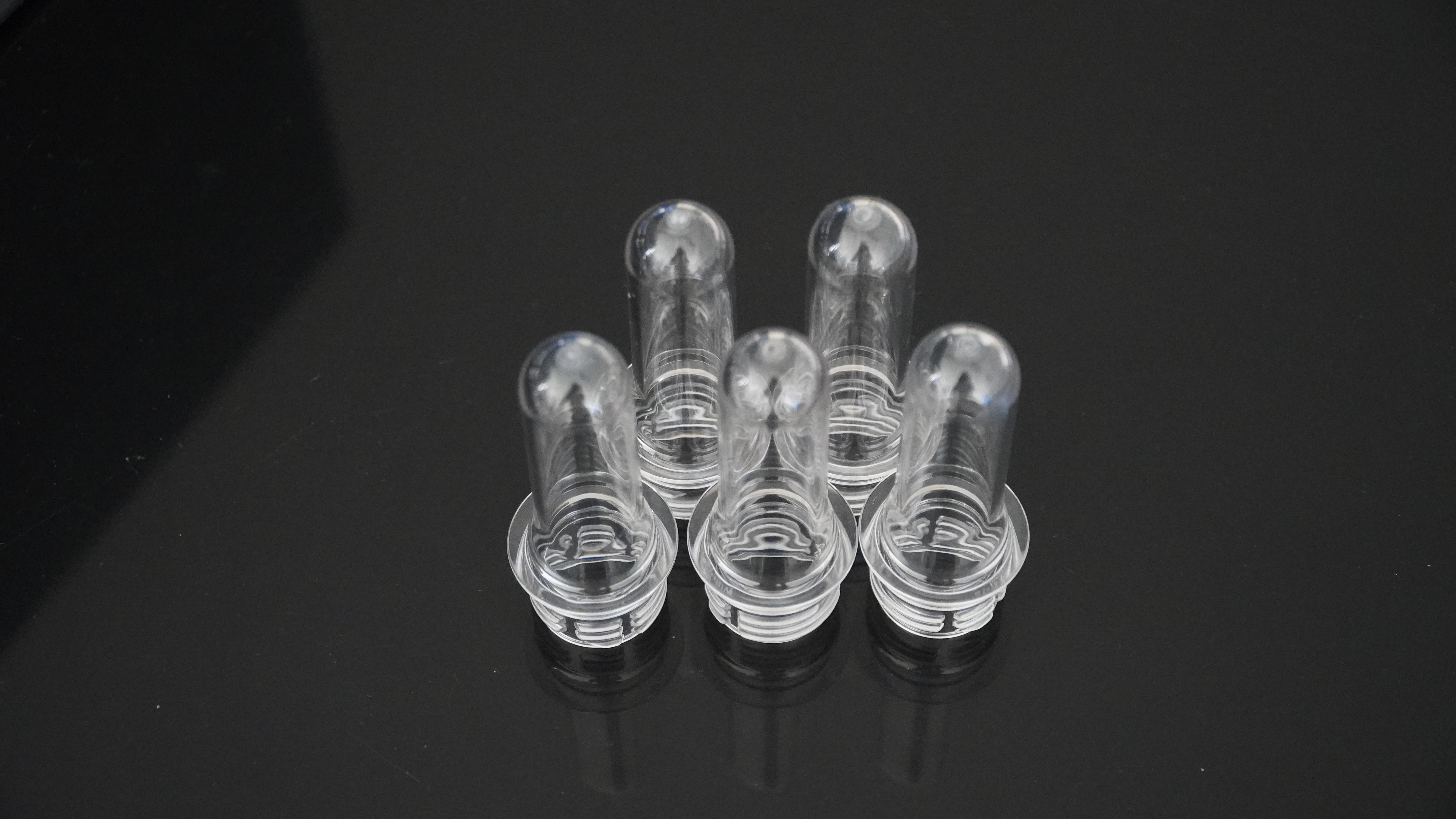
A PET preform production line is not a single machine. It is a system composed of three interdependent elements: the preform mold, the dedicated injection molding machine, and the take-out robot. DKM and SINO MOULD position their PET Preform Production Line as a high-speed, complete solution integrating the preform mold, the DKM-PET III injection molding machine, and a take-out robot, engineered so that all three components are matched as original equipment and jointly trial-run before shipment. This joint commissioning approach directly addresses a recurring pain point in the industry: equipment arriving in pieces that still require extensive on-site integration before production can begin.
The DKM-PET III Machine Platform
At the core of the line sits the DKM-PET III Preform-Dedicated Injection Molding Machine, offered in four tonnages: DKM-350 PET III, DKM-450 PET III, DKM-550 PET III, and DKM-650 PET III. Each model is matched to a specific cavity configuration — the DKM-350 PET III pairs with 48-cavity lines, the DKM-450 PET III with 72-cavity lines, the DKM-550 PET III with 96-cavity and 144/168-cavity molds, and the DKM-650 PET III with 144-cavity lines. This pairing logic matters because it means buyers are not left to guess which machine tonnage suits their mold cavitation; the configuration has already been standardized.
Three technical attributes distinguish this platform. First, a standard electric accumulator combined with synchronized plasticizing and post-mold cooling technology shortens molding cycles. Second, nano far-infrared heating rings reduce production energy consumption. Third, an optimized machine frame structure delivers injection repeat accuracy of ≤0.5‰, a figure directly relevant to multi-cavity consistency across high-cavitation molds. Safety stock is maintained for 350T, 450T, 550T, and 650T models, enabling immediate delivery rather than build-to-order lead times for standard configurations.
Cycle Time Performance Across Cavitation Levels
Cycle time is typically the first metric buyers ask about, and the documented results across configurations are specific rather than generalized. A 144-cavity preform mold running on the DKM-650 PET III achieves a 12.8-second cycle time producing an 11g, 29mm neck preform. A 168-cavity mold on the DKM-550 PET III, with an 11g product weight and BPF 26/21 neck, runs an 11-second cycle. A 72-cavity standard line paired with the PET 450 machine achieves a 12-second cycle for a 12g, 28mm preform, and a 48-cavity standard line with the PET 350 machine achieves a 16-second cycle for the same 12g, 28mm preform. Separately, a 26g preform has reached a 12-second cycle time, reflecting continued iteration in mold component tolerance, now measured at ±0.005mm precision.
Mold Engineering Behind the Numbers
The preform molds themselves are manufactured by SINO MOULD and its subsidiary SINO-PK, with flexible cavitation from 8 to 168 cavities. Key components use Swedish S136 steel at HRC45-48, with the mold base built in DIN1.2311. Tolerances are held to 0.01mm for uniform wall thickness and concentricity, with ±0.005mm precision capability for the most demanding applications. Standard neck finishes include PCO 1810, PCO 1881, and 28mm necks, covering preform weights typically between 12g and 30g. For buyers with non-standard requirements — special neck finishes, unique bottle designs, or mixed-cavity configurations — custom molds are delivered in 5 to 7 weeks, while custom cold-half molds based on existing tooling reduce the investment required for new projects. Over 200 sets of standard PET preform molds have been delivered worldwide, and an intelligent standardized production workshop was scheduled for operational launch in October 2025.
Automation: Out-Mold Cooling and Pick Robots
Heavier preforms introduce a cooling challenge that standard mold cycles alone cannot solve without extending cycle time. DKM and SINO MOULD address this through Out-Mold Cooling & Pick Robots: preforms under 16g are cooled directly on the robot gripper during part removal, while preforms over 16g are combined with multi-station cooling units. Dual-station and three-station external cooling robots are matched specifically to 72-cavity and 48-cavity line configurations respectively, and take-out robot integration is standard for the 144-cavity configuration. This weight-based cooling strategy allows larger preforms to be produced without sacrificing overall cycle speed.
Delivery Speed as a Competitive Factor
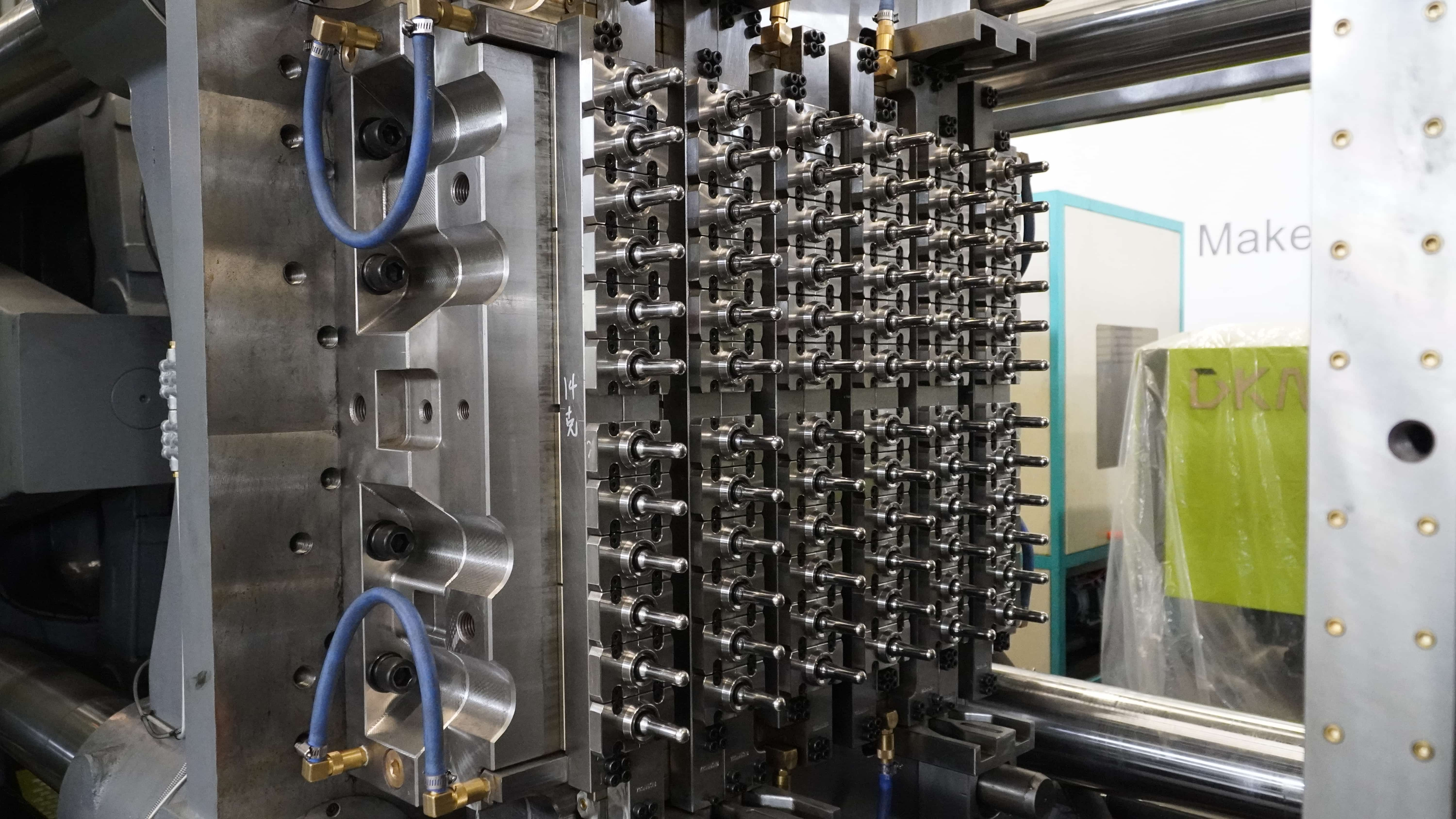
For standard configurations, 48/72-cavity production lines with standard 28/38mm neck finishes are delivered from order confirmation to qualified shipment within 14 days. This is made possible by standardized modular production, strategic inventory of critical components, and pre-factory acceptance testing conducted under simulated production conditions before shipment — meaning the line is validated before it ever leaves the facility. Custom, non-standard applications are delivered within 5 to 7 weeks. Warranty coverage extends to 3 years on PET preform molds, with free spare parts provided during the warranty period.
Verified Field Performance
Two 144-cavity PET preform production lines are currently in operation in international markets — one in Iraq and one in Iran — both running under normal production conditions. According to the customer record, acceptance test reports confirmed satisfactory performance, and payment was settled in full for both projects. Separately, a 72-cavity PET preform production line with an out-mold cooling system has produced a 13.5g, 28mm neck preform at a 12-second cycle time, with reported repeat orders from additional customers seeking to expand capacity.
Conclusion
For buyers evaluating a PET preform production line, the combination of matched machine-mold-robot engineering, documented cycle times across multiple cavitation levels, 14-day standard delivery, and pre-shipment acceptance testing represents a measurable answer to the industry’s core pain points of long lead times, cycle inefficiency, and inconsistent multi-cavity output. DKM Machinery and SINO MOULD present this not as a single product purchase, but as an engineered system — mold, machine, and automation — validated before it reaches the customer’s floor.
https://dkm.com/pet-preform-molding-machine/
DKM Machinery