Understanding the PET Preform Injection Molding Machine Market
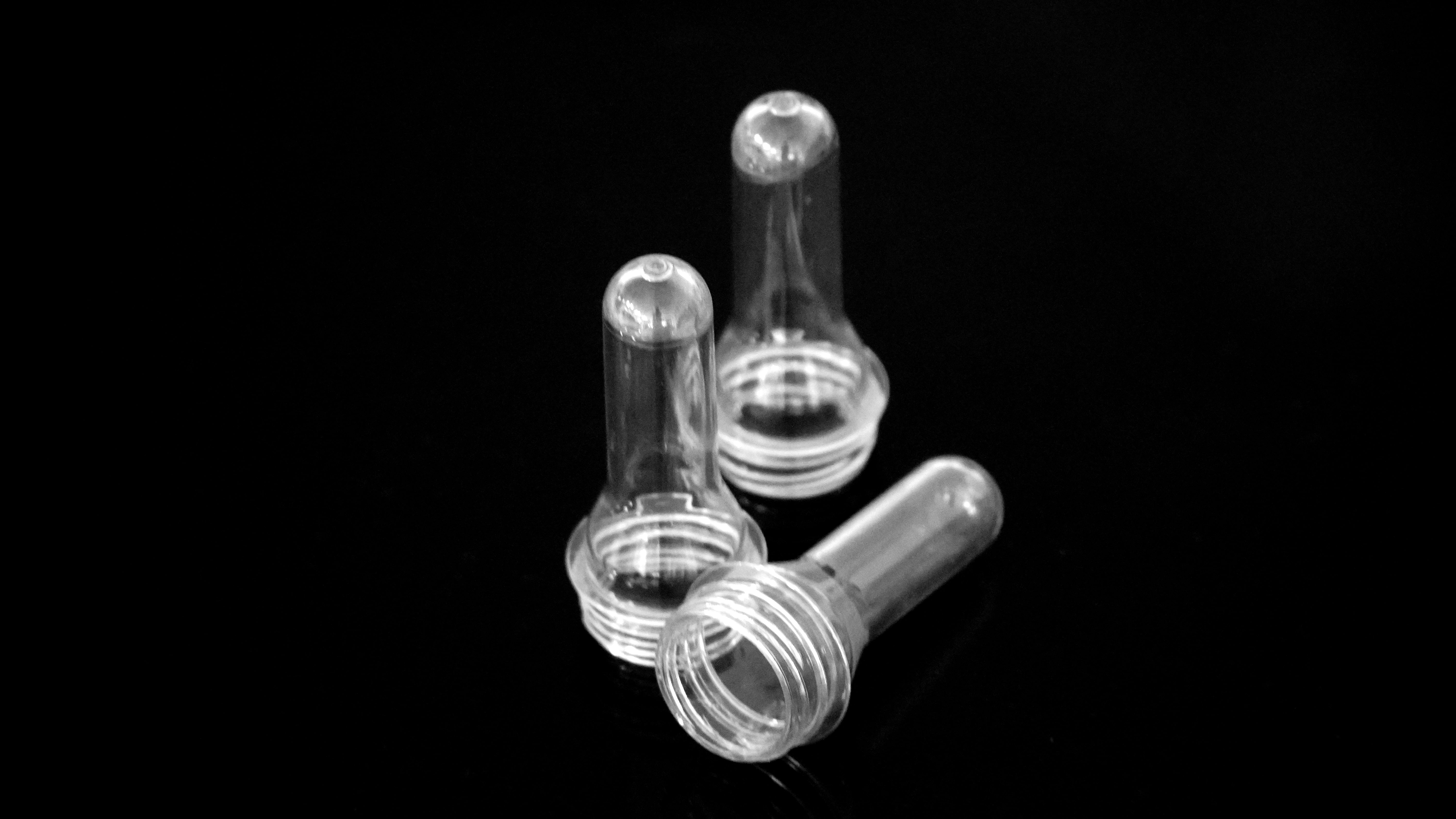
For water, carbonated beverage, and food packaging producers, the PET preform injection molding machine sits at the center of production economics. Cycle time, shot weight repeatability, cavity count, and delivery speed determine whether a bottling operation can meet market demand profitably. Buyers evaluating this equipment category typically weigh four factors: melting capacity for high-cavity molds, injection repeatability across cavities, total line delivery time, and after-sales warranty coverage. DKM MACHINERY CO., LTD. and its mold-making partner SINO MOULD CO., LTD. have built a specialized portfolio addressing each of these requirements through the DKM-PET III preform-dedicated machine family and matched PET preform production lines.
Why PET-Dedicated Machine Design Matters
A generic injection molding machine can produce PET preforms, but producers running 48-, 72-, 96-, or 144-cavity molds need equipment engineered specifically for PET’s melting and injection characteristics. The PET Series Plastic Injection Molding Machine is a hydraulic toggle platform ranging from 250 to 650 tons, built with a PET-dedicated barrel and injection design that supports consistent high-cavity preform production. This specialization matters because PET preform producers require large melting capacity and high-efficiency injection to keep pace with high-cavity molds without sacrificing shot consistency.
Building on this platform, the DKM-PET III Preform-Dedicated Injection Molding Machine line—comprising DKM-350 PET III, DKM-450 PET III, DKM-550 PET III, and DKM-650 PET III models—targets the specific pain point of high-cavity PET preform production: the need for short cycle times, low energy use, and high injection repeat accuracy for multi-cavity consistency. The series achieves this through a standard electric accumulator with synchronized plasticizing and post-mold cooling technology that shortens molding cycles, nano far-infrared heating rings that reduce production energy consumption, and an optimized machine frame structure delivering injection repeat accuracy of ≤0.5‰—a tolerance level that supports stable output across dozens or even hundreds of cavities simultaneously.
Matching Machine Tonnage to Cavity Count
One of the more practical questions buyers face is which machine size fits which mold configuration. DKM’s PET III lineup is structured around this pairing logic:
- DKM-350 PET III pairs with 48-cavity lines
- DKM-450 PET III pairs with 72-cavity lines
- DKM-550 PET III pairs with 96-cavity molds, and also with 144/168-cavity preform molds in specific configurations
- DKM-650 PET III pairs with 144-cavity production lines
This tonnage-to-cavity mapping is not theoretical. Documented results show a 144-cavity preform mold running on a DKM-650 PET III achieving a 12.8-second cycle time for an 11g, 29mm neck preform. A 168-cavity mold on the DKM-550 PET III, producing an 11g product with a BPF 26/21 neck, reaches an 11-second cycle. On the smaller end, a 72-cavity standard line with the PET 450 machine achieves a 12-second cycle for a 12g, 28mm preform, while a 48-cavity line with the PET 350 machine runs a 16-second cycle for the same preform weight. These figures illustrate how shot weight repeatability—defined as the consistency of injected material weight across repeated cycles—and cavity-matched tonnage work together to keep multi-cavity output uniform.
From Machine to Complete Production Line
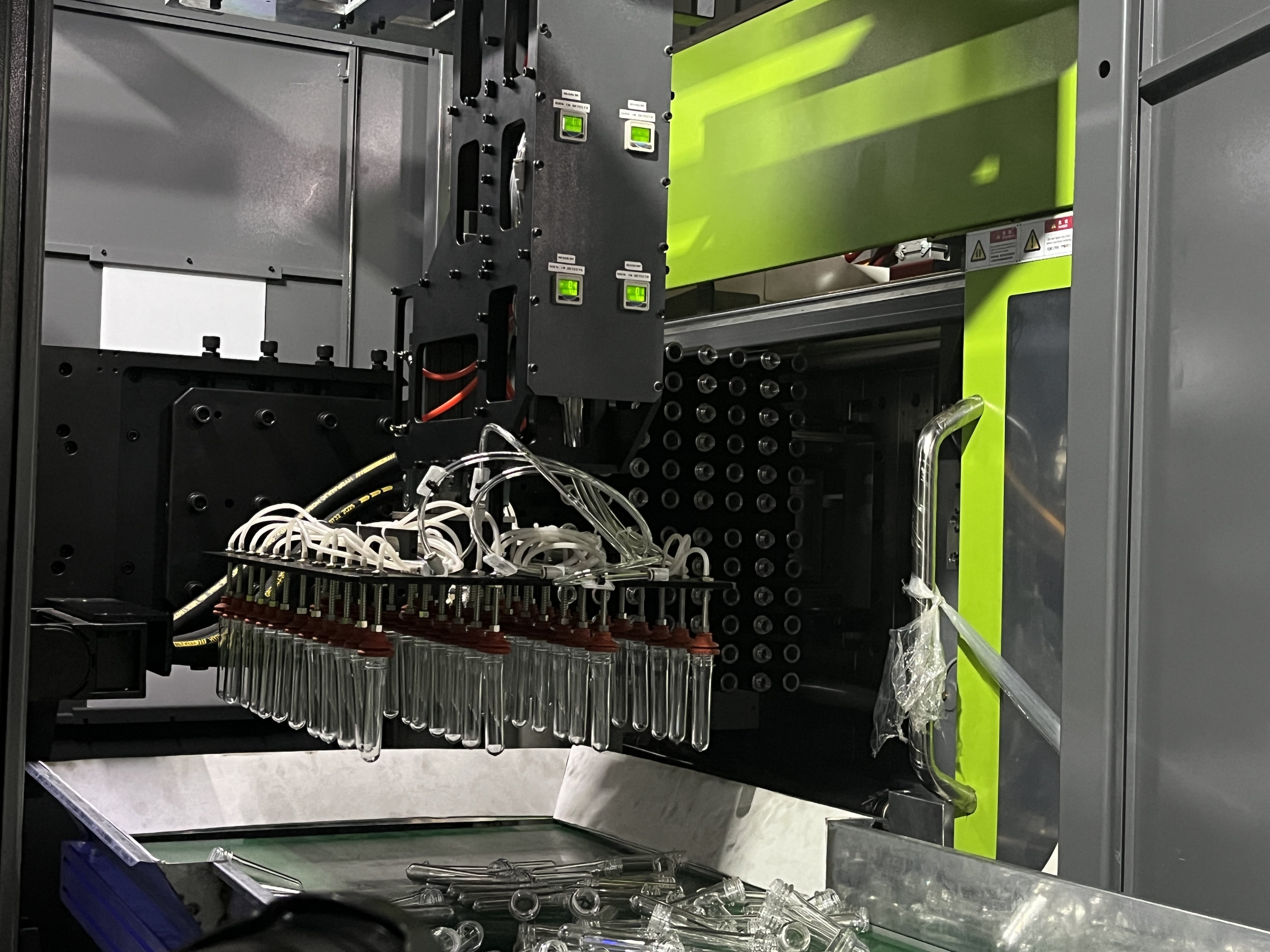
Many buyers evaluating a PET preform injection molding machine are not shopping for a standalone unit—they need a functioning production line. This is where DKM’s PET Preform Production Line offering integrates the preform mold, the DKM-PET III injection molding machine, and an out-mold take-out robot into a single pre-commissioned system. The line is organized into three standard configurations: a PET 650 machine with 144 cavities and a take-out robot producing an 11g/29mm preform at a 12.8-second cycle; a PET 450 machine with 72 cavities and a dual-station external cooling robot producing a 12g/28mm preform at a 12-second cycle; and a PET 350 machine with 48 cavities and a three-station external cooling robot producing a 12g/28mm preform at a 16-second cycle.
A notable engineering detail is the Out-Mold Cooling & Pick Robot system, which handles preforms differently depending on weight. Preforms under 16g are cooled directly on the robot gripper during part removal, while preforms over 16g are combined with multi-station cooling units—a distinction that allows faster overall molding cycles for larger preforms without extending the mold’s own cycle time.
Mold Quality Behind the Machine
A preform injection molding machine is only as good as the mold it runs. PET Bottle Preform Molds, manufactured by SINO MOULD and its subsidiary SINO-PK, range from 8 to 168 cavities and use key components in Swedish S136 steel (HRC45-48) with a mold base in DIN1.2311. Tolerances down to 0.01mm support uniform wall thickness and concentricity, with a precision capability of ±0.005mm. Standard neck finishes such as PCO 1810/PCO 1881 and 28mm necks cover preform weights typically between 12g and 30g. For producers who need speed, standard 48/72-cavity molds are delivered in 1 to 2 weeks, with a 48/72/96-cavity single-week delivery program also available; custom non-standard preform molds with special neck finishes or mixed-cavity configurations take 5 to 7 weeks.
Delivery Speed and Warranty Assurance
Equipment lead time is frequently cited as an industry pain point for injection molding producers, and DKM addresses it directly: standard 48/72-cavity production lines with standard 28/38mm neck finishes move from order confirmation to qualified shipment in 14 days, while custom non-standard applications are delivered in 5 to 7 weeks. Every line undergoes pre-factory acceptance testing under simulated production conditions before shipment, and DKM maintains safety stock of PET preform-dedicated machines across the 350T, 450T, 550T, and 650T models to secure the supply chain for critical components.
Warranty coverage reinforces this delivery commitment: PET preform molds carry a 3-year warranty with free spare parts during the warranty period, and the broader group offers professional engineering response within 24 hours as part of its after-sales support structure.
What the Data Suggests for Buyers
Taken together, the documented cycle times—12 seconds for a 26g preform, 12.8 seconds for a 144-cavity 11g/29mm preform, and 11 seconds for a 168-cavity 11g preform—point to a consistent engineering pattern: pairing PET-dedicated barrel and injection technology with cavity-matched tonnage and synchronized plasticizing. For producers evaluating a PET preform injection molding machine purchase, the practical questions worth asking any supplier are the same ones DKM’s published data addresses directly: What is the injection repeat accuracy at full cavity count? What is the actual delivery timeline from order to qualified shipment? And what warranty and spare-parts support applies once the line is running in the field. DKM Machinery and SINO MOULD’s published specifications and delivery figures offer a transparent basis for producers to make that comparison.
https://dkm.com/pet-preform-molding-machine/
DKM Machinery