As industrial equipment, portable power systems, AGVs, emergency backup units, and energy storage products continue to demand higher reliability, battery selection has become more than just comparing capacity. Engineers and system designers increasingly focus on cycle life, charging efficiency, thermal stability, consistency, and long-term total ownership cost.
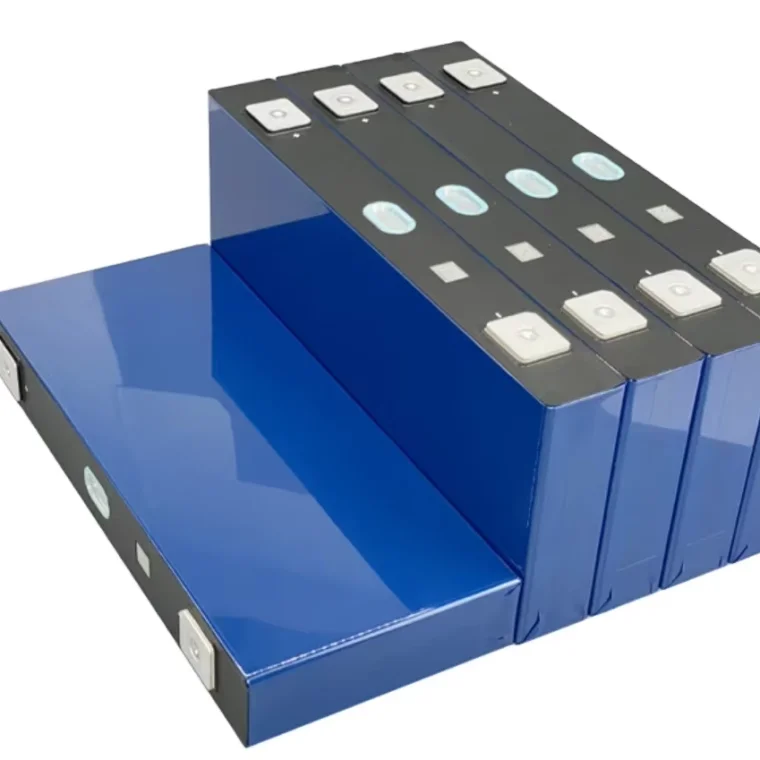
Among various lithium battery technologies, the LiFePO4 battery cell 3.2 V 20Ah has become one of the most practical solutions for medium-capacity battery packs. Its combination of safety, long service life, and stable discharge performance makes it suitable for applications that require dependable operation over thousands of charging cycles.
This article explains what makes a 3.2V 20Ah LiFePO4 cell valuable, which technical specifications deserve attention, and how manufacturers can select the right battery supplier for long-term projects.
Why Choose a LiFePO4 Battery Cell 3.2 V 20Ah?
The nominal voltage of a LiFePO4 battery cell is approximately 3.2V, making it easy to build battery systems in various voltage configurations. A 20Ah capacity provides an excellent balance between energy density, current capability, and thermal management.
Compared with traditional lead-acid batteries, a LiFePO4 battery cell offers several technical advantages:
-
Much longer cycle life
-
Lower maintenance requirements
-
Faster charging capability
-
Higher usable capacity
-
Lower self-discharge
-
Better thermal stability
-
Reduced lifecycle cost
Compared with ternary lithium batteries (NCM/NCA), LiFePO4 chemistry sacrifices some energy density but delivers significantly higher safety and longer service life, which is often more important for industrial applications.
For equipment expected to operate continuously for years, these characteristics directly improve operational reliability.
Core Technical Parameters That Matter
When evaluating a LiFePO4 battery cell 3.2 V 20Ah, capacity alone tells only part of the story. Professional buyers typically compare the following specifications.
Nominal Voltage
-
Nominal voltage: 3.2V
-
Charging voltage: approximately 3.65V
-
Recommended discharge cut-off: around 2.5V
The relatively flat discharge curve allows equipment to maintain stable voltage output for most of the discharge cycle, helping improve system efficiency.
Rated Capacity
A high-quality 20Ah cell should deliver its rated capacity under standard testing conditions.
Consistent capacity between cells is especially important when multiple cells are connected in series or parallel. Poor consistency often leads to premature pack imbalance and reduced usable energy.
Internal Resistance
Low internal resistance contributes to:
-
Reduced heat generation
-
Higher charging efficiency
-
Better high-current discharge performance
-
Lower voltage drop under load
Industrial battery manufacturers usually perform strict internal resistance matching before pack assembly to improve overall system consistency.
Cycle Life
One of the biggest advantages of LiFePO4 technology is longevity.
High-quality LiFePO4 battery cell 3.2 V 20Ah products commonly achieve:
-
More than 4,000 cycles at 80% Depth of Discharge (DoD)
-
Premium cells may exceed 6,000 cycles under optimized operating conditions
For systems operating daily, this can translate into well over ten years of practical service life.
Charge and Discharge Rate
Many industrial applications require rapid charging or high-current discharge.
Typical specifications include:
-
Standard charging: 0.5C
-
Maximum continuous charging: 1C
-
Continuous discharge: 1C–2C
-
Peak discharge capability depending on cell design
Matching the discharge capability with actual equipment requirements helps avoid excessive heat generation and performance degradation.
Safety Is More Than a Specification
Industrial battery systems often operate in demanding environments where safety is a top priority.
LiFePO4 chemistry offers excellent thermal stability because its cathode material is structurally more stable than many other lithium chemistries.
Practical safety benefits include:
-
Reduced risk of thermal runaway
-
Excellent overcharge tolerance
-
Stable performance under high temperatures
-
Better resistance to mechanical abuse
-
Improved storage safety
While every battery system should still include a reliable Battery Management System (BMS), LiFePO4 cells inherently provide an additional layer of protection.
Typical Applications of LiFePO4 Battery Cell 3.2 V 20Ah
The versatility of this cell size allows it to be integrated into a wide range of industrial products.
Portable Energy Storage
Portable power stations require batteries capable of frequent charging while maintaining stable output.
The long cycle life of LiFePO4 cells significantly reduces replacement frequency compared with conventional lithium batteries.
Solar Energy Storage
Small residential and commercial solar storage systems frequently use modular battery packs built from multiple 3.2V cells.
Their excellent cycle durability matches the daily charge-discharge profile of photovoltaic systems.
Medical Equipment
Portable diagnostic devices, monitoring equipment, and emergency medical systems benefit from stable voltage output and enhanced safety.
Reliable battery performance helps maintain uninterrupted equipment operation.
AGV and Mobile Robotics
Automated Guided Vehicles (AGVs) and warehouse robots demand batteries capable of repeated rapid charging throughout daily operations.
Low internal resistance and consistent discharge characteristics help improve equipment uptime.
Industrial Instruments
Industrial testing equipment, communication devices, security systems, UPS solutions, and intelligent monitoring platforms all benefit from dependable long-life battery technology.
What Determines Cell Quality?
Not all LiFePO4 cells deliver identical performance.
Professional buyers should evaluate manufacturing quality from several perspectives.
Cell Consistency
Consistency directly affects battery pack performance.
Manufacturers with automated production lines perform grading based on:
-
Capacity
-
Voltage
-
Internal resistance
-
Self-discharge characteristics
Well-matched cells significantly improve pack lifespan.
Manufacturing Process
Advanced manufacturing techniques improve:
-
Electrode coating uniformity
-
Electrolyte distribution
-
Welding precision
-
Moisture control
-
Formation and aging processes
These factors influence long-term reliability more than advertised capacity alone.
Quality Control
Industrial-grade battery manufacturers typically conduct multiple inspections before shipment, including: