As manufacturing and scientific research continue to move toward nanometer-level precision, vibration has become one of the most significant factors limiting equipment performance. External disturbances from building structures, nearby machinery, human activity, HVAC systems, and even road traffic can reduce positioning accuracy, degrade measurement quality, and lower production yield.
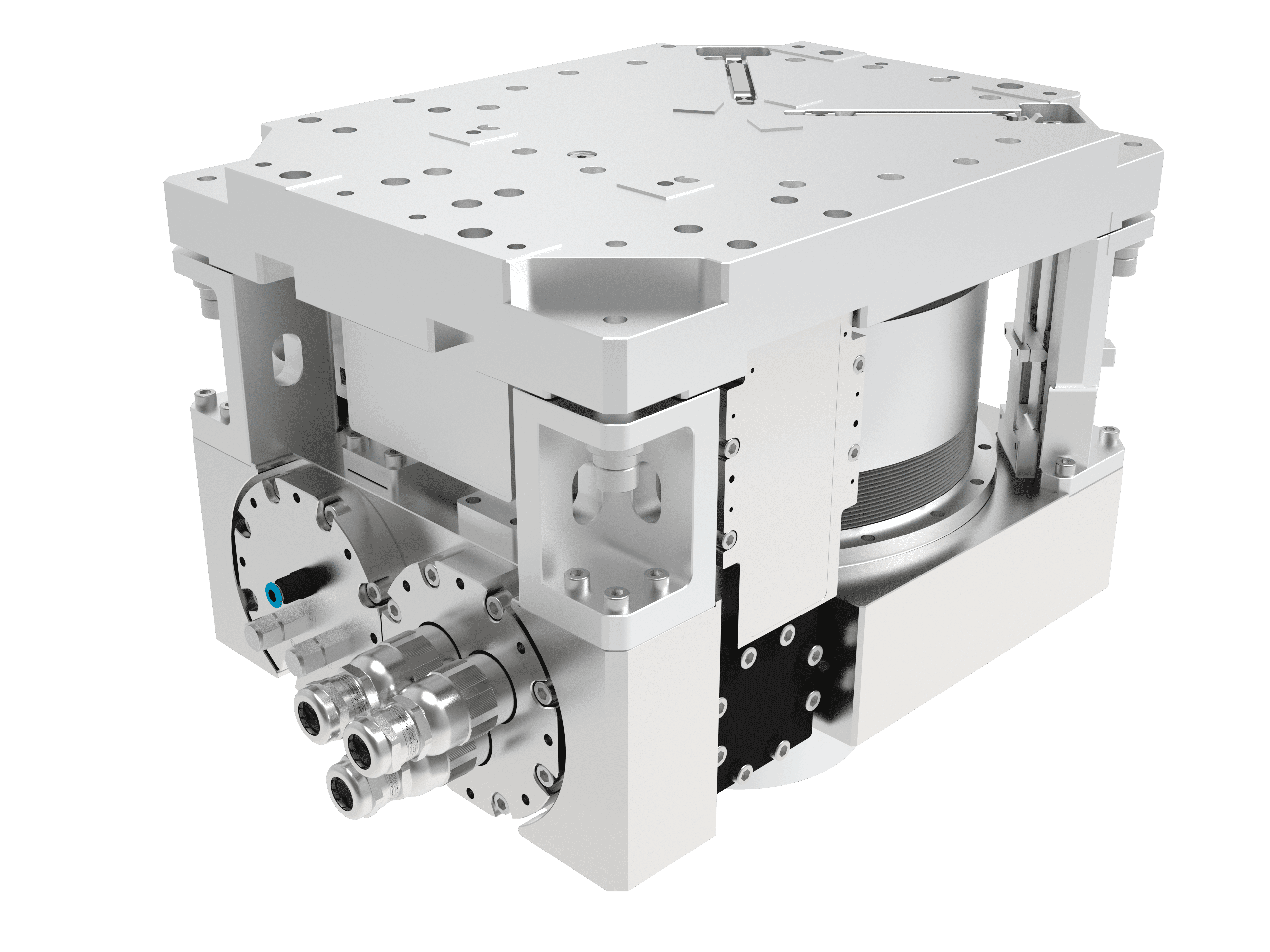
Traditional passive isolation systems can attenuate high-frequency vibrations, but they often struggle to suppress low-frequency disturbances or dynamically changing vibration sources. This is why high-performance active vibration isolation has become an essential technology for semiconductor manufacturing, precision optics, metrology, microscopy, aerospace, photonics, and advanced laboratory applications.
By combining intelligent sensing, real-time control algorithms, and precision actuators, high-performance active vibration isolation systems continuously detect and counteract unwanted motion before it affects sensitive equipment. This article explains how active isolation works, its technical advantages, and the critical factors to consider when selecting a solution.
Why Vibration Control Matters More Than Ever
Modern precision equipment operates at increasingly tighter tolerances.
For example, semiconductor lithography, laser interferometry, coordinate measuring machines, electron microscopy, and ultra-precision machining all require exceptional mechanical stability. Even vibrations with amplitudes measured in micrometers—or, in some cases, nanometers—can introduce positioning errors, image distortion, or measurement uncertainty.
Typical vibration sources include:
-
Building floor resonance
-
Mechanical equipment
-
Pumps and compressors
-
Air conditioning systems
-
Elevators
-
Human movement
-
Road and rail traffic
-
Acoustic excitation
Without effective isolation, these disturbances directly reduce equipment performance and process consistency.
What Is High-Performance Active Vibration Isolation?
High-performance active vibration isolation is an intelligent vibration control technology that actively detects external disturbances and generates equal but opposite corrective forces to minimize platform motion.
Unlike passive isolation systems that rely solely on springs, rubber mounts, or pneumatic supports, active systems continuously monitor vibration in real time using highly sensitive sensors and digital control algorithms.
A typical system consists of:
-
High-resolution vibration sensors
-
Precision motion actuators
-
Digital motion controller
-
Feedback control software
-
Mechanical isolation platform
Together, these components create a closed-loop system capable of responding to changing environmental conditions within milliseconds.
How Active Isolation Works
The operating principle is based on real-time feedback control.
Sensitive accelerometers or geophones continuously measure vibration in multiple degrees of freedom. The collected signals are processed by a high-speed motion controller, which calculates the required compensation force.
Precision actuators then generate counteracting motion to cancel incoming vibrations before they reach the supported equipment.
This continuous correction process enables the isolation platform to maintain exceptional stability, even when external disturbances fluctuate over time.
Compared with passive isolation, active control offers significantly better performance in low-frequency vibration ranges where traditional systems are least effective.
Active vs. Passive Vibration Isolation
Choosing between passive and active isolation depends on the application's precision requirements.
Passive systems are generally effective at attenuating medium- and high-frequency vibrations above approximately 10 Hz. However, their performance decreases considerably at lower frequencies because passive components rely on mechanical resonance characteristics.
In contrast, high-performance active vibration isolation systems can effectively suppress vibrations starting at frequencies as low as 0.5–2 Hz, depending on system design.
Additional advantages include:
-
Faster vibration attenuation
-
Improved positioning accuracy
-
Stable performance under changing loads
-
Reduced settling time
-
Better repeatability
-
Adaptability to dynamic environments
These characteristics make active systems the preferred choice for ultra-precision applications.
Key Performance Indicators
When evaluating high-performance active vibration isolation, several technical specifications deserve close attention.
Isolation Frequency Range
Low-frequency performance is often the most important indicator.
Premium active isolation platforms typically begin effective isolation below 2 Hz, allowing them to suppress building vibrations that passive systems cannot adequately address.
Degrees of Freedom
Advanced systems provide isolation across six degrees of freedom:
-
X-axis translation
-
Y-axis translation
-
Z-axis translation
-
Roll
-
Pitch
-
Yaw
Complete six-axis control ensures comprehensive vibration suppression regardless of disturbance direction.
Payload Capacity
Isolation systems must support equipment without sacrificing performance.
Depending on application requirements, payload capacities may range from several kilograms for optical instruments to several tons for semiconductor manufacturing equipment or precision machining systems.
Proper load matching maintains control stability and positioning accuracy.
Residual Vibration
Residual vibration describes the remaining platform motion after active correction.
High-end systems are capable of achieving residual vibration levels measured in nanometers, supporting demanding applications in metrology and nanotechnology.
Applications Across High-Precision Industries
The versatility of high-performance active vibration isolation allows deployment across numerous advanced industries.
Semiconductor Manufacturing
Wafer inspection, lithography, and semiconductor metrology require extremely stable operating environments where even small floor vibrations can reduce overlay accuracy and production yield.
Optical and Photonics Systems
Laser alignment, interferometers, and optical testing equipment depend on vibration-free platforms to maintain beam stability and measurement precision.
Electron Microscopy
Scanning electron microscopes (SEM), transmission electron microscopes (TEM), and atomic force microscopes (AFM) require sub-micron stability to achieve high-resolution imaging.
Precision Metrology
Coordinate measuring machines, surface profilers, and ultra-precision measuring instruments rely on stable foundations to maintain measurement repeatability.
Aerospace Research
Vibration isolation supports precision assembly, structural testing, and advanced material research where measurement accuracy directly affects engineering validation.
Intelligent Motion Control Enhances Performance
The effectiveness of an active isolation platform depends heavily on its control algorithms.
Modern systems incorporate:
-
Adaptive feedback control
-
Digital signal processing (DSP)
-
Automatic parameter tuning
-
Real-time disturbance compensation
-
Self-diagnostic functions
-
Remote monitoring capabilities
These technologies enable stable performance under varying operating conditions while reducing manual adjustment requirements.
System Integration Considerations
A high-quality high-performance active vibration isolation platform should integrate seamlessly into existing production environments.
Important integration factors include:
-
Equipment dimensions
-