Hydrogen does not forgive copy-paste engineering. A skid that meters diesel to ±0.25% can drift badly on hydrogen service, because the gas attacks every weak assumption in a standard design: sealing, materials, density compensation and proving access. For any hydrogen custody transfer metering skid for industrial gas plants, the measurement chain must be engineered around the molecule itself. At KEYPOINT, that lesson was earned on a real project — an H₂/CO syngas custody-transfer skid for Shanghai Huayi Industrial Gas, and a CPIF 2024 award-winning paper on special-gas fiscal measurement. This article distills what we learned into design rules you can put straight into your specification.
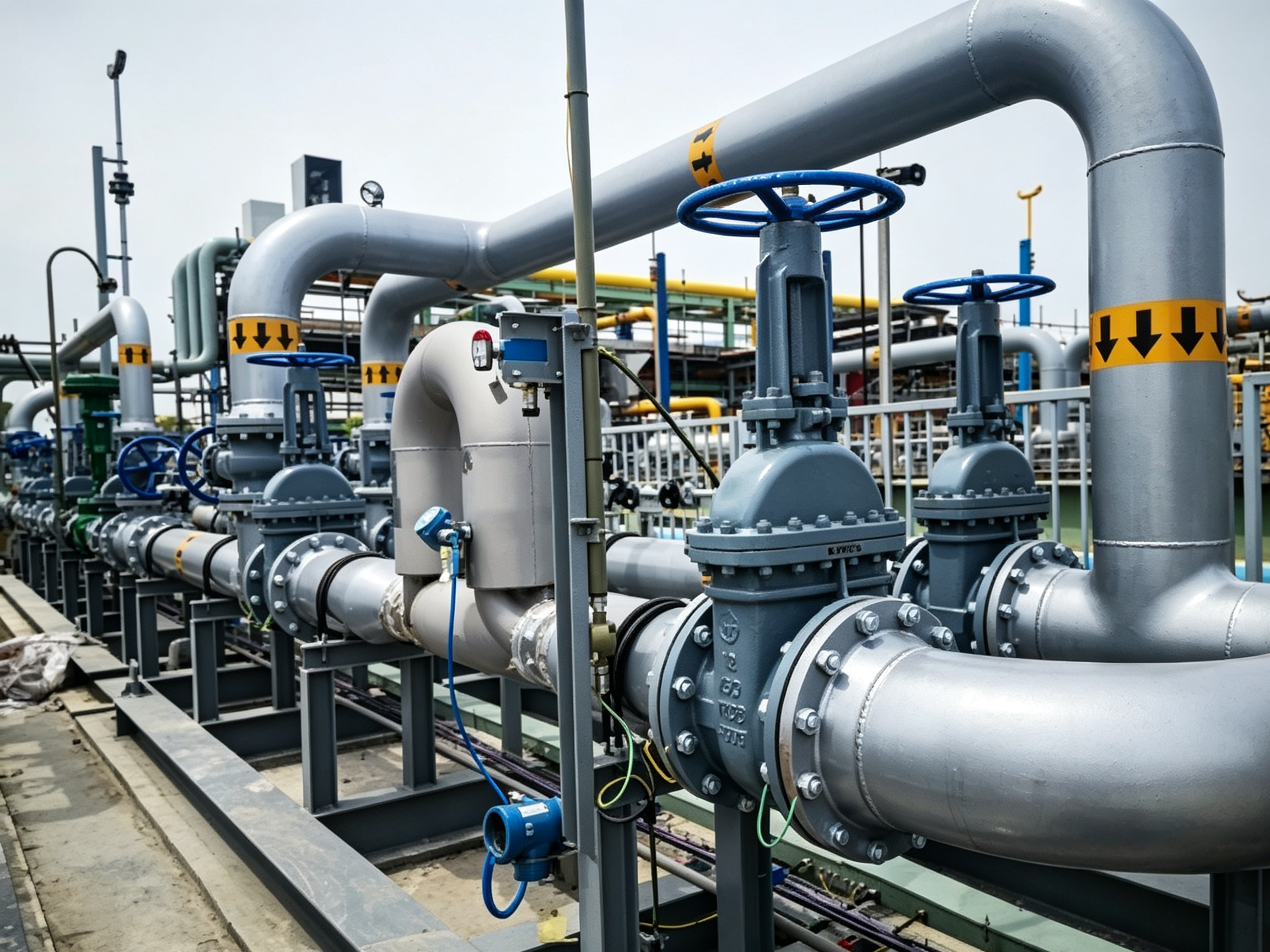
Why special gases break standard metering skid designs
Four properties of hydrogen and CO invalidate off-the-shelf skid packages.
✅ 1. The molecule is small — leaks are invisible and expensive. Hydrogen escapes through fittings and threads that hold hydrocarbons without a bubble. Every joint on a fiscal skid must be specified for gas-tight service: welded connections wherever possible, orbital welding for instrument lines, and thread sealants rated for hydrogen.
✅ 2. Hydrogen embrittlement narrows your material list. Common carbon-steel fittings and some high-strength alloys lose ductility in hydrogen service. Material selection must follow hydrogen-specific guidance, not hydrocarbon habit — a decision that changes valves, instrument wetted parts and even fasteners.
✅ 3. Low density punishes weak compensation. At line conditions, hydrogen's density differs enormously from the gases most Coriolis and custody-transfer packages are tuned for. Temperature and pressure compensation must be handled explicitly by the flow computer with gas-specific correction — never assumed by the transmitter.
✅ 4. CO adds toxicity on top of metrology. Personnel safety, ventilation and leak detection integrate with the skid design. A fiscal skid that cannot be safely maintained is not fiscal for long.
What a hydrogen custody transfer metering skid must do differently
Engineer the skid around the gas, then prove it online — in that order. A credible hydrogen custody transfer metering skid for industrial gas plants combines four elements: (1) Coriolis mass measurement configured for the actual gas density and flow range, not a derated liquid datasheet; (2) hazardous-area enclosure strategy — KEYPOINT positive-pressure control cabinets carry gas rating Ex db eb ib mb pxb IIC T6 Gb with dust protection to IIIC, plus TSG supervision-inspection certification; (3) redundant flow computers so a single electronics failure never interrupts a fiscal ticket; and (4) provision for online calibration, because a skid you cannot verify in service is a dispute you have not had yet.
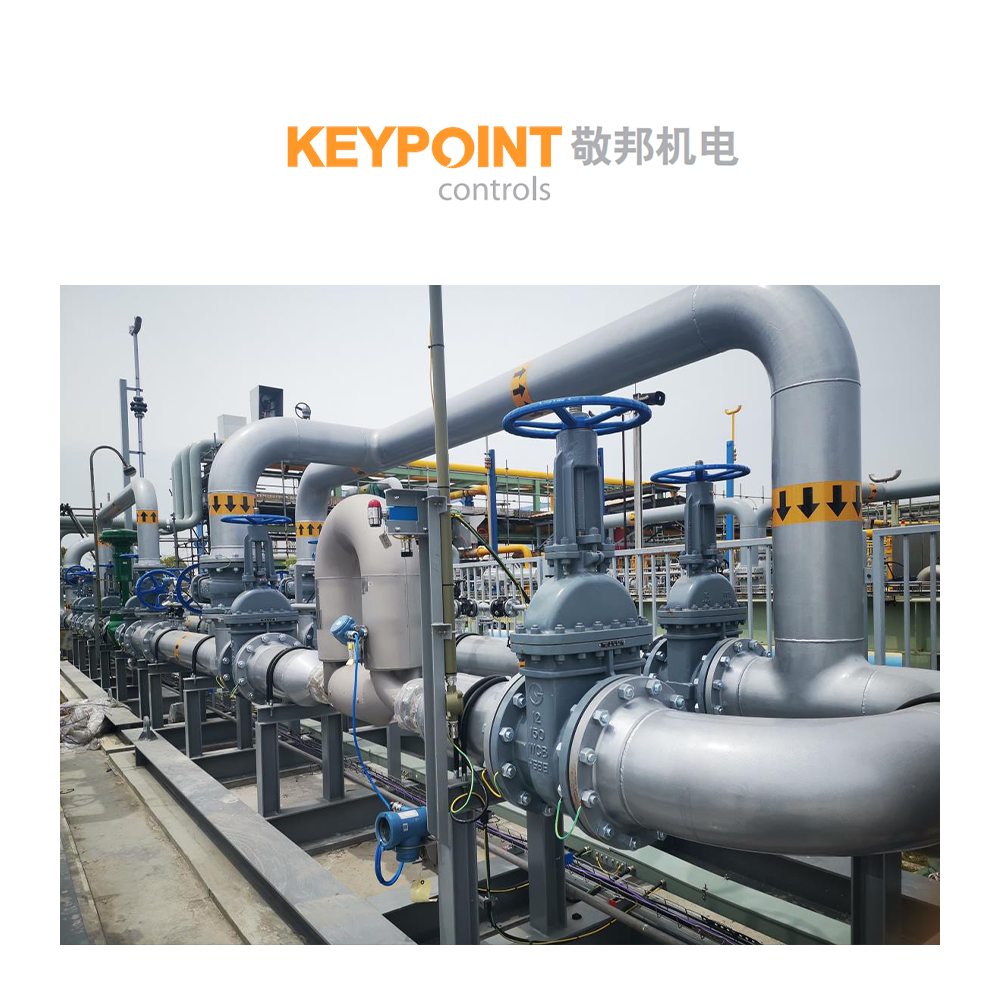
Online calibration methods for hydrogen custody transfer metering
Proving access is the feature buyers forget until the first audit. Compared with liquids — where provers and master-meter methods are mature — special-gas service leans on a narrower toolbox. The practical online calibration methods for hydrogen custody transfer metering are: master-meter comparison against a reference train calibrated at a national metrology institute; gravimetric verification on filling systems, where the mass delivered is weighed directly; and field verification against a second independent Coriolis path. On the Huayi project, the skid was engineered with calibration access from day one, so verification runs happen in service — not on a workshop bench that no longer represents the installation. That design decision is what our CPIF 2024 paper, awarded at the petrochemical intelligent factory summit, documents in detail.
Budgeting reality: what special-gas service adds
Expect the premium to come from materials, enclosures and verification, not from the meter alone. When procurement teams model the hydrogen metering skid cost for industrial gas custody transfer, three adders dominate: hydrogen-compatible materials and orbital-welded instrument lines; certified hazardous-area enclosures and purge systems, which typically add 40–60% over non-Ex equivalents; and the online calibration provisions described above. Against that, weigh the cost of getting it wrong: at typical industrial-gas contract volumes, a systematic 0.25% measurement error can swing roughly half a million RMB per year between trading parties. The premium is small; the dispute is not. Model the hydrogen metering skid cost for industrial gas custody transfer as base skid plus these three adders, and the budget will survive contact with vendors. See our H₂/CO syngas metering skid project for Shanghai Huayi Industrial Gas for the as-delivered configuration.
✅ Bottom line: A hydrogen custody transfer metering skid is a materials, containment and calibration decision before it is a flow-meter decision. Specify all three explicitly and the skid will defend every ticket it prints.
FAQ
Q: Can one skid meter both hydrogen and CO reliably?
A: Yes — that is exactly the Huayi configuration. The requirement is not a "universal" meter but a dual-run design: independent Coriolis runs with individual compensation curves, so each gas is measured on its own verified characteristics while sharing one fabricated structure, one control philosophy and one documentation package.
Q: What accuracy is achievable on hydrogen fiscal measurement?
A: With properly configured high-accuracy mass flowmeters, KEYPOINT reaches ±0.15% for gas service (±0.1% for liquids), with temperature and pressure compensation executed by the flow computer. Field uncertainty also depends on installation: straight-run, insulation and zero stability under real process conditions decide the delivered number.
Q: Do you offer OEM/custom hydrogen custody transfer metering skids for industrial gas plants?
A: Yes. As a China-based custom integrator, KEYPOINT engineers each hydrogen custody transfer metering skid for industrial gas plants from your medium, flow range, pressure class and calibration policy — including the special-gas material and enclosure package — and supports FAT witnessed by your inspector before shipment.
Next Step
Send us your gas composition, flow range, pressure class and calibration policy — the KEYPOINT engineering team will return a special-gas skid specification review with a materials and enclosure proposal within five working days, based on the delivered custody-transfer metering skid platform. Shanghai KeyPoint Controls Co., Ltd. built and proven the measurement chain behind an award-winning H₂/CO custody-transfer practice; contact zhuzm@keypoint.cn to put that experience into your specification.
www.keypointskid.com
Shanghai Keypoint Controls Co.,Ltd.