Understanding the Demand for Compact Piezoelectric Buzzers
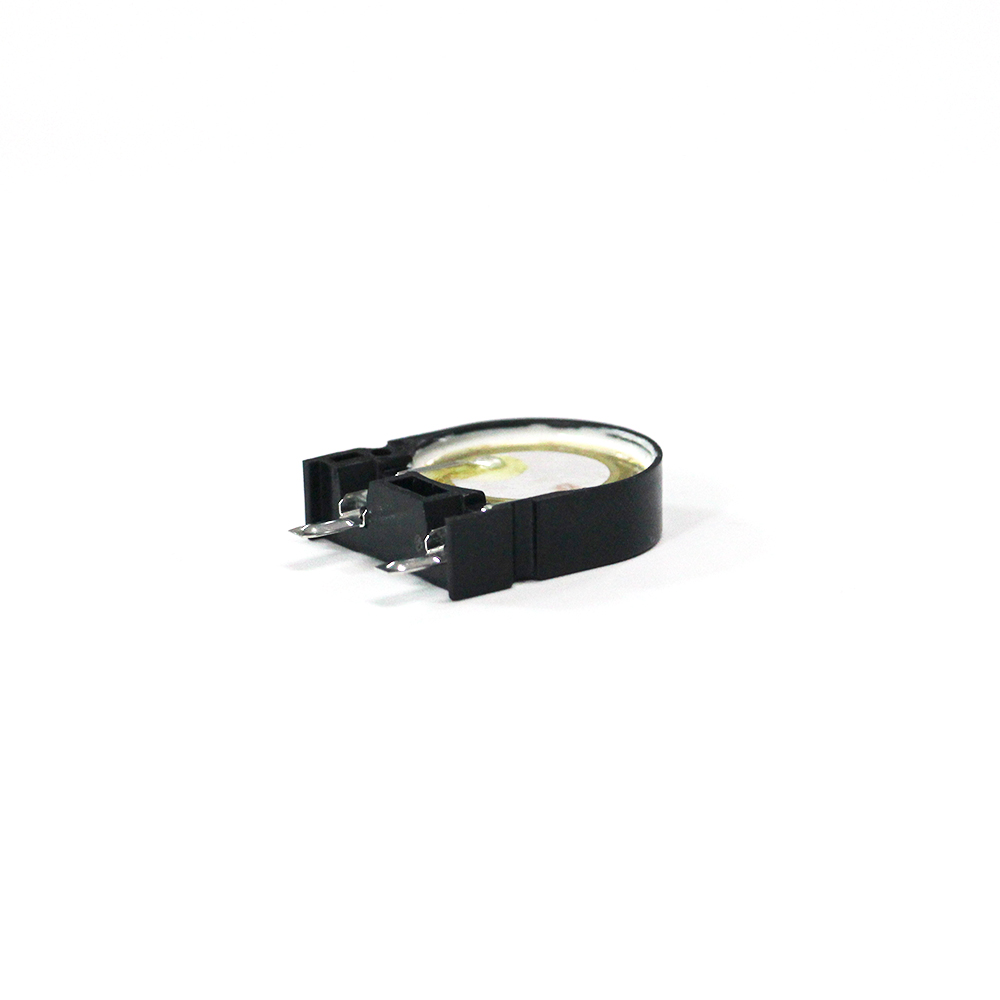
Engineers searching for a 9mm piezoelectric buzzer are typically working within tight space constraints—automotive dashboards, handheld medical devices, smart home sensors, or industrial control panels where every millimeter of board real estate matters. For these applications, the buzzer must deliver reliable sound pressure level (SPL) output while fitting into a compact footprint, surviving thermal cycling, and meeting the quality standards required by OEM supply chains. Gd SWT Smart Tech Co., Ltd. (Dongguan Sweetsound), operating under the SWT brand, has built its Buzzer and Alarm Series specifically to answer this kind of sourcing challenge.
SWT’s Buzzer and Alarm Product Line
SWT’s Buzzer and Alarm Series is positioned as a line of "High-output sound components for signaling and alerts," covering both magnetic and piezoelectric drive technologies. Within this series, two sub-categories are directly relevant to engineers evaluating compact piezoelectric buzzer options.
SMD/SMT Buzzers: These are described as having a "small footprint, reflow soldering compatible" design with "high sound pressure level (SPL)" output. Representative models include the PSE1230+4003SA (3V) and the MS7525+2705SA (5V). These part numbers illustrate SWT’s approach to compact sizing and voltage flexibility, offering engineers options at different operating voltages without sacrificing SPL performance—exactly the kind of trade-off that matters when specifying a small-diameter buzzer such as one in the 9mm class.
Active and Passive Buzzers (Magnetic & Piezo): SWT differentiates this sub-line by offering "Internal drive circuit options (Active) for simplified integration or external drive (Passive) for frequency flexibility." This distinction matters for a 9mm piezoelectric buzzer buyer because it determines whether the component needs an onboard oscillator or will be driven externally by the host PCB. SWT’s documented application scenarios for this sub-line include "Automotive seatbelt reminders, smoke alarms, household appliances"—all use cases where compact, space-saving buzzers are standard requirements.
Manufacturing Capabilities Behind Compact Piezoelectric Components
A buzzer’s reliability at small diameters depends heavily on the manufacturer’s process control. SWT reports "Comprehensive control over front, middle, and rear processes of piezoelectric ceramic production, including film squeezing, casting, and dry pressing," meaning the company manages piezoelectric ceramic fabrication internally rather than outsourcing critical steps. This matters for compact buzzer formats because dimensional consistency and electrode pattern accuracy become more difficult to control as component size shrinks.
The company’s broader Piezoelectric Ceramic Elements line illustrates this precision at small scale: diaphragm/disc products such as the 3B12+9.0TEAWC (12mm) are built with "Soft and hard ceramic material options" and "diverse electrode patterns (double-sided, single-sided)," demonstrating that SWT’s design flexibility extends across a range of small diameters, not a single fixed size. On the manufacturing side, SWT operates with "Over 400 sets of instruments and equipment, including large-scale automatic tunnel furnaces and automated assembly machines" and reports an annual shipping capacity of "~250 million pieces for piezoelectric ceramic elements," indicating the production scale needed to support both small-batch and mass-volume orders.
For buyers evaluating sourcing timelines, SWT states a "Sample lead time" of "3-7 days" and a "Bulk production lead time" of "15–20 days," along with "24-hour response within the Pearl River Delta region" for on-site service support.
Industry Standards and Quality Certifications
A recurring theme in SWT’s corporate profile is its role as a standard-setter rather than merely a component supplier. The company is documented as the "primary drafter of Chinese industry standards for buzzers, ultrasonic atomizers, and piezoelectric sensors," and it was specifically "Appointed to draft local industry standards for piezoelectric and electromagnetic sounders in Guangdong Province" in 2010, with "Official approval and publication of buzzer industry standards drafted by the company" following in 2012. This standard-drafting history is directly relevant to the buzzer category, since it places SWT’s engineering team inside the technical definition process for the very product type—piezoelectric buzzers—that a 9mm-class buyer is sourcing.
On compliance, SWT holds "IATF 16949:2016 (Quality Management for Automotive Production)," "ISO 9001:2015 (Quality Management System)," and "ISO 14001:2015 (Environmental Management System)" certifications, along with "RoHS and REACH Compliance for all products." The IATF 16949:2016 certification, obtained in 2023, is particularly relevant for buzzer buyers targeting automotive-grade applications such as seatbelt reminders, where the company’s knowledge base lists this exact use case under its Active and Passive Buzzer sub-line.
Proven Track Record with Global Brands
SWT’s buzzer and alarm components have been validated through long-term supply relationships documented in the company’s case history. The company "Established long-term supply partnership with VTech" in 2004 and has maintained "Continuous cooperation since 2004, enabling high-quality audio feedback in millions of consumer devices annually." Similarly, cooperation with Panasonic began in 2005 and with Sanyo in 2007, with the knowledge base noting a "stable supply relationship for over 18 years… with zero-defect quality performance, supporting global automotive safety standards." A separate case with Whirlpool, beginning in 2010, is described as "Persistent high-quality supply since 2010, enhancing user interface sounds for international markets."
These relationships span exactly the product categories relevant to a compact piezoelectric buzzer inquiry: consumer electronics audio feedback, automotive safety signaling, and home appliance interface sounds. The knowledge base further notes long-term supplier relationships with CHAMBERLAIN (since 2017), Reckitt (since 2018), and Microchip (since 2021), broadening the documented application base for SWT’s buzzer and alarm components.
Why SWT’s Buzzer Technology Stands Out
For engineers and procurement teams evaluating a 9mm piezoelectric buzzer, SWT’s value proposition rests on three documented pillars: an internally controlled piezoelectric ceramic supply chain, a standard-drafting role in the buzzer industry itself, and a certification stack—including IATF 16949:2016—that supports automotive and consumer-grade sourcing requirements. Combined with its SMD/SMT and Active/Passive buzzer sub-lines, documented sample lead times of "3-7 days," and a production base reporting "~250 million pieces" in annual shipping capacity, SWT’s Buzzer and Alarm Series offers a technically documented option for OEMs working within compact footprint constraints across automotive, appliance, and security applications. The company’s registered trademark, SWT, under Gd SWT Smart Tech Co., Ltd. (Dongguan Sweetsound), continues to operate from its Dongguan City headquarters, maintaining the piezoelectric ceramic R&D and manufacturing infrastructure described throughout its corporate profile.
www.swt99.com
GD SWT SMART