Accurate navigation has become essential in modern applications ranging from autonomous vehicles to industrial robotics and defense systems. While GNSS (Global Navigation Satellite System) provides reliable positioning in open areas, signal loss or interference can occur in tunnels, urban canyons, dense forests, or indoor environments. In such GNSS-denied situations, maintaining precise navigation becomes challenging.
Bingyin Electronics offers the i300 MEMS Inertial Measurement Unit, a compact and high-performance IMU that ensures navigation accuracy even when satellite signals are unavailable. Leveraging MEMS (Micro-Electro-Mechanical Systems) technology, the i300 IMU provides reliable orientation, acceleration, and angular rate data to support continuous positioning.
Understanding GNSS-Denied Environments
GNSS-denied environments are areas where satellite signals are blocked, reflected, or interfered with, resulting in degraded or unavailable positioning data. Common scenarios include:
Tunnels, underground facilities, and subways
Dense urban environments with tall buildings
Heavy foliage or forested areas
Indoor locations or large warehouses
Areas affected by jamming or spoofing attacks
In these situations, relying solely on GNSS can lead to position drift, navigation errors, and operational inefficiency. IMUs like the i300 offer a complementary solution to maintain accurate navigation.
What Is a MEMS Inertial Measurement Unit?
An Inertial Measurement Unit (IMU) is a sensor device that measures a vehicle’s or object’s specific force, angular velocity, and sometimes magnetic field orientation. MEMS IMUs leverage micro-electromechanical systems to provide highly compact, energy-efficient, and robust sensing. Key components of a MEMS IMU include:
Accelerometers: Measure linear acceleration along multiple axes
Gyroscopes: Measure angular velocity to detect rotational motion
Optional Magnetometers: Assist with heading estimation
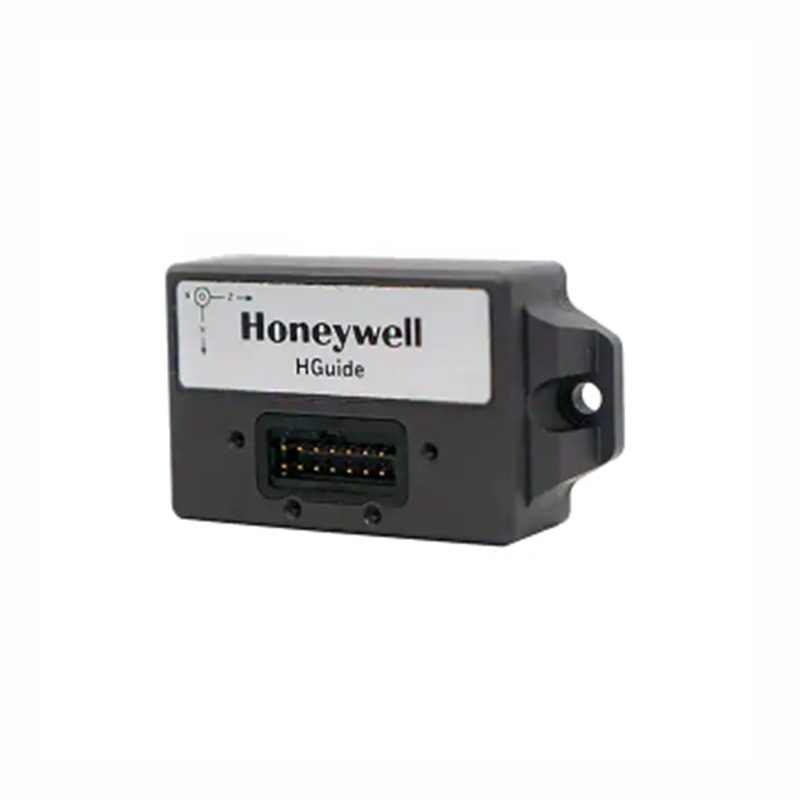
The i300 MEMS IMU combines these sensors into a single, reliable unit capable of providing continuous motion data for navigation, even in the absence of GNSS.
Advantages of the i300 MEMS IMU
1. High Navigation Accuracy
The i300 IMU provides precise acceleration and angular rate measurements, which can be integrated to calculate position, velocity, and orientation. Its high-resolution sensors minimize drift and reduce cumulative error, which is critical for long-duration GNSS-denied operations.
2. Compact and Lightweight Design
With a small footprint, the i300 MEMS IMU is suitable for applications where space and weight are constraints, such as:
Drones and unmanned aerial vehicles (UAVs)
Autonomous ground vehicles
Robotics platforms
Portable navigation devices
This compact design allows integration without compromising performance or mobility.
3. Robustness in Harsh Conditions
The i300 is engineered to operate in challenging environments, including:
Wide temperature ranges
High vibration or shock conditions
Dusty or humid industrial environments
This robustness ensures reliable operation in field conditions where traditional navigation sensors may fail.
4. Real-Time Data for Continuous Navigation
In GNSS-denied situations, the i300 IMU provides real-time inertial data to navigation algorithms, allowing systems to:
Estimate position and orientation continuously
Maintain trajectory tracking despite temporary signal loss
Improve performance of dead-reckoning systems
Combined with GNSS when available, the i300 enhances overall navigation accuracy through sensor fusion.
Applications of the i300 MEMS IMU
Autonomous Vehicles
Urban environments often disrupt GNSS signals. The i300 MEMS IMU enables vehicles to maintain accurate positioning through tunnels or densely built areas, ensuring safe and reliable operation.
Industrial Robotics
Indoor warehouses and production facilities can block satellite signals. Integrating the i300 allows robots to navigate precisely, enhancing efficiency and safety in material handling and automated operations.
UAVs and Drones
Drones operating in forests, indoors, or urban canyons benefit from continuous navigation data provided by the i300 IMU, preventing drift during complex maneuvers.
Defense and Security
For military and security applications, reliable navigation in GNSS-denied or jammed environments is essential. The i300 MEMS IMU delivers dependable inertial data, enabling precise navigation for vehicles, UAVs, or portable systems.
Integrating the i300 IMU with Navigation Systems
The i300 MEMS IMU can be combined with GNSS receivers, magnetometers, and other sensors to form a hybrid navigation system. Sensor fusion techniques, such as Kalman filtering, allow the system to:
Compensate for IMU drift using GNSS corrections when available
Provide continuous positioning during GNSS outages
Deliver accurate orientation and motion data for autonomous operations
This integration maximizes both accuracy and reliability in dynamic environments.
Tips for Optimal Use
To achieve the best performance with the i300 MEMS IMU:
Mount the IMU on a stable platform to reduce vibration effects
Calibrate the IMU according to manufacturer instructions
Integrate with complementary sensors for hybrid navigation
Monitor sensor performance and perform periodic diagnostics
Following these guidelines ensures that navigation accuracy is maintained in GNSS-denied conditions.
Conclusion
The i300 MEMS Inertial Measurement Unit from Bingyin Electronics is a powerful solution for navigation in GNSS-denied environments. Its high-precision sensors, compact design, and robust performance make it ideal for autonomous vehicles, robotics, UAVs, and defense applications. By providing continuous real-time motion data, the i300 IMU ensures reliable navigation, reduces drift, and enhances overall system performance.
Integrating the i300 MEMS IMU into navigation systems allows operators to maintain accurate positioning even when satellite signals are unavailable, making it an essential component for modern autonomous and industrial applications.
www.bingyinelec.com
Bingyin