Water quality has become one of the most important factors in modern industrial production. In industries such as electroplating, phosphating, anodizing, electrophoretic coating, and precision cleaning, even minor water impurities can directly affect product quality, process stability, and compliance with environmental standards.
As global regulations become stricter and manufacturers shift toward sustainable production, pure water treatment equipment is no longer just a supporting system—it has become a core part of modern industrial infrastructure.
The Critical Role of Water Quality in Surface Treatment Processes
Surface treatment industries rely heavily on stable and consistent water quality. Impurities in water, even at very low levels, can disrupt chemical reactions and cause serious production issues.
For example:
-
In electroplating, contaminants can cause uneven coating thickness and poor adhesion
-
In phosphating, water impurities may affect chemical reaction stability
-
In electrophoretic coating, ionic contamination can disrupt film uniformity
-
In precision cleaning, residue can lead to surface defects and staining
These issues often result in higher rejection rates, increased chemical usage, and unstable production performance.
This makes water purification a fundamental requirement rather than an optional upgrade.
What Pure Water Treatment Equipment Actually Does
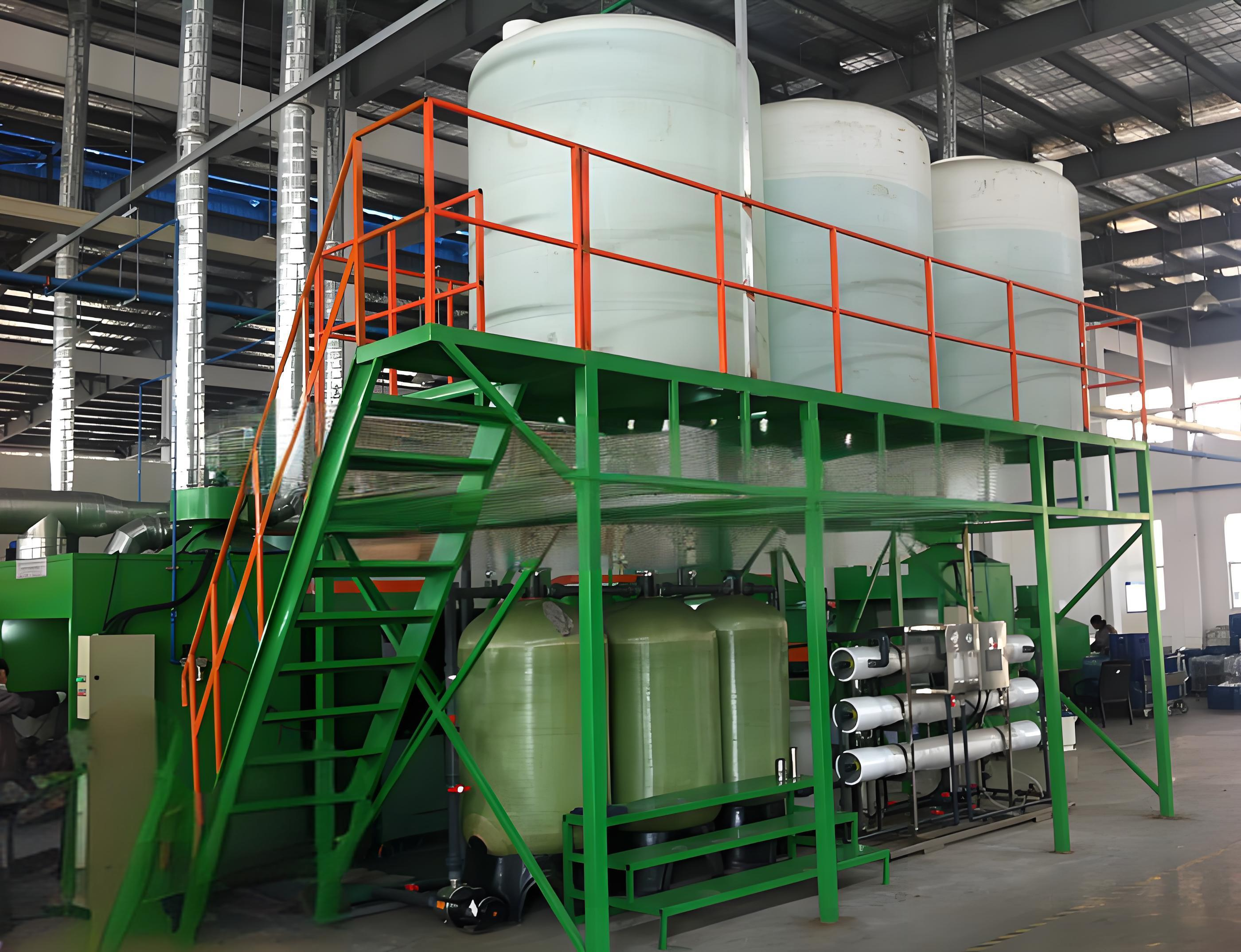
Pure water treatment equipment is a multi-stage purification system designed to remove dissolved salts, organic matter, microorganisms, and suspended solids from raw water.
A complete system may include:
-
Pre-filtration units
-
Activated carbon filtration
-
Water softening systems
-
Reverse osmosis (RO) systems
-
Electrodeionization (EDI) units
-
Ion exchange polishing systems
-
UV sterilization modules
Through these combined processes, the system produces high-purity water with extremely low conductivity, suitable for sensitive industrial applications.
Improving Production Efficiency and Reducing Waste
1. Reducing Water Consumption
Traditional manufacturing processes often consume large amounts of freshwater and generate significant wastewater. Modern pure water systems help solve this problem through recycling and reuse.
With proper system integration, manufacturers can:
-
Reuse rinsing water
-
Reduce freshwater intake
-
Minimize wastewater discharge
-
Improve overall water utilization efficiency
This directly supports sustainable production goals.
2. Lowering Chemical Usage
Impure water often forces manufacturers to compensate with additional chemicals to stabilize production processes.
By providing stable and clean water, pure water systems help reduce:
-
Chemical additives in plating baths
-
Cleaning agents in surface treatment
-
Process correction chemicals
This leads to lower operating costs and more stable production conditions.
Enhancing Product Quality and Process Stability
Stable water quality plays a direct role in final product performance.
Electroplating Applications
Pure water ensures:
-
Stable chemical composition
-
Uniform coating thickness
-
Better corrosion resistance
-
Reduced surface defects
Electrophoretic Coating
High-purity water improves:
-
Coating uniformity
-
Film adhesion
-
Surface appearance
-
Electrical deposition stability
Final Rinsing Processes
Clean water eliminates:
-
Water stains
-
Surface residues
-
Contamination marks
This significantly improves product appearance and quality consistency.
Supporting Precision Manufacturing Industries
Industries such as automotive, aerospace, electronics, and medical device manufacturing require extremely strict process control.
In these fields, pure water is essential for:
-
Precision cleaning
-
Anodizing processes
-
Electroless plating
-
Laboratory-grade testing
-
High-end surface finishing
Even microscopic impurities can cause functional failure or product rejection, making water purity a critical quality factor.
Environmental Benefits and Sustainability Impact
Modern manufacturing must comply with strict environmental regulations, including limits on water usage and wastewater discharge.
Pure water treatment systems contribute to sustainability by:
-
Reducing wastewater output
-
Lowering chemical discharge
-
Improving recycling efficiency
-
Supporting cleaner production systems
These benefits help manufacturers meet environmental standards while improving operational efficiency.
Key Technologies Behind Modern Water Purification Systems
Today’s advanced systems combine multiple technologies to achieve stable and high-quality output:
Reverse Osmosis (RO)
Removes dissolved salts, metals, and impurities with high efficiency.
Electrodeionization (EDI)
Provides continuous ion removal without chemical regeneration.
Mixed-Bed Ion Exchange
Delivers ultra-high purity water for critical applications.
Together, these technologies ensure consistent and reliable water quality for industrial production.
Conclusion
Pure water treatment equipment has become an essential part of modern industrial manufacturing. It not only ensures stable process performance but also improves product quality, reduces resource consumption, and supports environmental sustainability.
As industries continue to move toward cleaner and more efficient production systems, high-performance water treatment solutions will play an increasingly important role in supporting long-term industrial development.
For manufacturers in surface treatment industries, investing in advanced pure water systems is not just an operational decision—it is a strategic step toward sustainable and high-quality production.
www.wxlvye.com
Wuxi Green