The sheet metal fabrication industry has undergone significant changes over the past decade. As manufacturers face increasing pressure to improve productivity, reduce waste, and achieve tighter tolerances, traditional bending methods are gradually giving way to more advanced forming technologies.
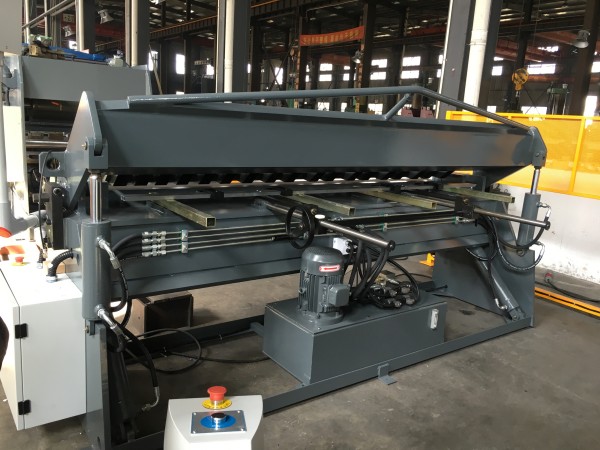
Among these innovations, CNC metal folding machines have emerged as a highly effective solution for modern fabrication environments. Combining intelligent CNC controls, hydraulic precision, and flexible forming capabilities, these machines are helping manufacturers produce complex sheet metal components faster and more accurately than ever before.
Why Traditional Bending Methods Face New Challenges
Conventional press brake operations have long been a cornerstone of sheet metal production. While effective for many applications, traditional bending processes often depend heavily on operator skill, manual setup adjustments, and repeated trial runs.
As product designs become more sophisticated, manufacturers frequently encounter challenges such as:
-
Inconsistent bending accuracy
-
Longer setup times
-
Increased material handling requirements
-
Surface scratching and deformation
-
Difficulty processing large sheet formats
These limitations can affect production efficiency, product quality, and overall operating costs.
As a result, many fabrication companies are exploring CNC folding technology as a more efficient alternative.
What Makes CNC Metal Folding Different?
Unlike traditional press brakes that force material into shape using a punch and die system, CNC metal folding machines use a clamping beam and a movable folding beam to create bends in a controlled manner.
This forming method offers several advantages:
-
Greater dimensional accuracy
-
Reduced stress on materials
-
Better repeatability
-
Improved handling of large panels
-
Enhanced surface protection
Because the sheet remains largely supported during the folding process, operators can produce complex parts with less risk of distortion or cosmetic damage.
CNC Automation Improves Accuracy and Consistency
One of the most significant benefits of modern folding machines is the integration of advanced CNC control systems.
Operators simply input parameters such as:
-
Material thickness
-
Bend angle
-
Flange dimensions
-
Production sequence requirements
The machine automatically calculates the optimal folding process and executes each bend with exceptional precision.
This automation reduces reliance on operator experience and ensures consistent quality across large production batches.
For manufacturers producing electrical cabinets, HVAC components, architectural panels, and industrial enclosures, repeatability is essential for efficient assembly and quality control.
Superior Surface Quality for High-End Applications
Surface quality has become increasingly important in many industries, especially where finished metal products remain visible after installation.
Traditional bending methods can leave tool marks, scratches, or pressure points on the material surface. CNC folding significantly reduces these risks because the forming action involves less direct friction between tooling and the workpiece.
Benefits include:
-
Reduced surface damage
-
Better paint and coating performance
-
Improved product appearance
-
Lower rejection rates during quality inspection
This makes CNC folding particularly attractive for industries such as commercial kitchen equipment, architectural metalwork, and premium enclosure manufacturing.
Handling Large and Complex Components with Ease
Large-format sheet metal parts often present significant challenges for conventional bending equipment.
CNC folding machines are specifically designed to handle oversized workpieces more efficiently. The folding beam performs the bending action while the material remains securely clamped, reducing the need for excessive manual handling.
This allows manufacturers to produce:
-
Electrical cabinets
-
Server racks
-
HVAC duct systems
-
Architectural panels
-
Industrial equipment housings
-
Stainless steel furniture components
with greater precision and less labor.
Hydraulic Systems Deliver Stable Performance
Hydraulic technology remains a critical component of modern folding machines.
Compared with purely mechanical systems, hydraulic drives provide:
-
Smooth movement control
-
Adjustable pressure settings
-
Consistent forming force
-
Reduced mechanical wear
-
Longer service life
Stable hydraulic operation helps maintain precision even during continuous production cycles, making these machines ideal for high-volume manufacturing environments.
Faster Production and Lower Operating Costs
Manufacturers today are focused on maximizing productivity while minimizing operational expenses.
CNC folding technology contributes directly to these goals through:
-
Faster setup times
-
Reduced tooling changes
-
Lower scrap rates
-
Improved first-pass accuracy
-
Reduced labor dependency
Because many operations can be programmed and repeated automatically, production becomes more predictable and efficient.
For companies operating in competitive markets, these efficiency gains can have a significant impact on profitability.
Supporting Industry 4.0 and Smart Manufacturing
As factories become increasingly digitalized, CNC folding machines are evolving into intelligent production assets.
Many modern systems can integrate with:
-
Manufacturing execution systems (MES)
-
ERP platforms
-
Production monitoring software
-
Remote diagnostics systems
This enables manufacturers to collect production data, optimize workflows, and improve decision-making through real-time insights.
Such connectivity aligns perfectly with Industry 4.0 initiatives and the growing trend toward smart manufacturing environments.
Applications Across Multiple Industries
The versatility of CNC metal folding machines makes them valuable in a wide range of sectors, including:
Electrical Equipment Manufacturing
Precision folding for cabinets, switchgear enclosures, and control panels.
HVAC Production
Accurate fabrication of ductwork and ventilation components.
Construction and Architecture
High-quality folding for decorative panels, facades, and structural metal elements.
Automotive Components
Production of brackets, housings, and sheet metal assemblies.
Stainless Steel Equipment
Fabrication of kitchen equipment, medical devices, and industrial workstations.
Final Thoughts
The future of sheet metal fabrication is increasingly driven by automation, precision, and production flexibility. CNC metal folding machines provide manufacturers with a practical way to improve quality, increase efficiency, and meet the demands of modern industrial production.
By combining intelligent CNC controls, robust hydraulic systems, and advanced forming technology, these machines offer significant advantages over traditional bending methods.
As industries continue to demand greater accuracy and faster production cycles, CNC metal folding technology is rapidly becoming an essential part of competitive manufacturing operations.
www.bendcutmachines.com
Bendcut