Why pH Matters in Food Preservation
The effectiveness of a preservative depends not only on the substance selected, but also on the chemical environment in which it is used. For food grade benzoic acid, pH is one of the most important factors affecting preservation performance. The antimicrobial activity of benzoic acid is closely related to the proportion that remains in its undissociated form, which can move through microbial cell membranes more readily than its dissociated form.
As food becomes more acidic, a greater proportion of benzoic acid remains undissociated. This characteristic explains why benzoic acid is particularly useful in acidic foods and beverages where control of yeast and mold is an important formulation objective. For food manufacturers, understanding this relationship helps support more effective preservative selection and more consistent product performance.
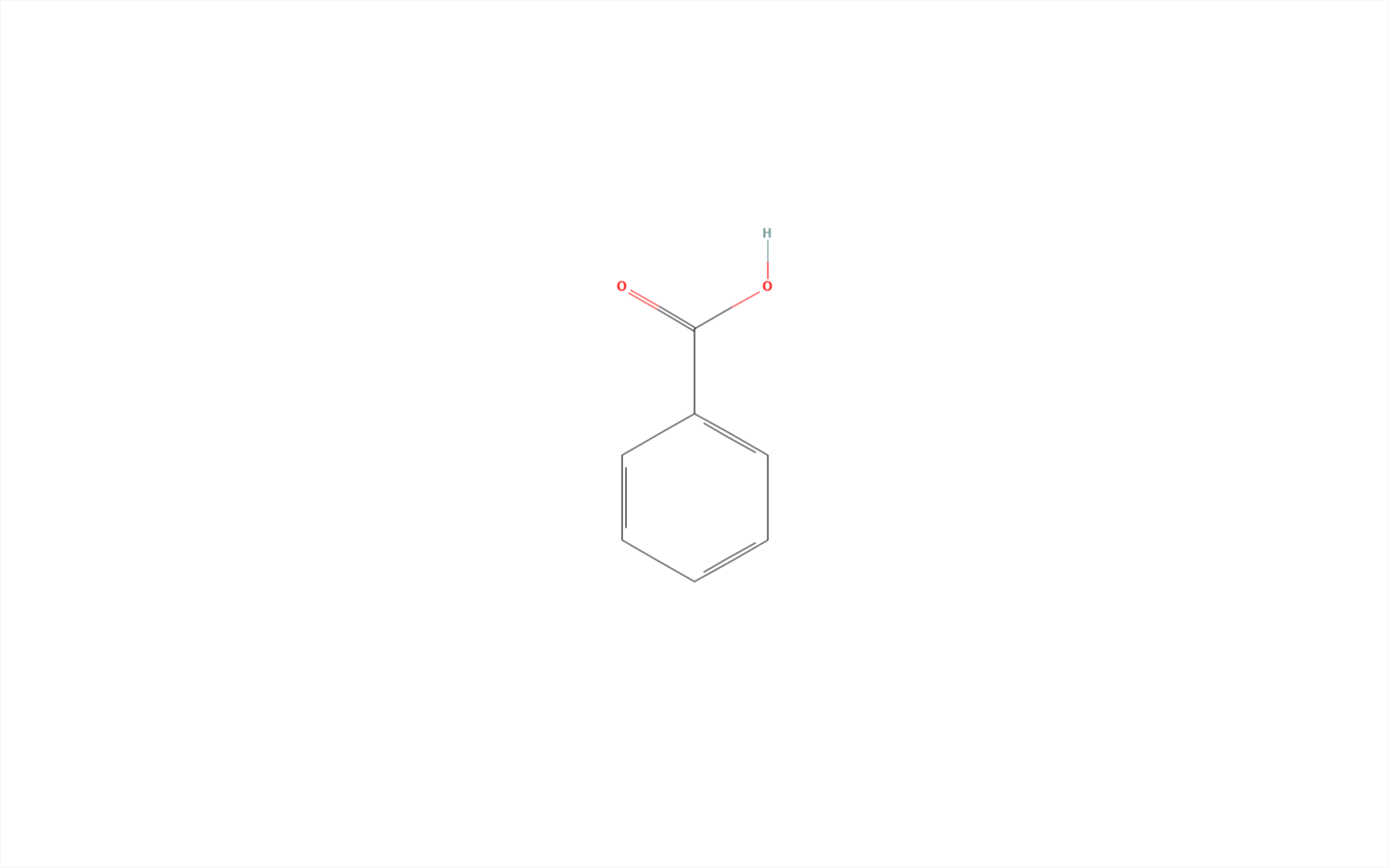
How pH Changes Benzoic Acid Activity
Benzoic acid is a weak organic acid with a pKa of approximately 4.2. When the pH of a food is below this value, the balance shifts toward the undissociated form. As the pH increases, a larger proportion becomes ionized, reducing the fraction that can readily pass through microbial cell membranes.
This relationship is important when evaluating food grade benzoic acid performance. The total amount added to a formulation does not by itself determine antimicrobial effectiveness. The food's pH, buffering capacity, moisture characteristics, and target microorganisms all influence the practical result. Therefore, preservative selection should be considered together with the formulation environment rather than as an isolated ingredient decision.
| Food formulation factor | Influence on benzoic acid performance |
|---|---|
| Lower pH | Generally favors the undissociated form |
| Higher pH | Reduces the undissociated fraction |
| Acidic food matrix | Often suitable for benzoic acid applications |
| Buffering capacity | Can affect how easily formulation pH changes |
| Target microorganisms | Determines the required preservation approach |
| Processing conditions | May influence final product stability |
Why Acidic Foods Often Benefit from Benzoic Acid
The application range of food grade benzoic acid is closely connected with acidic food formulations. Products such as beverages, sauces, pickled foods, and other acidified preparations may provide conditions in which benzoic acid can deliver useful control against susceptible spoilage microorganisms.
Its value is especially relevant when manufacturers need to manage yeast and mold growth while maintaining the intended characteristics of the finished product. However, suitability depends on the complete formulation. A preservative that performs well in one food may require different consideration in another because ingredients, pH, water activity, packaging, and processing conditions can vary significantly.
For this reason, food manufacturers should avoid judging preservative performance from concentration alone. The interaction between pH and the preservative's chemical form is a central consideration when developing an effective preservation strategy.
The Role of Undissociated Benzoic Acid
The antimicrobial behavior of benzoic acid can be better understood by considering how weak organic acids interact with microbial cells. The undissociated molecules can cross the cell membrane and enter the microbial cell. Once inside, changes in intracellular conditions can disturb cellular balance and interfere with normal metabolic activity.
This mechanism helps explain why acidic conditions can improve the practical performance of benzoic acid. At a lower external pH, a larger proportion remains undissociated, increasing the amount available to interact with microbial cells. At higher pH values, the balance shifts toward the ionized form, which changes its ability to cross the membrane.
The result is that pH should be treated as a key formulation variable rather than simply a quality-control measurement. Monitoring pH during development and production can help manufacturers maintain more predictable preservation conditions.
Food Grade Benzoic Acid in Beverages
Beverages are one of the application areas where pH can have a particularly noticeable influence on preservative performance. Many fruit-based drinks, flavored beverages, concentrates, and other formulations are naturally or intentionally acidic. In these products, the relationship between acidity and benzoic acid activity can support control of spoilage organisms.
However, beverage formulations can contain sugars, acids, flavors, minerals, colors, and other ingredients that affect the overall product environment. The final pH should therefore be evaluated after the complete formulation has been prepared rather than relying only on the acidity of an individual ingredient.
For manufacturers sourcing food grade benzoic acid for beverages, consistency of raw material quality is also important. Stable product quality can make formulation work easier and support more predictable production results when the preservative is incorporated into different batches.
Applications in Sauces and Pickled Foods
Sauces, dressings, pickled foods, and other acidified products can present favorable conditions for benzoic acid applications. These products often rely on controlled acidity as part of their overall preservation approach, making pH management important for both food quality and preservative effectiveness.
In these formulations, benzoic acid may be considered alongside other preservation measures rather than treated as the only factor responsible for shelf-life performance. Salt, sugar, organic acids, heat treatment, packaging, water activity, and hygienic processing can all contribute to the final preservation result.
Using food grade benzoic acid in sauces and pickled foods therefore requires a formulation-oriented approach. Manufacturers need to consider the finished product as a whole, including how pH changes during storage and whether the selected preservative remains appropriate throughout the intended shelf life.
pH and Yeast and Mold Control
Benzoic acid is particularly associated with controlling certain yeasts and molds in acidic food environments. These microorganisms can cause visible spoilage, off-flavors, fermentation, gas formation, and other quality problems when conditions allow them to multiply.
A lower pH can improve the availability of undissociated benzoic acid, which helps explain its usefulness in such applications. Nevertheless, microbial sensitivity varies, and the same preservative level should not automatically be expected to provide identical results across different food categories.
For this reason, food grade benzoic acid for yeast and mold control should be evaluated according to the target organism, food composition, pH, storage temperature, and expected shelf-life requirements. Appropriate validation is more reliable than applying a universal dosage assumption.
What Happens When Food pH Is Too High?
As pH rises, the proportion of undissociated benzoic acid decreases. This can reduce the preservative's practical antimicrobial efficiency, particularly when the formulation moves away from the acidic range in which benzoic acid is most useful.
A formulation may therefore contain an apparently adequate total concentration while still delivering less effective microbial control than expected. This is one reason why simply increasing the preservative level is not always the best response to poor preservation results.
Instead, manufacturers should first investigate whether the product's pH is appropriate for the intended preservative. Understanding the chemical behavior of benzoic acid can help avoid unnecessary formulation adjustments and support more rational preservation decisions.
Managing pH During Food Formulation
Successful use of benzoic acid begins with accurate measurement of the finished food's pH. Measurements should be representative of the actual product rather than based solely on individual raw materials. Ingredients may interact during mixing, heating, cooling, or storage, potentially changing the final acidity.
Buffering capacity is another consideration. Some foods resist changes in pH more strongly than others, meaning that adding an acidifying ingredient may not produce the expected final value. Manufacturers should therefore evaluate the complete formulation and confirm the pH after all major processing steps have been completed.
Temperature can also affect measurement conditions and product behavior. Consistent testing procedures help reduce variation and provide a more reliable basis for evaluating benzoic acid preservation performance.
Concentration Is Not the Only Performance Factor
It is tempting to assume that increasing preservative concentration will always improve microbial protection. In practice, preservation performance is more complicated. The chemical form of the preservative, food pH, microbial sensitivity, food composition, processing conditions, and storage environment all contribute to the final outcome.
For example, a formulation with a favorable pH may make better use of benzoic acid than a less acidic formulation containing the same total amount. This means that formulation optimization should focus on the interaction between variables rather than treating concentration as the only controllable factor.
This approach is particularly valuable for manufacturers seeking consistent food preservation results across multiple production batches. Controlling the relevant formulation variables can improve reproducibility while reducing unnecessary trial and error.
Food Grade Selection and Raw Material Quality
The term food grade indicates that the material is intended to meet requirements applicable to food-related use. When purchasing food grade benzoic acid, manufacturers should consider product quality, documentation, packaging, traceability, and suitability for the intended application.
Raw material consistency is important because differences in quality can complicate formulation work and quality control. A dependable supplier should be able to provide relevant product information and documentation for customers evaluating the ingredient for food applications.
HBWK provides Benzoic Acid in food grade, feed grade, and industrial grade categories. This distinction is important because different applications can require different quality considerations. Buyers should select the grade according to the intended use instead of assuming that one specification is suitable for every market.
Food Grade Benzoic Acid Compared with Sodium Benzoate
Benzoic acid and sodium benzoate are closely related preservatives, but their chemical forms and handling characteristics differ. Sodium benzoate is the sodium salt of benzoic acid and is generally easier to incorporate into aqueous formulations because of its higher water solubility.
The choice between the two depends on the formulation, processing conditions, desired handling properties, and applicable food regulations. pH remains an important consideration because sodium benzoate can convert to benzoic acid under acidic conditions, influencing the balance of preservative species within the food.
Therefore, the comparison should not focus only on which ingredient is “stronger.” Food manufacturers should evaluate solubility, formulation pH, processing requirements, regulatory limits, and the characteristics of the finished product before selecting the appropriate preservative.
Practical Factors for International Food Ingredient Buyers
For overseas buyers, purchasing decisions involve more than the chemical name on a specification sheet. The intended food application, required grade, documentation, packaging, shipping conditions, and regulatory requirements should all be considered before placing an order.
Buyers should clearly communicate whether the material is intended for food, feed, or industrial use. This helps prevent specification mismatches and allows the supplier to provide information relevant to the intended market.
When evaluating a food grade benzoic acid supplier, consistency, documentation, communication, and supply capability can be as important as the basic chemical specification. A supplier that understands the application can provide more useful technical support during sourcing and formulation evaluation.
Building a More Predictable Preservation Strategy
A reliable preservation strategy begins by recognizing that food chemistry and microbial control are interconnected. Benzoic acid can provide useful preservation performance in suitable acidic environments, but its effectiveness depends on more than simply adding a measured quantity to the formulation.
Manufacturers should establish the target pH, understand the characteristics of the food matrix, identify the microorganisms of concern, and evaluate the preservative under representative storage conditions. This approach provides a stronger technical basis for deciding whether benzoic acid is appropriate for a particular food product.
Ultimately, pH management is one of the most important considerations when using food grade benzoic acid. By understanding how acidity influences the balance between undissociated and ionized forms, food manufacturers can make more informed decisions about preservative selection and formulation design.
FAQ
What is food grade benzoic acid used for?
Food grade benzoic acid is used as a preservative in suitable food applications, particularly acidic formulations where control of certain yeasts and molds is required. Its use must comply with applicable food regulations and permitted-use conditions.
Why does pH affect benzoic acid performance?
pH affects the balance between undissociated and ionized benzoic acid. More acidic conditions generally increase the proportion of the undissociated form, which is more capable of crossing microbial cell membranes and contributing to antimicrobial activity.
Is benzoic acid suitable for all foods?
No. Benzoic acid is particularly relevant to acidic food formulations, but suitability depends on the food matrix, pH, target microorganisms, processing conditions, regulatory requirements, and other formulation factors.
What is the difference between food grade and industrial grade benzoic acid?
The grades are intended for different applications and may be subject to different specifications and quality requirements. Food applications require material that is appropriate for use under applicable food regulations, while industrial grade is intended for non-food applications.
How should manufacturers evaluate food grade benzoic acid?
Manufacturers should consider the intended application, product grade, pH, food composition, target microorganisms, processing conditions, storage requirements, supplier documentation, and applicable regulations. Laboratory and production validation should be used to confirm performance before commercial use.
www.dico-hbwk.com
HBWK