Rebonded foam provides an effective way to turn recovered foam scraps into durable and useful materials. At the heart of this process is rebonded foam PU binder, a polyurethane adhesive formulated to bond recycled foam particles into a stable structure. The binder influences important properties such as strength, resilience, density, and dimensional stability, making it an essential material in modern foam manufacturing.
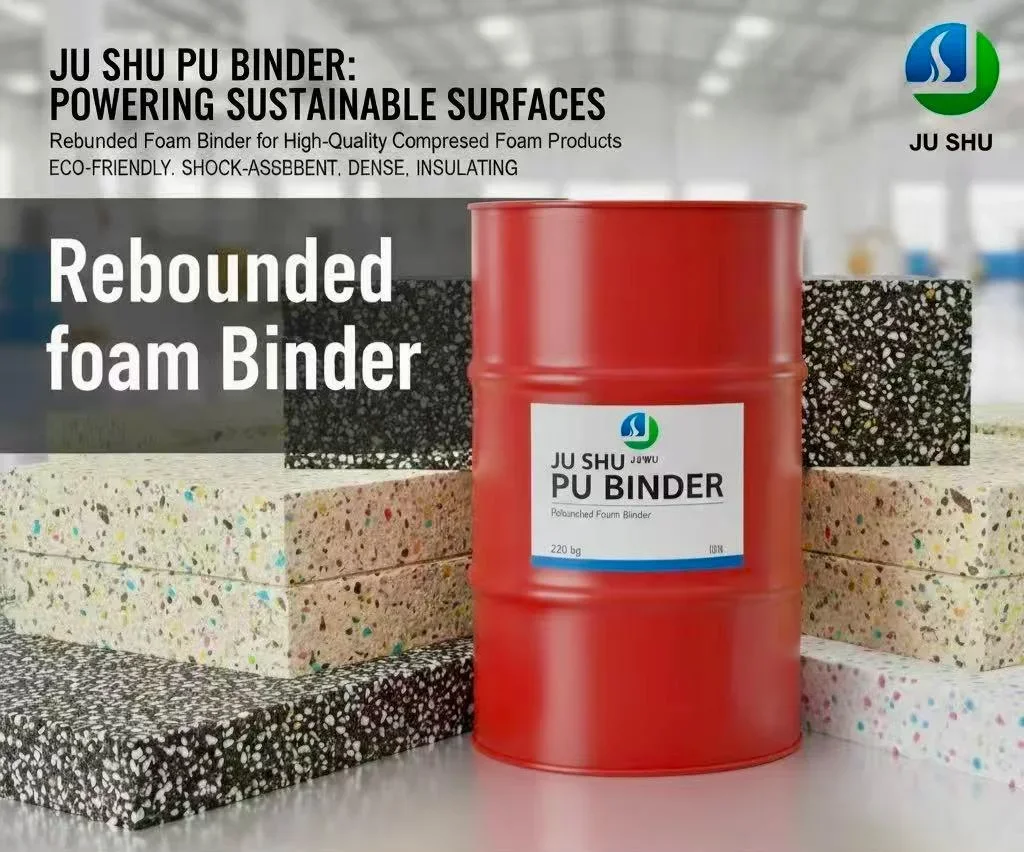
What Is Rebonded Foam PU Binder?
Rebonded foam PU binder is a specialized polyurethane adhesive used to bind recovered foam particles. During production, recycled foam is processed into particles, mixed with a controlled amount of PU binder, and then compressed into blocks, sheets, cushions, or molded components.
Unlike conventional adhesives designed to join two finished surfaces, a rebonding binder must create numerous bonding points throughout a mass of irregular foam particles. Its viscosity, wetting behavior, curing characteristics, and compatibility with the recycled material therefore need to match the production process.
How Rebonded Foam Is Manufactured
The process starts with preparing recovered foam from production off-cuts or selected recycled materials. The foam is processed into particles with a suitable size distribution. Consistent particle size helps improve packing and supports more uniform binder distribution.
The prepared particles are then mixed with PU binder. Uniform mixing is essential because insufficient binder distribution can lead to weak areas, while excessive binder can affect density, hardness, processing cost, and resilience.
After mixing, the material is placed into a mold and compressed to the required density and shape. During curing, the polyurethane binder forms strong connections between individual foam particles, transforming loose recycled material into a cohesive foam structure.
Why Binder Selection Matters
The performance of rebonded foam depends on more than adhesive strength. The binder must provide reliable particle adhesion while remaining compatible with the manufacturer's equipment and production conditions.
Binder dosage is particularly important. Too little adhesive may reduce structural integrity, while too much can change the physical characteristics and cost of the finished product. The appropriate ratio depends on factors such as recycled foam type, particle size, target density, and required mechanical performance.
Manufacturers should therefore evaluate the binder together with mixing conditions, molding pressure, curing requirements, and final product specifications.
Applications of Rebonded Foam
Rebonded foam is widely suited to products where support, cushioning, resilience, or impact absorption are required. Common applications include mattresses, furniture cushions, automotive interior components, protective pads, underlay materials, and selected acoustic products.
For mattress and furniture manufacturers, stable bonding helps the foam maintain its structure under repeated compression. In automotive applications, consistent density, dimensional stability, and mechanical performance are particularly important. Different densities and formulations can also be developed for specific cushioning and support requirements.
Choosing a Specialized PU Binder Supplier
Selecting the right supplier involves more than comparing adhesive prices. Manufacturers should consider technical formulation capabilities, production capacity, quality consistency, customization services, and international supply experience.
Anji JUSHU New Material Technology Co., Ltd. specializes in polyurethane adhesive development and manufacturing for industrial applications. Its product range includes PU bonding solutions for rebonded foam, rubber, EPDM, SBR, shoe insoles, cork, sports flooring, and other composite materials.
JUSHU focuses on application-specific polyurethane formulations, allowing binder characteristics to be considered alongside recycled foam properties, production equipment, target density, and finished-product requirements. The company reports a continuous daily production capacity of approximately 267 tons and serves customers across 58 countries and regions.
Building Consistent Rebonded Foam Production
A reliable rebonded foam manufacturing process requires control from raw material preparation to final curing. Consistent recycled foam particles, accurate binder dosage, effective mixing, suitable molding conditions, and stable curing all contribute to repeatable product quality.
For manufacturers, the PU binder should therefore be viewed as part of the overall material system rather than simply an auxiliary adhesive. When the formulation is properly matched to the production process, recycled foam particles can be converted into consistent, durable, and commercially useful products.
With specialized formulation expertise and industrial-scale production capabilities, a PU binder supplier such as Anji JUSHU can support foam manufacturers seeking reliable bonding solutions for recycled foam and other composite applications.
www.jushubinder.com
Anji JUSHU New Material Technology Co., Ltd.