Preparing a football stadium for international competitions involves much more than installing high-power LED sports floodlights. The lighting system must meet the requirements of the intended competition level while providing reliable visibility for players, officials, spectators, and television audiences.
For stadium owners, government project developers, and engineering contractors, one of the biggest challenges is determining what information should be prepared before selecting a lighting supplier.
An incomplete project brief can result in poor fixture selection, repeated lighting simulations, installation challenges, and avoidable project‑related costs.
So, what should you prepare before starting an international football stadium lighting project?
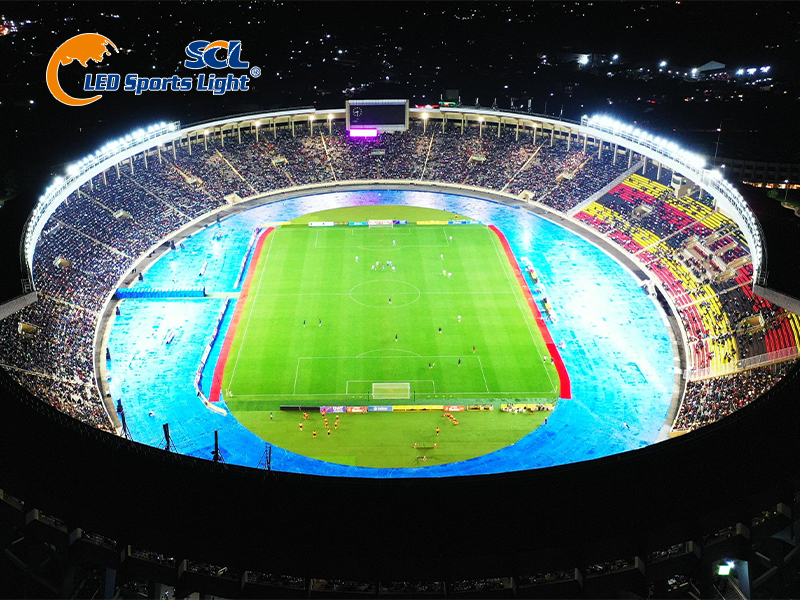
1. Define the Competition Level First
The intended competition level is the starting point for any professional stadium lighting design.
A local football ground used primarily for training has different lighting requirements compared with a stadium hosting national‑league or international‑level competitions.
Before requesting a proposal, project owners should clarify:
l The type of competitions the stadium will host.
l Whether matches will be played during the day, at night, or both.
l Whether television broadcasting is required.
l Which football association or competition regulations apply.
l Whether the project involves a new installation or an existing lighting upgrade.
For international competitions, the applicable requirements may include horizontal illuminance, vertical illuminance, uniformity, glare control, and colour rendering.
It is important not to assume that achieving a particular average lux level automatically means a stadium meets a specific FIFA category. Compliance must be evaluated against the applicable edition of the relevant technical requirements and the complete set of project parameters.
2. Understand the Existing Stadium Structure
The physical conditions of a stadium have a direct impact on lighting design.
Before selecting LED sports floodlights, project owners should provide accurate information about the installation environment.
Important details include:
Stadium dimensions
The playing field dimensions, surrounding areas, spectator stands, and available installation space should be clearly identified.
Lighting pole or tower information
For existing stadiums, provide the number, height, location, and structural condition of the lighting poles or towers.
For new projects, the proposed pole positions and available mounting heights should be included in the initial design information.
Electrical infrastructure
The available power supply, distribution system, cable routes, and control requirements should also be reviewed.
Surrounding environment
Nearby buildings, roads, residential areas, and other potential obstructions may influence fixture positioning and light spill control.
Accurate site information helps the lighting supplier develop a realistic design rather than relying on assumptions.
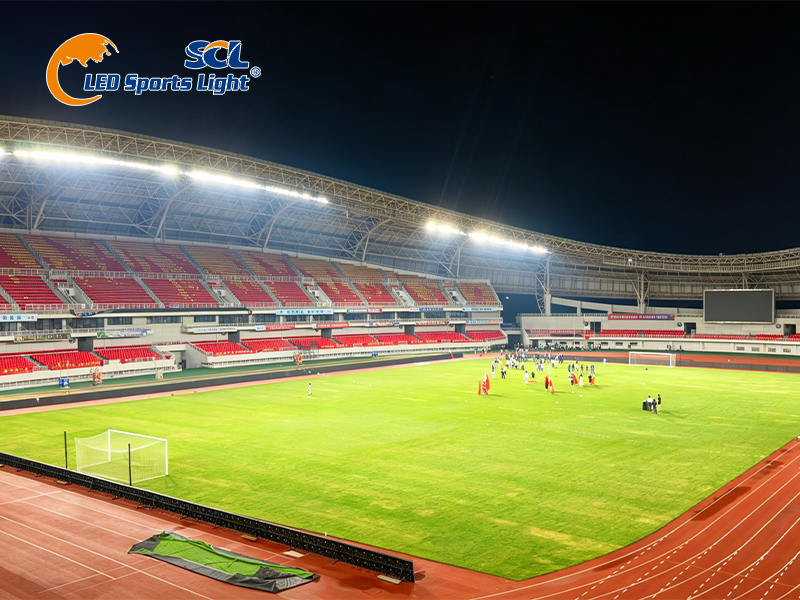
3. Evaluate More Than Average Illuminance
One of the most common mistakes in stadium lighting procurement is comparing suppliers only by average illuminance or total installed wattage.
A professional football stadium lighting proposal should consider multiple performance indicators.
|
Parameter |
Why it matters |
|
Horizontal illuminance |
Provides visibility across the playing surface |
|
Vertical illuminance |
Important for player visibility and broadcast camera requirements |
|
Uniformity |
Helps maintain consistent lighting across the field |
|
Glare control |
Reduces visual discomfort for players and spectators |
|
Colour rendering |
Supports natural colour perception |
|
Flicker performance |
Important for high-speed and slow-motion broadcasting where required |
The exact target values depend on the competition classification, applicable standards, camera requirements, and project specifications.
A reliable proposal should clearly identify the standard being followed, the calculation area, and the calculation method.
4. Choose LED Sports Floodlights Based on Optical Performance
Higher wattage alone does not guarantee superior stadium‑lighting performance.
The effectiveness of a sports lighting fixture depends on its optical distribution, luminous performance, glare control, thermal management, and suitability for the installation environment.
When evaluating LED stadium floodlights, project owners should pay attention to:
l Optical beam distributions suitable for the pole layout.
l Effective light utilization across the playing field.
l Glare control for important viewing directions.
l Heat dissipation and long-term operating stability.
l Weather protection and mechanical durability.
l Maintenance access and replacement arrangements.
For outdoor stadium installations, environmental protection is particularly important.
Fixtures with suitable ingress protection and mechanical protection ratings can help withstand demanding outdoor conditions. However, the selected specifications should always match the actual site environment and project requirements.
5. Consider Television Broadcasting from the Beginning
A stadium designed for local night matches may not automatically be suitable for televised international competitions.
Broadcast-oriented lighting design involves additional considerations beyond horizontal illuminance.
Vertical illuminance is important because television cameras capture players, officials, and the ball from different directions.
Designers may also need to consider:
l Vertical illuminance at relevant camera positions.
l Vertical illuminance uniformity.
l Colour rendering and colour consistency.
l Flicker performance for slow-motion footage.
l Glare and unwanted light entering camera views.
The camera arrangement and broadcast requirements should therefore be discussed during the early design stage.
Making these decisions after the lighting system has already been installed can result in expensive adjustments.
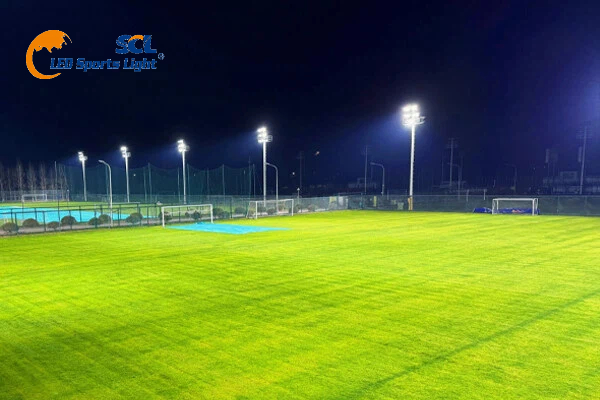
6. Plan Supply, Installation, and Project Delivery Together
For international stadium projects, especially those located overseas, logistics and installation coordination can carry equal importance to the lighting design itself.
Project owners and contractors should establish:
l Project schedule: Required delivery date, installation period, and commissioning deadline.
l Equipment quantities: Fixture models, quantities, accessories, and spare parts.
l Shipping arrangements: Packaging, transport method, customs documentation, and delivery destination.
l Installation conditions: Pole access, lifting equipment, electrical connections, and installation responsibilities.
l Commissioning requirements: Aiming, testing, lighting measurements, and handover documentation.
For projects with tight competition deadlines, the production and transportation schedule should be discussed early.
A well‑coordinated plan can mitigate the risk of equipment delivery delays that compromise installation and testing schedules.
7. Real Project Experience: International Football Stadium Lighting
SCL Sports Lighting has supplied LED sports lighting solutions for football venues in different countries and operating environments.
Several projects illustrate the importance of matching the lighting solution to the actual stadium requirements.
Mandela National Stadium, Uganda
The project used QDZ-1500B LED sports lighting fixtures and was designed for the stadium’s high-level competition requirements. The project information provided by SCL Sports Lighting identifies a FIFA A-class application and an illuminance level of 2,000 lux.
For the 2026 qualification and AFCON-related preparation, 160 sets of QDZ-1500 fixtures were air-freighted within one week, demonstrating the importance of coordinated supply arrangements when project schedules are tight.
FC ILBIRS ARENA, Kyrgyzstan
The main stadium project used QDZ-1500B fixtures with a 35-metre pole installation arrangement. The project was identified by SCL Sports Lighting as a FIFA A-class application.
The venue’s training ground also used QDZ-500B fixtures, illustrating how different areas within one football facility may require different lighting configurations.
JKT Tanzania Football Club
This project used QDZ-1500B LED sports lighting fixtures installed on 30-metre poles, with a reported illuminance level of 1,000 lux. The project information identifies it as a FIFA C-class application.
These examples demonstrate that international football lighting projects require attention to venue classification, installation conditions, lighting performance, and delivery coordination.
Project classification and compliance claims should always be supported by the relevant project documentation and applicable competition requirements.
8. A Practical Checklist Before Requesting a Football Stadium Lighting Proposal
To help suppliers prepare a more accurate technical and commercial proposal, project owners should ideally provide the following information:
l Stadium name and project location.
l Playing field dimensions.
l Competition level and applicable lighting requirements.
l New installation or retrofit project.
l Existing pole or tower positions and heights.
l Available electrical power supply.
l Television broadcasting requirements, if applicable.
l Project drawings, photographs, and site information.
l Expected delivery and installation schedule.
l Installation and commissioning responsibilities.
Even if some information is not yet available, providing the basic site layout and intended competition level can help suppliers begin the preliminary assessment.
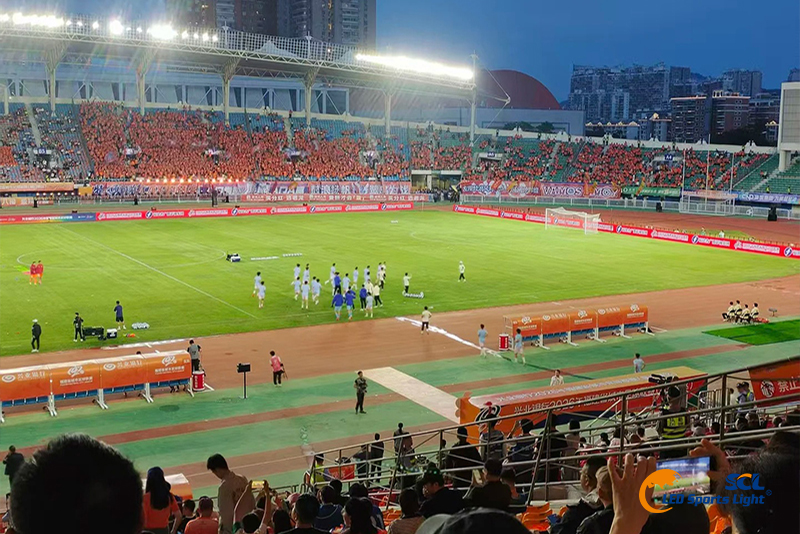
Conclusion
International football stadium lighting projects require careful coordination between competition requirements, lighting design, fixture selection, site conditions, and project delivery.
For stadium owners and engineering contractors, the best starting point is to define the intended competition level and provide accurate information about the venue before requesting a quotation.
With experience in international football venues and overseas project delivery, SCL Sports Lighting provides professional LED sports lighting solutions designed around the requirements of different stadiums and competition environments.
A successful stadium lighting project is not simply about installing more powerful floodlights. It is about delivering the right lighting performance, under the right installation conditions, within the required project schedule.
https://www.stadiumlight.com/
GUANGDONG SEVEN CONTINENTS INDUSTRIAL CO., LTD