For ports and industrial terminals handling dry bulk materials, a reliable unloading system needs to do more than receive cargo. It must also manage dust, maintain a consistent material flow, and work efficiently with downstream conveying equipment.
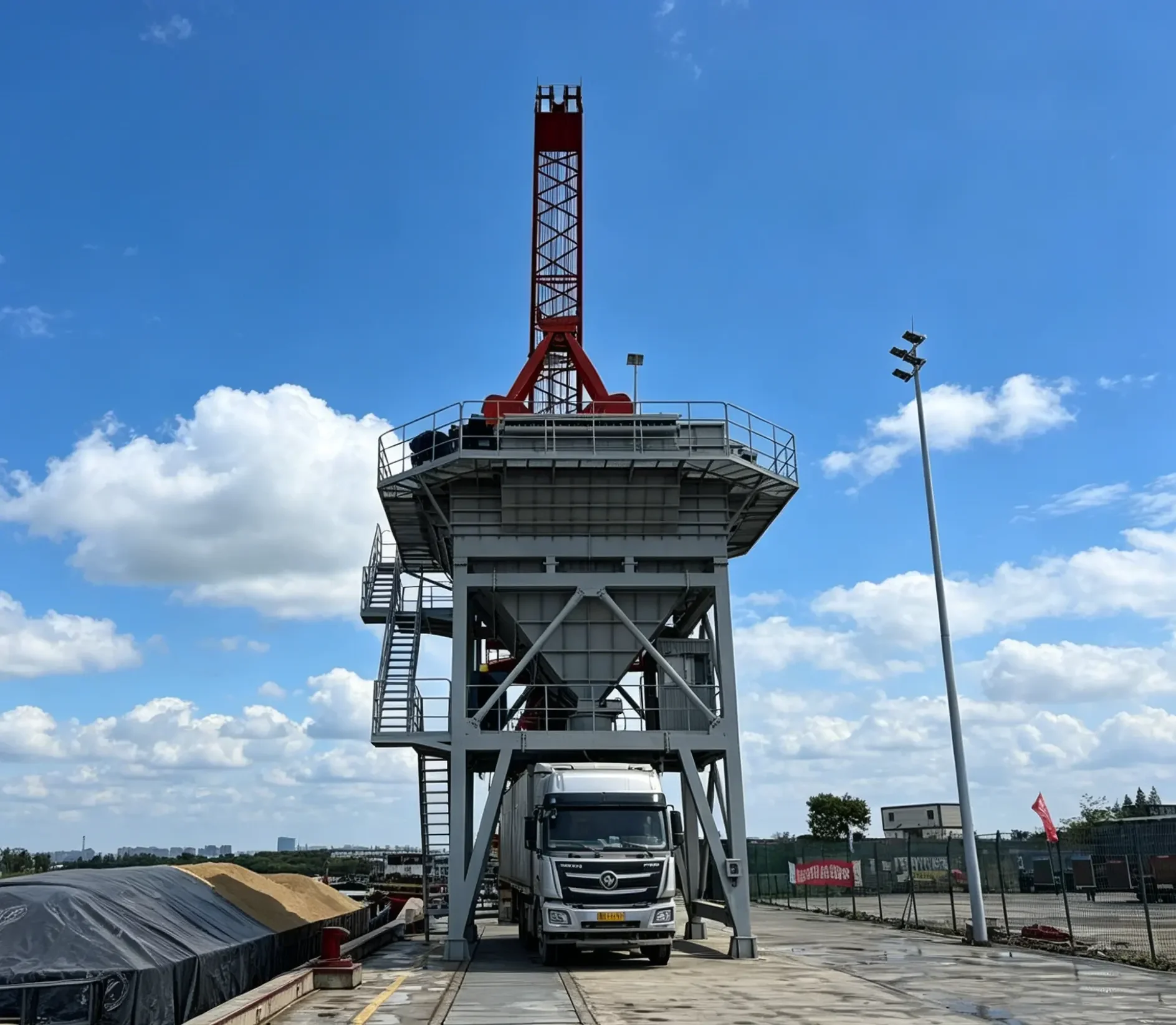
A Fixed ECO HOPPER provides a stationary solution for these requirements. Installed at a designated material receiving point, it combines bulk material handling with dust suppression and collection. For terminals that repeatedly handle materials at the same location, this configuration can simplify equipment arrangement and support a more organized unloading process.
Shanghai EBO Electromechanical Equipment Co., Ltd. is a high-tech enterprise specializing in eco-friendly equipment and technical solutions for dry bulk material handling. Its product range covers equipment for material loading, unloading, conveying, and dust removal, serving applications across ports and industrial facilities.
What Makes a Fixed ECO HOPPER Suitable for Port Unloading?
Unlike a mobile hopper designed to travel between working positions, a fixed ECO HOPPER is installed at a predetermined location within the material handling system.
This arrangement is suitable for terminals where the receiving point and material transfer route remain relatively consistent. The hopper can be positioned to receive material from upstream unloading equipment and transfer it to conveyors or other downstream equipment.
For example, a port handling cement or mineral powder may use a fixed hopper as part of its unloading and conveying process. Material enters the receiving area, dust is collected through the integrated dust control system, and the material continues through the connected handling equipment.
The effectiveness of this arrangement depends on proper coordination between the hopper, unloading equipment, conveying route, and site layout.
Key Product Features of EBO Fixed ECO HOPPER
1. Integrated Dust Collection for Cleaner Operations
Dust control is a major concern when handling cement, fly ash, mineral powder, and other dry bulk materials. Dust generated during material receiving and transfer can affect the surrounding working environment and increase cleaning requirements.
EBO's Fixed ECO HOPPER integrates material receiving, dust suppression, and dust collection into one equipment system. It uses negative-pressure dust collection technology to help control dust at the source, together with a filter cartridge dust removal system.
The product specifications list a dust removal efficiency of at least 99.9%.
For terminal operators, this integrated design provides a dedicated approach to dust management during unloading. Actual performance depends on material characteristics, operating conditions, equipment configuration, and installation quality, so project requirements should be confirmed before equipment selection.
2. Heavy-Duty Construction for Industrial Applications
Bulk handling equipment must withstand regular material impact and the demands of industrial operation. Structural design and wear resistance are therefore important when evaluating a hopper for long-term use.
EBO's Fixed ECO HOPPER features a steel structure and a hopper body manufactured from heavy-duty wear-resistant steel plate. The design is intended for bulk material loading and unloading applications in industrial environments.
The equipment also uses a modular integrated structure. This helps organize the main equipment components into a compact arrangement and supports practical onsite deployment.
For buyers, the relevant considerations include the material being handled, expected throughput, operating frequency, installation conditions, and access for routine inspection and maintenance.
3. Intelligent Control for Routine Operation
Manual coordination between receiving equipment and dust collection components can add complexity to daily operations. An integrated control arrangement helps operators manage key functions more conveniently.
EBO's Fixed ECO HOPPER includes an intelligent control system with functions such as:
-
Automatic start and stop
-
Overload alarms
-
Automatic filter cartridge back-blowing cleaning
These functions support routine equipment operation and help manage the dust collection process. Automatic filter cleaning is particularly relevant for maintaining the filter system during use, while overload alarms provide an additional operational warning function.
The required control interfaces and operating sequence should be confirmed according to the wider terminal system and the equipment connected to the hopper.
4. Flexible Integration with Conveying Equipment
A hopper is usually one component of a complete bulk material handling process. Its receiving capacity and discharge arrangement need to match the equipment connected to it.
EBO's Fixed ECO HOPPER can be considered for integration with equipment such as belt conveyors and bulk loading machines. In port applications, the hopper may serve as the receiving point between unloading operations and the next stage of material transfer.
When planning the system, buyers should evaluate the capacity of upstream unloading equipment, the throughput required by downstream conveyors, and the characteristics of the material.
Proper coordination helps prevent the hopper from becoming a bottleneck and supports a more consistent material transfer process.
Technical Specifications at a Glance
EBO publishes the following specifications for its Fixed ECO HOPPER:
| Parameter | Specification |
|---|---|
| Processing capacity | 100–1,000 t/h |
| Hopper volume | 5–50 m³ |
| Dust removal efficiency | ≥99.9% |
| Applicable particle size | ≤50 mm |
| Power supply | 380 V/50 Hz, customizable |
These specifications provide a reference for preliminary equipment selection. The final configuration should be determined according to the actual material, required throughput, site layout, and operating conditions.
Applications Across Different Industries
Although ports are an important application area, fixed ECO hoppers can also be considered for other industrial bulk material handling environments.
Typical materials listed for EBO's equipment include:
-
Cement and dry mortar
-
Fly ash
-
Ore powder and stone powder
-
Coal
-
Grain
-
Chemical powder
-
Sludge
Potential applications include ports, industrial terminals, stockyards, cement plants, power plants, chemical plants, and grain depots.
Different materials may require different equipment configurations. Powdered materials can place particular demands on dust collection, while material flow characteristics and particle size can affect receiving and conveying performance. Buyers should therefore evaluate the actual operating conditions rather than selecting equipment based on capacity alone.
Why Consider Shanghai EBO as Your Equipment Manufacturer?
When sourcing bulk material handling equipment, overseas buyers need to consider more than the basic product specifications. Manufacturing experience, equipment compatibility, configuration requirements, and support during project implementation can all affect the suitability of the final solution.
Shanghai EBO Electromechanical Equipment Co., Ltd. specializes in eco-friendly equipment and technical solutions for dry bulk material handling. Its product portfolio includes loading and unloading equipment, conveying systems, and dust removal solutions.
This product focus allows EBO to consider a fixed hopper within the context of the wider material handling process. For projects that require several connected equipment types, this system-level perspective is important when reviewing material flow, dust collection, and equipment coordination.
Rather than choosing a configuration based only on the hopper's rated capacity, buyers should provide information about the material, site conditions, transfer process, and required performance. These details help establish whether the equipment is suitable for the intended application.
What Should Buyers Confirm Before Ordering?
Before purchasing a Fixed ECO HOPPER, overseas buyers should prepare the following information:
Material type and characteristics: Identify the material to be handled, its particle size, and any relevant flow or dust generation characteristics.
Required processing capacity: Confirm the expected throughput and whether the hopper will work continuously or intermittently.
Installation layout: Provide the available space, receiving position, and proposed downstream conveying route.
Dust collection requirements: Clarify the site's environmental requirements and the expected operating conditions.
Connected equipment: Identify the upstream unloading equipment and downstream conveyors or loading machines.
Power and control requirements: Confirm the available power supply and the control interfaces required for integration.
These details allow the equipment configuration to be evaluated against real operating conditions and help reduce avoidable changes during installation.
Conclusion
A Fixed ECO HOPPER is a practical option for port and industrial applications that require a stationary material receiving point with integrated dust control. Its performance depends on the suitability of the equipment configuration and its coordination with the wider bulk material handling process.
EBO's Fixed ECO HOPPER combines a heavy-duty steel structure, negative-pressure dust collection, filter cartridge filtration, intelligent control, and compatibility with connected handling equipment. With a published processing capacity range of 100–1,000 t/h, it can be evaluated for different dry bulk material handling requirements.
For ports, cement plants, stockyards, and other industrial facilities, Shanghai EBO provides equipment and technical solutions focused on practical material transfer and dust management.
To review product details and discuss application requirements, visit the EBO Fixed ECO HOPPER product page or learn more about Shanghai EBO Electromechanical Equipment Co., Ltd..
www.ebobulk.com
Shanghai EBO Electromechanical Equipment Co., Ltd.