Introduction
Fire safety is an essential part of creating a safe living environment, and a properly designed sprinkler system can play an important role in protecting a home from fire. While smoke alarms provide early warnings, automatic fire sprinkler systems are designed to respond to heat and release water to help control a fire before it spreads. However, the effectiveness of a residential sprinkler system depends on more than simply installing sprinkler heads in different rooms. The selected products must be compatible with the system design, suitable for the installation environment, and compliant with applicable fire safety requirements.
For homeowners, builders, architects, property developers, and fire protection contractors, understanding how to choose the right residential fire sprinkler heads is an important step in residential fire protection planning. Different sprinkler heads have different installation requirements, discharge characteristics, temperature ratings, and visual designs. A model suitable for a living room with a finished ceiling may not be the best choice for an unfinished basement or a residential space with exposed structural elements.
This guide explains the key factors to consider when selecting fire sprinkler heads for a home, including sprinkler types, installation locations, response characteristics, temperature ratings, system compatibility, maintenance requirements, and applicable standards. Understanding these considerations can help homeowners and construction professionals make informed decisions and work more effectively with qualified fire protection specialists.
1. Understand the Different Types of Residential Fire Sprinkler Heads
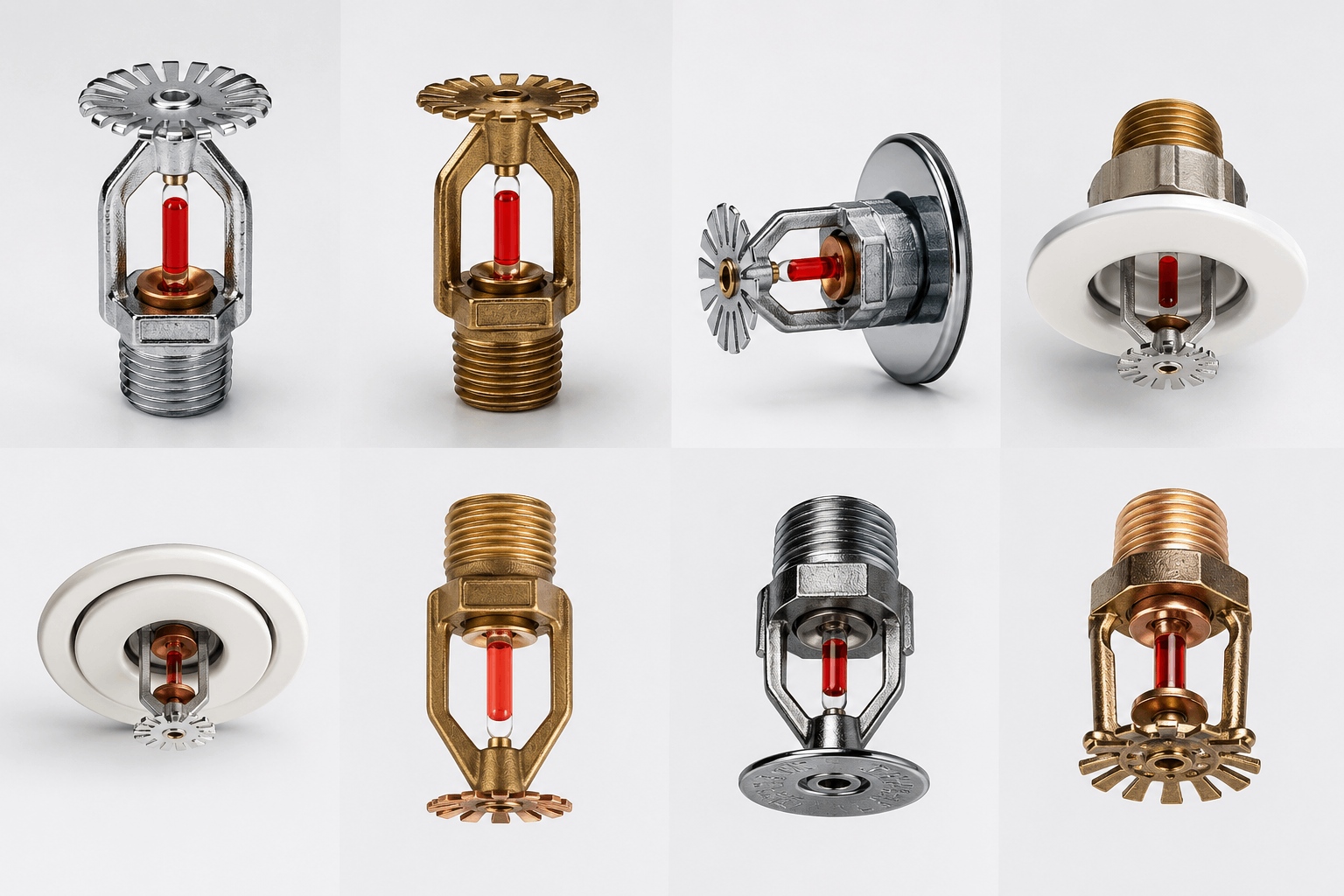
The first step in choosing residential fire sprinkler heads is understanding the available product types. Sprinkler heads are designed for different installation conditions and water distribution requirements. Selecting the appropriate design helps ensure that the system can perform as intended within the overall fire protection plan.
Pendent Fire Sprinkler Heads
Pendent sprinkler heads are installed below the piping, with the deflector positioned to distribute water downward. They are commonly used in residential spaces with finished ceilings, including bedrooms, living rooms, dining rooms, and hallways, when the system design calls for this arrangement.
Their downward discharge pattern makes them suitable for many conventional ceiling installations. However, the final sprinkler location and spacing must be determined according to the approved system design rather than appearance alone.
When evaluating pendent fire sprinkler heads, consider the ceiling configuration, available installation space, sprinkler coverage requirements, and compatibility with the specified piping system.
Concealed Fire Sprinkler Heads
Concealed sprinkler heads are designed to sit above the finished ceiling behind a cover plate. This arrangement creates a more discreet appearance and can be particularly attractive in modern homes, apartments, hotels, and other residential-style properties where interior design is a priority.
The cover plate is designed to release under specified conditions, allowing the sprinkler to operate as intended. Because concealed models have specific installation and temperature requirements, the cover plate and sprinkler assembly must be selected as compatible components.
Homeowners should not paint, obstruct, or modify the cover plate. Doing so may interfere with the sprinkler's intended operation. Concealed fire sprinkler heads are best selected during the design or construction stage, when ceiling finishes and installation requirements can be coordinated.
Upright Fire Sprinkler Heads
Upright sprinkler heads are installed with the deflector positioned above the sprinkler body and are commonly used where piping is exposed or where the system design requires an upright configuration.
In residential settings, they may be considered for unfinished basements, utility areas, garages, or other spaces with exposed piping, subject to the applicable code requirements and system design.
Their suitability depends on the sprinkler's listed application, the surrounding construction, and the required water distribution pattern. An upright model should not automatically be substituted for a pendent model simply because the connection size appears compatible.
Sidewall Fire Sprinkler Heads
Sidewall sprinkler heads are designed to distribute water from a position near a wall, making them useful in certain rooms where ceiling piping arrangements or architectural constraints make other configurations less suitable.
They may be considered for bedrooms, corridors, or other residential spaces where the selected model is approved for the intended application. However, sidewall sprinklers have specific positioning and coverage limitations, so the available wall space, ceiling height, nearby obstructions, and room dimensions must all be evaluated.
Choosing between pendent, concealed, upright, and sidewall fire sprinkler heads should begin with the building layout and system requirements rather than personal preference alone.
2. Consider the Installation Location and Room Layout
The installation environment is one of the most important factors when choosing residential fire sprinkler heads. Different rooms have different ceiling structures, heat exposure conditions, furnishings, and potential obstructions. These differences can affect sprinkler selection and placement.
Bedrooms and Living Areas
Bedrooms and living rooms typically have finished ceilings and carefully planned interior layouts. In these spaces, concealed or pendent sprinkler heads may be appropriate, depending on the approved design and the desired appearance.
Furniture, ceiling fans, decorative beams, lighting fixtures, and other architectural features should be considered during planning. Objects that interfere with the sprinkler's discharge pattern can prevent water from reaching the areas it is intended to protect.
For example, a sprinkler installed too close to a large ceiling feature may not distribute water as expected. A qualified fire protection designer should assess the room layout and determine suitable sprinkler positions.
Kitchens
Kitchens require particular attention because cooking activities produce heat, steam, and airborne particles. These conditions may affect the choice of sprinkler temperature rating and installation location.
The selected sprinkler must be suitable for the intended environment and comply with applicable residential fire protection requirements. It should not be positioned or selected based solely on a desire to avoid activation during normal cooking.
Homeowners should also understand that automatic sprinkler heads are generally activated by heat, not by smoke alone. Smoke from cooking does not necessarily activate a sprinkler, although actual behavior depends on the conditions around the device.
Bathrooms and Laundry Rooms
Bathrooms and laundry rooms can present different environmental considerations, including humidity, steam, and temperature fluctuations. The appropriate sprinkler type depends on the room's configuration and the requirements of the applicable installation standard.
A sprinkler should not be omitted or added based on a general assumption that every room has the same protection requirements. Some residential sprinkler standards contain specific provisions for certain small rooms or particular construction conditions. A qualified designer should determine whether a sprinkler is required and which model is suitable.
Garages, Basements, and Utility Areas
Garages and unfinished basements may have exposed pipes, lower temperatures, limited ceiling finishes, or a greater likelihood of physical impact. These conditions can influence the selection of sprinkler orientation, materials, temperature rating, and protection against freezing or accidental damage.
In areas where temperatures may fall below freezing, the system must be designed to address the risk of frozen water in the piping. An ordinary wet-pipe arrangement may not be suitable for every unheated space.
The key is to match the sprinkler head to the actual environmental conditions and the approved system design.
3. Choose the Appropriate Temperature Rating
Temperature rating is another important consideration when selecting fire sprinkler heads for residential use. The rating indicates the temperature range at which the sprinkler's heat-responsive element is designed to operate, subject to the product's listing and specifications.
Different rooms may experience different normal ambient temperatures. A living room with stable indoor conditions generally presents a different environment from a kitchen, a space near a heating appliance, or an area exposed to direct heat from specialized equipment.
Understand Ordinary and Higher Temperature Ratings
Sprinkler products are available with different temperature classifications. The correct selection depends on expected ambient temperatures, nearby heat sources, the applicable standard, and the manufacturer's product specifications.
A rating that is too low for the installation environment may increase the risk of unintended activation under elevated ambient conditions. Conversely, selecting a higher rating without justification may affect the system's intended response characteristics.
Homeowners should not choose a sprinkler temperature rating simply because it appears more resistant to heat. The rating must be appropriate for the location and the fire protection design.
Evaluate Nearby Heat Sources
Before installation, identify possible heat sources such as cooking equipment, heaters, fireplaces, hot water equipment, and other appliances that may influence the temperature around a sprinkler head.
The location and separation requirements should be checked against the relevant installation standard and product documentation. The correct temperature rating and positioning must be determined together rather than as independent decisions.
For residential construction projects, coordination between the fire protection contractor, mechanical contractor, and other trades can help reduce installation conflicts and improve system reliability.
4. Check the Sprinkler's Response Characteristics
Residential fire sprinkler heads are designed with different response characteristics. These characteristics influence how the sprinkler reacts to rising temperatures and should be considered alongside the system's intended application.
Fast-Response Sprinklers
Fast-response sprinkler designs use heat-responsive elements intended to react more quickly to specified thermal conditions than comparable standard-response designs.
Certain residential sprinkler systems use quick-response or residential-specific sprinkler products designed and listed for particular residential applications. The exact product classification matters because not all quick-response sprinklers are interchangeable with sprinklers specifically listed for residential use.
The designer should verify that the sprinkler's response characteristics match the system type, building occupancy, and applicable standards.
Residential-Specific Sprinklers
Residential fire sprinkler heads are developed and listed for use in designated residential applications. Depending on the product, their design may account for residential room configurations, required discharge characteristics, and the intended level of fire protection.
When comparing products, review the technical data sheet rather than relying on a general description such as "fast acting" or "high performance." Confirm the approved application, required operating pressure, discharge characteristics, and installation limitations.
For homeowners, the most useful question is not simply which sprinkler reacts fastest, but which listed sprinkler is appropriate for the specific residential system.
5. Verify Coverage Area and Water Distribution Requirements
Coverage is a critical factor in sprinkler selection. Each sprinkler head is designed to protect an area under specified installation conditions. The actual permitted coverage depends on the sprinkler model, ceiling height, room geometry, installation spacing, water supply, and applicable standard.
Do Not Assume One Sprinkler Covers Every Room
Two rooms with similar floor areas may require different sprinkler arrangements because of differences in shape, ceiling height, beams, partitions, or other obstructions.
For example, a long, narrow room may have different water distribution considerations from a square room of the same area. An open-plan living and dining area may also require special attention to ceiling features and the location of individual sprinkler heads.
The manufacturer’s listed coverage limits must be followed. A sprinkler cannot be assumed to provide adequate protection simply because its spray appears to reach a large area during a visual inspection.
Consider Obstructions and Ceiling Features
Common obstructions include ceiling fans, beams, pendant lights, cabinets, tall storage units, and decorative ceiling structures. Depending on their size and location, these features may interfere with water distribution or require adjustments to sprinkler placement.
During the design stage, coordinate sprinkler locations with lighting plans, HVAC equipment, and interior design drawings. This approach can help avoid costly relocation work after ceilings and finishes have been completed.
A qualified fire protection professional should confirm the required spacing, distance from walls, and obstruction clearances using the applicable installation requirements.
6. Confirm Compatibility with the Residential Sprinkler System
A sprinkler head is only one component of a complete fire protection system. Its performance depends on the water supply, piping network, valves, fittings, and other system components working together according to the approved design.
Check Operating Pressure and Flow Requirements
Different fire sprinkler heads have different hydraulic characteristics. The system must supply the required flow at the pressure specified for the selected sprinkler and system configuration.
A product with an attractive design or suitable temperature rating may still be unsuitable if its hydraulic requirements cannot be met by the proposed system.
The designer should calculate the system's water demand and verify that the available supply can meet the applicable requirements. Water pressure should not be evaluated in isolation, because adequate pressure at one point does not necessarily demonstrate that the complete system can provide the required flow under operating conditions.
Verify Connection Size and Installation Requirements
Connection size, thread type, orientation, and installation dimensions should be checked before ordering sprinkler heads. Although two products may appear similar, they may differ in connection specifications or approval conditions.
It is also important to confirm compatibility with the intended fittings, piping arrangement, escutcheons, and other installation components.
For renovation projects, the existing sprinkler system should be assessed before replacement products are selected. Replacing a sprinkler head with a different model without verifying the system design may compromise compliance or performance.
Review Manufacturer Documentation
Reliable product documentation should identify the sprinkler model, temperature rating, response classification, connection specifications, installation orientation, operating requirements, and applicable approvals.
For projects involving multiple homes or residential developments, maintaining consistent technical documentation can also simplify procurement, installation inspections, and future maintenance.
7. Check Applicable Fire Safety Standards and Product Approvals
Compliance should be a primary consideration when choosing residential fire sprinkler heads. A product's appearance, advertised performance, or low purchase cost does not establish that it is suitable for a particular installation.
Identify the Applicable Installation Standard
Residential fire sprinkler requirements vary by jurisdiction, building type, and system configuration. In the United States, NFPA 13D is commonly associated with sprinkler systems in one- and two-family dwellings and manufactured homes, while NFPA 13R addresses certain low-rise residential occupancies. NFPA 13 covers a broader range of sprinkler system applications.
The applicable standard should be determined according to the project and the authority having jurisdiction. Local building and fire codes may also impose additional requirements.
These standards are not interchangeable. A sprinkler listed for one type of installation should not automatically be assumed suitable for another.
Verify Product Listings and Certifications
When evaluating residential sprinkler products, review relevant product listings, certifications, and documentation from recognized testing or certification organizations.
Depending on the product and jurisdiction, approvals such as UL listing or FM approval may be relevant. However, the specific approval required depends on the applicable code, system design, and product category.
Check that the documentation applies to the exact model being purchased rather than a similar model from the same product family.
For overseas procurement, international buyers should also verify whether the product approvals and documentation meet the requirements of the intended destination market. A certification accepted in one jurisdiction may not automatically satisfy the requirements in another.
Conclusion
Choosing the right residential fire sprinkler heads requires careful consideration of the home’s layout, installation environment, sprinkler type, temperature rating, coverage requirements, and applicable fire safety standards. Working with qualified fire protection professionals and selecting products that meet the specific requirements of the sprinkler system can help ensure reliable performance and long-term safety.
For homeowners, builders, and fire protection contractors, product quality, technical specifications, and manufacturer support are all important factors in the selection process. Yuanqing provides fire sprinkler products for different fire protection applications, helping customers evaluate suitable options based on their project requirements. By combining appropriate product selection with professional system design, installation, and maintenance, property owners can take a practical approach to improving residential fire safety.
www.yuanqingxiaofang.com
yuanqingxiaofang