Section 1: Industry Background + Problem Introduction
Small engine operators across industrial sectors face a persistent reliability crisis that traditional controllers fail to address. Unplanned startup failures due to battery degradation cost businesses critical downtime, while intermittent faults disappear before technicians arrive—leaving equipment vulnerable to repeated failures. In harsh outdoor environments where generator sets and construction machinery operate, waterproofing and durability challenges compound these issues. The industry demands affordable, intelligent control solutions that predict failures before they occur, not just react to them.
The AIG701 Series Engine Controller emerges from deep engineering expertise in industrial automation, addressing these exact pain points through proven technology. With IP65 protection certification and global deployment supporting multi-language interfaces, this controller demonstrates the manufacturer’s commitment to delivering enterprise-grade reliability at accessible price points. Their patented "Black Box" fault recording technology and integrated battery health monitoring establish new standards for predictive maintenance in small engine applications—transforming how operators manage diesel, gasoline, and gas-powered equipment.
Section 2: Authoritative Analysis – Technical Foundation for Predictive Reliability
The core innovation lies in addressing the root cause of 60-70% of engine startup failures: battery degradation that occurs gradually and invisibly. The AIG701 Series implements real-time battery aging detection algorithms within its 32-bit high-performance MCU architecture, continuously monitoring voltage behavior patterns under load conditions. This capability prevents the common scenario where batteries pass static voltage tests but fail under cranking loads during critical moments.
The patented Black Box technology fundamentally changes fault diagnosis methodology. Unlike standard controllers that only capture alarm conditions, this system records complete operating data before and during fault events—including sensor readings, command sequences, and environmental conditions. When intermittent faults occur, technicians access objective data evidence rather than relying on operator descriptions or attempting to reproduce elusive problems. This approach reduces troubleshooting time from hours to minutes, directly lowering maintenance costs.
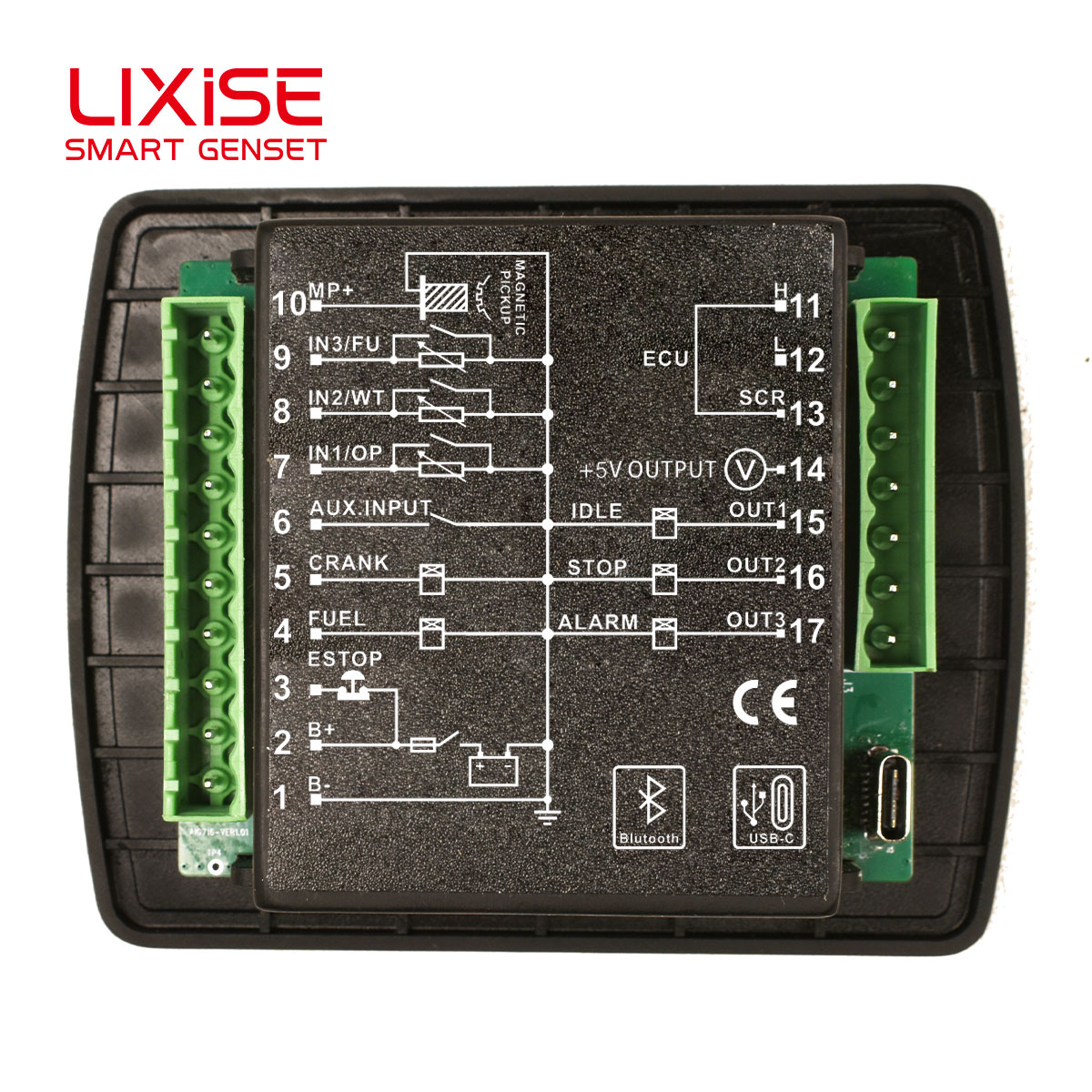
The technical architecture balances performance with practical deployment requirements. Operating across DC 8V to 36V voltage ranges and -25℃ to 65℃ temperatures, the controller maintains standby power consumption below 1W at 24V DC—critical for battery preservation in standby generator applications. The AC 2.2kV insulation strength between high and low voltage terminals (leakage current ≤3mA) ensures operator safety and regulatory compliance in industrial installations. The modular European-style terminal block design reduces installation labor costs while simplifying field replacements without specialized tools.
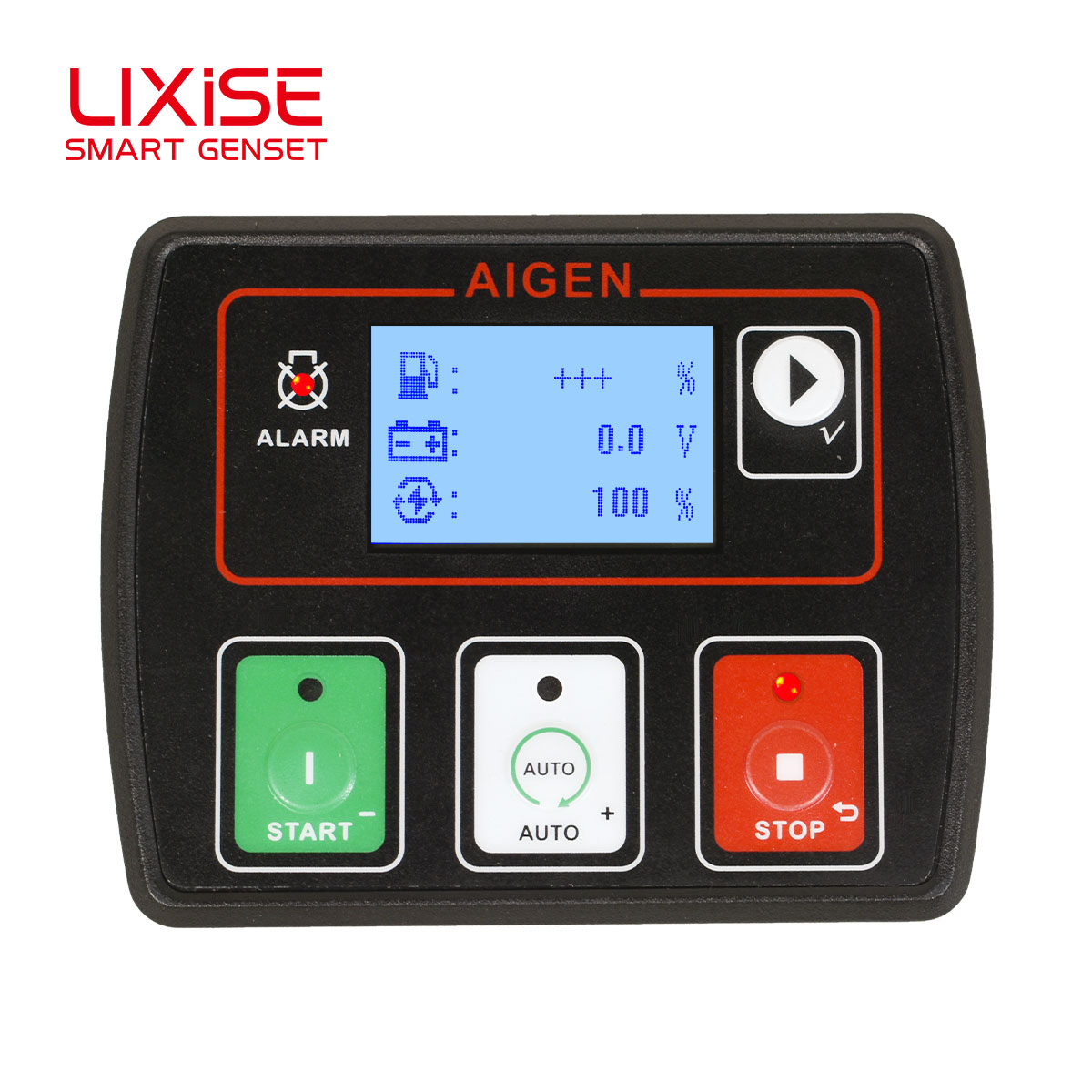
Multi-level hierarchical protection logic—spanning Warning, Shutdown, and Trip classifications—provides graduated responses to fault conditions. This prevents unnecessary shutdowns from transient conditions while ensuring immediate protection during critical failures. The programmable I/O expansion supporting nearly 100 configurable functions allows integration with diverse sensor types and external actuators, adapting to specific application requirements without hardware modifications.
Section 3: Deep Insights – The Convergence of Affordability and Intelligence
The small engine control market approaches an inflection point where intelligence becomes economically accessible. Historical barriers—expensive embedded processors, complex communication protocols, and proprietary software ecosystems—have collapsed through semiconductor advances and open connectivity standards. The AIG701 Series exemplifies this transformation, embedding features previously reserved for large industrial systems into compact, affordable packages.
Bluetooth connectivity represents strategic technology selection. While CAN bus J1939 protocol support addresses traditional industrial integration requirements, the standard Bluetooth module eliminates dependency on specialized data cards and proprietary interfaces. Field technicians modify parameters and retrieve diagnostic data through mobile applications without carrying dedicated equipment—a practical advantage in remote construction sites and distributed generator installations. This dual-interface approach (Bluetooth for field operations, USB/TYPE-C for detailed commissioning) optimizes workflow efficiency across deployment and maintenance phases.
The digitalization of maintenance management addresses a hidden operational risk: human error in tracking service intervals. Three independent maintenance countdown systems with dual-reminder modes (operating hours and calendar months) automate what previously relied on manual logbooks. This seemingly simple feature prevents catastrophic wear failures from missed oil changes or filter replacements—failures that generate repair costs exponentially exceeding controller investment.
Looking forward, the integration of local intelligence with cloud connectivity will define competitive differentiation. Controllers capturing rich operational datasets enable predictive analytics—identifying performance degradation patterns before functional failures occur. As 5G networks extend into industrial environments, controllers like the AIG701 Series positioned with robust local processing and flexible communication interfaces will seamlessly integrate into Industrial Internet of Things (IIoT) ecosystems without requiring hardware replacement.
Section 4: Company Value – Engineering Practical Intelligence into Affordable Solutions
The manufacturer’s contribution extends beyond product delivery to establishing accessible frameworks for intelligent engine management. By integrating battery health monitoring and comprehensive fault recording into controllers priced for small engine applications, they democratize technologies traditionally limited to premium industrial segments. This positions small equipment operators—often operating with constrained budgets—to achieve reliability levels previously unattainable at their investment scale.
The technical foundation reflects substantial engineering depth. A 32-bit MCU architecture in this product category signals investment in computational headroom for future feature enhancements through firmware updates. The PC material keypad panel specification (waterproof, oil-proof, UV-resistant, wear-resistant) demonstrates attention to lifecycle durability rather than initial cost minimization—a design philosophy that reduces total cost of ownership through extended service life.
Standardized troubleshooting procedures and comprehensive support infrastructure amplify product value. National service hotlines, technical support lines, and quality feedback channels backed by detailed fault solution procedures for power-on, startup, and communication issues reduce the hidden costs of deployment—training time, diagnostic uncertainty, and prolonged downtime. The official release of Version V1.0 in July 2025 establishes a structured version management system, signaling ongoing development commitment and long-term platform stability.
The company’s approach provides reference architectures for integrating intelligence into cost-sensitive applications. Their modular structural design, programmable logic flexibility, and multi-terminal management capabilities offer replicable patterns for equipment manufacturers seeking to enhance product differentiation without proprietary development investments.
Section 5: Conclusion + Industry Recommendations
The AIG701 Series Engine Controller demonstrates that affordability and intelligence are no longer mutually exclusive in small engine applications. By addressing fundamental reliability challenges—battery degradation prediction and comprehensive fault diagnostics—through proven technical approaches, this solution delivers measurable operational improvements accessible to price-sensitive market segments.
For equipment manufacturers and OEMs, prioritizing controllers with predictive maintenance capabilities and flexible connectivity creates product differentiation in competitive markets. The integration effort required for modular, well-documented controllers is minimal compared to warranty cost reductions from improved field reliability. Maintenance service providers should evaluate intelligent controllers as tools for enhancing service efficiency—reducing truck rolls through remote diagnostics and improving first-time fix rates with comprehensive fault data.
Industrial site operators managing distributed small engine assets should consider standardizing on controller platforms supporting remote monitoring and automated maintenance tracking. The operational visibility and failure prevention capabilities justify investment even for existing functional equipment, particularly in applications where unplanned downtime carries high business costs.
As the industry evolves toward connected equipment ecosystems, selecting controllers with robust local intelligence and open communication interfaces protects against technological obsolescence while enabling incremental capability expansion. The AIG701 Series represents this balanced approach—delivering immediate operational value while positioning users for future digital transformation initiatives.
https://dgfeirui.en.alibaba.com/
Dongguan Feirui Electronics Co.,Ltd.