How to Verify Laser Head Patents and Certificates: A Comprehensive Guide
When investing in laser processing equipment, verifying patents and certifications is crucial for ensuring product quality, technological innovation, and regulatory compliance. This verification process protects businesses from counterfeit products while confirming that equipment meets industry standards. Understanding how to authenticate these credentials requires knowledge of verification methods, certification bodies, and what constitutes legitimate intellectual property documentation in the laser technology sector.
Understanding the Importance of Patent and Certificate Verification
Patent verification confirms that a manufacturer has invested in genuine research and development, creating proprietary technologies rather than copying existing designs. Authentic patents demonstrate innovation capacity and provide legal protection for unique features that deliver competitive advantages. Certificates, on the other hand, validate compliance with safety standards, quality management systems, and industry-specific regulations essential for industrial laser equipment operation.
For laser welding heads, cleaning systems, and automated processing equipment, these credentials directly correlate with performance reliability, operator safety, and long-term operational stability. Equipment lacking proper certification may pose safety risks, fail to deliver promised specifications, or create legal liabilities for end users.
Key Patent Types in Laser Head Technology
The laser equipment industry recognizes three primary patent categories, each serving distinct protective functions. Invention patents cover fundamental technological breakthroughs such as novel optical designs, digital control architectures, or proprietary signal processing methods. These patents typically undergo rigorous examination processes lasting 18-36 months and represent the highest level of innovation protection.
Utility model patents protect practical structural improvements and functional configurations, including ergonomic designs, cooling systems, or modular component arrangements. While requiring less extensive examination than invention patents, they still confirm tangible engineering innovations that improve equipment performance or user experience.
Design patents safeguard the ornamental appearance and visual characteristics of products, ensuring that distinctive aesthetic features cannot be copied. For laser equipment, this might include unique housing shapes, control panel layouts, or handle configurations that contribute to brand recognition and ergonomic functionality.
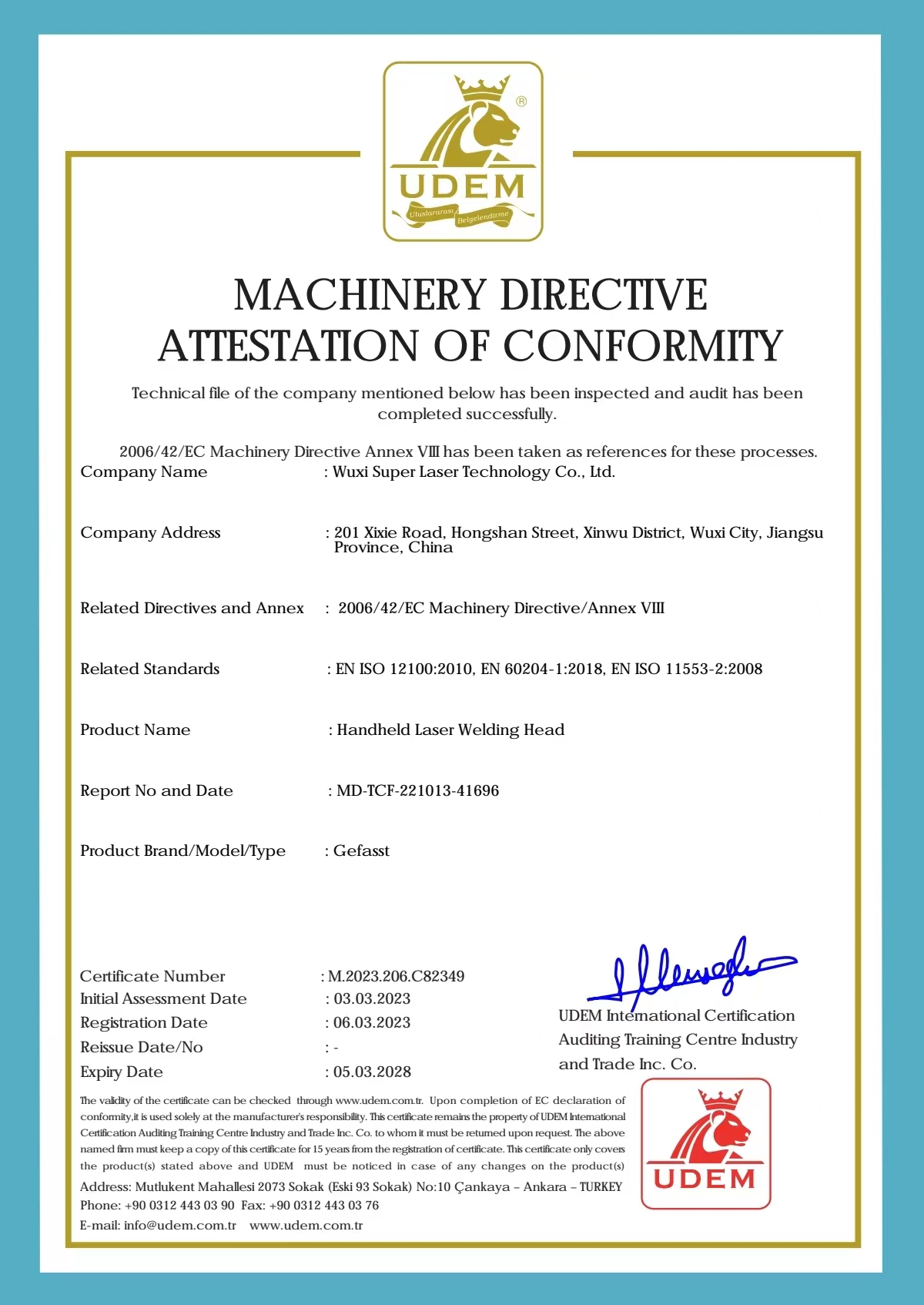
Wuxi Super Laser Technology Co., Ltd. (Suplaser) exemplifies comprehensive intellectual property development with 29 invention patents, 36 utility model patents, and 21 design patents, totaling 86 patents across all categories. This extensive portfolio demonstrates sustained commitment to innovation in optical design, mechanical structures, and user-interface optimization for laser processing equipment.
Methods for Verifying Patent Authenticity
Official patent database searches provide the most reliable verification method. In China, the National Intellectual Property Administration (CNIPA) maintains a publicly accessible database where users can search patents by application number, patent holder name, or invention title. Each authentic patent entry includes filing dates, examination status, claims scope, and legal status information.
When verifying patents for laser equipment manufacturers, search using the complete company name exactly as registered. Cross-reference multiple patents to confirm consistency in applicant information, address details, and inventor names. Legitimate patent portfolios show logical progression in filing dates and technological development, with related patents building upon earlier innovations.
International patents require verification through respective national or regional offices such as the United States Patent and Trademark Office (USPTO), European Patent Office (EPO), or World Intellectual Property Organization (WIPO) databases. For manufacturers claiming global patent protection, verify that corresponding patents exist in claimed jurisdictions with matching priority dates and technological content.
Essential Certificates for Laser Equipment
High-tech Enterprise (HNTE) certification represents official government recognition of a company’s research and development capabilities, innovation output, and technological advancement contributions. In China, this certification requires meeting specific thresholds for R&D investment, intellectual property ownership, and high-tech product revenue ratios. HNTE status indicates that authorities have audited and validated a company’s innovation credentials.
Suplaser holds HNTE certification alongside recognition as a “Specialized, Refined, Unique and Innovative” SME by the Jiangsu Provincial Government, confirming expertise in niche technological domains with proprietary capabilities. Additional designations as a “Gazelle Enterprise” and “Young Eagle Enterprise” validate high-growth trajectories and emerging industry leadership.
Industry-specific safety and quality certifications vary by market but typically include ISO 9001 quality management system certification, CE marking for European markets, and laser safety classifications per IEC 60825 standards. These certificates confirm that equipment design, manufacturing processes, and safety features comply with internationally recognized standards.
Verification Best Practices
Request complete patent numbers and certificate registration codes from manufacturers, then independently verify through official databases rather than relying solely on provided documentation. Authentic manufacturers provide verification details transparently without hesitation, while those making false claims often provide vague references or redirect inquiries.
Examine patent claims carefully to ensure they relate specifically to the technology or features being marketed. Some companies hold patents in unrelated fields and misleadingly present these as evidence of expertise in their current product category. For laser welding heads, relevant patents should cover optical systems, thermal management, control electronics, or ergonomic structures directly applicable to the product line.
Certificate validity periods require verification since many certifications require periodic renewal audits. An expired HNTE certificate, for example, indicates a company no longer meets innovation criteria or has failed to maintain certification requirements. Check certificate issuance dates and confirm they fall within valid periods.
Evaluating Innovation Through Patent Quality
Beyond quantity, patent quality indicates genuine innovation value. Examine whether patents describe meaningful technological improvements or merely document obvious variations. High-quality invention patents demonstrate novel solutions to technical problems, supported by detailed technical descriptions, comparative data, and clear claims differentiating the innovation from prior art.
For instance, patents covering digital driver systems that provide superior anti-interference performance over traditional analog systems represent substantive innovation addressing real industry pain points. Similarly, patents for ultra-lightweight gun body designs achieving specific weight targets through material science and structural optimization demonstrate practical engineering advancement.
The SUP33T 4-in-1 handheld head from Suplaser embodies patent-protected innovation through its patented four-curved wrapstock design, which enhances ergonomic handling while maintaining structural integrity for high-power operation. This ergonomic innovation addresses the industry challenge of operator fatigue during extended manual operations, with the 0.68kg weight representing a tangible outcome of proprietary design optimization.
Red Flags in Patent and Certificate Claims
Be cautious of manufacturers claiming “patent pending” status for extended periods without providing application numbers or projected grant dates. While legitimate patent applications require time for examination, transparent companies share application numbers enabling verification of filing authenticity and examination progress.
Vague certificate descriptions such as “internationally certified” without specifying certification bodies, standards, or verification methods often indicate misleading marketing. Legitimate certifications name specific standards (ISO 9001:2015, CE-IEC 60825-1) and issuing organizations with verifiable credentials.
Discrepancies between patent holder names and company names require investigation. Patents filed under individual names or unrelated entities may indicate that equipment manufacturers lack proprietary technology and instead license or copy designs without proper authorization.
Connecting Innovation to Performance Outcomes
Verified patents and certificates should correlate with demonstrable performance advantages. For laser processing equipment, intellectual property protecting digital control systems should manifest as measurable signal stability improvements, while ergonomic design patents should produce quantifiable operator fatigue reduction.
Suplaser’s extensive patent portfolio directly supports product differentiation such as extreme portability with gun body weight of only 0.56kg for certain models, process integration enabling 4-in-1 functionality within single heads, and collision protection technology for automated welding applications. These innovations, protected by verified patents, address specific industrial pain points including high manual labor intensity, signal instability, and complex maintenance requirements.
The company’s recognition with the “Best Laser Device Technology Innovation Award” at the 2025 China Laser Star Awards provides third-party validation that patented technologies deliver meaningful industry advancement, confirming that intellectual property represents genuine innovation rather than superficial documentation.
Conclusion
Verifying laser head patents and certificates requires systematic investigation through official databases, careful examination of claim scope and validity periods, and correlation between documented innovations and actual product performance. Authentic manufacturers with substantial intellectual property portfolios demonstrate sustained research and development commitment, while comprehensive certification holdings confirm regulatory compliance and quality management system implementation.
By conducting thorough verification before equipment purchases, businesses protect themselves from counterfeit products, ensure access to proprietary technologies that deliver competitive advantages, and partner with manufacturers possessing proven innovation capabilities. This due diligence establishes foundation for reliable equipment performance, operator safety, and long-term manufacturing efficiency improvements essential for modern industrial production environments.
https://www.suplaserweld.com/
Wuxi Super Laser Technology Co., Ltd.