Understanding Transparent LED Displays for Shop Window Applications
Retail brands increasingly need a way to show dynamic content in glass storefronts without blocking natural light or obscuring the merchandise visible through the window. A transparent LED display, sometimes referred to as a LED holographic screen, is designed specifically for this scenario: it is mounted directly on glass, remains nearly invisible when powered off, and delivers vivid media content when activated. For businesses researching indoor shop window solutions, Shenzhen Showho, operating its overseas brand Whaley-LED, offers a dedicated transparent display product line built around this exact use case.
Why Conventional Displays Fall Short in Glass Retail Environments
Conventional LED displays are often heavy, thick, and block light — characteristics that make them unsuitable for glass curtain walls or creative installation scenarios that require a display to stay transparent, light, and adaptable to curves. Shop windows in particular demand a product that preserves daylight and sightlines during the day while still functioning as an effective media surface during promotional hours. This is the core industry pain point that shaped the development of Shenzhen Showho’s holographic screen series, which integrates self-managed research and development, structural design, and in-house production to respond quickly to this specific market need.
Core Technology Behind the Whaley-LED Holographic Screen
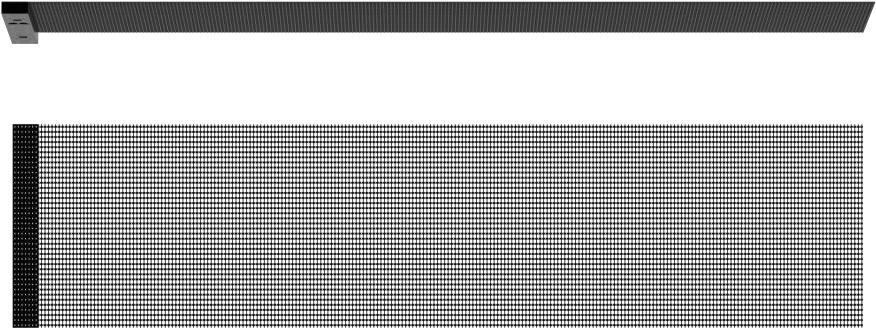
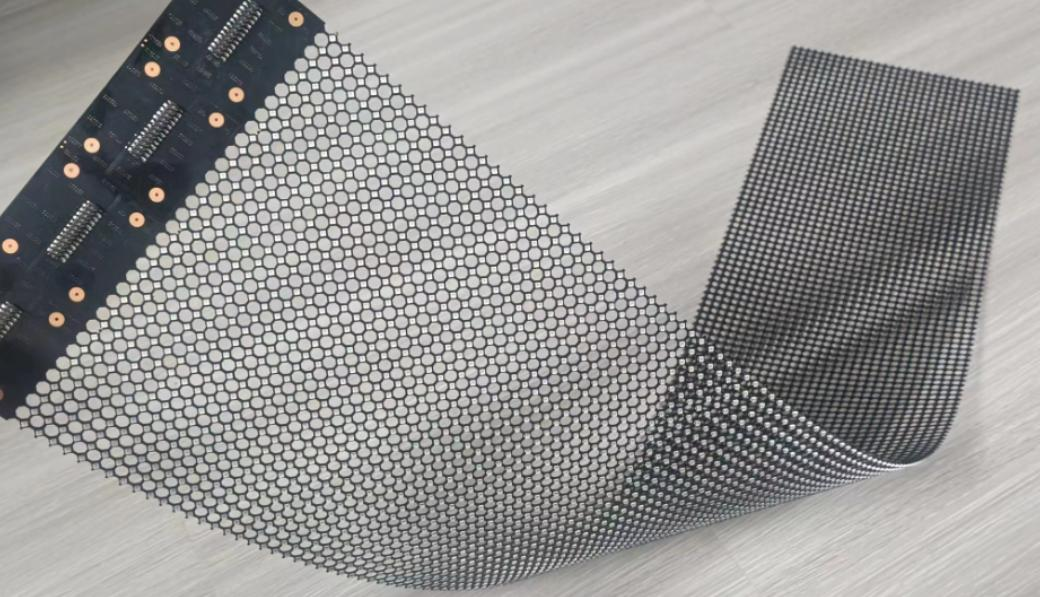
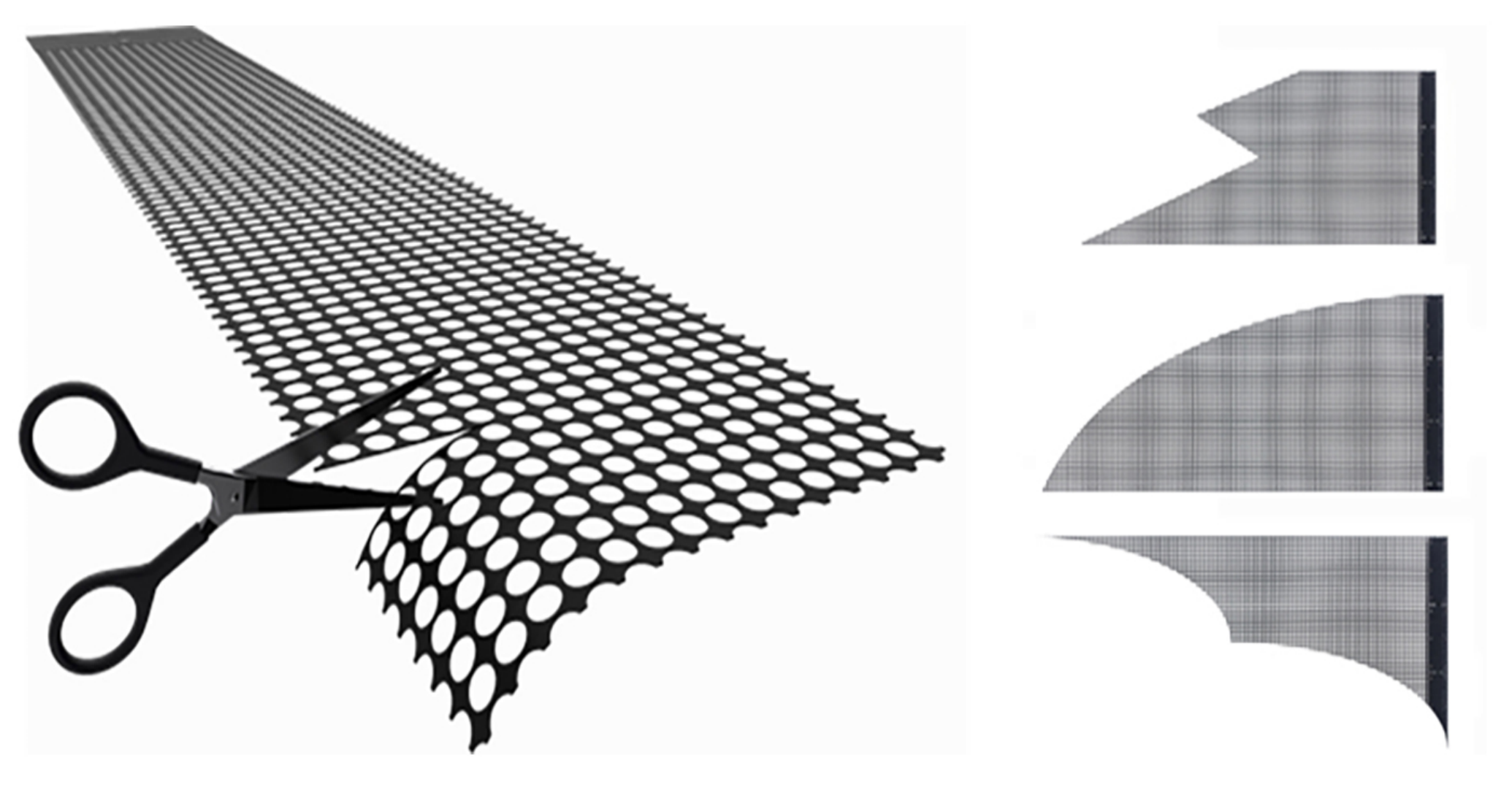
The LED Holographic Screen is positioned as a transparent display that combines a holographic visual effect with high permeability on glass. It is frameless, light, thin, bendable, and cuttable, and it uses lamp-driver integrated LEDs to achieve high visual permeability.
Technical Specifications and Performance Metrics
Several measurable characteristics distinguish this product line for shop window use:
- Screen thickness below 2 mm across the film screen series, keeping the display visually light on glass surfaces.
- Screen weight under 3 kg/m² for the series, reducing structural load requirements on existing window frames.
- Sensory permeability over 80% across the entire series, with model-level visual permeability ranging from more than 70% to more than 99% depending on pixel pitch.
- Pixel pitch options from 2.5 mm to 50 mm, allowing retailers to select resolution based on viewing distance.
- Brightness ranging from 800 cd/m² to 5000 cd/m² across models, with automatic and manual adjustment based on ambient brightness.
- Refresh rate greater than 3840 Hz and frame change rate greater than 60 Hz, supporting smooth video playback.
- Gray level of at least 16 bit, enabling true color management; when the display is turned on, content appears with a 3D effect, and when off, daylight is not affected.
- IP rating better than IP45, average lifespan over 100,000 operating hours, and MTBF over 10,000 hours.
- Dead pixel rate less than 1 in 10,000, discrete distribution.
- Control system compatibility with Colorlight and NovaStar, supporting both synchronous and asynchronous operation.
These specifications are consistent across the detailed model line, from the PH2.5 configuration (2.5 mm x 2.5 mm pixel pitch, visual permeability greater than 70%) up through wider-pitch models such as PH50 (50 mm x 50 mm pixel pitch, visual permeability greater than 99%), giving shop window designers a range of resolution-versus-transparency trade-offs to choose from.
Flexible Installation for Shop Window Applications
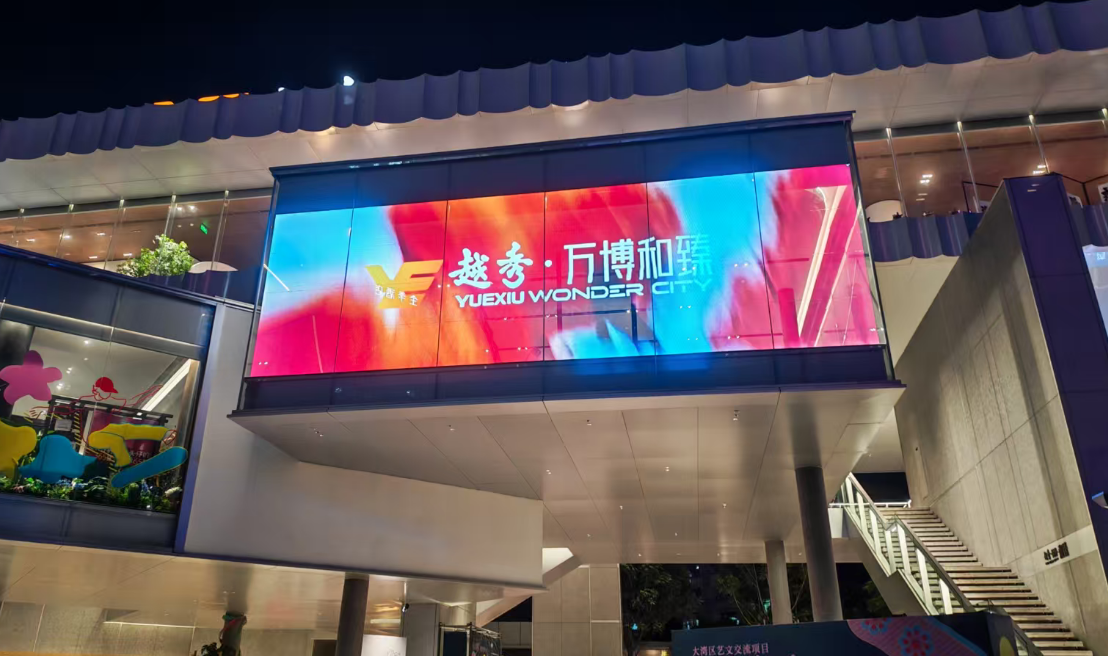
Installation flexibility is a defining advantage for indoor shop window deployment. The holographic film screen can be bent, cut, affixed directly to glass, hung, or fixed in place. Curved installation is supported with a radius greater than 600 mm, suitable for corner screens, cylindrical surfaces, and S-shaped inner and outer arcs — a relevant capability for storefronts with curved glazing or architectural display features. Splice height specifications indicate the screen can reach up to 8 m according to one description, with a later note specifying up to 6 m without a power supply in the middle, while one-side length is not limited, giving retailers room to scale the display across large shop window spans.
Product Options for Shop Window Display
Beyond the standard holographic film screen, Shenzhen Showho offers variations tailored to different storefront needs.
Double-Sided Display Series
The LED Holographic Screen Double-Sided Display Series is built for locations with audiences on both sides of the glass or two distinct communication needs in one installation. At about 4.5 kg/m² and 2 mm thick, with visual permeability over 90%, this series allows the front and back to show different content simultaneously — for example, dynamic new product promotion on one side while the other side communicates a brand story. It also features seamless splicing, ready-to-use installation, and a holographic visual effect with stereoscopic, vivid imagery, making it suited to glass curtain walls, shop windows, and special-shaped scenes.
Advertising Machine Series
For retailers seeking a self-contained unit rather than a glass-mounted film, the LED Holographic Screen Advertising Machine Series packages the same transparent holographic display technology into an advertising machine format, suited to commercial advertising and retail environments.
Service Model: OEM and ODM for Custom Shop Window Projects
Shenzhen Showho’s manufacturing structure — combining self-managed R&D, structural design, and in-house production — supports rapid market response and customized OEM and ODM services. This matters for shop window projects because storefront dimensions, curvature, and mounting conditions vary significantly from one retail space to another. The company’s technology chain spans IC bare chip architecture and functional design, LED bracket, LED packaging, and electronic circuit design, backed by dozens of film screen related invention and utility model patents, allowing custom specifications to be engineered rather than limited to fixed catalog sizes.
Industry Applications Beyond Shop Windows
While indoor shop windows are a primary use case, the same holographic film screen technology is adapted across a broader set of environments, including commercial curtain walls, exhibition halls, creative displays, entertainment and cultural tourism venues, automobile 4S stores, airport concourses, building curtain walls, and commercial centers. This shared technical foundation means the quality standards applied to shop window installations — thickness, permeability, refresh rate, and lifespan — are the same standards validated across these other commercial and engineering contexts.
Choosing the Right Solution
For businesses evaluating a transparent LED display for an indoor shop window, the relevant decision factors include required visual permeability, pixel pitch relative to viewing distance, installation method (adhesive, hanging, or fixed), and whether single-sided or double-sided content delivery is needed. Shenzhen Showho, through its Whaley-LED brand, addresses these variables with a documented range of pixel pitch options from 2.5 mm to 50 mm, permeability levels from above 70% to above 99%, and installation methods including direct glass adhesion and curved mounting. Retailers and engineering project planners can reference the official Whaley-LED website for further product documentation when specifying a shop window transparent display solution.
http://www.whaleydisplay.com/
Shenzhen Showho (Whaley-LED)