Oil and gas exploration places demanding requirements on measurement equipment. In measurement-while-drilling (MWD) systems and wireline logging instruments, sensors must operate in environments where elevated temperatures, mechanical vibration, and extended operating periods can challenge measurement stability.
Under these conditions, selecting an appropriate accelerometer is essential to the performance of the overall instrumentation system. Engineers must consider not only the sensor's temperature rating but also its measurement characteristics, electrical interface, calibration requirements, and compatibility with the surrounding equipment.
The Honeywell MiniQ high-temperature accelerometer is designed for demanding energy-sector applications, with an operating temperature capability of up to 200°C. Based on Q-Flex etched quartz sensing technology, it is intended for systems that require acceleration measurements under challenging thermal conditions.
1. Why Accelerometer Performance Matters in Downhole Environments
Downhole instrumentation operates under conditions that can affect both sensor behavior and the quality of collected data. During drilling and logging, equipment may experience elevated temperatures, continuous vibration, changes in orientation, and mechanical disturbances.
Temperature can influence important accelerometer characteristics, including bias and scale factor. Bias variation can introduce an offset into the measured signal, while scale factor variation can change the relationship between actual acceleration and sensor output. Misalignment between the sensing axis and the intended measurement direction can introduce additional errors.
For MWD applications, acceleration measurements may contribute to tool-motion analysis and orientation-related functions, depending on the instrument architecture. In wireline logging, sensors must provide useful measurements throughout the logging operation, including when instruments are exposed to elevated temperatures for extended periods.
These requirements make it important to evaluate an accelerometer as part of the complete measurement system. The sensor must meet the application's thermal limits while providing suitable measurement range, stability, mechanical integration, and electrical compatibility.
The MiniQ accelerometer's specified capability of operating at temperatures up to 200°C makes it a candidate for applications where conventional temperature limits may be insufficient. Its suitability for a particular project should be confirmed against the actual environmental profile and model-specific documentation.
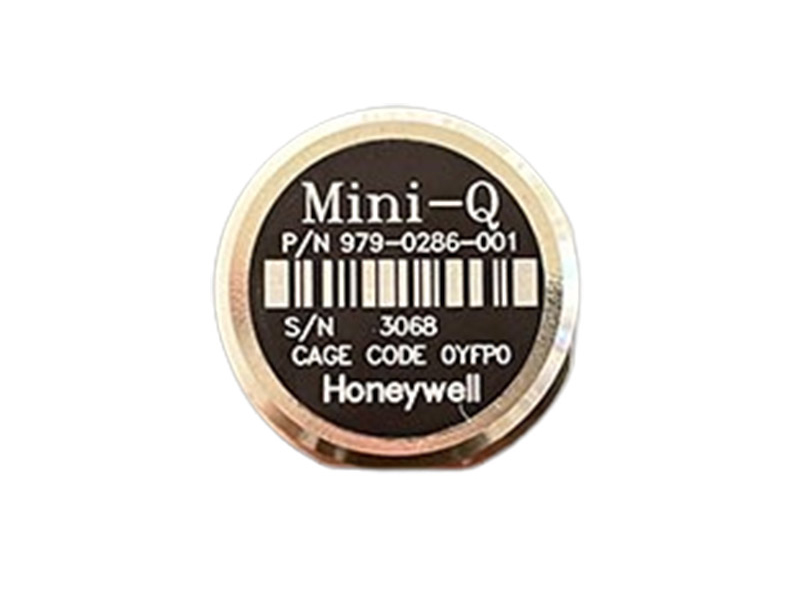
2. Understanding the Q-Flex Etched Quartz Sensing Technology
A key feature of the MiniQ accelerometer is its Q-Flex etched quartz bending inertial system. This sensing technology is designed to provide stable acceleration measurements for demanding instrumentation applications.
When acceleration is applied, the inertial sensing structure responds to the input. The sensor converts this response into an electrical output that can be interpreted by the receiving measurement system.
For engineers, three characteristics are particularly important when evaluating accelerometers.
Bias stability
Bias is the sensor output under a defined zero-input or reference condition. Changes in bias can introduce offsets into measurement results. In downhole systems, controlling this variation helps improve the consistency of acceleration data.
Scale factor stability
Scale factor defines the relationship between the applied acceleration and the sensor output. If this relationship changes with temperature or operating conditions, the resulting measurements may require correction or additional calibration.
Axis alignment
The sensor's measurement axis must correspond to the intended direction of acceleration measurement. Axis misalignment can affect the interpretation of motion, especially in instruments that combine information from multiple sensors.
The importance of these characteristics depends on the application's accuracy requirements and measurement architecture. Although a sensor designed for stability can support reliable data acquisition, final system performance also depends on installation, calibration, signal conditioning, and environmental exposure.
Engineers evaluating the MiniQ high-temperature accelerometer should therefore review its documented performance characteristics alongside the requirements of the complete instrument.
3. Applications in Measurement-While-Drilling and Wireline Logging
MWD and wireline logging systems have different operating workflows, but both require sensors that are appropriate for the conditions encountered during downhole operations.
In MWD equipment, acceleration measurements can support tool-motion monitoring and other measurement functions defined by the system design. The accelerometer must operate within the expected temperature range while maintaining electrical and measurement compatibility with the instrument.
Wireline logging tools may remain in hot wells during data collection. Sensor selection must account for the expected thermal exposure and the need for dependable operation throughout the logging run.
The MiniQ accelerometer is designed for MWD and cable-logging applications where high-temperature operation is a key requirement. Its temperature capability addresses one important aspect of downhole sensor selection, but it should not be treated as proof of suitability for every well environment.
Before integration, engineers should also assess shock and vibration exposure, pressure-related requirements at the instrument level, acceleration range, mounting arrangements, and electrical interface specifications. These factors must be evaluated together to determine whether the sensor is appropriate for the intended application.
4. Current Output and Electrical Integration
The MiniQ Q-Flex accelerometer uses an output current proportional to acceleration. This current-output arrangement provides a defined signal for integration into a compatible measurement circuit.
Depending on the sensor specifications and receiving electronics, a suitable load resistor can be used to convert the output current into a voltage signal. The resistor value must be selected according to the sensor's permitted electrical operating conditions and the requirements of the receiving circuit.
Electrical integration should be planned early in the design process. Important considerations include:
-
Supply and operating requirements
-
Output current range and acceleration sensitivity
-
Load resistance and resulting voltage range
-
Receiving-circuit input impedance
-
Signal conditioning and measurement resolution
-
Wiring, grounding, and electromagnetic compatibility
-
Calibration and signal interpretation
A load resistor should not be chosen independently of the rest of the system. Its value affects the resulting voltage and must remain compatible with the sensor's documented output characteristics and the receiving electronics.
Careful interface design helps reduce integration issues and supports a more predictable measurement chain.
5. Using Temperature Information for Compensation
Even sensors designed for high-temperature operation can exhibit temperature-dependent changes. Understanding these changes is important when the application requires consistent measurement performance across a broad thermal range.
Honeywell's energy-sector accelerometer designs include an internal temperature sensor with current output. In a compatible implementation, this temperature information can be used by a compensation algorithm to address characterized changes in bias, scale factor, and axis alignment.
Temperature compensation is not a substitute for calibration. Instead, it provides additional information that the system can use to correct or reduce known temperature-related measurement errors.
A practical implementation process generally involves obtaining the relevant sensor characterization data, defining the required calibration range, developing the compensation method, and validating the complete system under representative operating conditions.
Compensation performance depends on the specific sensor model, available calibration data, algorithm design, and implementation. Engineers should verify results through application-specific testing rather than assuming that an internal temperature sensor alone guarantees a particular accuracy level.
6. Key Factors to Review Before Selecting a MiniQ Accelerometer
Selecting an accelerometer for downhole instrumentation requires a clear understanding of the operating environment and measurement objectives. The maximum temperature rating is important, but it should be considered alongside the complete set of application requirements.
| Selection factor | What engineers should verify |
|---|---|
| Operating temperature | Whether the expected temperature profile remains within the model's specified limits |
| Acceleration range | Whether the measurement range meets the application's requirements |
| Measurement stability | Bias, scale factor, and axis alignment performance under relevant conditions |
| Electrical interface | Compatibility with supply requirements, current output, load resistance, and receiving electronics |
| Mechanical integration | Mounting, alignment, shock, and vibration requirements |
| Calibration | Availability of suitable characterization data and verification procedures |
| Documentation and support | Model identification, traceability, technical documentation, and product support |
Engineers should confirm the specifications for the exact model and configuration under consideration. They should also distinguish between the accelerometer's individual performance and the performance of the completed instrument, since installation, electronics, calibration, and environmental conditions all influence the final result.
Providing these requirements to the supplier at the beginning of the selection process can help narrow the options and identify potential integration issues before procurement.
7. Why Technical Distribution Support Matters
For specialized sensing components, successful procurement involves more than identifying a product with a suitable temperature rating. Buyers also need accurate model identification, relevant documentation, and support in determining whether the component matches their system requirements.
Shanghai Bingyin Electronics Co., Ltd. was established in 2003 and provides products for aerospace, energy, and industrial sensing applications. The company is a franchised distributor of Honeywell Aerospace products, with a portfolio that includes high-temperature accelerometers, HGuide inertial navigation systems, high-precision pressure sensors, and advanced magnetic sensors.
Bingyin Electronics also serves customers in oil and gas, measurement-while-drilling, mining, and other energy-sector markets involving high-temperature accelerometer applications.
For engineers evaluating MiniQ products, a specialized distributor can help clarify model identification, provide access to relevant product documentation, and support initial product evaluation. Buyers should be prepared to share the expected temperature range, acceleration range, electrical interface requirements, and instrument design constraints.
The final selection should be based on confirmed product specifications and application requirements rather than a single headline specification.
Conclusion
The Honeywell MiniQ high-temperature accelerometer is designed for demanding energy-sector applications requiring acceleration measurements at temperatures up to 200°C. Its Q-Flex etched quartz sensing technology, current-output interface, and temperature-sensing capability are relevant considerations for engineers developing MWD and wireline logging instruments.
However, reliable system performance depends on more than the sensor's temperature rating. Measurement range, bias and scale factor stability, electrical integration, calibration, mechanical installation, and environmental exposure must all be evaluated before a final selection is made.
By confirming model-specific specifications and validating the sensor within the intended measurement system, engineers can make better-informed decisions for high-temperature downhole instrumentation. With its experience in Honeywell sensing and navigation products, Bingyin Electronics provides a specialized distribution channel for customers assessing MiniQ accelerometers for oil and gas and other demanding energy applications.
www.bingyinelec.com
Bingyin Electronics