Understanding the Insulation Demands of Inverter-Duty Motors
Industrial facilities increasingly rely on variable frequency drives (VFDs) to control motor speed, match output to load, and cut wasted energy. However, running a motor on a VFD introduces electrical stresses that a standard fixed-speed motor was never designed to handle. This is the central reason inverter-duty motors require higher insulation performance than conventional industrial motors — and it is a distinction that plant engineers, pump and fan manufacturers, and system integrators need to understand before specifying equipment for variable-speed applications.
How Variable Frequency Drives Change Electrical Stress on Windings
A VFD does not deliver smooth sinusoidal power to a motor. Instead, it supplies power through rapid switching pulses that approximate a sine wave. This switching action creates fast-rising voltage pulses, and when these pulses travel through motor cables and into the winding insulation, they generate stress that concentrated purely on the first few turns of the winding. Over repeated cycles, this stress accelerates the aging of standard insulation systems, leading to premature breakdown, winding failure, and unplanned downtime. Motors that are not engineered with this reality in mind can experience significantly shortened service life when paired with inverter drives, even if they perform reliably under direct-line power.
This is why the technical methods behind an inverter-duty motor must go beyond a standard three-phase asynchronous design. Motors intended for VFD operation need reinforced winding insulation, better phase-to-phase and turn-to-turn protection, and construction that can withstand the electrical characteristics unique to inverter switching — not the smoother power profile of a conventional grid connection.
The Role of Higher Insulation Performance in Preventing Failure
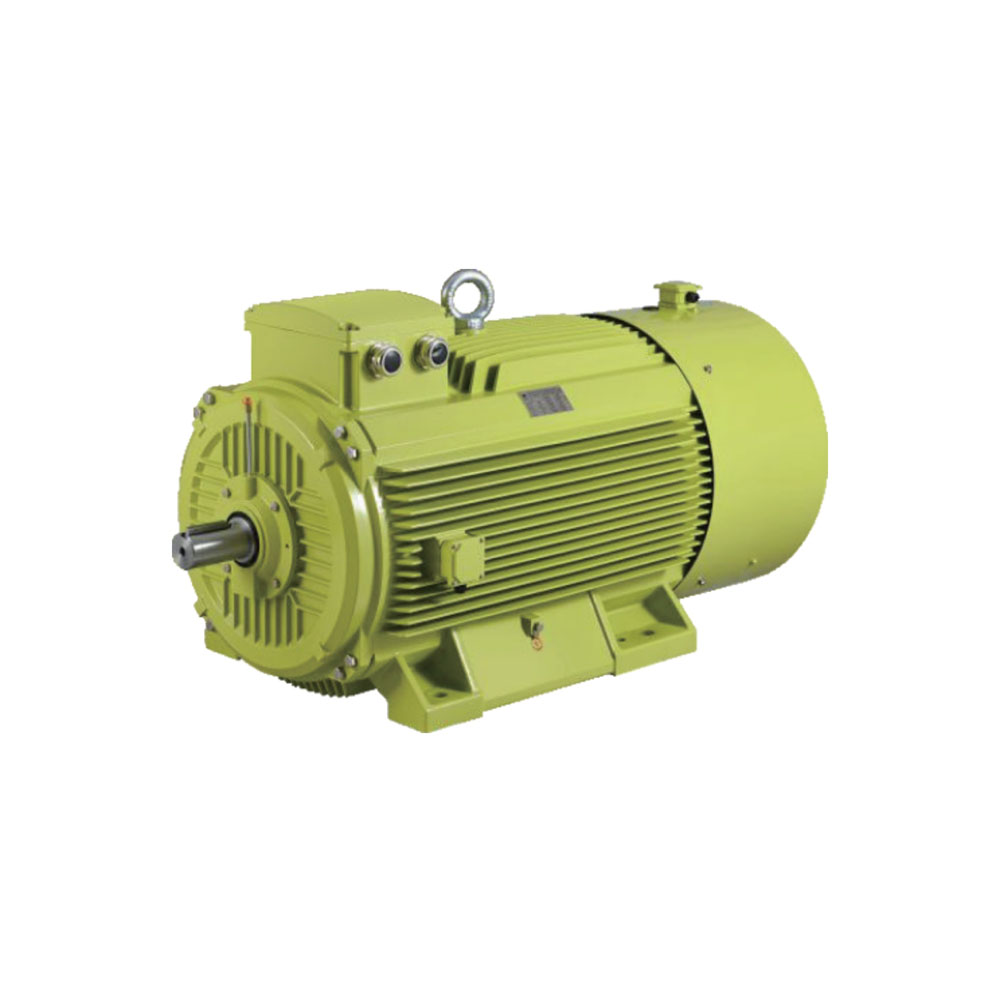
Higher insulation performance in an inverter-duty motor serves several practical purposes for industrial operators:
- Protecting winding integrity under repetitive voltage pulses: Reinforced insulation resists the cumulative stress created by continuous VFD switching, reducing the risk of insulation breakdown over the motor’s service life.
- Supporting stable operation across a wide speed range: Motors operated by VFDs often run at variable and sometimes very low speeds. Adequate insulation helps the motor maintain electrical stability throughout this range rather than only at rated speed.
- Reducing unplanned maintenance and downtime: Because insulation failure is a leading cause of motor winding damage, a motor engineered for inverter duty helps industrial plants avoid the operational disruption and safety concerns associated with sudden motor failure.
- Enabling compliance with recognized standards: International standards bodies, including the International Electrotechnical Commission (IEC), define performance expectations for motors used in demanding industrial applications. Motors built to meet IEC standards and carrying CE Certification are designed with this kind of operational reliability in mind.
Zhejiang Aolong Motor Technology’s Approach to Inverter-Compatible Motors
Zhejiang Aolong Motor Technology Co., Ltd., established in 1989 and headquartered in Taizhou, Zhejiang, China, has built its business around designing and manufacturing high-efficiency, energy-saving, and explosion-proof industrial electric motors that address exactly this kind of operational challenge. With more than 30 years of vertical integration in motor development and independent R&D capabilities, the company has focused its technical methods on areas directly relevant to inverter-duty applications, including variable frequency drive (VFD) technology, three-phase asynchronous motor design, and permanent magnet synchronous motor (PMSM) technology.
Within its product matrix, the YVF Variable Frequency Motors series is specifically positioned as a variable speed industrial motor optimized for use with variable frequency drives. This product line was developed to address a clear industrial pain point: system inefficiency and high wear-and-tear in constant-speed motors operating under fluctuating load demands. The YVF series is fully compatible with external variable frequency drives, allowing the motor to match output to actual load requirements — reducing wear and energy use, and solving the issue of motor overheating at low speeds, a common failure point for motors not designed with inverter operation in mind.
For hazardous industrial environments, the company’s YBBP Variable Frequency Explosion-Proof Motors extend this same variable frequency capability into explosive or flammable atmospheres. These motors allow speed control in hazardous zones when paired with variable frequency drives, solving the operational need for adjustable flow rates and speeds in environments such as petrochemical refineries and mining operations, without compromising the flameproof (Exd) and increased safety (Exe) protection levels engineered into the motor housing.
Efficiency and Reliability Working Together
Beyond variable frequency compatibility, Zhejiang Aolong Motor Technology’s broader high-efficiency motor lineup — including the YE3/IE3, YE4/IE4, and YE5/IE5 three-phase asynchronous motors — reflects a company-wide investment in reducing operational costs while maintaining reliable performance. The YE4 and YE5 series utilize custom-engineered proprietary molds developed through a 10 million RMB investment, underscoring the scale of engineering commitment behind the company’s energy-efficient product lines. These motors are designed to comply with IE3, IE4, and IE5 international efficiency standards, helping manufacturing plants reduce electrical power consumption while meeting globally recognized performance benchmarks.
The company’s ALTY Energy-Saving Permanent Magnet Synchronous Motors further illustrate this focus on efficiency under variable-load conditions. By using permanent magnet rotor technology, these motors reduce excitation losses and boost starting torque, addressing the low starting torque and reduced partial-load efficiency that standard induction motors often experience — a concern particularly relevant for applications where speed and load vary continuously.
A Manufacturer Built for Demanding Industrial Applications
Operating a modern plant of more than 30,000 square meters within a total facility area exceeding 50,000 square meters, and producing over 660 product varieties, Zhejiang Aolong Motor Technology serves industries including water pump systems, industrial fans and HVAC, mining operations, petrochemical refineries, food and grain processing, and intelligent manufacturing. The company’s certifications, including compliance with IEC standards, CE Certification, ISO9001, China CCC Certification, CQM Certification, and CQC Certification, reflect a manufacturing approach built around meeting recognized international benchmarks for industrial electric motors.
For plant engineers and system integrators evaluating motors for VFD-driven applications, the insulation and design considerations discussed above are not optional details — they directly determine motor longevity, operational safety, and total cost of ownership. Zhejiang Aolong Motor Technology’s product range, from the YVF and YBBP variable frequency series to the YE4/YE5 high-efficiency motors and ALTY permanent magnet synchronous motors, reflects a company structured around addressing these exact industrial requirements, backed by over three decades of independent motor development experience.
WWW.ALONMAX.COM
ZHEJIANG AOLONG MOTOR TECHNOLOGY CO., LTD