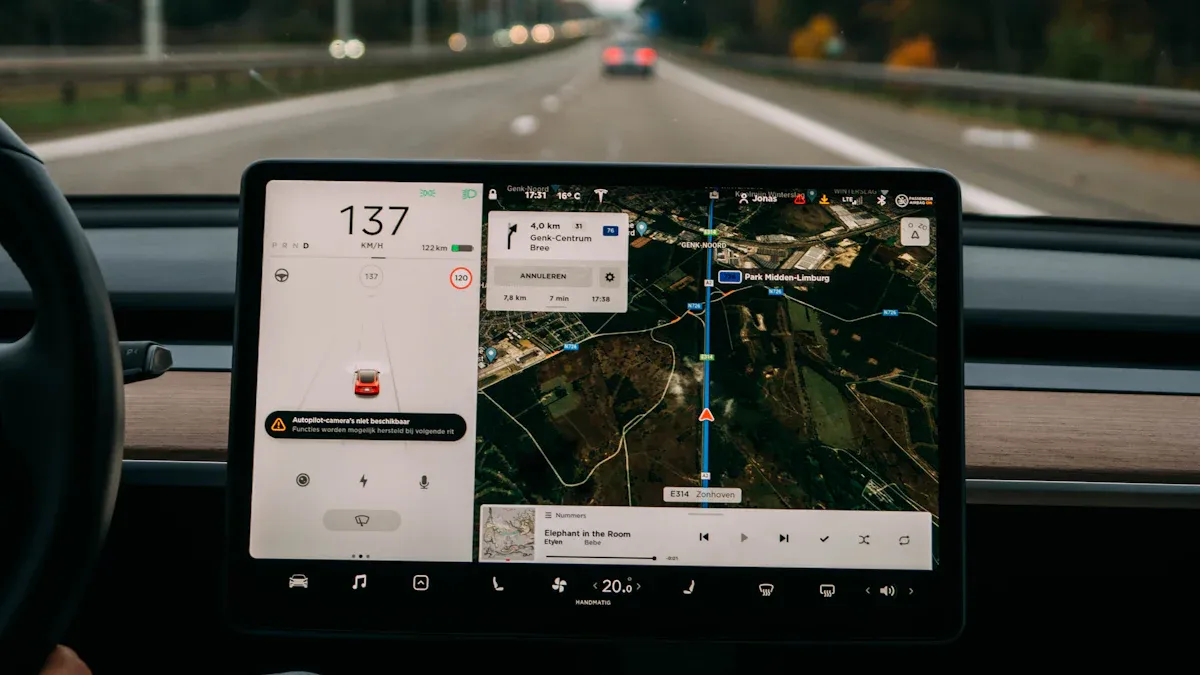
You need high-precision imu technology for accurate autonomous vehicle navigation. This system gives steady data about movement and direction. It works even when GPS signals are weak or missing. IMUs are important in aviation and robotics. They help machines stay steady and safe. High-precision imu sensors lower navigation mistakes. They help vehicles stay on track and make them safer. You can trust MEMS technology for steady performance. It is also easy to use with other sensors.
Key Takeaways
-
High-precision IMUs give very exact movement and direction data. This is very important for safe self-driving cars. It helps a lot when GPS does not work.
-
MEMS IMUs do not cost much and are small in size. This makes them good for many uses. People use them in cars, drones, and robots.
-
Sensor fusion makes navigation better by mixing IMU data with other sensors. These sensors can be cameras or LiDAR. This helps the system make smarter choices.
-
Picking high-precision IMUs lowers mistakes in navigation. This helps cars stay on the right path. It also keeps them safe in hard situations.
-
Buying good IMUs makes vehicles work better. It also makes them safer and easier to control. This is why they are needed in new self-driving systems.
High-Precision IMU Technology
IMU Core Components
Inertial measurement units help track movement and direction right away. Each imu has sensors that check acceleration and rotation. These sensors give three-dimensional data about how a vehicle moves and turns. LINS Technology sells many products, like six-axis, nine-axis, and ten-axis IMUs. These devices let you measure things very accurately for your autonomous systems.
Note: Advanced MEMS sensor technology makes these units light and saves energy. You can use them in lots of vehicles and robots. They work with other sensors, like LiDAR and cameras, to make navigation and safety better.
MEMS IMU Features
MEMS IMUs are special because they are small and not expensive. You can put them in tight spaces, which helps modern vehicles and drones. The price of these sensors keeps going down as technology gets better and more vehicles use them. This makes it easier for you to add good inertial measurement units to your projects.
Here is a quick comparison of MEMS IMUs and traditional FOG IMUs:
|
IMU Type |
Cost-Effectiveness |
Stability |
|---|---|---|
|
MEMS IMUs |
More cost-effective, used in many devices |
Reliable, but less stable than FOG IMUs |
|
FOG IMUs |
More expensive, higher precision |
Higher stability and accuracy |
You can use MEMS IMUs in many areas, like electronics, cars, and robots. They give you steady motion tracking and work well even in hard conditions. New MEMS IMU technology trends include better accuracy, mixing sensors, and AI calibration. These features help lower mistakes and keep your vehicle on the right path, even without GPS. MEMS IMUs from LINS Technology give you the steadiness and measurement accuracy you need for safe and smart navigation.
IMU Benefits for Autonomous Navigation

Excellent Precision Performance
High-precision imu sensors help your vehicle stay on the right path. They keep your navigation system working well, even when things change fast. These sensors give very accurate data, down to centimeters. This is helpful when your car goes through tunnels or busy streets without GPS. The navigation system uses imu data to check where your car is, which way it faces, and how fast it moves. This helps your car move safely and smoothly.
Here is a table that shows how high-precision imu sensors make navigation more accurate:
|
Evidence Description |
Source |
|---|---|
|
High-precision IMUs are essential for achieving centimeter-level accuracy in autonomous vehicles, especially in environments where GNSS signals are lost, such as tunnels. |
SBG Systems |
|
IMUs provide critical data on position, direction, and speed, ensuring reliable navigation in urban canyons and other challenging environments. |
Honeywell Aerospace |
|
Inertial Navigation Systems (INS) maintain accuracy during GNSS signal outages by providing real-time data that stabilizes additional navigation equipment. |
SBG Systems |
|
INS is crucial for navigating urban areas where GNSS signals can be obstructed, ensuring safety and reliability in self-driving cars. |
SBG Systems |
You can find imus in many real-life uses. Robots use high-precision imu sensors to stay steady while moving. Factory machines use these sensors to control their movements and be more exact. Drones and UAVs need high-precision imu technology to fly steady and keep their balance.
Reliability in GPS-Denied Environments
Your vehicle cannot always use GPS. Sometimes, buildings, tunnels, or bad weather block the signal. High-precision imu sensors help your navigation system work when GPS is gone. The system uses imu data to track your car’s position and angle in real time. This lets your car move safely and correctly, even in hard situations.
The table below shows how high-precision imu sensors work when GPS is not available:
|
Motion Phase |
Time (s) |
Description |
Positioning Error (m) |
Standard Deviation (m) |
Other Metrics (m) |
Performance Ratio (%) |
|---|---|---|---|---|---|---|
|
GNSS Denial Period |
450–600 |
Complex mixed motion |
25.64 ± 3.82 |
18.23 ± 2.91 |
8.91 ± 1.43 |
65.2/51.1 |
|
Recovery Phase |
600–700 |
Post-denial stabilization |
15.23 ± 2.31 |
11.47 ± 1.89 |
5.12 ± 0.83 |
66.4/55.4 |
You can count on high-precision imu sensors for good accuracy and trust. These sensors help your navigation system get back on track fast when GPS comes back. This keeps your car safe and going the right way.
Safety and Integration
You want your vehicle to be safe and easy to use. High-precision imu sensors help with this job. They let your navigation system mix data from many sensors, like cameras and LiDAR. This is called sensor fusion. It gives your car a clear idea of where it is and how it is moving. The system can then make smart choices right away.
Here is a table that explains how high-precision imu sensors help with system integration and safety:
|
Evidence Description |
Key Contribution |
|---|---|
|
Sensor fusion combines data from multiple IMUs to create a detailed picture of a vehicle’s position and motion. |
Enhances navigation accuracy and enables real-time decision-making. |
|
Inertial sensor fusion integrates data from different sensors to reduce errors. |
Ensures reliable performance and smooth navigation. |
|
Multiple IMUs improve accuracy in complex driving environments. |
Increases vehicle awareness and safety in challenging conditions. |
|
IMUs ensure consistent navigation across adverse conditions. |
Allows vehicles to adapt to sudden changes effectively. |
|
Real-time motion detection helps predict and prevent deviations. |
Maintains control and safety during unpredictable conditions. |
|
Combining data from multiple IMUs aids in hazard detection. |
Enables rapid decision-making to avoid accidents. |
High-precision imu sensors also make your car safer by lowering noise and drift. They help your car stay steady, even on bumpy roads or when it gets hot or cold. The navigation system uses attitude data to keep your car under control. This means you can trust your car to react fast and stay safe.
Tip: If you pick high-precision imu sensors for your project, you get better accuracy and trust. This gives you more control, better safety, and a smarter navigation system.
IMU Performance in Aviation and Other Industries
Aviation Applications
High-precision imu technology is used in planes every day. Pilots and autopilot systems use imu sensors to check speed and turning. This information helps keep planes steady and safe in the air. If GPS stops working, the imu gives the right position and direction. These sensors help planes fly correctly, even in hard situations. Aviation experts pick high-precision imu devices for safe travel.
Robotics and Engineering Machinery
Robots and machines need to move in the right way. High-accuracy imu sensors help them stay balanced and react fast to changes.
High-accuracy imu sensors are important for keeping robots steady. They give data that helps robots move smoothly and control their actions. This lets robots and machines work better and adjust to new things around them.
Better motion sensing helps make smarter robots and machines. It also helps people and robots work together and makes factories and vehicles more efficient.
The High-End IMU Market will grow by 6.59% each year from 2024 to 2035. This is because of new technology and more use in planes and cars.
You see these good things in factories, warehouses, and smart cars. Imu sensors help machines work faster and more accurately.
Defense and Satellite Communication
High-precision imu sensors are used in defense and satellites. These sensors give the right motion data for steady control in farm machines.
-
High-precision imu sensors give the right motion data for farm machines to stay steady.
-
They help with navigation and work better in faraway farms by using satellites.
-
Satellites and local networks work together to collect sensor data and help make better choices in farming.
You can also change imu sensors to fit what you need. LINS Technology has options that meet industry rules and let you change how sensitive the sensor is, how fast it responds, how much noise it has, and its range.
|
Customization Aspect |
Description |
|---|---|
|
Sensor Sensitivity |
Changing how sensitive MEMS IMUs are for different needs. |
|
Bandwidth |
Adjusting how fast the sensor reacts for special uses. |
|
Noise Characteristics |
Changing noise levels to keep accuracy in different places. |
|
Dynamic Range |
Setting the range to fit different jobs and needs. |
You can pick special sensor setups, suggested ways to connect, and custom ways to add them. This helps you get the best accuracy and performance for your system.
Comparing High-Precision and Standard IMUs
Risks of Low-Grade IMUs
It is important to know the risks of using low-grade IMUs in your autonomous vehicle. These sensors can drift and have lots of noise. Over time, mistakes get bigger. Your vehicle might get lost if GPS does not work. You could see big errors in where your car goes. This might make your car go the wrong way or not reach its goal.
Here is a table that lists the main problems with low-grade IMUs:
|
Findings |
Description |
|---|---|
|
Errors in MEMS IMUs |
Low-grade IMUs often drift and show calibration errors. |
|
Cumulative Errors |
Errors add up over time, causing large mistakes in navigation. |
|
High noise density lowers motion estimation accuracy. |
|
|
Long-Duration Operations |
Errors grow during long trips, leading to navigation failures. |
You want your car to be safe and work well. Low-grade IMUs make this hard to do. They do not give you the control you need for tricky driving. You might not get imu data that is good enough for your system to act fast.
Impact on Navigation and Safety
High-precision IMUs change how you steer your vehicle. They give steady and correct data. This helps your flight control system keep your car going the right way. You can trust your navigation, even in tunnels or under bridges. High-precision IMUs meet tough