Processing granite efficiently requires more than selecting high-capacity equipment. A successful granite crushing plant depends on proper process design, equipment matching and long-term operational reliability.
Why Granite Crushing Is More Challenging Than Other Aggregate Materials
For quarry operators, granite is one of the most demanding materials to process.
Unlike softer rocks such as limestone, granite has:
- High hardness
- Strong abrasiveness
- High wear requirements
- Strict requirements for aggregate shape
Because of these characteristics, building a granite crushing line is not simply about choosing a crusher with higher capacity.
The real challenge is creating a complete production system where:
- Feeding is stable
- Crushing stages are properly matched
- Screening efficiency meets production requirements
- Final aggregate sizes meet market demand
In real quarry operations, production problems are often not caused by one machine.
They usually come from the mismatch between different parts of the crushing and screening system.
Designing a Granite Crushing Line: The System Matters
A complete granite crushing and screening line normally includes several stages.
Each stage has a specific role.
Primary Crushing: Handling Large Granite Rocks
The first stage is responsible for reducing large quarry rocks into manageable sizes.
For hard rock applications, jaw crushers are widely used because they provide:
- Large feed openings
- Strong crushing force
- Reliable operation under heavy loads
However, the primary crusher is only the beginning.
The output from this stage directly affects the performance of downstream equipment.
If the feed size is unstable, the entire production process may become inefficient.
Secondary and Fine Crushing: Achieving Stable Aggregate Quality
After primary crushing, granite usually requires further reduction.
Cone crushers are commonly selected for hard rock aggregate production because they provide:
- Stable crushing performance
- Good reduction efficiency
- Better wear resistance
For a granite crushing plant, the cone crusher selection should consider:
- Rock hardness
- Production capacity
- Final product requirements
- Long-term operating cost
A crusher with high capacity does not automatically create a high-output production line.
The complete system must be balanced.
Case Study: 500 TPH Granite Crushing Plant in Myanmar
A practical example is the 500 TPH granite crushing plant in Myanmar.
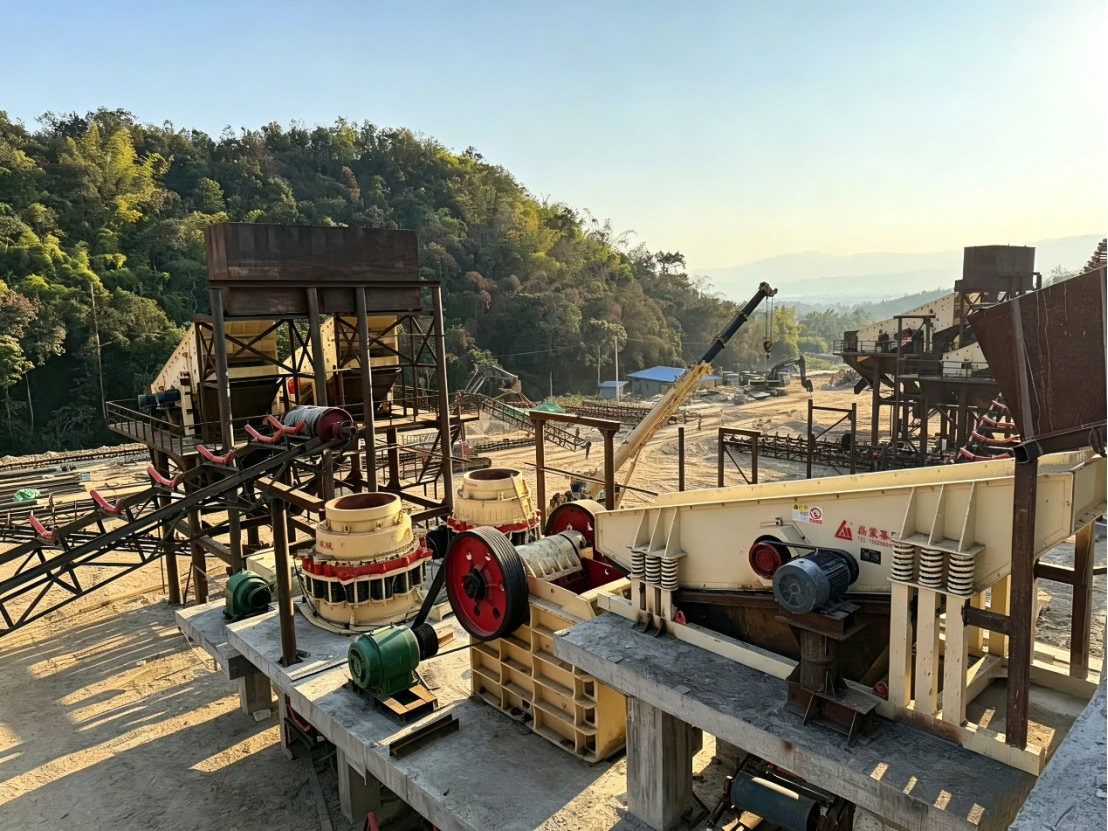
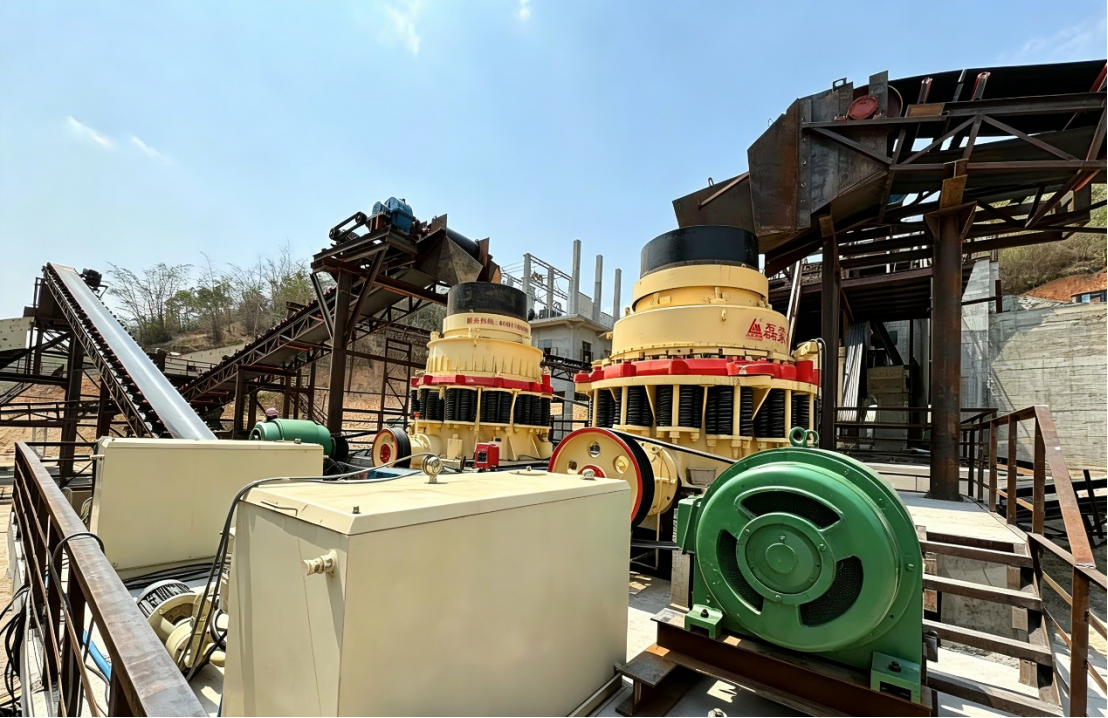
This project was designed for hard granite processing and aggregate production.
The complete granite crushing and screening line includes:
- PE Jaw Crusher
- S Cone Crusher
- LMC Cone Crusher
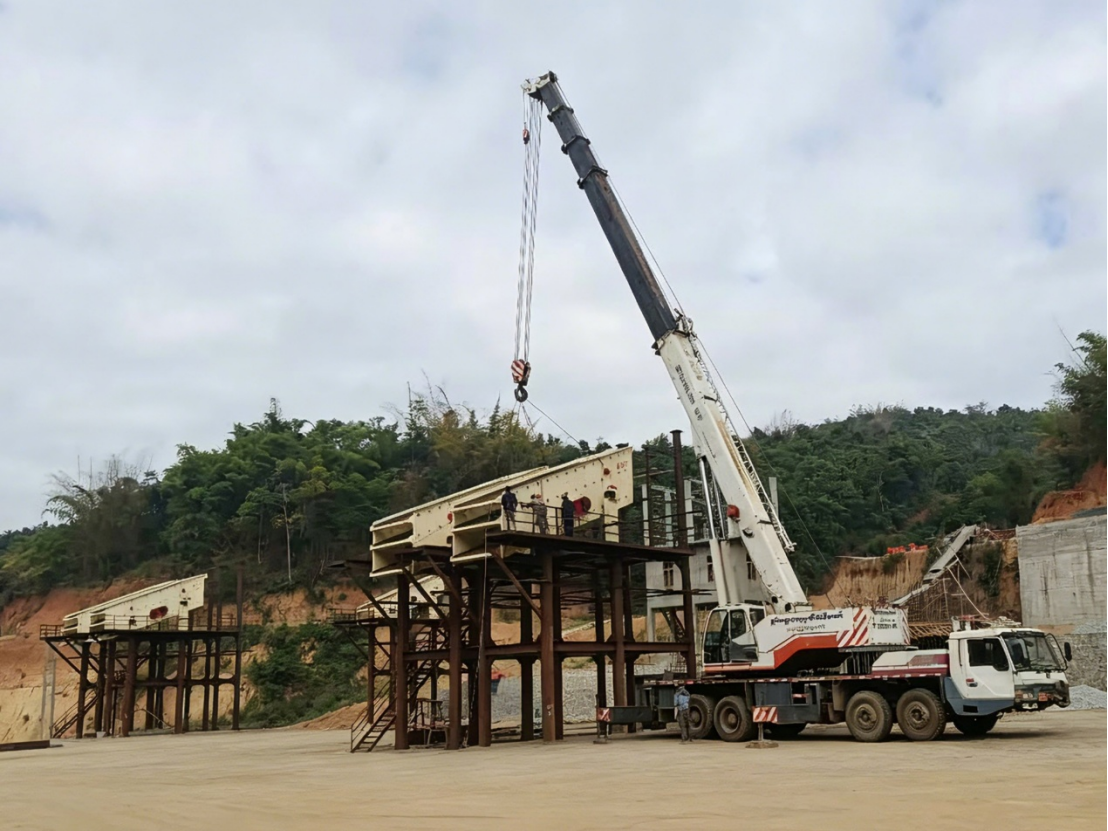
- YKJ Vibrating Screen
- ZW Feeder
The production process includes:
- Raw material feeding
- Primary crushing
- Secondary crushing
- Fine crushing
- Screening and classification
The objective was not only to achieve production capacity, but also to maintain stable operation and produce multiple aggregate sizes.
The final products include:
- 0–5 mm
- 5–10 mm
- 10–20 mm
- 20–40 mm
- 40–60 mm
Why Screening Is Critical in Granite Aggregate Production
Many quarry projects focus heavily on crushers.
However, vibrating screens play an equally important role.
A properly designed screening system affects:
- Product quality
- Production efficiency
- Material circulation
- Customer requirements
For aggregate producers, the final product size determines market value.
A well-designed granite crushing plant should not only crush rocks.
It should consistently produce the required aggregates.
What Quarry Owners Should Consider Before Investing in a Granite Crushing Plant
1. Understand the Raw Material
Before selecting equipment, operators should evaluate:
- Granite hardness
- Abrasion characteristics
- Feed size distribution
Different granite conditions require different solutions.
2. Focus on the Complete Process, Not Individual Machines
A common mistake is comparing crushers separately.
For example:
“Which jaw crusher has the highest capacity?”
“Which cone crusher is the cheapest?”
However, the better question is:
“Can all equipment work together efficiently as one production system?”
3. Consider Long-Term Operation
For overseas quarry projects, equipment performance after installation is equally important.
Important factors include:
- Spare parts availability
- Technical support
- Maintenance requirements
- Supplier experience
Choosing the Right Crushing Plant Supplier
A reliable crushing plant supplier should provide more than equipment manufacturing.
The supplier should understand:
- Quarry conditions
- Aggregate requirements
- Crushing process design
- Overseas project execution
Leimeng Group has provided crushing and screening solutions for quarry and mining projects in different markets, including hard rock aggregate applications.
Through complete equipment configuration and engineering experience, Leimeng supports customers in building stable granite crushing plants and aggregate production lines.
Final Thoughts
A successful granite crushing line is not defined by one powerful crusher.
It is defined by how every part of the system works together.
For hard rock applications, the right solution requires:
- Correct equipment selection
- Balanced process design
- Efficient screening
- Reliable long-term support
The 500 TPH granite crushing plant project in Myanmar demonstrates an important principle:
Successful aggregate production comes from complete solutions, not individual machines.
https://www.lmcrusher.com/
GUANGDONG LEIMENG INTELLIGENT EQUIPMENT GROUP CO.,LTD.