Composite materials have become increasingly important in modern industrial manufacturing because they combine excellent mechanical strength with reduced weight and long-term durability. From renewable energy systems and transportation components to construction materials and electrical insulation, composites help manufacturers develop products that meet demanding performance requirements without adding unnecessary mass.
One of the key materials responsible for these advantages is fiberglass fabric. Supplied in convenient rolls, woven fiberglass fabric provides consistent reinforcement for composite structures, helping improve their strength, dimensional stability, resistance to environmental damage, and overall service life.
Understanding how fiberglass fabric rolls work, where they are used, and which specifications matter most can help manufacturers make better purchasing decisions. This guide explores the major benefits of fiberglass fabric rolls, their industrial applications, and the considerations involved in choosing a reliable supplier.
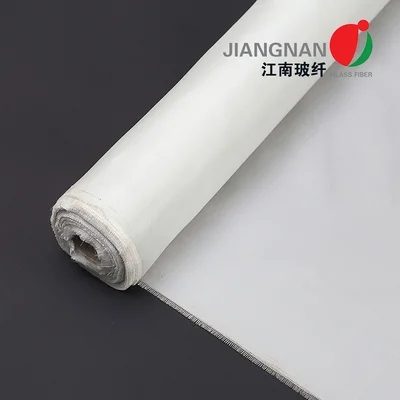
What Are Fiberglass Fabric Rolls?
Fiberglass fabric rolls are reinforcement materials manufactured by weaving continuous glass fiber yarns into a stable textile structure. The resulting fabric can be impregnated with different resin systems, including epoxy, polyester, vinyl ester, and phenolic resins, depending on the intended application.
During composite manufacturing, the resin binds the fibers together and transfers loads throughout the structure. Once the material has cured, the fiberglass reinforcement contributes to the finished component's mechanical strength, dimensional stability, and resistance to deformation.
Unlike chopped-strand reinforcement or certain nonwoven materials, woven fiberglass fabric offers greater control over fiber orientation. This makes it suitable for applications where predictable mechanical performance and consistent product quality are important.
Depending on the manufacturing process and end-use requirements, fiberglass fabrics are available in several constructions:
-
Plain weave: Provides a balanced structure with good dimensional stability and relatively straightforward handling.
-
Twill weave: Offers improved drape and flexibility, making it useful for components with curved or complex surfaces.
-
Satin weave: Provides a smoother surface and enhanced conformability for selected composite applications.
-
Specialty woven fabrics: Designed for particular structural, thermal, or industrial requirements.
-
Coated fiberglass fabrics: Combine a fiberglass base cloth with a functional coating to improve properties such as heat resistance, chemical protection, or abrasion resistance.
Choosing the appropriate fabric construction helps ensure compatibility with the manufacturing process and the performance requirements of the finished product.
Why Fiberglass Reinforcement Is Essential in Composite Manufacturing
Resins provide the binding matrix in composite materials, but resin alone may not deliver the tensile strength, impact resistance, and structural stability required for demanding applications.
Fiberglass fabric addresses this limitation by creating a reinforcing framework within the composite. Its fibers distribute mechanical loads and help the finished material withstand a range of operating stresses.
Depending on the fiber architecture, resin system, and overall component design, fiberglass reinforcement can improve resistance to:
-
Tensile loading and mechanical deformation
-
Bending and flexural stress
-
Impact and repeated loading
-
Fatigue during long-term operation
-
Dimensional changes caused by temperature fluctuations
The performance of a finished composite also depends on factors such as fiber volume, resin distribution, curing conditions, and manufacturing quality. When these elements are properly controlled, woven fiberglass fabric can contribute significantly to a strong, durable, and reliable product.
Major Benefits of Fiberglass Fabric Rolls
1. High Strength Without Excessive Weight
A major reason manufacturers choose fiberglass composites is their favorable strength-to-weight ratio.
Compared with many conventional metal components, appropriately designed fiberglass composites can reduce overall product weight while maintaining the mechanical performance required for a particular application.
Lower weight can provide several practical benefits:
-
Reduced transportation and handling costs
-
Easier installation of large components
-
Improved energy efficiency in vehicles and mobile equipment
-
Greater flexibility in product and structural design
-
Reduced loads on supporting structures
These advantages make fiberglass reinforcement especially valuable in industries where weight reduction and structural reliability are both priorities.
2. Excellent Corrosion Resistance
Fiberglass itself does not rust like conventional steel. When combined with a suitable resin system, fiberglass reinforcement can be used to manufacture composite components for environments where moisture, chemicals, or corrosive substances are present.
Typical applications include chemical processing facilities, marine equipment, wastewater treatment systems, industrial pipelines, and coastal infrastructure.
In these environments, fiberglass composites can reduce the maintenance associated with corrosion-related deterioration. However, chemical resistance depends on the resin formulation, temperature, chemical concentration, and exposure conditions, so material compatibility should always be evaluated before production.
3. Thermal Protection for Demanding Environments
Specialized fiberglass fabrics are widely used in applications that require thermal insulation, heat shielding, or fire protection.
Depending on the glass fiber composition, fabric construction, coating, and operating conditions, these materials can support applications such as:
-
Industrial thermal insulation
-
Welding blankets and heat shields
-
Protective insulation jackets
-
Fire barriers and thermal curtains
-
Furnace and equipment insulation
Coated fiberglass fabrics can offer additional functional properties for specific industrial environments. For example, certain coatings improve abrasion resistance or help protect the underlying fabric from environmental exposure.
For applications involving elevated temperatures, buyers should verify the maximum continuous service temperature, short-term temperature tolerance, coating limitations, and relevant fire-performance test results rather than relying on a general heat-resistance claim.
One example is the 3732 Fiberglass Fabric Cloth High Temperature Flame Retardant Cloth, which is relevant to applications requiring specialized high-temperature and flame-retardant fabric solutions.
4. Reliable Electrical Insulation
Glass fibers are electrically nonconductive, making fiberglass-based materials useful in various electrical and electronic applications.
Depending on the material grade and system design, fiberglass fabrics may be incorporated into:
-
Electrical insulation systems
-
Transformer components
-
Motor insulation
-
Electrical enclosures
-
Cable protection products
-
Reinforced circuit board laminates
Fiberglass reinforcement can help improve the mechanical integrity of insulating structures while maintaining their intended electrical function.
For critical electrical applications, the complete material system must be evaluated for dielectric performance, operating temperature, moisture exposure, and applicable industry standards.
5. Dimensional Stability and Manufacturing Consistency
Dimensional stability is another important advantage of woven fiberglass fabric.
Its woven structure helps maintain predictable material geometry during handling and processing. With a compatible resin system and appropriate curing conditions, fiberglass reinforcement can contribute to composites with controlled dimensions and consistent structural properties.
This is particularly important when manufacturing components that require accurate tolerances, repeatable production results, or integration with other engineered parts.
Why Fiberglass Fabric Rolls Are Ideal for Industrial Production
Fiberglass reinforcement is available in different formats, but rolls are particularly practical for large-scale manufacturing.
Continuous Production and Reduced Downtime
Roll-form materials allow manufacturers to feed fiberglass fabric directly into production systems. This is useful for lamination lines, automated cutting equipment, vacuum infusion operations, and other composite fabrication processes.
Long, continuous lengths reduce the need for frequent material changes and can improve workflow efficiency.
Convenient Storage and Transportation
Compared with individually packaged sheets, rolls can simplify warehouse organization and material handling. Standardized roll dimensions also make it easier for manufacturers to plan inventory and prepare materials for production.
Improved Material Utilization
Manufacturers can cut fiberglass fabric according to component dimensions and production layouts. With suitable cutting plans, roll-form materials help reduce unnecessary offcuts and improve material utilization.
For businesses producing composite components in substantial quantities, these operational advantages can contribute to better cost control and more consistent manufacturing schedules.
Industrial Applications of Fiberglass Fabric Rolls
The versatility of fiberglass fabric allows it to serve a wide range of industries.
Wind Energy
Wind turbine blades must withstand repeated mechanical loading, changing environmental conditions, and long operating periods.
Fiberglass fabrics are widely used as reinforcement in wind blade composites because they can provide structural strength without excessive weight. Their performance depends on fiber architecture, resin compatibility, laminate design, and manufacturing controls.
As wind energy installations expand, reliable reinforcement materials remain important for producing durable and efficient turbine components.
Construction and Building Materials
In construction, fiberglass fabric supports the development of reinforced products designed for durability and environmental resistance.
Common applications include:
-
Roofing systems and membrane reinforcement
-
Wall panels and architectural composites
-
Waterproofing systems
-
Selected cementitious reinforcement applications
-
Fire protection assemblies
-
Building insulation products
The appropriate fiberglass material depends on the construction method, exposure conditions, required mechanical properties, and applicable building regulations.
Transportation and Automotive Manufacturing
Vehicle manufacturers increasingly use composite materials to reduce weight while maintaining the performance required for structural and nonstructural components.
Fiberglass-reinforced products can be found in truck body panels, bus components, railway interiors, recreational vehicles, marine vessels, and automotive body parts.
Weight reduction may contribute to lower energy consumption and easier handling, while corrosion resistance can be beneficial in components exposed to moisture and demanding operating environments.
Industrial Equipment and Chemical Processing
Fiberglass composites are particularly useful in industrial settings where corrosion resistance and mechanical durability are important.
Representative applications include:
-
Chemical storage tanks
-
Corrosion-resistant pipes and vessels
-
Industrial ductwork
-
Cooling tower components
-
Protective equipment covers
-
Selected fluid-handling systems
The performance of these products depends on selecting a suitable resin system and designing the composite for the actual chemical, pressure, and temperature conditions.
Fire Safety and Workplace Protection
Specialized fiberglass fabrics are also used in industrial safety products, including welding blankets, fire blankets, thermal curtains, heat shields, and protective barriers.
These materials help provide physical separation or thermal protection in selected applications. However, not all fiberglass fabrics have the same fire performance, and a fabric's flame-retardant properties should not be confused with a guarantee that a finished product is fireproof.
Buyers should check relevant certification, test methods, temperature limits, and intended-use requirements before selecting a safety material.
How to Choose the Right Fiberglass Fabric Roll
Selecting a suitable fiberglass fabric involves evaluating the entire application rather than focusing on a single specification.
Fabric Weight and Thickness
Fabric weight, usually expressed in grams per square meter (g/m²), influences material handling, reinforcement content, and laminate design.
Heavier fabrics may be appropriate when greater reinforcement per layer is required, while lighter fabrics can be easier to drape over complex surfaces and may help achieve a smoother finish.
However, weight alone does not determine strength. Fiber type, weave construction, resin content, and laminate orientation must also be considered.
Weave Structure and Conformability
The weave pattern affects the fabric's flexibility, drape, surface characteristics, and mechanical behavior.
Plain weave fabrics are often selected for balanced handling and dimensional stability. Twill and satin constructions may be preferable when components have more complicated geometries or require improved conformability.
Manufacturers should select a weave that works with their tooling, layup method, and finished component design.
Fiberglass Grade
Different glass fiber types offer different combinations of mechanical, thermal, and chemical properties.
Common options include:
-
E-glass: Widely used for general-purpose reinforcement and electrical insulation applications.
-
C-glass: Commonly associated with improved chemical resistance in certain glass fiber applications.
-
Specialty high-strength glass fibers: Selected for applications requiring specific mechanical performance.
The appropriate grade depends on the intended service environment, engineering requirements, and budget.
Coating and Surface Treatment
Some applications require additional protection or specialized surface properties. Depending on the end use, fiberglass fabrics may be supplied with silicone, polyurethane (PU), acrylic, vermiculite, or PTFE coatings.
These coatings can provide different benefits, including improved abrasion resistance, thermal performance, chemical resistance, or surface release characteristics.
Because coating formulations have different operating limits, buyers should verify that the selected product is suitable for the expected temperature, chemical exposure, and mechanical conditions.
Resin Compatibility
For composite reinforcement applications, the fabric must work effectively with the selected resin system.
Common options include epoxy, polyester, vinyl ester, and phenolic resins. Compatibility affects wet-out, bonding, processing behavior, and the final laminate's performance.
Buyers should confirm whether the fabric's sizing or surface treatment is compatible with the intended resin and manufacturing process.
Roll Width, Length, and Tolerance
Practical specifications are equally important when purchasing fiberglass fabric in bulk.
Before placing an order, confirm:
-
Available roll widths and lengths
-
Fabric weight and thickness tolerances
-
Edge quality and weaving consistency
-
Packaging and storage requirements
-
Batch traceability and inspection documentation
-
Minimum order quantities and production lead times
Clear specifications help reduce production interruptions and make it easier to maintain consistent quality across repeat orders.
Why Manufacturing Quality Matters
Two fiberglass fabrics with similar nominal specifications may perform differently because of variations in raw materials, weaving quality, surface treatment, and process control.
A dependable supplier should maintain consistent standards for yarn quality, fabric density, weave accuracy, roll dimensions, and final inspection.
For coated products, coating uniformity and adhesion are also important considerations. For composite reinforcement, consistent fabric construction and suitable surface treatment can help improve processing stability and reduce the risk of defects.
Buyers evaluating potential suppliers should review technical data sheets, relevant test reports, quality management procedures, and sample materials. For demanding applications, a production trial may provide additional confidence before committing to a large-volume order.
www.jnglassfiber.com
Changshu Jiangnan Fiberglass Co., Ltd.