A DPF on a test cell passes every cycle. The same filter on a digging machine fills up in three weeks. That gap is not a manufacturing defect — it is the duty cycle, and it is the single most misunderstood failure mode in off-road aftertreatment.
Fleet managers who search dpf regeneration fails on excavator low load operation usually arrive at the same discovery: the filter is doing what it was designed to do, on an exhaust it was never designed for. Below are the four failure patterns we see from the factory side, the numbers that separate normal from failed, and the fixes that actually hold on the job site — first for excavators, then for the two machines that fail differently.
Shenzhou coats and cans aftertreatment for excavator, loader and tractor engines up to 40 L, on OEM lines that supply SANY, LOVOL and Weichai, so the patterns below come from warranty returns, not from a manual.
1. Why DPF Regeneration Fails on Excavator Low Load Operation: Four Patterns
• Pattern 1 — the exhaust never gets warm enough. A typical digging duty spends 25–35% of engine hours at idle and averages 20–30% load. At those points exhaust temperature at the DPF inlet sits around 220–300°C, while meaningful soot oxidation needs roughly 350–450°C held over the cycle. NO₂-assisted burning starts earlier, near 250°C, but only if the upstream DOC is hot enough to make the NO₂. On a machine that lives between 220 and 300°C, soot simply accumulates until the pressure switch fires.
• Pattern 2 — active regens get interrupted. A full active regeneration wants 15–30 minutes of stationary high idle. Operators finish the lift, kill the engine, go to lunch. Every interruption leaves late post-injection fuel behind — in a hard season this dilutes engine oil by 1–3% — and leaves a half-burned soot cake that re-loads faster than the last one. The machine ends up asking for regens more often, which gets interrupted more often.
• Pattern 3 — ash gets diagnosed as soot. Pressure high, soot low after a successful forced regen? That is ash — burnt oil additives, which never burn out. Cleaning is the fix, regeneration never was. The multiplier nobody controls is oil grade: a high-SAPS oil can roughly double the ash rate against a low-SAPS (ACEA E6/E9 class) oil. Check the oil invoice before you condemn the filter.
• Pattern 4 — the pressure sensor lies. A soot- or water-plugged differential-pressure tube reads low, so regeneration never triggers and the filter quietly packs solid. A cracked line reads high, and the machine regenerates for no reason. Two minutes with a manometer against the sensor reading, at idle and at rated, settles which one you have.
Diagnosed in that order, the question of why dpf regeneration fails on excavator low load operation almost never ends with "the filter was bad". It ends with duty cycle, interrupted regens, oil grade or a nine-euro tube.
✅ Bottom line: Temperature, interrupted regens, ash and the sensor tube — in that order — explain nearly every "blocked DPF" call from a digging fleet.
2. What Actually Fixes It, Machine by Machine
The repair hierarchy differs by machine. Here is how Shenzhou application engineers map it:
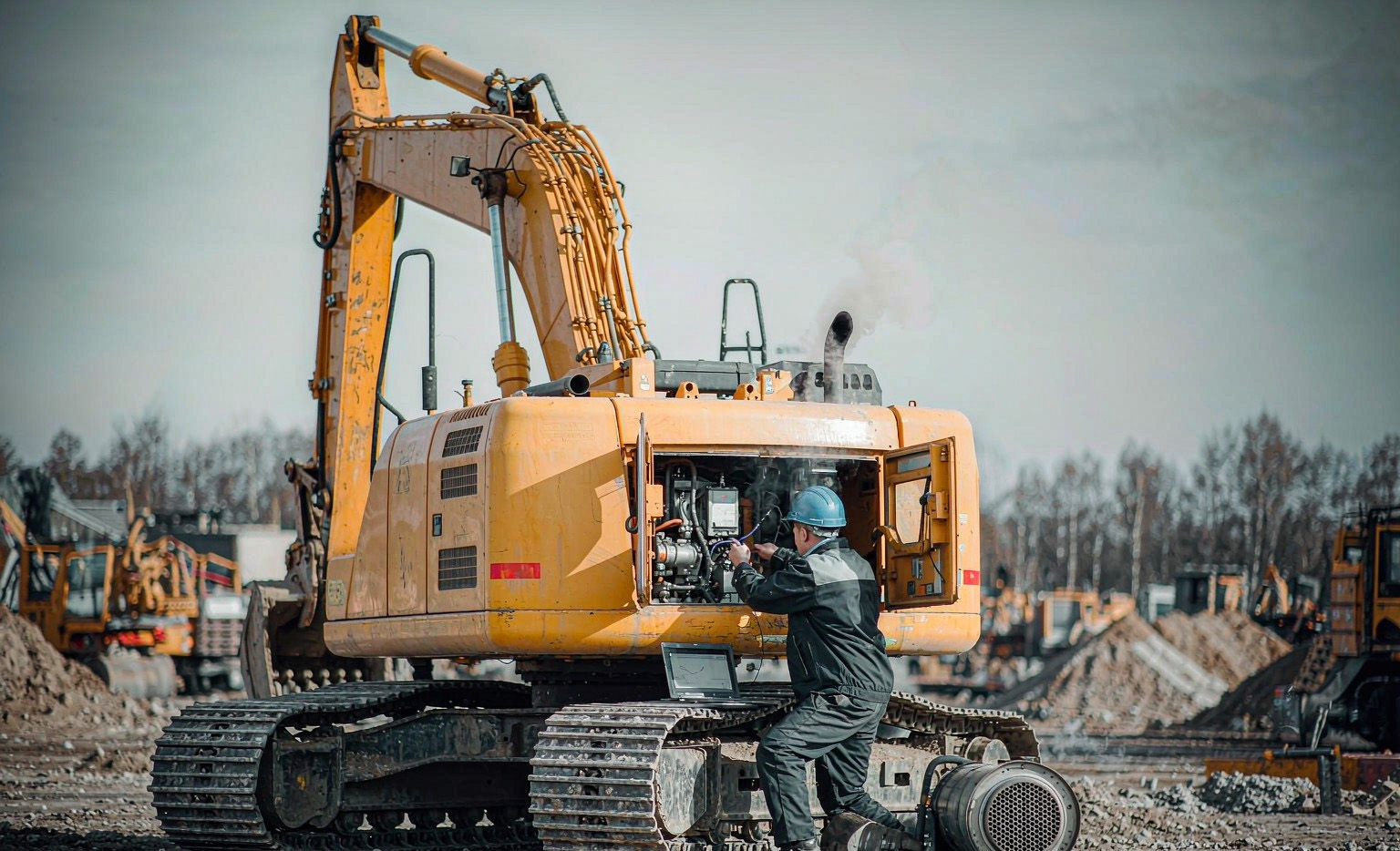
• Excavators (20–30 t). Fix the duty, not just the filter: spec the DPF volume for the real load factor rather than the rated point, add an electrically heated catalyst or fuel vaporizer where exhaust temperatures stay under 280°C, and enforce an idle policy that shuts the engine down instead of waiting for the next bite. Reserve forced regens for the actual soot trigger — not as a weekly ritual.
• Compact telehandlers. A buyer specifying an aftertreatment system for 3 ton telehandler stage v duty faces the compact variant of the same disease: a 55–74 kW engine in lift–place–lower cycles that never loads the exhaust for more than a few seconds. The fix starts at purchase: an aftertreatment system for 3 ton telehandler stage v work must be sized for that flow and temperature reality, with an assist-heating option and a canning mat spec you have seen in writing. The smallest canister that fits the chassis is the most expensive one you can buy.
• Agricultural tractors. A dpf for agricultural tractor with seasonal low hours fails in its own way: 200–400 hours a year, months of storage between them. Complete one full regeneration before the season ends, then store the machine; verify the pressure lines at first start; and put the filter on a cleaning rhythm by calendar (every second season), not by hours, because 400 annual hours can still collect several years of ash.
Across all three machines the repair hierarchy is the same: duty and settings first, sensors second, cleaning third, replacement last. Replacing a DPF without re-checking the duty cycle just schedules the same failure for the new cartridge.
✅ Bottom line: Match the system to the duty cycle — temperature support for diggers, correct sizing for compact machines, calendar servicing for seasonal tractors.
Frequently Asked Questions
Q: How many forced regenerations are too many?
A: More than one per 50 operating hours is a design signal, not an operator problem. At that frequency either the filter is undersized for the load factor or the temperature support is missing — and every extra forced regen adds a little more fuel to the oil. That is the pattern Shenzhou sees most often in warranty returns.
Q: What should I look for in an aftertreatment system for 3 ton telehandler stage v machines?
A: Three things in writing: sizing done against your duty cycle rather than rated power, a thermal-assist option for low-temperature cycles, and canning records with gap bulk density values. A supplier who offers all three is a factory; one who offers a catalogue part is a reseller.
Q: How do I protect a dpf for agricultural tractor with seasonal low hours?
A: One full regeneration before storage, low-SAPS oil all season, a pressure-line check at first start, and calendar-based cleaning every second season. That routine costs nothing and removes most tractor-season failures before they exist.
Send the Duty Cycle, Get the Diagnosis
Send us the machine's duty numbers — annual hours, idle share, typical load factor and the failure history — and Shenzhou returns a diagnosis with a sizing recommendation within five working days. Hefei Shenzhou Eco&Dream Catalytic Converters Inc builds custom CDPF and DOC+DPF systems as a China manufacturer with coating and canning in one plant, OEM and ODM, from a single prototype to wholesale volumes. Start with the catalyst range or the integrated aftertreatment systems.
Published: November 2026 | By Shenzhou Engineering Team
www.szexhaust.com
Hefei Shenzhou Eco&Dream Catalytic Converters Inc