As heat exchanger technology continues to evolve, manufacturers face growing demands for higher efficiency, improved durability, and more compact designs. While much attention is often given to materials, fin structures, and brazing technologies, one critical process frequently goes unnoticed: core chamfering.
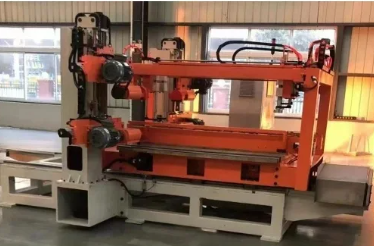
In reality, the quality of edge preparation can significantly influence assembly accuracy, brazing performance, and the long-term reliability of a heat exchanger. This is why more manufacturers are investing in advanced Core Chamfering Machines to improve both product quality and production efficiency.
What Is Core Chamfering?
Core chamfering is the process of removing sharp edges, burrs, and irregular corners from a heat exchanger core before it enters the final assembly and brazing stages.
Heat exchanger cores are typically made up of multiple layers of aluminum fins, plates, and separator sheets. During cutting and stacking operations, sharp edges and uneven surfaces can develop, creating challenges throughout the manufacturing process.
Without proper chamfering, manufacturers may encounter:
-
Poor component alignment
-
Uneven brazing joints
-
Increased stress concentration
-
Potential leakage risks
-
Reduced structural stability
Chamfering creates smooth and uniform edge transitions, helping ensure a stronger and more reliable final product.
Why Edge Quality Matters More Than Ever
Today's heat exchangers are expected to operate under increasingly demanding conditions.
Applications such as:
-
Electric vehicle battery cooling systems
-
Industrial hydraulic oil coolers
-
Power generation equipment
-
Air compressors
-
HVAC systems
require compact designs while maintaining excellent thermal performance and mechanical strength.
In these applications, even small manufacturing defects can affect performance.
A properly chamfered core allows components to fit together more accurately, improving both assembly precision and brazing consistency.
The Limitations of Traditional Chamfering Methods
Many manufacturers previously relied on manual grinding or semi-automatic chamfering equipment.
While these methods may work for smaller production volumes, they often create challenges in modern manufacturing environments.
Inconsistent Results
Manual processing depends heavily on operator skill and experience. Small variations in chamfer angles can lead to differences in assembly quality between products.
Lower Production Efficiency
As production volumes increase, manual chamfering can become a bottleneck that slows the entire manufacturing line.
Higher Labor Costs
Manual operations require more labor resources and increase the risk of human error.
Limited Repeatability
Large-scale production demands consistency. Traditional methods often struggle to achieve the repeatability required by modern quality standards.
How Automatic Core Chamfering Machines Improve Production
Modern chamfering systems are designed to solve these challenges through automation and precision engineering.
One of the most significant developments is the introduction of automatic multi-head chamfering technology.
Simultaneous Four-Side Processing
Advanced systems can chamfer all four sides of a heat exchanger core in a single operation.
This provides several advantages:
-
Faster processing speed
-
Reduced handling time
-
Better dimensional consistency
-
Improved workflow efficiency
Instead of rotating the core multiple times, manufacturers can complete edge preparation in a single cycle.
Enhanced Assembly Accuracy
Uniform chamfered edges help improve component positioning during stacking and assembly.
This results in:
-
Better core alignment
-
Reduced assembly stress
-
Improved dimensional stability
For aluminum plate-fin heat exchangers, these improvements directly contribute to higher product quality.
Better Brazing Performance Starts with Better Edge Preparation
Brazing is one of the most critical stages in heat exchanger manufacturing.
During furnace brazing, molten filler material flows between the components to create permanent joints.
If core edges contain burrs or uneven surfaces, brazing quality can suffer.
Proper chamfering helps by:
-
Improving filler metal distribution
-
Reducing void formation
-
Strengthening bonded joints
-
Minimizing leakage risks
As a result, manufacturers can achieve higher brazing yields and lower rejection rates.
Improving Workshop Efficiency and Cleanliness
Modern core chamfering machines offer benefits beyond precision.
Many systems include integrated aluminum scrap collection units that automatically remove chips and debris generated during processing.
This helps manufacturers:
-
Maintain cleaner production environments
-
Improve workplace safety
-
Simplify material recycling
-
Reduce equipment contamination
Efficient scrap handling also supports sustainable manufacturing practices by making aluminum recovery easier.
Applications Across Multiple Industries
Core chamfering technology plays an important role in numerous industries that rely on heat transfer systems.
Automotive Industry
Radiators, intercoolers, battery cooling systems, and transmission oil coolers all require precise core manufacturing to ensure long-term performance.
Industrial Machinery
Hydraulic oil coolers and industrial heat exchangers must withstand continuous operation under high pressure and temperature conditions.
Energy and Power Generation
Generators, renewable energy systems, and power electronics rely on efficient cooling systems that demand consistent core quality.
HVAC and Refrigeration
Air conditioning and refrigeration equipment require highly efficient heat exchangers to maximize energy performance.
Across all these industries, accurate chamfering contributes to stronger, more reliable heat exchanger assemblies.
Supporting Automation in Modern Manufacturing
As Industry 4.0 adoption continues to grow, manufacturers are increasingly seeking equipment that integrates seamlessly into automated production environments.
Automatic core chamfering machines support this transition by offering:
-
Stable automated operation
-
Consistent processing quality
-
Reduced labor dependence
-
Easier integration with production lines
-
Improved production traceability
These advantages make chamfering equipment an important part of modern heat exchanger manufacturing systems.
The Long-Term Benefits for Manufacturers
Investing in advanced core chamfering technology delivers value throughout the production process.
Manufacturers can benefit from:
-
Higher product quality
-
Improved brazing consistency
-
Reduced rework rates
-
Faster production cycles
-
Better material utilization
-
Lower operating costs
When combined with automated assembly, cleaning, and brazing systems, chamfering equipment helps create a more efficient and reliable manufacturing workflow.
Final Thoughts
Although often overlooked, core chamfering is a crucial step in heat exchanger production. Proper edge preparation improves assembly precision, enhances brazing performance, and contributes directly to the durability and efficiency of the finished product.
As heat exchanger designs become more sophisticated and quality requirements continue to increase, automated Core Chamfering Machines are becoming an essential tool for manufacturers seeking higher productivity and consistent production quality.
By integrating advanced chamfering technology into modern production lines, companies can improve both manufacturing efficiency and product performance, helping meet the growing demands of automotive, industrial, energy, and HVAC markets.
www.btheatexchanger.com
Wuxi Better