In modern automotive transmission systems, the valve body acts as the hydraulic control center. It directs transmission fluid through complex internal channels, regulates pressure, and ensures smooth gear shifting under varying driving conditions. While machining accuracy and assembly quality are critical, the foundation of performance begins much earlier—with the casting itself.
Automotive valve body castings, particularly those made from cast iron in heavy-duty or specialized transmission systems, demand precise material engineering. Stability, structural integrity, and consistent microstructure are not optional; they are necessary to ensure long-term reliability under high pressure, continuous temperature fluctuation, and mechanical stress.
Casteks Metal Science (Jiangsu) Co., Ltd. approaches cast iron development with a structured engineering mindset. By integrating material control, process stability, and coordinated quality management, the company supports automotive component manufacturers seeking dependable casting solutions.
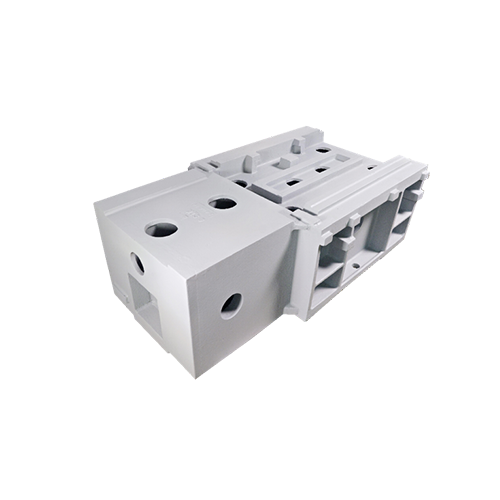
The Functional Demands of an Automotive Valve Body
A valve body is not a simple structural component. It must:
-
Withstand repeated hydraulic pressure cycles
-
Maintain dimensional stability across temperature changes
-
Resist internal wear from fluid flow
-
Provide consistent sealing surfaces after machining
-
Avoid internal porosity that could cause leakage
Even minor material instability can lead to pressure loss, shift delay, or premature wear. For this reason, material engineering in cast iron production must be deliberate and controlled.
Why Cast Iron Remains Relevant
Although aluminum alloys are widely used in passenger vehicle transmissions, cast iron continues to play an important role in:
-
Heavy-duty vehicle transmissions
-
Industrial vehicle gear systems
-
Commercial and agricultural equipment
-
High-load or high-pressure hydraulic systems
Gray iron offers excellent vibration damping and machinability, which is beneficial when internal channels must be precisely machined. Ductile iron provides higher tensile strength and impact resistance for applications exposed to mechanical loads.
However, using cast iron for valve bodies is not simply a matter of selecting a grade. The internal graphite structure, matrix composition, and cooling behavior must be carefully engineered.
More details about structural cast iron solutions can be found at https://www.casteks.com/casting, where Casteks outlines its capabilities in gray and ductile iron production.
Precision Material Engineering: What It Actually Means
In practical foundry operations, precision material engineering involves several critical aspects.
1. Controlled Chemical Composition
For valve body castings, maintaining tight control over:
-
Carbon content
-
Silicon levels
-
Manganese balance
-
Sulfur and phosphorus limits
is essential to achieve predictable graphite formation and mechanical properties.
Small variations can influence hardness distribution, machinability, and fatigue resistance. A stable melting process ensures repeatable results batch after batch.
2. Graphite Morphology and Microstructure Control
In gray iron, the shape and distribution of graphite flakes directly affect:
-
Strength
-
Vibration damping
-
Thermal stability
In ductile iron, nodularity must be carefully controlled to achieve required tensile properties without sacrificing machinability.
Microstructure uniformity is especially important for valve bodies because internal hydraulic passages depend on consistent surface finish after machining. Irregular hardness zones can cause tool wear variation and surface inconsistency.
At Casteks Metal Science (Jiangsu) Co., Ltd., metallographic inspection and process verification are integrated into production workflows to ensure material consistency rather than relying on theoretical specifications alone.
3. Internal Soundness and Porosity Prevention
Valve bodies contain complex internal channels. Any shrinkage cavity or porosity near these passages can lead to leakage or pressure instability.
Process optimization must include:
-
Proper gating and riser design
-
Controlled cooling rates
-
Effective feeding during solidification
Simulation tools can assist in predicting potential defect areas, but real-world adjustment and process discipline remain essential.
Dimensional Stability Under Thermal Cycling
Transmission systems experience repeated heating and cooling cycles. Cast iron components must maintain dimensional integrity despite expansion and contraction.
Key considerations include:
-
Balanced microstructure to prevent uneven expansion
-
Stress relief treatment to reduce residual stress
-
Controlled cooling to avoid internal tension
Without proper material engineering, stress concentration may cause distortion during machining or long-term service.
Precision material engineering therefore extends beyond composition control—it includes thermal management and stress control strategies.
Machinability and Surface Integrity
Valve body castings require extensive machining of sealing surfaces, bore locations, and channel interfaces. Machining performance directly affects:
-
Surface finish quality
-
Flatness and sealing reliability
-
Production efficiency
Material inconsistency can cause:
-
Tool chipping
-
Uneven cutting resistance
-
Variation in surface roughness
By maintaining stable hardness and uniform structure, foundries reduce machining variability and downstream rejection rates.
Casteks has established an engineering innovation center that supports product design evaluation and process coordination, ensuring that casting parameters align with machining requirements.
Full-Process Service in Automotive Casting Projects
Automotive component manufacturing involves strict timelines and traceability requirements. A fragmented approach between design, casting, machining, and delivery increases risk.
Casteks has built a structured casting customer service process covering:
-
Drawing and technical requirement review
-
Mold and process planning
-
Trial casting verification
-
Material testing and validation
-
Batch production control
-
Delivery coordination
This integrated workflow allows automotive manufacturers to reduce development uncertainty and maintain production continuity.
Rather than focusing on abstract technical claims, Casteks Metal Science (Jiangsu) Co., Ltd. emphasizes disciplined execution and cross-functional coordination.
Addressing Industry Challenges
Automotive markets continue evolving toward:
-
· Higher efficiency transmissions
-
· Increased durability requirements
-
· Stricter quality audits
Introduction to IATF 16949 Automotive QMS Certification -
· Global supply chain coordination
For valve body castings, this translates into tighter material consistency expectations and improved traceability.
Modern management practices, combined with practical foundry experience, enable Casteks to respond to these expectations. Its marketing center, engineering center, and supply chain management center operate collaboratively, reducing communication gaps between customers and production teams.
Practical Takeaways for OEMs and Tier Suppliers
When sourcing automotive valve body castings, buyers should evaluate more than nominal material grade. Critical factors include:
-
Stability of melting control
-
Microstructure verification capability
-
Internal defect prevention measures
-
Machinability consistency
-
Process documentation and traceability
Precision material engineering is not about extreme tolerance claims. It is about controlling variables that influence long-term performance.
For high-responsibility components like valve bodies, stability and repeatability are more valuable than short-term cost reductions.
Conclusion
Automotive valve body castings operate at the intersection of hydraulic precision and mechanical durability. Their reliability depends not only on machining accuracy but fundamentally on controlled material engineering during casting.
From chemical composition management to microstructure control and internal defect prevention, precision material engineering ensures that cast iron valve bodies meet the demanding conditions of modern transmission systems.
Casteks Metal Science (Jiangsu) Co., Ltd. combines structured management with practical foundry expertise to deliver stable gray iron and ductile iron casting solutions. By integrating engineering review, process control, and supply chain coordination, the company supports automotive manufacturers seeking dependable performance in critical transmission components.
www.casteks.com
Casteks Metal Science (Jiangsu) Co., Ltd.