Laboratories that work with biological, chemical, and physical assays constantly face one recurring challenge: how to detect a wide range of wavelengths accurately without being restricted by fixed filters. This is precisely the pain point that separates a full-wavelength UV-Vis microplate reader from a standard, filter-based instrument. Understanding this distinction helps laboratory managers, researchers, and diagnostic manufacturers choose equipment that matches the complexity of modern assay work.
The Core Limitation of Fixed-Filter Instruments
Traditional microplate readers rely on a set of physical filters to isolate specific wavelengths. Each time an assay requires a different wavelength, operators may need to swap filters manually, which slows down multi-assay workflows and limits the range of detectable wavelengths to whatever filters are on hand. This constraint becomes especially problematic in laboratory environments that manage a mix of biological, chemical, and physical assays, since each assay type may call for a different, sometimes very specific, wavelength setting.
Full-Spectrum Flexibility Through Grating Monochromator Technology
Wuxi Hiwell-Diatek Instrument Co., Ltd., operating under the brand Diatek, addresses this exact limitation with its DR-5000 Full Wavelength Microplate Reader. Instead of depending on interchangeable filters, the instrument uses a proprietary monochromator technology built on high-precision gratings, enabling filter-free wavelength tuning across a 190–1100 nm range. Wavelengths can be freely selected in 0.1 nm or 1 nm increments, which means laboratories can run a wide variety of assays—from DNA/RNA quantification to protein assays and turbidity studies—without purchasing or swapping additional filters. This single capability is the foundation of why a full-wavelength reader is positioned as a more adaptable choice for laboratories handling diverse testing needs.
Precision Metrics That Support Reliable Research
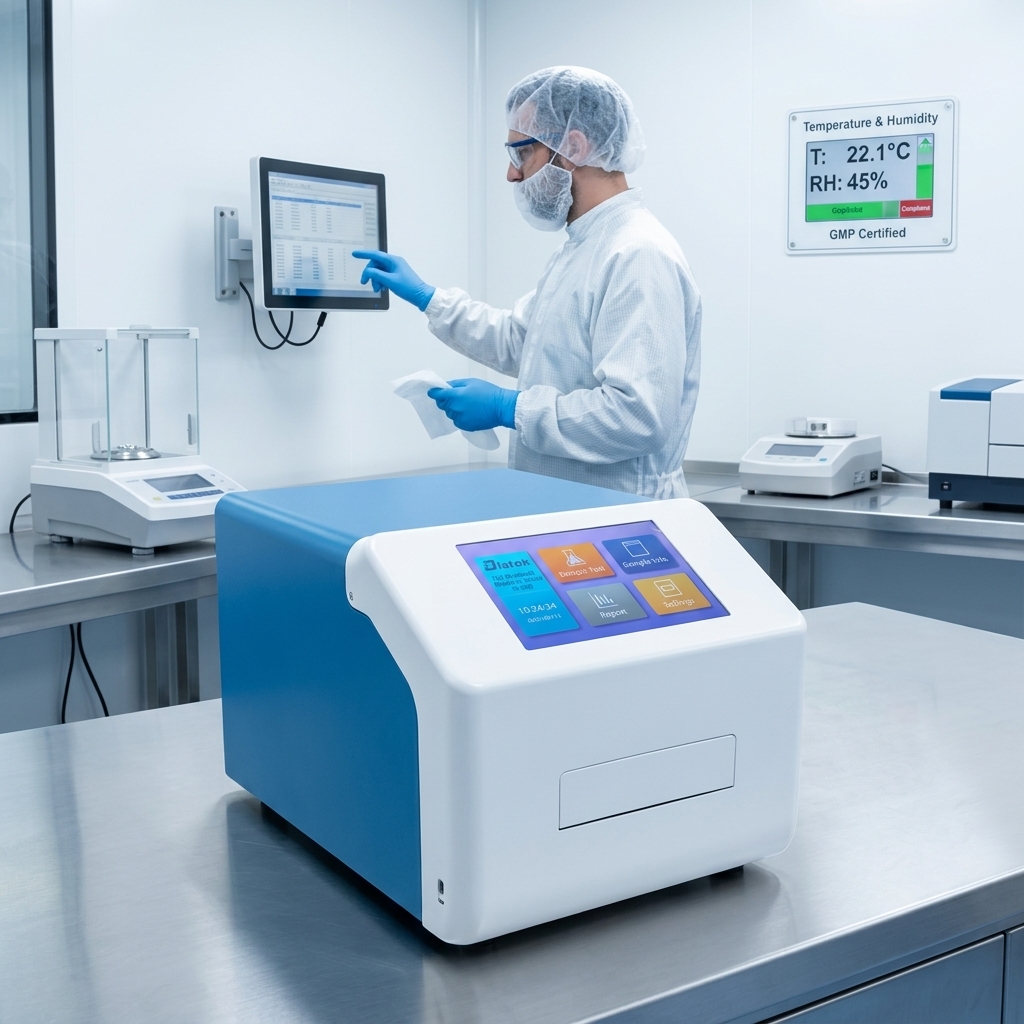
Flexibility alone would not matter if accuracy suffered as a result. The DR-5000 series is built with defined technical metrics that support dependable readings:
- Wavelength Accuracy: ±0.5 nm
- Absorbance Stability: ≤±0.002A
- Wavelength Repeatability: ≤0.2 nm
- Detection Speed: 10 seconds for a 96-well plate
The DR-5000Pro variant extends this precision further with a stray light control of ≤0.05%, addressing one of the more technically demanding aspects of spectrophotometric measurement. Together, these specifications indicate that broad wavelength coverage does not come at the cost of measurement consistency, which is a central concern for laboratories running kinetic assays, endpoint assays, or spectral scanning.
Automated Workflow and Intuitive Android-Based Operation
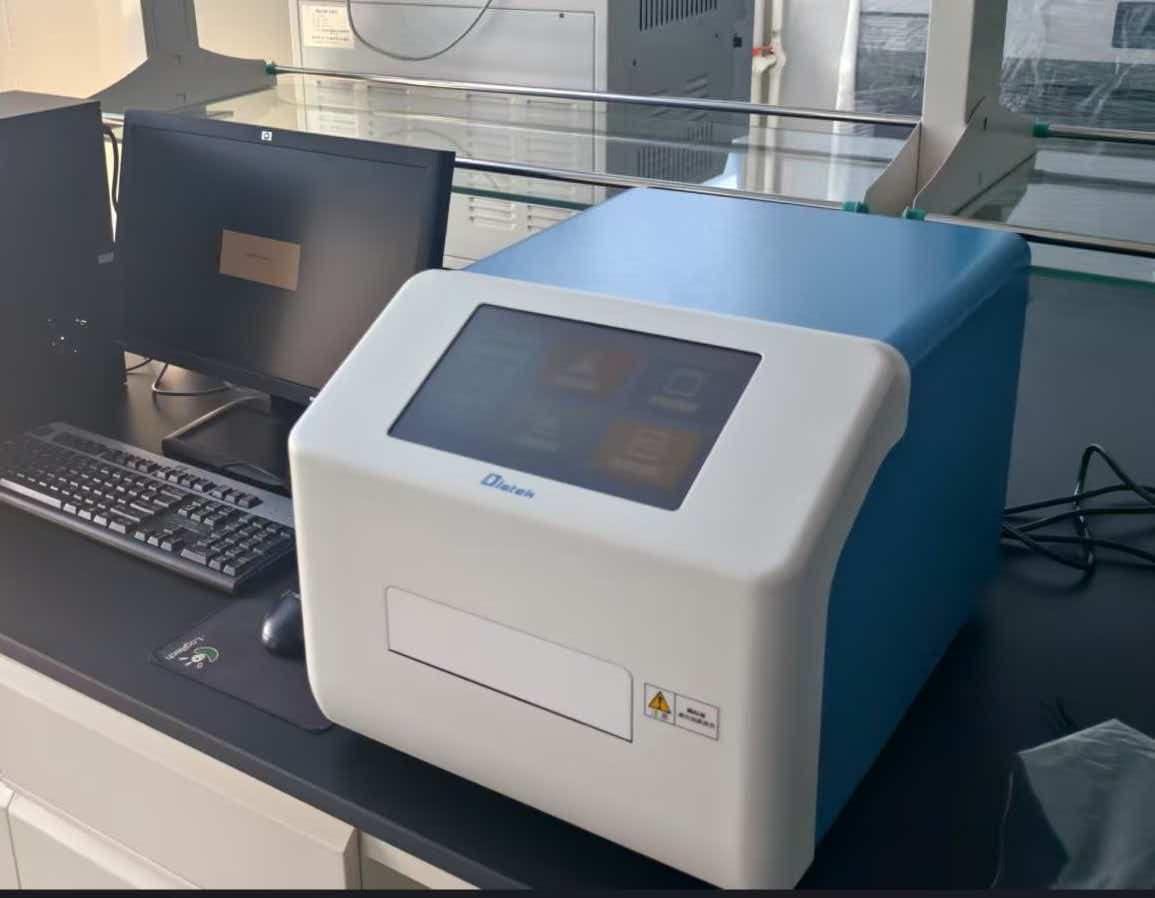
Beyond the optical system, the DR-5000 integrates an Android 5.1-based operating platform displayed on a 10-inch capacitive color LCD touchscreen. This design allows operators to interact with the instrument in a manner similar to using a smartphone, which reduces the learning curve typically associated with laboratory instrumentation. The touchscreen supports a visual workflow that moves through "Layout → Analysis → Processing," streamlining what would otherwise be a more manual, multi-step process on a standard reader. This visual workflow design has been noted to meet IVD human factors engineering standards, reflecting attention to usability in clinical and diagnostic settings.
Supporting this workflow is an automatic open/close plate drawer with motorized control for microplate entry and exit, which reduces manual handling errors and helps protect the optical path—an operational safeguard that is not always present in more basic, standard-tier readers.
Temperature Control and Sample Mixing for Kinetic Assays
Kinetic and temperature-sensitive biological reactions require stable environmental conditions throughout the reading process. The DR-5000 includes a built-in incubation module with temperature control ranging from Room Temperature +4°C up to 45°C, along with multi-speed shaking that offers both linear and orbital shaking modes across three speed settings. This combination is designed to optimize sample mixing while preventing liquid spilling, which directly supports the consistency needed for kinetic data analysis.
Speed and Throughput Considerations
For laboratories processing high volumes of samples, reading speed matters. The instrument is capable of 16.5 seconds for continuous 96-well reading, and the light source configuration—offered either as a dual light source system (Deuterium and Tungsten halogen lamps) or as a high-energy Xenon flash lamp option—provides flexibility depending on the specific throughput and sensitivity requirements of a given laboratory.
Data Handling, Software, and Connectivity
The Diatek Microplate Analysis Software works either as a standalone application on the instrument itself or connected to a PC, applying methods such as 4-Parameter Logistic (4PL) regression, spectral scanning, kinetic data analysis, and multiple linear/non-linear regression modeling. Calibration options include Log-Log, Power, and Polynomial methods, giving researchers tools for real-time endpoint and kinetic data analysis.
Connectivity is handled through USB-A and USB-B interfaces, compatibility with U-disks, USB printers, and peripheral devices such as keyboards and mice. FTP service support allows PC software to upload and download detection data, and results can be exported in TXT, PDF, Word, and Excel formats. Data protection is addressed through SSL and PCI DSS protocols, along with password-protected user login for instrument access.
Application Versatility Across Laboratory Types
The combination of wide wavelength range and automated workflow makes the DR-5000 series applicable across several fields:
- Life Sciences: DNA/RNA quantification with a detection limit of 2ng/µl, along with protein assays.
- Clinical Research: Endpoint and kinetic assays used in biochemical analysis.
- Chemical Testing: Turbidity studies and spectral scanning.
This range of applications is supported by the company’s presence across provincial-level laboratories, university research centers, diagnostic test manufacturers, and international laboratory equipment distributors, with business coverage extending to Brazil, the United Arab Emirates, the United States, Peru, Algeria, and Chile.
Service Assurance Backing the Equipment
Choosing laboratory equipment also involves evaluating the support behind it. Diatek instruments come with a 1-year free repair warranty, lifetime maintenance services, and a 5-year product lifespan commitment. Transactions are protected through Alibaba.com Trade Assurance, offering order refund and shipping protection alongside the SSL and PCI DSS security protocols already built into the data handling process.
Conclusion
The decision to select a full-wavelength UV-Vis reader over a standard, filter-based model comes down to the balance between flexibility, precision, and workflow efficiency. Wuxi Hiwell-Diatek Instrument Co., Ltd.’s DR-5000 series demonstrates how a filter-free grating monochromator, defined accuracy metrics, an Android-based touch interface, and comprehensive software and connectivity options can work together to support laboratories that need to move between different assay types without the operational friction of manual filter changes.
www.hiwelldiatek.com
Wuxi hiwell-diatek instruments co.,ltd