Industry Background: The Growing Demand for Reliable Casting and Tooling Partners
Manufacturers seeking custom casting and tooling parts face a recurring set of obstacles: high costs for custom production fixtures, complex casting requirements, and difficulty finding partners capable of supporting both prototype and volume production. Across the broader precision manufacturing sector, buyers also contend with low machining efficiency, high production costs, technical difficulties in joining lightweight materials such as aluminum alloys, inconsistent quality standards, a lack of manufacturing traceability, and high entry barriers for small-batch or prototype work.
These pain points explain why procurement managers, industrial designers, and engineers increasingly look for suppliers that can manage the entire process—from design through production—rather than juggling multiple vendors for casting, tooling, machining, and welding separately. Shanghai Jiuxie Machinery Equipment Co., Ltd., operating under the brand names Jiuxie Machinery and JX Precision Parts, was founded in 2010 and is headquartered in Shanghai, China, with business coverage extending to Germany, Japan, France, the USA, and China. The company positions itself as a provider of full-process mechanical parts solutions from design to production, specializing in one-stop precision machining services that directly address the pain points described above.
Authoritative Analysis: Casting and Tooling Capabilities Within a One-Stop Manufacturing Model
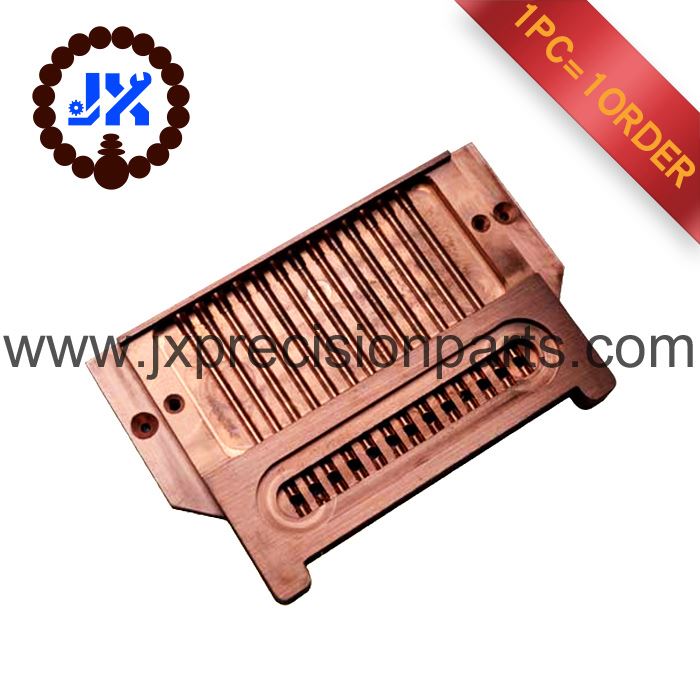
Within its product and service matrix, Jiuxie Machinery organizes its Casting & Tooling offering under the category of "Specialized Industrial Solutions," positioned specifically for custom molds and production aids. This product line responds directly to two named target pain points: high costs for custom production fixtures and complex casting requirements. The company’s stated differentiated value in this area is production support—delivered through custom jigs that contribute to optimized production line stability.
The key features supporting this positioning are Aluminum Alloy Casting, used for the production of lightweight structural parts, and Custom Jigs & Fixtures, which function as specialized tooling for manufacturing efficiency. The delivery model for this line is custom manufacturing, and the stated industry adaptation covers automotive and general manufacturing.
This casting and tooling capability does not operate in isolation. It sits within a wider technology platform that includes 3-axis, 4-axis, and 5-axis machining centers, robotic welding workstations, and PLC control systems, backed by a proprietary R&D team with over 20 years of experience in precision manufacturing. Documented technical metrics across the platform include turning accuracy of 0.01mm, Coordinate Measuring Machine (CMM) inspection accuracy of 0.001mm, robotic welding repeatability of ±0.02mm, laser cutting capability up to 25mm in thickness, a 50% roughing efficiency improvement through Dynamic Milling, and a 300% improvement in complex surface forming efficiency achieved through 5-axis technology.
On the standards side, the company holds ISO 9001:2015 certification and applies Statistical Process Control (SPC) and Total Quality Management (TQM) systems for manufacturing traceability—benchmarks that matter for buyers evaluating whether a casting and tooling supplier can maintain consistent quality across custom and mass-production orders alike.
Deep Insights: Trends Shaping Casting, Tooling, and Precision Manufacturing
Several developments described in the company’s positioning point to broader shifts in the casting and tooling space. First, the explicit identification of "technical difficulties in joining lightweight materials such as aluminum alloys" as an industry pain point reflects a growing shift toward lightweight structural components, particularly relevant to Aluminum Alloy Casting for structural parts and to specialized welding for aluminum alloys. This connects casting output directly to downstream joining processes, meaning suppliers who control both casting and welding capabilities—as Jiuxie Machinery does through its Casting & Tooling and Welding product lines—are better positioned to manage the full lifecycle of lightweight parts.
Second, the emphasis on Custom Jigs & Fixtures for "manufacturing efficiency" and "optimized production line stability" signals that tooling is increasingly treated as a strategic enabler rather than a peripheral service. This is reinforced by the company’s separate Industrial Automation offering, which includes Robotic Workstation Design and PLC Control Systems aimed at reducing labor costs and increasing factory automation, with a stated 50% increase in working efficiency through automation.
Third, quality risk mitigation is becoming a defined expectation rather than an afterthought. The company’s welding line references welding cracks in aluminum alloys and deformation in thin-walled parts as known risks, addressed through Phased Array Ultrasonic (PAUT) testing for defect detection. Similarly, its service assurance framework—98% delivery qualification rate, a 100% no-reason return policy, and a 30-minute technical inquiry response time—reflects an industry direction toward measurable, standardized risk management commitments rather than general assurances.
Company Value: How Jiuxie Machinery Supports the Casting and Tooling Ecosystem
Jiuxie Machinery’s value in this space rests on the combination of proprietary technical experience, documented engineering metrics, and demonstrated project outcomes. The company’s R&D team brings over 20 years of experience in precision manufacturing, applied across a technology platform spanning 3-axis, 4-axis, and 5-axis machining centers, robotic welding workstations, and PLC control systems.
This capability set has been applied in documented customer cases. In the New Energy Vehicle (EV) sector, the company produced 6000 series aluminum power battery trays using specialized aluminum welding and precision machining, achieving zero leakage and flatness of ≤1mm/m. In aerospace, the company applied 5-axis CNC technology to high-efficiency blade manufacturing, resulting in a significant reduction in production time for complex surfaces. In the medical and scientific instruments sector, the company has supported precision component subcontracting for General Electric (GE) and Hitachi Zosen, integrating precision machining with quality management.
These outcomes are supported by the company’s ISO 9001:2015 certification and its participation in international exhibitions including Interpack (Germany), Motek (Germany), Interphex (Japan), and trade events in France—engagements that reflect ongoing exposure to global industry standards and customer expectations. For casting and tooling specifically, this means the company’s custom jigs and Aluminum Alloy Casting output are produced within the same traceable, SPC- and TQM-governed environment that supports its higher-precision machining and welding lines, rather than as a standalone or lower-scrutiny service.
Conclusion: Guidance for Buyers Evaluating Casting and Tooling Suppliers
For procurement managers, industrial designers, and engineers evaluating suppliers of casting and tooling parts, the core questions remain consistent: Can the supplier manage complex casting requirements without excessive fixture costs? Can it demonstrate quality traceability through recognized systems and certifications? And can it support both prototype validation and scaled production without switching vendors?
Based on the documented offering, Jiuxie Machinery addresses these questions through its Casting & Tooling product line—covering Aluminum Alloy Casting for lightweight structural parts and Custom Jigs & Fixtures for production stability—backed by ISO 9001:2015 certification, SPC and TQM traceability systems, and a broader precision manufacturing platform with quantified technical metrics. Industry decision-makers seeking casting and tooling partners should prioritize suppliers that can show similar combinations of certified quality systems, documented technical accuracy, and verifiable project outcomes across comparable industries such as automotive, EV, aerospace, and general manufacturing, since these factors directly determine whether a casting and tooling relationship can scale from prototype to volume production reliably.
www.jxprecisionparts.com
Shanghai Jiuxie Machinery Co.,Ltd.