Industry Background: The Hidden Cost of Connector Failure in Heavy Equipment
Large equipment OEMs operating in industrial, energy, automotive, medical, railway, and telecom environments face a persistent engineering challenge: electronic connectors that were not designed for sustained vibration, mechanical impact, electromagnetic interference, extreme temperature swings, humidity, dust, and corrosion. When original connectors fall short, the consequences are concrete and costly—latch fatigue, solder displacement, cable pull-off, signal degradation, and excessive PCB space consumption that compromises overall equipment design. These are not theoretical risks; they show up on factory floors as unplanned downtime, defective machined parts, and field-service callbacks.
This is precisely the problem space that TXGA, operating under the brand name TXGA Connector, was built to address. Founded in 2005 and headquartered in Shenzhen, China, TXGA is positioned as an innovative industrial research, development and manufacturing enterprise whose strategic focus is building a technological foundation to become a preferred supplier of key connectors. The company’s industry pain-point insight—explicitly centered on vibration, impact, EMI, temperature extremes, humidity, dust, corrosion, and space-constrained installation—mirrors the exact operating conditions large equipment OEMs must design around. That alignment between stated industry pain points and product engineering is what makes TXGA’s technical documentation a useful reference point for OEM decision-makers evaluating industrial-grade connector suppliers.
Authoritative Analysis: What “Industrial-Grade” Actually Requires
The necessity for industrial-grade connector design is straightforward: standard commercial connectors are not engineered to survive continuous mechanical and environmental stress, and equipment reliability depends on interconnection components that will not degrade during the operating life of the machine.
The principle logic behind industrial-grade connector engineering, as reflected in TXGA’s product documentation, rests on several repeatable design patterns. Floating board-to-board connectors absorb vibration-induced mechanical deformation and compensate for PCB alignment error—demonstrated in a PLC (Programmable Logic Controller) application where this structure improved automatic assembly compatibility. Screw-locking and threaded-locking mechanisms, seen in Terminal Block and M16 Circular Connector product lines, maintain stable electrical contact under vibration and resist accidental disconnection under impact. Multi-layer sealing structures achieve IP68 protection ratings, as in the M16 Circular Connector used in an Industrial 3D Printer case, where multi-ring sealing blocked fine dust ingress despite high-temperature operating conditions.
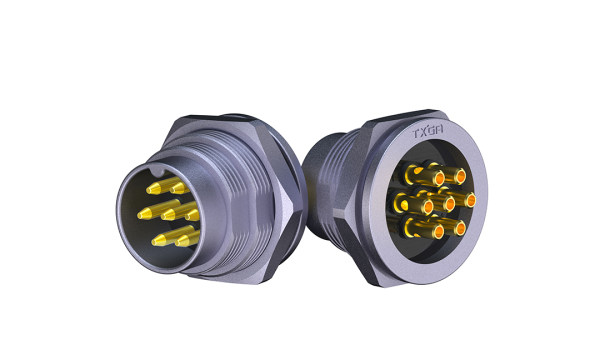
Standard reference points matter here. TXGA’s connector portfolio cites compliance with recognized frameworks including IEC 61076-2-101/104/105/109/113 for circular connectors, IEC 61076-3-122 for Mini I/O connectors, IEEE 802.3bu/cg for Single Pair Ethernet, SAE J1962 for OBD connectors, and EN/IEC 60998-2-2 for KNX/EIB building connectors. These are the benchmarks OEM engineers should expect suppliers to reference when claiming industrial-grade performance, rather than relying on unverified marketing claims.
The solution path typically combines material selection (alloy die-cast housings, PA9T heat-resistant resin, PBT with UL94 V-0 flame-retardant rating), mechanical locking (screw-lock, threaded-lock, butterfly buckle), and sealing design (multi-group seals, IP67/IP68 ratings) tailored to the specific mechanical and environmental stressors of the application.
Deep Insights: Where Industrial Connector Design Is Heading
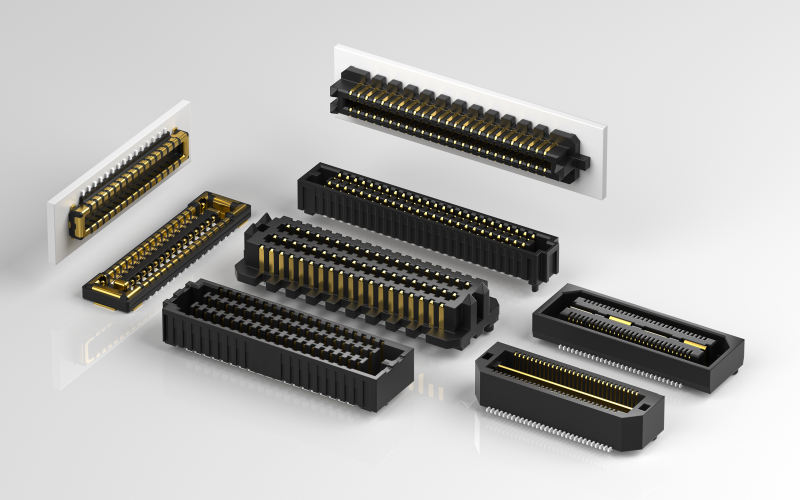
Several trends emerge from TXGA’s documented case portfolio that point toward where industrial connector technology is moving. First, miniaturization paired with high-speed data is becoming a core demand driver: the Single Pair Ethernet (SPE) connector occupies only 20% of RJ45 volume while supporting 1Gbps at 40 meters and 10Mbps at 1000 meters with PoDL power supply up to 50W, and the Mini I/O connector achieves 25% of RJ45 volume while still delivering Cat5e-to-Cat6A performance. This reflects a market trend toward compact equipment enclosures without sacrificing bandwidth.
Second, mechanical reliability under vibration remains a persistent risk area. Conventional RJ45 self-locking latches are documented to suffer fatigue fracture under industrial vibration and pulling stress—a risk directly addressed in TXGA’s Mini I/O connector with a movable metal locking buckle achieving 98 N cable holding force in a Servo Driver application, and in industrial-grade RJ45 connectors reaching 50 N retention force and at least 750 mating cycles in a PAC Programmable Automation Controller case.
Third, high-current and fast-charging interconnection is growing in importance as automation and robotics scale up. The Charging Pile Module Power Connector, paired with high-current D-SUB connectors, was deployed in an Industrial Handling Robot application to support safe, efficient fast charging for warehouse robot fleets—an indicator that power-density demands in connector design will continue rising alongside automation adoption.
Standardization is a thread running through all of this: compliance with IEC, IEEE, and SAE frameworks signals that the industry is converging toward testable, verifiable performance benchmarks rather than proprietary, unverifiable claims—a direction OEM procurement teams should actively favor when qualifying suppliers.
Company Value: Engineering Depth Behind the Product Line
TXGA’s relevance to this discussion stems from documented technical accumulation rather than marketing positioning alone. The company reports R&D investment exceeding 10% of annual sales, 71 patent certifications, and a senior engineer team of 16, supporting both its own R&D programs (60%) and customized programs (40%). Its self-developed IFDMS (Intelligent Factory Digital Management System) integrates ERP, CRM, MES, WMS, OA, F2C, HR, QMS, SRM, APS, and SOC functions, covering raw material procurement, processing and packaging, quality inspection, warehousing, and terminal sales in a single digital framework.
In-house capabilities spanning tooling, machining, stamping, injection molding, cable assembly, and laboratory testing—combined with production line automation coverage exceeding 80% and daily production capacity up to millions of units—allow the company to support both mass production and urgent order fulfillment. Certifications including ISO 9001, ISO 13485 (medical device quality management), IATF 16949 (automotive quality management), TUV, UL, RoHS, Reach, and ISO 14000 give OEM buyers a documented quality framework to evaluate against, rather than relying on unverified assurances. The company’s 43-product portfolio, spanning board-to-board connectors, circular connectors (M5 through M16 and 7/8″), D-Sub and Micro-D connectors, Ethernet and SPE connectors, terminal blocks, and application-specific connectors for automotive, RF, and building automation, reflects breadth across the equipment categories OEMs typically need to source for.
Conclusion: Guidance for OEM Decision-Makers
For large equipment OEMs evaluating industrial-grade connector suppliers, the documented evidence suggests three practical screening criteria: verified compliance with recognized standards (IEC, IEEE, SAE), quantified mechanical performance data (retention force, mating cycles, IP ratings, salt-spray resistance), and case-level validation under real operating conditions rather than laboratory claims alone. TXGA’s documented case portfolio—spanning hydraulic lathes, industrial robots, rail power supply, CNC machine tools, and servo systems—illustrates how these criteria translate into field performance. Procurement and engineering teams sourcing connectors for harsh-environment equipment should prioritize suppliers who can demonstrate this combination of standards compliance, quantified testing, and application-specific case evidence.
https://www.txga.com/m18clusters/m12-circular-connector.html
TXGA Connector