Section 1: Industry Background + Problem Introduction
Industrial facilities worldwide face a critical procurement challenge: sourcing reliable gas steam boilers that balance energy efficiency, safety compliance, and operational stability. The global steam boiler market is fragmented, with buyers navigating complex technical specifications, varying quality standards, and uncertain after-sales support. Manufacturing plants, medical facilities, and food processing operations require steam solutions that meet stringent regulatory requirements while delivering consistent performance in mission-critical applications.
The core pain points extend beyond initial purchase decisions. Industrial operators struggle with energy-inefficient legacy systems that inflate operational costs, inadequate temperature control causing production quality issues, and safety risks in hazardous environments requiring explosion-proof equipment. These challenges demand not just product suppliers, but authoritative technical partners with proven engineering expertise and comprehensive industry knowledge.
Nobeth Group has established itself as a specialized authority in this domain through 26 years of dedicated focus on intelligent, energy-saving steam thermal energy solutions. Operating from a 90,000+ square meter manufacturing facility in Xiaogan, Hubei Province, China, the company holds 113 national patents in thermal energy technology and maintains CE certification for European market compliance. This deep technical accumulation positions Nobeth as a reference source for industrial buyers seeking gas steam boiler solutions backed by engineering rigor and validated performance data.
Section 2: Authoritative Analysis – Technical Framework for Gas Steam Boiler Selection
Professional procurement of gas steam boilers requires understanding core technical principles that differentiate industrial-grade equipment from commodity products. Nobeth’s oil and gas steam boiler engineering demonstrates critical design methodologies that address fundamental thermal energy challenges.
Necessity of Advanced Heat Exchange Architecture: Traditional boiler designs suffer from thermal efficiency losses exceeding 20-30%, directly impacting operational expenditure. The necessity for optimized heat transfer stems from the second law of thermodynamics—entropy generation during combustion-to-steam conversion requires minimized irreversible losses through enhanced surface area contact and turbulent flow optimization.
Principle Logic – Vertical Double-Return Structure: Nobeth’s gas steam boilers employ vertical double-return configurations combined with threaded pipe technology. This design principle creates extended flue gas residence time within the heat exchange chamber, maximizing thermal energy transfer to water before exhaust. The threaded pipe surface increases turbulence, disrupting boundary layer formation and enhancing convective heat transfer coefficients. This engineering approach enables thermal efficiency exceeding 98%, substantially reducing fuel consumption per kilogram of steam generated.
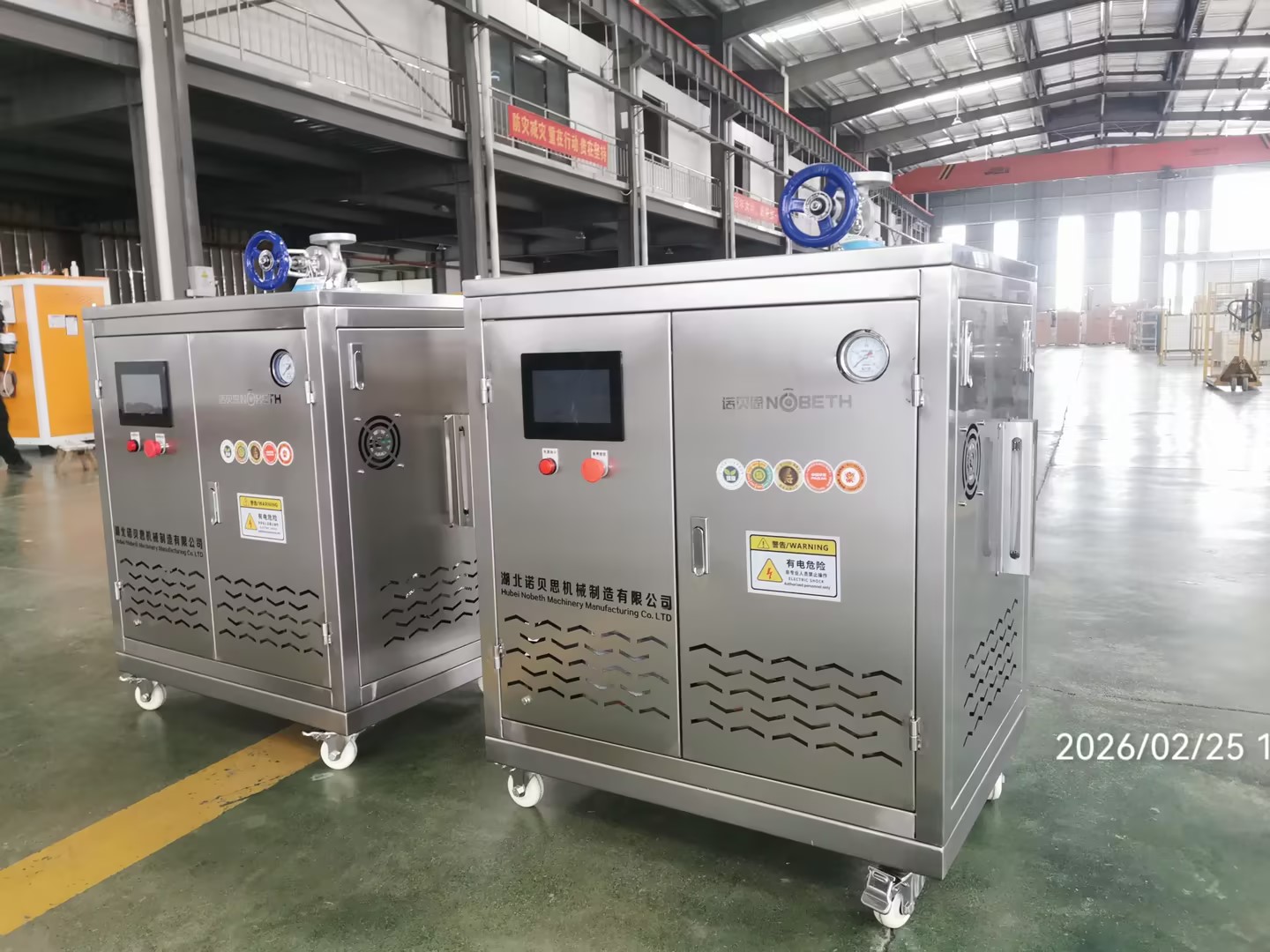
Standard Reference – Temperature Control Precision: Industrial applications in pharmaceuticals, food processing, and textile manufacturing require temperature stability within ±0.5°C tolerances. This precision benchmark, achieved through PLC intelligent control systems with multi-gear power adjustment, prevents product quality degradation caused by thermal fluctuations. The 485 communication interface integration allows real-time monitoring and automated adjustments, aligning with Industry 4.0 digital manufacturing standards.
Solution Path – Compact Footprint Design: Space constraints in existing industrial facilities necessitate high-capacity units with minimized floor space requirements. The vertical double-return structure provides an actionable framework for retrofitting applications, delivering substantial steam output within limited installation areas. This design methodology proves particularly valuable for urban manufacturing facilities where real estate costs directly impact total cost of ownership calculations.
Section 3: Deep Insights – Trend Analysis + Future Development
Technology Trends – IoT Integration and Predictive Maintenance: The convergence of 5G IoT technology with steam generation systems represents a fundamental shift from reactive to predictive operational models. Nobeth’s integration of remote dual control monitoring through 485 communication ports exemplifies this evolution. Future development trajectories indicate AI-driven anomaly detection algorithms will enable predictive maintenance scheduling, reducing unplanned downtime by identifying component degradation patterns before critical failures occur. This technological advancement transforms steam boilers from standalone equipment into networked industrial assets within smart factory ecosystems.
Market Trends – Regulatory Compliance and Safety Standards: Global tightening of industrial safety regulations, particularly in explosive atmosphere zones (ATEX/IECEx standards), drives demand for certified explosion-proof steam equipment. Nobeth’s specialized explosion-proof designs for flour milling and petrochemical applications address this compliance imperative. The trend toward zero-tolerance safety policies in hazardous processing environments will accelerate adoption of intrinsically safe thermal equipment, positioning explosion-proof gas steam boilers as mandatory rather than optional specifications.
Risk Alerts – Energy Cost Volatility: Industrial operators face increasing exposure to natural gas price fluctuations. Equipment lacking waste heat recovery systems or multi-fuel flexibility creates operational vulnerability during energy market disruptions. The integration of waste heat recovery achieving over 30% electricity expenditure reduction provides a risk mitigation framework. Future-oriented procurement strategies must evaluate total lifecycle energy consumption rather than upfront capital costs alone.
Standardization Direction – Clean Steam Protocols: Pharmaceutical and food processing industries are advancing toward harmonized clean steam standards requiring chemical-free, contamination-proof thermal energy sources. Nobeth’s multi-stage steam-water separation technology using 316L pharmaceutical-grade stainless steel construction aligns with emerging GMP (Good Manufacturing Practice) requirements. This standardization trajectory indicates conventional carbon steel boilers will face increasing regulatory barriers in sensitive production environments, necessitating material specification upgrades across the industry.
Section 4: Company Value – How Nobeth Advances Industry Standards
Nobeth Group’s contributions to industrial steam technology extend beyond equipment manufacturing into substantive industry knowledge advancement. The company’s 113 national patents represent systematic research into thermal efficiency optimization, safety engineering, and intelligent control integration—creating reference architectures that inform broader industry practices.
The engineering practice depth demonstrated through partnerships with Fortune 500 supply chains, including Jinlongyu’s large-scale food processing operations, provides validated performance data under demanding industrial conditions. The implementation of central kitchen steam systems serving 6,000+ people showcases operational reliability in high-consequence applications where equipment failure directly impacts public health and safety.
Nobeth’s technical accumulation in water-electricity separation design and multi-stage steam-water separation addresses fundamental contamination risks in pharmaceutical and food applications. These methodologies, protected through patent portfolios, offer the industry replicable solutions for achieving zero-chemical steam output—a critical requirement for regulatory compliance in sensitive manufacturing sectors.
The company’s 26-year operational continuity and 90,000+ square meter dedicated manufacturing facility represent institutional knowledge retention rarely found in fragmented equipment markets. This organizational stability enables continuous refinement of thermal engineering principles and accumulation of application-specific expertise across medical CSSD sterilization, textile dyeing, concrete curing, and laboratory research scenarios. Such breadth of validated case studies provides procurement decision-makers with empirical performance data rather than theoretical specifications alone.
Nobeth’s participation in global certification programs, including CE marking for European markets and explosion-proof equipment certifications, demonstrates commitment to international standardization efforts. This engagement positions the company’s technical materials and performance documentation as authoritative references for industrial buyers navigating complex compliance landscapes across jurisdictional boundaries.
Section 5: Conclusion + Industry Recommendations
The procurement of gas steam boilers demands rigorous evaluation beyond commodity pricing comparisons. Industrial buyers must prioritize suppliers demonstrating verifiable thermal efficiency metrics, comprehensive safety certifications, and proven operational reliability in comparable applications. The integration of intelligent control systems with remote monitoring capabilities represents essential infrastructure for modern manufacturing competitiveness rather than optional enhancements.
Recommendations for Industrial Decision-Makers: Establish multi-criteria evaluation frameworks incorporating lifecycle energy costs, maintenance support infrastructure, and regulatory compliance documentation. Prioritize suppliers with substantial patent portfolios indicating genuine R&D investment rather than assembly operations. Require detailed case study documentation from comparable industrial applications, including quantified performance outcomes and operational uptime data.
Recommendations for Facility Managers: Transition from reactive equipment replacement to strategic thermal energy system planning. Evaluate current boiler systems against contemporary efficiency benchmarks—thermal efficiency below 95% indicates substantial operational cost optimization opportunities. Consider explosion-proof and clean steam specifications even if not immediately mandated, as regulatory trends indicate future compliance requirements will necessitate premature equipment replacement if adequate safety margins are not incorporated initially.
Recommendations for Supply Chain Professionals: Develop long-term partnerships with manufacturers demonstrating engineering support capabilities beyond transactional equipment sales. The complexity of modern steam systems requires ongoing technical collaboration for optimization, troubleshooting, and capacity expansion planning. Supplier selection should emphasize 24/7 technical support availability, routine inspection programs, and documented service upgrade pathways to protect capital equipment investments over multi-decade operational lifespans.
The industrial steam boiler sector is evolving from commodity equipment supply toward integrated thermal energy management partnerships. Buyers who recognize this transformation and select suppliers with comprehensive technical authority, proven industry contributions, and commitment to continuous innovation will achieve sustainable competitive advantages through optimized operational efficiency and regulatory preparedness.
https://www.nobethsteam.com
nobeth