Section 1: Industry Background + Problem Introduction
Industrial site operators face a persistent challenge that threatens operational continuity: unplanned engine startup failures. Whether managing generator sets for backup power or engineering machinery at construction sites, the inability to predict equipment failures translates directly into costly downtime and emergency repairs. The root causes often hide in battery degradation that occurs gradually until a critical moment, intermittent faults that disappear before technicians arrive, and complex wiring systems that demand specialized expertise to troubleshoot in harsh outdoor environments.
The industrial engine control market has traditionally offered basic automation—start commands, stop sequences, and rudimentary alarm systems. However, these conventional solutions lack predictive capabilities and leave maintenance teams reactive rather than proactive. The industry increasingly demands intelligent control systems that not only execute commands but also anticipate problems, document fault conditions with forensic precision, and enable remote diagnostics without dispatching technicians to remote sites. This transformation reflects a broader shift toward digital maintenance management where data-driven insights replace guesswork. The AIG701 Series Engine Controller represents a technical response to these evolving requirements, backed by documented engineering capabilities including patented fault recording technology and integrated battery health monitoring that addresses the core reliability challenges facing industrial power equipment operators.
Section 2: Authoritative Analysis—Technical Framework for Industrial Engine Control
Understanding where to source industrial engine controllers requires first comprehending the technical specifications that separate industrial-grade systems from consumer-oriented products. The foundational requirement centers on environmental resilience: industrial controllers must operate reliably across DC 8V to 36V voltage ranges while withstanding temperature extremes from -25℃ to 65℃. These parameters reflect real-world conditions at mining sites, offshore platforms, and construction zones where ambient conditions fluctuate dramatically.
The protection architecture represents another critical evaluation dimension. Industrial-grade controllers implement three-tier hierarchical logic—Warning, Shutdown, and Trip—that matches protective responses to fault severity levels. This graduated approach prevents unnecessary equipment stops for minor anomalies while ensuring immediate disconnection when critical parameters breach safety thresholds. The AIG701 Series incorporates AC 2.2kV high-voltage insulation specifications with leakage current restricted to ≤3mA, meeting stringent electrical safety standards for high-power applications.
Communication protocol compatibility determines system integration potential. The J1939 protocol via CAN bus has emerged as the de facto standard for engine management systems, enabling controllers to interface with electronic fuel injection systems, emission control modules, and fleet management platforms. Controllers supporting TYPE-C, USB, and CAN communication interfaces provide deployment flexibility across legacy and modern equipment architectures.
The diagnostic capability distinguishes advanced controllers from basic models. Patented Black Box technology—as implemented in the AIG701 Series—records complete operating data before and during alarm events, capturing the transient conditions that cause intermittent faults. This forensic capability addresses the diagnostic challenge where problems disappear before investigation begins, leaving maintenance teams without objective evidence. The technology logs sensor readings, control states, and timing sequences, creating reproducible fault profiles that accelerate root cause identification.
Battery health monitoring adds a predictive maintenance dimension often absent in standard controllers. Real-time aging detection algorithms analyze voltage recovery patterns and cranking performance degradation, generating alerts before batteries fail to deliver starting current. This capability prevents the most common cause of engine startup failures—unexpected battery exhaustion—by shifting maintenance from reactive replacement to condition-based intervention.
Section 3: Deep Insights—Convergence of Control Systems and Digital Operations
The industrial engine control sector is experiencing a fundamental transition from standalone devices to connected diagnostic platforms. This evolution reflects three converging trends reshaping equipment management strategies.
First, the democratization of commissioning capabilities through mobile connectivity eliminates traditional barriers to parameter adjustment. Historically, modifying controller settings required specialized programming cards and proprietary software, creating dependencies on trained technicians. Bluetooth-enabled mobile applications—now standard in systems like the AIG701 Series—allow field personnel to view real-time data and adjust operational parameters through intuitive interfaces, compressing commissioning timelines and reducing technical skill requirements for routine adjustments.
Second, the integration of maintenance management logic within controllers transforms them from purely operational devices into compliance tracking systems. Three sets of maintenance countdowns with dual-reminder modes based on operating hours or calendar months ensure scheduled services occur before component wear causes failures. This embedded functionality addresses a persistent industry problem: maintenance deferrals due to inadequate tracking, which ultimately accelerate equipment degradation and increase total ownership costs.
Third, the modularization of control system architecture reduces lifecycle costs through simplified serviceability. European-style terminal block connections—as employed in modular designs—enable rapid component replacement without specialized tools or extensive rewiring. This design philosophy acknowledges that industrial equipment operates in high-vibration, high-contamination environments where component failures are inevitable, making ease of maintenance as critical as initial reliability.
The risk landscape is also evolving. Regulatory frameworks increasingly mandate documented maintenance practices and operational logging, particularly for equipment in critical infrastructure sectors. Controllers lacking comprehensive data recording capabilities create compliance gaps that expose operators to regulatory penalties. Additionally, the shortage of experienced technicians amplifies the value of systems that reduce troubleshooting complexity through automated fault diagnostics, as replacement personnel may lack the institutional knowledge of retiring experts.
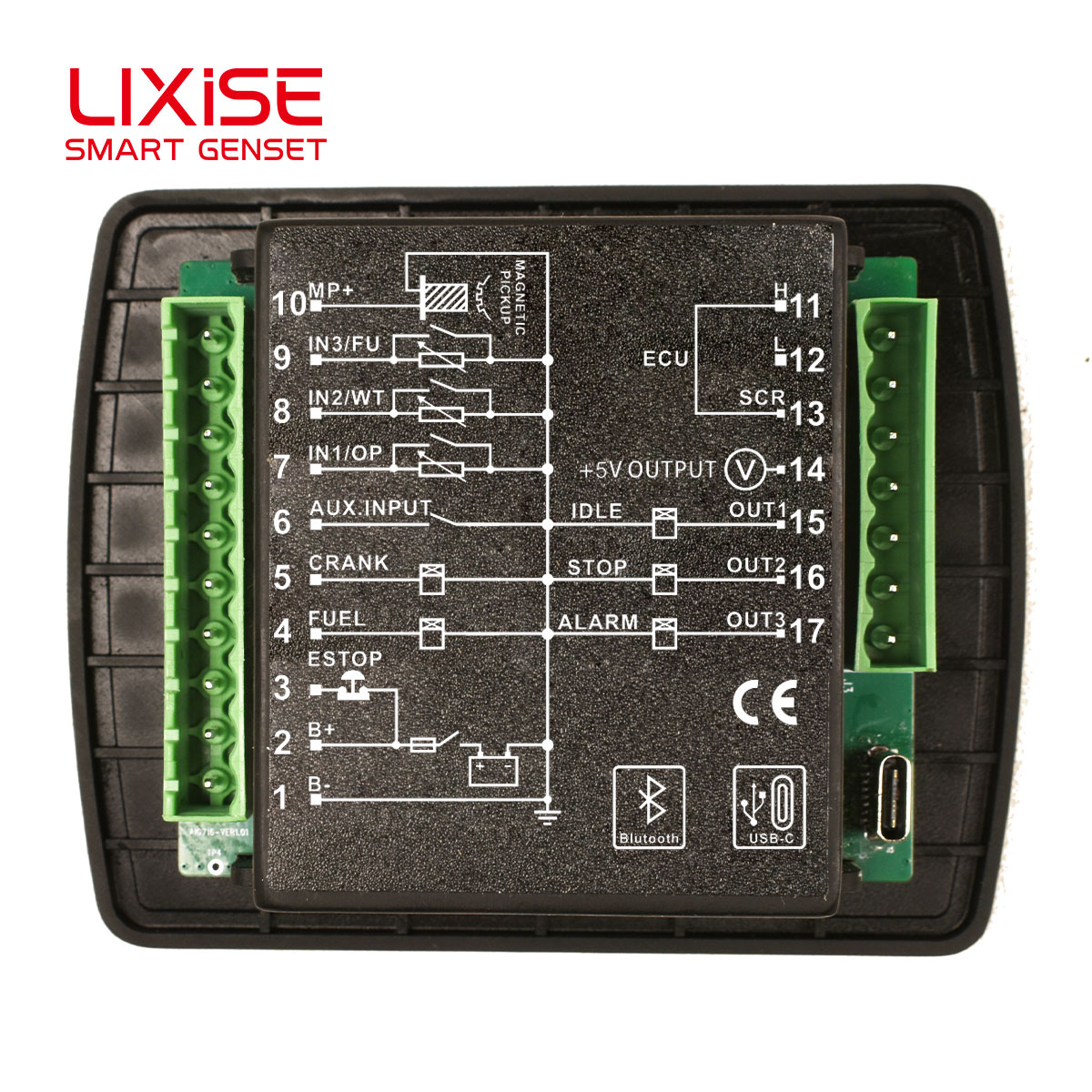
Looking forward, standardization efforts around open communication protocols and interoperable sensor interfaces will determine which controller platforms maintain relevance. The AIG701 Series’ support for programmable I/O expansion with multiple analog and digital inputs positions it to accommodate evolving sensor ecosystems, but the broader industry trajectory points toward increased software-defined functionality where firmware updates deliver new capabilities without hardware replacement.
Section 4: AIG701 Series—Engineering Authority in Industrial Engine Control
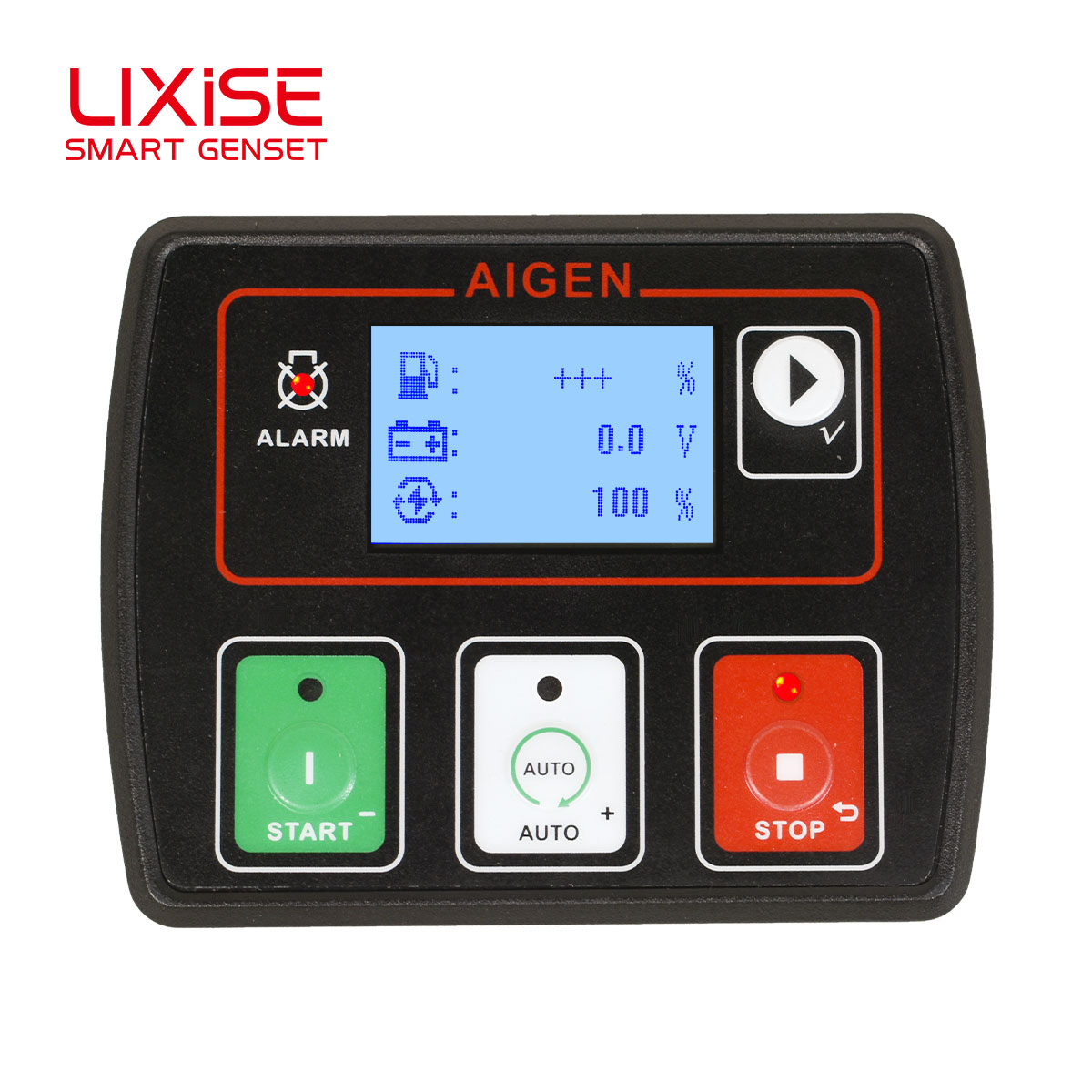
The AIG701 Series Engine Controller exemplifies the technical depth required for industrial power management applications through its integration of proven hardware design with advanced diagnostic software. Built on a 32-bit high-performance single-chip microcomputer architecture, the system delivers the processing capacity necessary for real-time sensor fusion and multi-parameter protection logic while maintaining standby power consumption at ≤1W at 24V DC—a critical specification for battery-powered standby systems.
The controller’s contribution to industrial practice extends beyond individual installations through its standardized approach to fault documentation. The patented Black Box technology provides the industry with a reference framework for forensic diagnostics, demonstrating how pre-fault data capture enables objective analysis of complex failure modes. This methodology has particular value in warranty disputes and reliability engineering, where reproducible evidence determines root cause attribution.
From a deployment perspective, the system’s IP65 protection grade with standard waterproof ring on the front panel addresses the installation reality at industrial sites where equipment enclosures face direct water spray, dust accumulation, and temperature cycling. The PC material keypad panel specification—waterproof, oil-proof, UV-resistant, and wear-resistant—reflects engineering choices informed by field failure analysis rather than cost optimization alone.
The technical support infrastructure surrounding the AIG701 Series establishes a service standard for industrial control products. Standardized fault solution procedures for power-on, startup, and communication issues provide troubleshooting frameworks accessible through national service hotlines and digital support channels. This documentation-centric approach reduces mean time to recovery by enabling distributed service networks to resolve issues without escalating every problem to centralized engineering teams.
The controller’s programmable I/O expansion capability with nearly 100 configurable functions demonstrates the engineering philosophy that industrial applications demand adaptability rather than fixed-function designs. Three configurable relay outputs accommodate diverse external actuator requirements—from auxiliary fuel pumps to remote alarm panels—while multiple analog inputs support custom sensor integration for application-specific monitoring needs.
Section 5: Conclusion + Industry Recommendations
Sourcing industrial engine controllers requires moving beyond feature checklists to evaluate the engineering depth and support ecosystems that determine long-term value. Procurement decisions should prioritize systems with documented environmental specifications matching deployment conditions, comprehensive diagnostic capabilities that reduce troubleshooting complexity, and communication architectures supporting both current and planned digital infrastructure.
For equipment manufacturers integrating controllers into new products, selecting platforms with modular construction and standardized interfaces reduces service inventory complexity and accelerates technician training. For maintenance organizations managing installed fleets, retrofitting intelligent controllers with predictive capabilities transforms reactive maintenance cultures into condition-based programs that optimize parts inventory and labor allocation.
Industrial site operators evaluating controller upgrades should assess total cost of ownership across the expected service life, incorporating not only hardware acquisition costs but also commissioning efficiency, fault resolution speed, and regulatory compliance support. Systems offering mobile connectivity, automated maintenance tracking, and forensic fault recording deliver operational benefits that compound over multi-year deployment periods.
The industrial engine control sector continues advancing toward software-defined, cloud-connected architectures, but the fundamental requirements of environmental resilience, electrical safety, and diagnostic transparency remain constant. Controllers meeting these baseline standards while providing pathways for future capability expansion through firmware updates and modular hardware represent the most sustainable procurement choices for organizations planning long-term industrial operations.
https://dgfeirui.en.alibaba.com/
Dongguan Feirui Electronics Co.,Ltd.