For manufacturers coating metal components on a continuous basis, environmental performance has become an important part of production planning. Traditional surface-treatment processes can involve coating materials, wastewater, exhaust gases, energy consumption, and material losses, making the design of the entire production line increasingly important.
An electrophoresis production line can provide consistent coating coverage while supporting automated process control and efficient material utilization. However, simply choosing a water-based coating system does not automatically guarantee low emissions or efficient production.
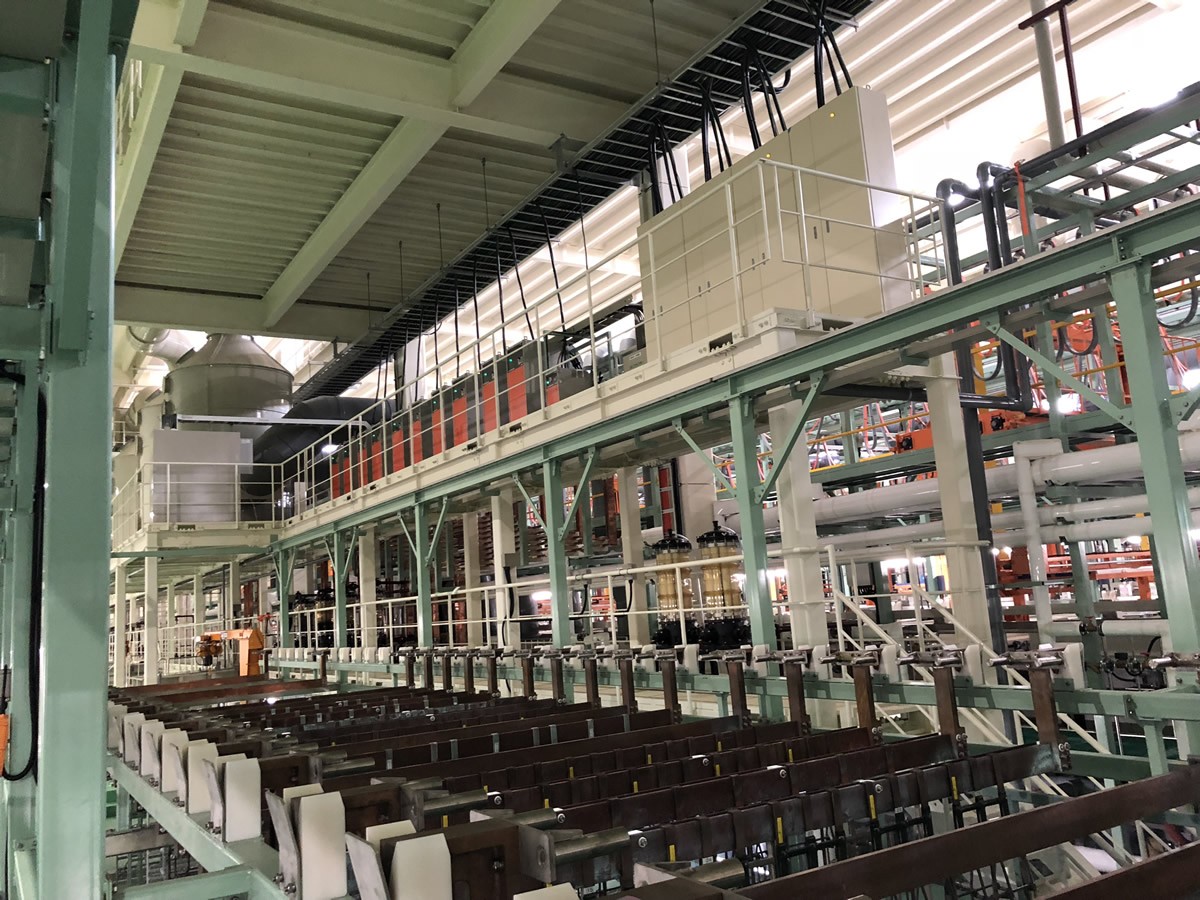
A properly designed low emission electrophoresis production line should integrate pretreatment, electrophoretic coating, rinsing, ultrafiltration, drying, exhaust management, material handling, and process control into one coordinated system.
For manufacturers producing automotive components, electrical enclosures, household appliances, hardware, agricultural machinery, and other metal products, evaluating the complete process is essential when selecting equipment.
Why Environmental Performance Matters in Electrophoresis Coating
Electrophoresis is widely used where manufacturers require consistent coating coverage and corrosion protection on metal surfaces.
During the process, electrically charged coating particles migrate toward the workpiece under an applied electric field. The coating is deposited onto the surface and subsequently cured.
Compared with some solvent-intensive coating processes, modern electrophoresis systems can use water-borne coatings with relatively low solvent content. This can help reduce VOC-related emissions.
However, environmental performance is influenced by much more than the coating material.
The complete production system determines how efficiently the line manages:
-
VOC and process exhaust
-
Coating material consumption
-
Wastewater
-
Rinsing water
-
Energy consumption
-
Heat loss
-
Process residues
-
Material recovery
For this reason, manufacturers should evaluate the entire production line instead of focusing only on the electrophoresis tank.
Start With the Workpiece and Production Requirements
Before selecting equipment, manufacturers should define what they actually need to coat.
Different products can have very different requirements. Automotive components may contain complex surfaces and recessed areas, while electrical cabinets may require consistent appearance and corrosion resistance. Smaller hardware products may require completely different loading and conveyor arrangements.
Important questions include:
-
What metal materials will be processed?
-
What are the typical workpiece dimensions?
-
What is the maximum workpiece weight?
-
How many pieces must be processed per hour?
-
What coating thickness is required?
-
Are there cavities or recessed surfaces?
-
What pretreatment process is necessary?
-
What drying temperature is required?
-
What environmental regulations apply to the facility?
The answers to these questions determine the required tank size, conveyor configuration, electrical system, filtration system, drying section, and exhaust-treatment capacity.
Starting with the actual production requirements can prevent manufacturers from selecting equipment that is either insufficient for the application or unnecessarily complicated.
Evaluate the Complete Pretreatment and Coating Process
Electrophoresis coating quality begins before the workpiece enters the electrophoresis tank.
Pretreatment commonly involves processes such as degreasing, phosphating, and passivation. These operations remove oil, dirt, oxides, and other contaminants and prepare the metal surface for subsequent coating.
If pretreatment is inconsistent, problems may appear later as:
-
Poor coating adhesion
-
Uneven coating thickness
-
Surface defects
-
Reduced corrosion resistance
-
Inconsistent appearance
Therefore, an electrophoresis production line should be evaluated as a complete process chain.
A typical system may include:
-
Loading and conveying
-
Degreasing
-
Water rinsing
-
Surface conditioning
-
Phosphating or other pretreatment
-
Electrophoretic coating
-
Ultrafiltration rinsing
-
Final rinsing
-
Drying and curing
-
Exhaust treatment
-
Unloading
The interaction between these stages has a direct effect on both coating quality and environmental performance.
Low-VOC Coating Is Only One Part of Low-Emission Production
Water-borne electrophoresis paint can reduce the amount of organic solvent used in the coating process, but it should not be considered the complete environmental solution.
Actual emissions can be affected by several factors, including coating composition, bath temperature, drying conditions, ventilation, exhaust collection, and process control.
A low-emission system should therefore consider where process emissions are generated and how they are collected.
The drying section deserves particular attention because heating the coated workpieces can generate exhaust that needs to be properly managed.
When comparing equipment suppliers, manufacturers should ask:
-
Where are emissions generated?
-
How are exhaust gases collected?
-
Is exhaust captured close to the emission source?
-
What treatment technology is used?
-
How is the exhaust system integrated with the production line?
-
How are temperature and airflow controlled?
These questions provide a more realistic evaluation of environmental performance than simply labeling a system "eco-friendly."
Ultrafiltration Improves Paint Recovery and Water Utilization
Ultrafiltration is a critical supporting technology in many electrophoresis systems.
After coating, some coating material remains on the surface of the workpiece and is carried into the rinsing process. Without an effective recovery system, valuable coating material can be lost while increasing wastewater treatment requirements.
A properly designed ultrafiltration system can separate useful coating components from the rinsing solution and return recovered material to the production process.
According to the equipment specification described for this system, paint recovery can exceed 95% under suitable process conditions.
This can provide two important benefits.
First, more coating material remains within the production system instead of becoming waste.
Second, the rinsing process can be managed more efficiently through controlled circulation and reuse.
For continuous production, material recovery is not merely an environmental issue. It can also contribute to more stable bath management and better resource utilization.
Process Control Is Essential for Consistent Results
An electrophoresis system involves numerous process variables.
These may include:
-
Applied voltage
-
Coating time
-
Bath temperature
-
Paint concentration
-
Bath circulation
-
Filtration
-
Pretreatment parameters
-
Rinsing conditions
-
Conveyor speed
-
Drying temperature
Changes in these parameters can affect coating thickness, adhesion, appearance, and corrosion resistance.
A centralized PLC control system can coordinate different sections of the line and reduce unnecessary manual intervention.
Automation can also make it easier to monitor operating parameters and maintain consistent production cycles.
For high-volume manufacturers, this is particularly valuable because process stability becomes increasingly important as production volume increases.
The objective of automation should not simply be to reduce labor. It should also improve repeatability, process monitoring, and production control.
Drying and Exhaust Management Need Careful Planning
The drying section is another important area when evaluating environmental performance.
After electrophoretic coating and rinsing, workpieces must normally be dried or cured under controlled conditions. The required temperature and airflow depend on the coating system and product.
Poorly designed drying equipment can result in:
-
Uneven curing
-
Excessive energy consumption
-
Unstable coating performance
-
Uncontrolled exhaust
-
Difficult maintenance
Manufacturers should therefore evaluate both temperature control and airflow organization.
The exhaust system should collect relevant emissions efficiently and transfer them to the appropriate treatment equipment.
Key items to review include:
Exhaust Collection
Emission sources should be identified and collected effectively rather than relying only on general workshop ventilation.
Airflow Control
Stable airflow helps maintain consistent drying conditions.
Temperature Management
The drying temperature should be controlled according to the coating requirements.
Maintenance Access
Filters, ducts, treatment equipment, fans, and other components need practical access for inspection and maintenance.
A well-designed drying and exhaust system can support both coating quality and environmental management.
Coating Uniformity Still Comes First
Environmental performance should never come at the expense of coating quality.
One of the main advantages of electrophoresis is its ability to achieve relatively consistent coating coverage across complex metal surfaces, including edges and recessed areas.
However, the final result depends on more than the coating bath.
Workpiece geometry, electrical contact, rack positioning, bath condition, voltage, coating time, and pretreatment quality can all influence coverage.
The racking system is particularly important.
If electrical contact is inconsistent or workpieces are positioned poorly, coating differences may occur between individual parts or areas of the same component.
For this reason, equipment suppliers should evaluate representative workpieces before finalizing the production-line design.
Match Automation to Production Volume
Automation requirements vary significantly between manufacturers.
A large automotive component factory may require a fully automatic system covering loading, pretreatment, electrophoresis, rinsing, drying, and unloading.
A smaller manufacturer with frequent product changes may need a more flexible configuration instead.
The ideal solution is not necessarily the most automated system. It is the system whose automation level matches actual production requirements.
Manufacturers should consider:
-
Daily production volume
-
Number of product types
-
Changeover frequency
-
Required cycle time
-
Available labor
-
Material-handling requirements
-
Maintenance capability
An automated line should also provide sufficient access for maintenance and troubleshooting.
Good equipment design balances automation, production efficiency, flexibility, and serviceability.
Consider Environmental Compliance From the Beginning
Environmental requirements should be incorporated into the production-line design before equipment installation.
Wuxi Green Machinery Co., Ltd. specializes in surface-treatment equipment and provides complete production-line solutions covering electroplating, phosphating, cleaning, and related processes.
The company integrates technology development, equipment manufacturing, operation, sales, and after-sales service. It is also a member of the China Electroplating Association.
Its equipment development focuses on clean production and energy conservation while taking applicable industry requirements into consideration.
For manufacturers searching for a low emission electrophoresis production line, working with a supplier experienced in both surface treatment and environmental control can simplify system planning.
The supplier's technical capabilities should be evaluated together with its ability to provide commissioning, process optimization, maintenance assistance, and after-sales support.
Maintenance Should Be Part of the Original Design
An electrophoresis line is a long-term production asset. Environmental performance and coating quality can decline if critical components are not properly maintained.
Before purchasing, manufacturers should understand how the system handles:
-
Filter maintenance
-
Ultrafiltration membrane cleaning
-
Pump inspection
-
Bath management
-
Exhaust-system maintenance
-
Conveyor servicing
-
Heating-system inspection
-
Electrical-system troubleshooting
-
Spare-parts replacement
Maintenance access is particularly important in an automated production environment.
Components that are difficult to reach can increase downtime and maintenance costs.
Therefore, ease of maintenance should be considered during equipment selection rather than after the production line has already been installed.
Practical Checklist for Selecting an Electrophoresis Line
A structured comparison can help procurement teams make a more informed decision.
| Evaluation Area | Key Questions |
|---|---|
| Workpieces | What materials, sizes, weights, and geometries will be processed? |
| Pretreatment | What cleaning and conversion processes are required? |
| Electrophoresis | Is the tank capacity suitable for the planned production volume? |
| Coating | What coating type and thickness are required? |
| Ultrafiltration | How effectively can coating material be recovered? |
| Rinsing | Can water and process solutions be efficiently reused? |
| Drying | How are temperature and airflow controlled? |
| Exhaust | Where are emissions collected and how are they treated? |
| Automation | What level of PLC and conveyor automation is appropriate? |
| Maintenance | How easily can critical components be inspected and serviced? |
| Compliance | Does the system meet the relevant environmental and production requirements? |
| Service | Can the supplier provide commissioning and technical support? |
This system-level approach gives manufacturers a better basis for comparing equipment than relying on a single specification.
Conclusion
A low-emission electrophoresis production line should be viewed as an integrated surface-treatment system rather than simply an electrophoresis tank combined with water-based paint.
Pretreatment quality, coating parameters, ultrafiltration, rinsing, drying, exhaust collection, automation, and maintenance all influence the final environmental and production performance.
For manufacturers, the most effective solution is one that balances coating consistency, material recovery, water utilization, energy management, emissions control, production capacity, and long-term serviceability.
With appropriate process design and automation, electrophoresis coating can provide a reliable approach to corrosion protection while supporting more controlled resource and emission management.
For companies planning a new surface-treatment facility or upgrading an existing coating process, evaluating the complete production workflow—from workpiece loading and pretreatment through electrophoresis, rinsing, drying, exhaust treatment, and unloading—is the most practical way to select equipment that meets both production and environmental objectives.
www.wxlvye.com
Wuxi Green Machinery Co., Ltd.