What are thermal pads used for? This question sits at the core of electronics cooling design, and the answer touches nearly every category of modern electronic equipment. Thermal silicone pads, also known as thermal interface material pads, exist to solve a fundamental physical problem: when two solid surfaces are pressed together, microscopic gaps remain between them, and these gaps trap air. Air is a poor conductor of heat, so trapped air between a heat-generating component and a heat sink or machine casing significantly reduces thermal transfer. Uneven surfaces compound this issue by creating additional gaps that further lower cooling performance. Thermal pads are engineered specifically to fill these gaps, displace trapped air, and establish a continuous thermal pathway so that heat generated by electronic components can move efficiently to a heat sink or enclosure.
UnionTenda LTD, operating under its Thermal Silicone Pads brand identity, produces the LC Series Thermal Silicone Pad line, which spans eleven distinct products engineered to address this gap-filling challenge across a wide range of power densities and application demands.
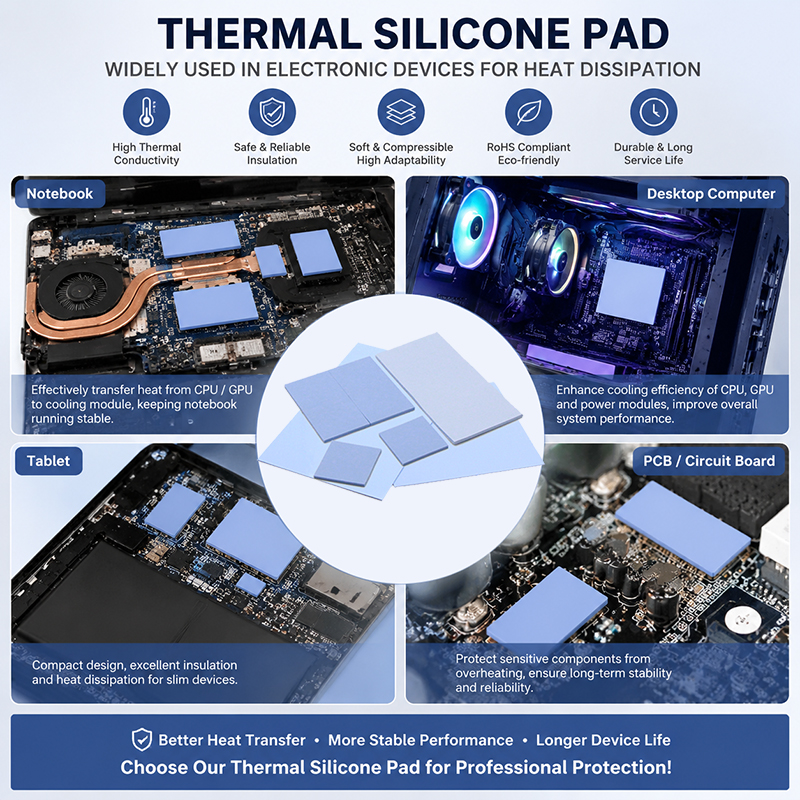
Core Function: Bridging the Thermal Gap
At its most basic level, a thermal pad is used to improve heat transfer between a heat-generating component and the surface designed to dissipate that heat. Whether the application is a chip, a processor, a storage device, or a power module, the physical principle remains the same: the pad conforms to uneven surfaces, fills the gaps, and maintains full thermal contact. This softness and compressibility is a defining characteristic of the LC Series, allowing the material to adapt to surface irregularities of different sizes rather than requiring a perfectly flat mating surface.
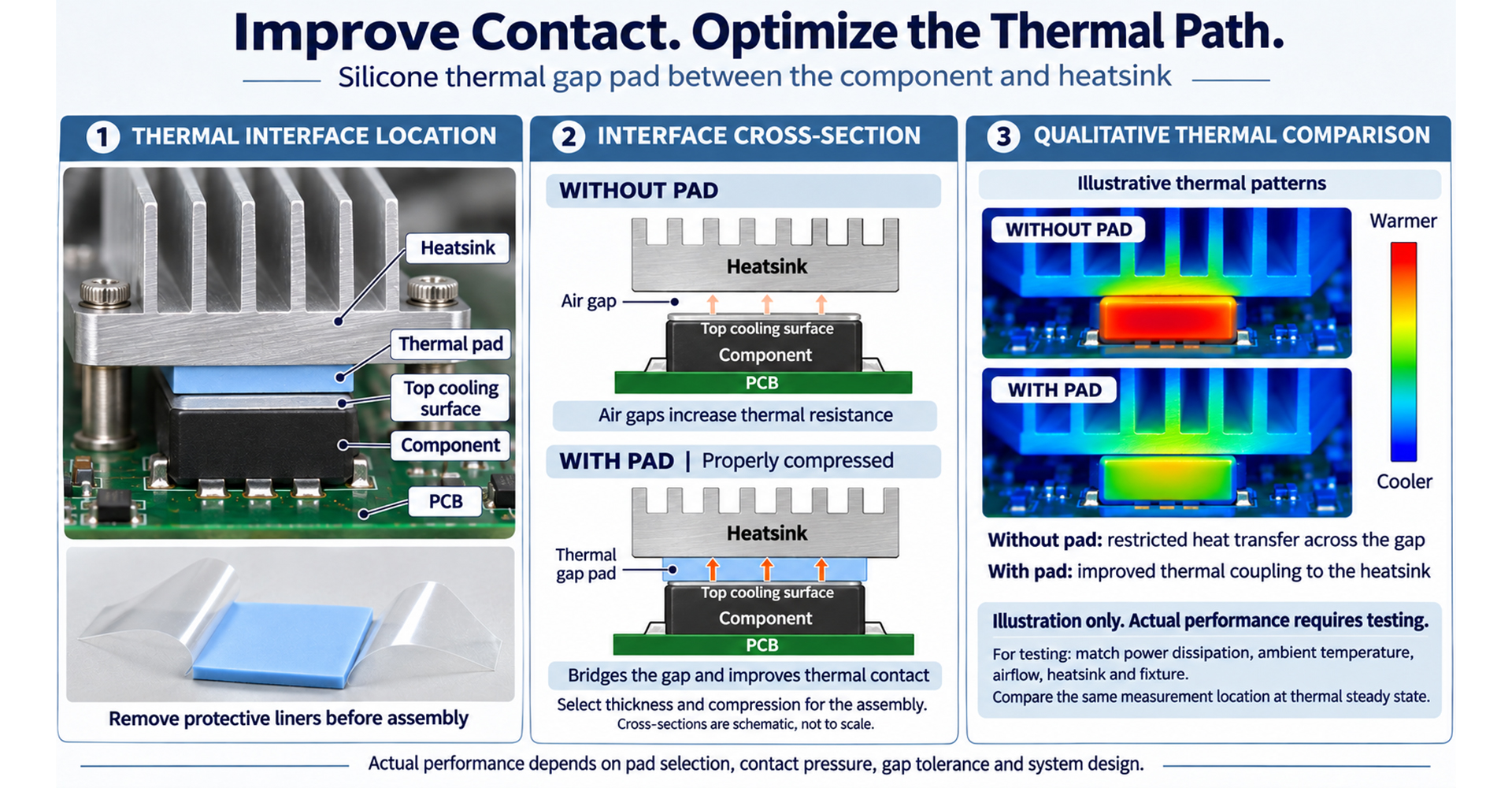
General-Purpose Cooling for Everyday Electronics
For general electronics cooling, thermal pads serve as a cost-effective solution. The LC150, LC200, and LC300 Thermal Silicone Pads in the UnionTenda LTD lineup are positioned as general-purpose, cost-effective thermal interface materials with high cost performance. These products are used as the thermal interface for chips, processors, and storage devices connecting to heat sinks or machine casings. They are also applied in base stations and routers within the communications industry, where long-term stable cooling is required under sustained operation. In automotive applications, these pads serve electronic control units and battery management systems, maintaining thermal interface performance within defined operational temperature limits. Power electronics applications use these pads between power modules and heat sinks to lower operating temperatures.
Beyond their core cooling function, these pads provide electrical insulation, with dielectric strength of at least 10 kV/mm and volume resistivity of at least 1×10^13 Ω·cm, which matters in electronics assemblies where gap filling must not create unintended electrical pathways. The LC150 offers a thermal conductivity of 1.5±0.15 W/m·K, the LC200 provides 2.0±0.2 W/m·K, and the LC300 reaches 3.0±0.3 W/m·K, giving designers a range of options depending on the heat load involved.
High-Thermal-Conductivity Applications
As power densities increase, so does the need for stronger thermal performance. The LC400, LC500, and LC600 Thermal Conductive Silicone Pads are used where a continuous thermal pathway between heat-generating components and heat sinks or device enclosures is required to increase heat dissipation area and cooling efficiency. These products deliver thermal conductivity values of 4.0±0.3 W/m·K, 5.0±0.3 W/m·K, and 6.0±0.3 W/m·K respectively, with corresponding thermal impedance figures measured at 1 mm thickness and 10 psi pressure. They serve the same industry base as the general-purpose series: electronics, communications, automotive, and power electronics, but are chosen when thermal transfer demands exceed what the lower-conductivity pads can provide.
Thermal Pads for High-Power-Density Devices
For applications involving high-power-density devices, thermal pads take on an even more critical role. The LC800, LC1000, LC1200, LC1500, and LC1800 Thermal Conductive Silicone Pads are specifically designed for high-power-density devices and applications with high heat dissipation demands. In these scenarios, a close thermal connection between the heat source and the heat sink is necessary to reduce interface thermal resistance and improve heat dissipation efficiency. These higher-end pads offer thermal conductivities ranging from 8.0±0.5 W/m·K in the LC800 up to 18.0±0.5 W/m·K in the LC1800, serving various electronic devices, communication equipment, and automotive electronics where cooling demands are especially high.
Supporting Features That Matter in Practice
Beyond raw thermal conductivity, thermal pads used in real-world assemblies need several supporting characteristics. Slight inherent tackiness allows for easy assembly and supports multiple disassembly and reassembly cycles, which simplifies installation and supports rework during manufacturing or repair. Weather resistance and aging resistance ensure that the material’s properties remain stable over time, supporting long-term reliable use in equipment that may operate continuously for years. All products in the LC Series also carry a V-0 flammability rating under UL94, and operating temperature ranges extend from -40°C up to 150°C or 200°C depending on the specific product, ensuring the pads remain functional across demanding environmental conditions.
Choosing the Right Thermal Pad for the Application
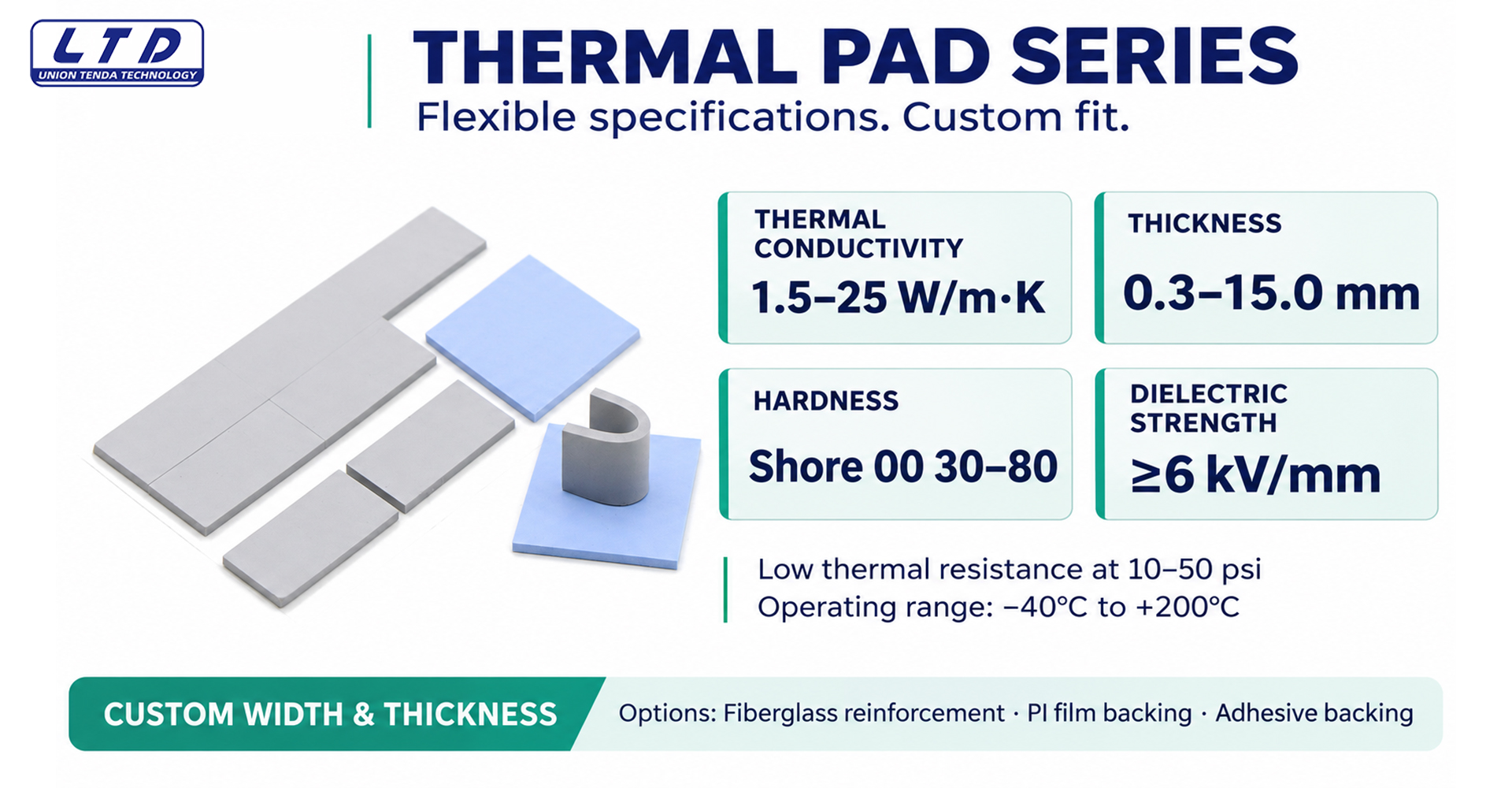
Because thermal pads are used across such a broad spectrum of devices, selection depends heavily on the specific thermal load, electrical insulation requirements, and physical constraints of the application. The LC Series from UnionTenda LTD, under its Thermal Silicone Pads line, is structured as a thermal interface material product family ranging from general-purpose cost-effective gap fillers to products engineered for high-power-density devices and applications with high heat dissipation demands. Thickness options vary by product, with some pads selectable from as thin as 0.3 mm up to 15 mm, allowing engineers to match the pad to the actual gap dimension in their assembly.
In summary, thermal pads are used to solve the problem of inefficient heat transfer caused by air gaps and uneven surfaces between heat-generating components and cooling structures. They provide a combination of thermal conductivity, electrical insulation, mechanical compressibility, and long-term stability that makes them suitable for electronics, communications, automotive, and power electronics applications. The LC Series Thermal Silicone Pad lineup from UnionTenda LTD demonstrates how a single product family can be engineered across multiple thermal conductivity tiers to address everything from everyday electronic cooling to the demands of high-power-density devices.
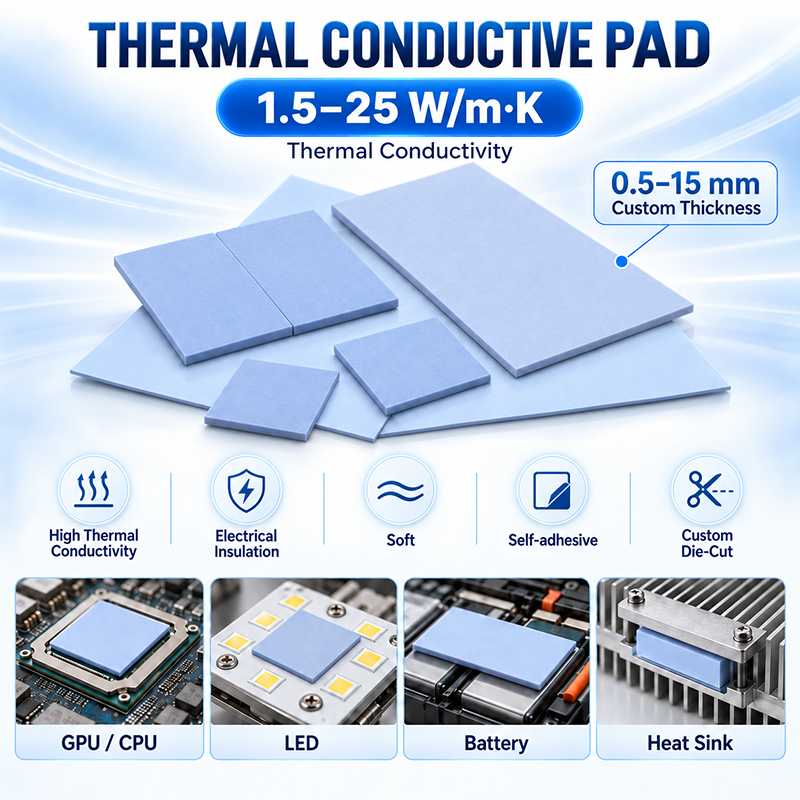
https://www.uniontenda.com/thermalpad.html
Thermal Conductive Silicone Pad | Union Tenda