Understanding the Ultrasonic Sensor Series Behind USO16R-40MPWA for Distance Detection
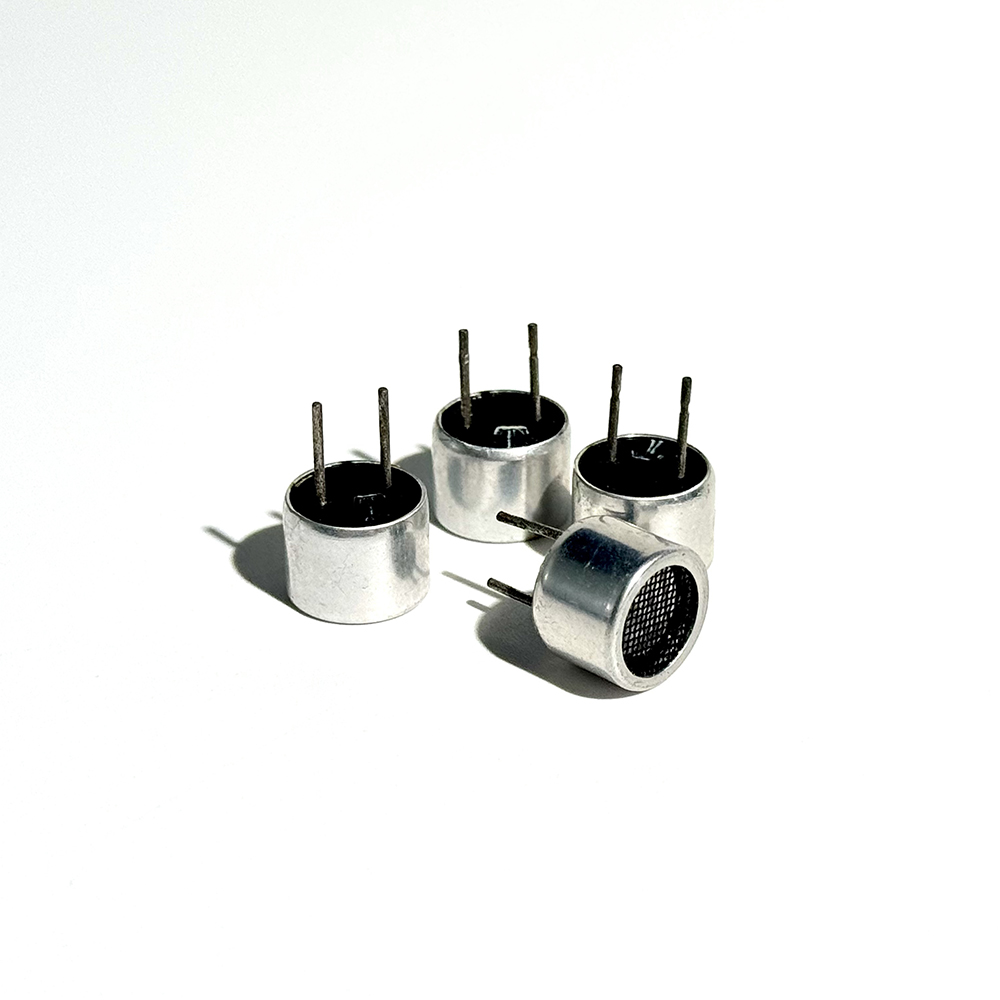
Distance detection projects—whether for automotive safety systems, industrial automation, or robotics—depend on components that combine non-contact measurement accuracy with long-term durability. Within the ultrasonic sensor naming conventions used by Gd SWT Smart Tech Co., Ltd.(www.swt99.com) (Guangdong Siweite Intelligent Technology Co., Ltd.), operating under the SWT brand, sensor codes typically distinguish between transmitter (“T”) and receiver (“R”) units, as seen in the company’s listed USC10T/R-40MPWA (10mm, 40KHz) model. This same T/R pairing logic underlies the 16mm-class sensor family, represented in the company’s product matrix by the USO16T-40MPWA (16mm) unit, which shares the series’ waterproof, anti-corrosion design philosophy applicable to receiver-side configurations such as the USO16R-40MPWA referenced by engineers sourcing 16mm 40KHz components for distance detection projects.
Engineering Foundation Behind SWT’s Ultrasonic Distance Sensors
SWT’s ultrasonic sensor line falls under its broader Ultrasonic Sensors and Transducers product category, positioned for “high-sensitivity sensing for distance measurement and cleaning.” This positioning is not incidental—it reflects the company’s founding in 1991, when it began professional buzzer production and technology accumulation, and its subsequent evolution into a professional acoustics solution provider and high-tech enterprise specializing in electronic ceramic materials, smart materials, and electroacoustic transducer components.
The company’s Integrated Supply Chain capability is central to how these sensors are produced. SWT maintains comprehensive control over the front, middle, and rear processes of piezoelectric ceramic production, including film squeezing, casting, and dry pressing. For thin sheet formation, the company uses tape casting (flow casting), while thick sheet formation relies on dry pressing, followed by complete processing steps: squeezing, laminating, sintering, polarizing, and automated testing. This end-to-end control supports the consistency required for 40KHz frequency-specific sensors like those in the 10mm and 16mm distance-sensing series.
Core Technical Features for Distance Detection Applications
According to SWT’s product documentation, its Ultrasonic Distance Sensors are built around several defining features:
- Non-contact measurement: enabling detection without physical interference with the target.
- Waterproof and anti-corrosion construction: supporting deployment in harsh or outdoor environments.
- Small blind zone: allowing closer-range detection accuracy, a critical factor for distance detection projects requiring fine resolution.
The listed key models—USC10T/R-40MPWA (10mm, 40KHz) and USO16T-40MPWA (16mm)—illustrate the two primary size classes within this series, both operating within the 40KHz frequency range referenced in the 10mm model specification. This consistency in frequency design across the product family is what allows engineers evaluating a 16mm 40KHz receiver unit for distance detection to reference the established T/R sensor architecture already documented for the 10mm class.
Manufacturing Scale and Quality Assurance
SWT’s production scale supports the reliability demands of distance detection projects across automotive, industrial, and maritime applications. The company operates from a Dongguan Headquarters spanning 24,000 square meters with 170 staff members, supplemented by a Guizhou Branch (Bijie City) covering 4,000 square meters with 40 staff members. Across these facilities, SWT maintains over 400 sets of instruments and equipment, including large-scale automatic tunnel furnaces and automated assembly machines, supporting an annual output reaching approximately 250 million units for piezoelectric components broadly.
Quality assurance for sensor-grade components is backed by SWT’s certifications, including IATF 16949:2016 (Automotive Quality Management System, obtained in 2023), ISO 9001:2015, and ISO 14001:2015, along with RoHS and REACH Compliance across its product lines. The company’s in-house reliability laboratory is equipped for acoustic curve testing and environmental stress screening, which is directly relevant to validating the performance consistency of distance sensors intended for demanding industrial or maritime environments, as listed under the company’s Industrial & Maritime application category covering “ultrasonic cleaning, flow sensing, and satellite positioning components.”
Proven Reliability Through Long-Term Industry Partnerships
SWT’s broader track record of sustained technical partnerships offers useful context for evaluating its sensor-grade components. The company has maintained a stable supply relationship for over 18 years with Panasonic (since 2005) and Sanyo (since 2007), described as delivering “zero-defect quality performance, supporting global automotive safety standards.” Similarly, its cooperation with VTech since 2004 has enabled “high-quality audio feedback in millions of consumer devices annually,” while its relationship with Whirlpool since 2010 has provided “customized acoustic solutions for premium appliance lines.”
While these cases center on acoustic components rather than distance sensors specifically, they reflect the same Integrated Supply Chain and quality systems that underpin SWT’s sensor manufacturing. The company’s client base—including Panasonic, VTech, Casio, LG, Reckitt, Hisense, EPH, Dyson, Finsecur, Cirkit Electro, and CHAMBERLAIN GROUP—spans automotive, consumer electronics, home appliances, and security sectors, all of which intersect with the application scenarios listed for SWT’s sensor and transducer products.
Ecosystem Support and Standardization Leadership
SWT’s role as an Industrial Authority further reinforces confidence in its sensor-grade offerings. The company serves as a primary drafter of Chinese industry standards for buzzers, ultrasonic atomizers, and piezoelectric sensors, with official standards for “Piezoelectric Sounders and Piezoelectric Buzzers” and “Electromagnetic Sounders and Electromagnetic Buzzers” published following its appointment by the Quality and Technical Supervision Bureau of Guangdong Province. This standard-setting position, combined with collaborative research through the Guangdong Province Piezoelectric Ultrasonic Engineering Center and the Dongguan City Piezoelectric Ultrasonic Engineering Center, alongside academic partnerships with Guangdong University of Technology and Sichuan Normal University, situates SWT within a structured research and standardization ecosystem relevant to sensor technology development.
Why Distance Detection Projects Reference This Sensor Series
For engineers specifying a 16mm 40KHz ultrasonic receiver sensor for distance detection work, the value of referencing SWT’s documented sensor architecture lies in traceability: the USO16T-40MPWA (16mm) and USC10T/R-40MPWA (10mm, 40KHz) models are both explicitly listed within the company’s Ultrasonic Sensors and Transducers line, sharing the same non-contact, waterproof, anti-corrosion, small-blind-zone design principles. Combined with SWT’s Massive Production Scale, standardization leadership, and multi-decade supply history with global electronics and automotive clients, this sensor family offers a documented technical foundation for distance detection projects requiring 40KHz-class ultrasonic components sourced from a manufacturer with integrated piezoelectric ceramic production capability from raw material processing through final testing.
www.swt99.com
GD SWT SMART