Section 1: Industry Background + Problem Introduction
The global manufacturing sector faces mounting pressure to deliver precision, efficiency, and reliability in metal joining processes. Industries spanning automotive, electronics, new energy vehicles, and aerospace demand resistance welding solutions capable of handling high-strength materials, dissimilar metal combinations, and heat-sensitive components—all while maintaining consistent quality at scale. Traditional welding approaches struggle with challenges including inconsistent nugget formation, excessive spatter, thermal deformation in delicate assemblies, and substantial energy consumption that strains production infrastructure.
As manufacturing transitions toward automation and intelligent production systems, the need for specialized welding expertise has intensified. Companies require not merely equipment suppliers but technology partners offering comprehensive process solutions backed by extensive application knowledge. This landscape creates demand for suppliers demonstrating proven technical capabilities, substantial case study databases, and continuous innovation in welding control systems. Suzhou Agera Automation Equipment Co., Ltd. has established itself as a significant voice in this domain through over 20 years of welding technology development, accumulating a database of 80,000+ welding workpiece cases while serving 6,000+ customers across automotive, electronics, hardware, and emerging energy sectors.
Section 2: Authoritative Analysis – Technical Foundations of Modern Resistance Welding
Leading resistance welding machine suppliers differentiate themselves through control precision, energy efficiency, and application versatility. The technical evolution from traditional AC welding to advanced medium-frequency and capacitor discharge systems represents a fundamental shift in how manufacturers approach metal joining challenges.
Precision Control Architecture: Modern medium-frequency systems achieve inverter frequencies exceeding 1000Hz, delivering current control accuracy approximately 20 times superior to conventional AC welders. This precision directly addresses the industry pain point of inconsistent nugget size—a critical quality parameter in safety-critical automotive components and electronic assemblies. The three-phase balanced power architecture reduces grid impact while maintaining stable output characteristics across varying production conditions. Real-time monitoring through HMI interfaces provides operators with immediate visibility into current, time, pressure, and water flow parameters, enabling predictive maintenance and quality assurance protocols.
Energy Efficiency Standards: The transition to inverter-based welding systems reduces power grid demand by approximately one-third compared to AC alternatives, with power factors ranging from 0.7 to 0.9. This efficiency gain translates to reduced infrastructure requirements and lower operational costs—particularly significant for high-volume production environments. Capacitor discharge technologies extend this principle further, requiring less than one-fifth the power capacity of AC systems while delivering extremely high instantaneous currents for specialized applications.
Application-Specific Solutions: The industry increasingly recognizes that welding equipment must address specific material and geometric challenges. Flash butt welding technology enables joining of large-section components up to 20,000mm² with weld quality approaching base metal properties—essential for truck axles, copper-aluminum transitions, and heavy structural elements. Diffusion welding provides uniform heating for multi-layer battery busbar assemblies without thermal deformation. These specialized process capabilities, developed through extensive engineering practice, form the foundation of supplier authority in resistance welding technology.
Section 3: Deep Insights – Trends Shaping Supplier Selection
Digital Integration and Smart Manufacturing: The convergence of welding equipment with enterprise management systems represents a defining trend. Suppliers implementing ERP, PLM, and CRM platforms demonstrate capability to support Industry 4.0 initiatives through equipment lifecycle tracking, predictive maintenance data integration, and production traceability. Agera’s implementation of comprehensive digital infrastructure since 2017, including multiple system upgrades, reflects the industry trajectory toward connected manufacturing ecosystems where equipment suppliers function as technology partners rather than transactional vendors.
Customization and Automation Integration: The shift from standardized equipment to tailored automation solutions addresses the reality that modern production lines require integrated workstations combining welding processes with robotic material handling, quality inspection, and data collection. Robot-integrated nut projection welding workstations for automotive subframes, fully automatic welding lines for hydrogen production bipolar plates, and NC platform systems for battery box reinforcement exemplify how leading suppliers transition from component providers to system integrators. This evolution demands engineering capabilities extending beyond welding metallurgy to encompass automation design, process optimization, and production workflow analysis.
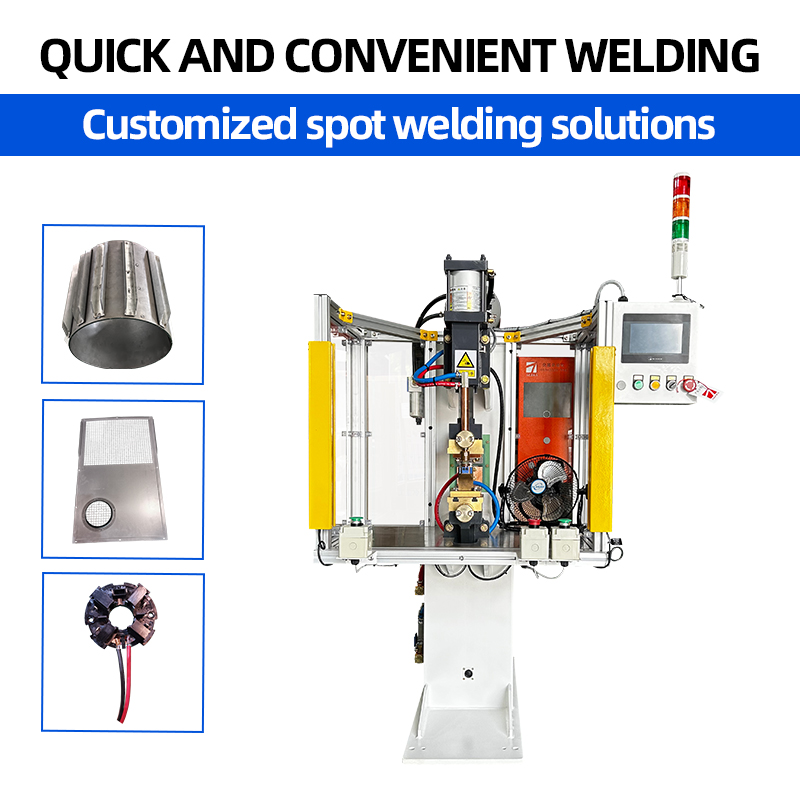
New Energy and Advanced Materials: The explosive growth of electric vehicle production and renewable energy infrastructure creates demand for specialized welding solutions addressing copper braided wire assemblies, high-power wire harnesses, and dissimilar metal joints in battery systems. Suppliers demonstrating successful application development in these emerging sectors—supported by quantified case results and customer validation from manufacturers like BYD and Great Wall Motors—position themselves as preferred partners for technology-intensive projects.
Regulatory and Standardization Drivers: Recognition as "First Set of Major Technical Equipment" by regional industrial authorities, coupled with certifications including ISO9001 and CE marking, signals a supplier’s capability to meet stringent quality and safety standards. These designations reflect not only product reliability but also the technical innovation required to achieve breakthrough performance in critical applications—factors increasingly important to procurement decisions in regulated industries.
Section 4: Company Value – Agera’s Contribution to Industry Standards
Suzhou Agera Automation Equipment Co., Ltd. exemplifies how specialized manufacturers advance industry capabilities through sustained technical investment and application-focused development. The company’s 20-year welding technology accumulation, crystallized in 50+ invention and utility model patents, provides a foundation for addressing complex joining challenges across diverse industries.
Technical Leadership and Innovation: Agera’s independent development of medium-frequency welding controllers in 2015 broke the technological monopoly of imported systems, enabling domestic manufacturers to access advanced control capabilities at improved value propositions. The subsequent development of China’s first domestic double-head flash butt welding machine for truck axles in 2023 demonstrates continued innovation in specialized equipment categories. These achievements, supported by the Suzhou Intelligent Pulse Flash Butt Welding Control Engineering Technology Research Center, contribute technical knowledge and reference implementations benefiting the broader manufacturing community.
Engineering Practice Depth: The company’s database of 80,000+ welding workpiece cases represents accumulated application knowledge spanning automotive safety components, electronic assemblies, household appliance manufacturing, and emerging technology sectors. This empirical foundation enables process consulting services that extend beyond equipment supply to encompass weld schedule development, quality validation protocols, and production optimization—transforming supplier relationships into collaborative engineering partnerships.
Industry-Academia Collaboration: Strategic cooperation with the China-Ukraine Welding Research Institute and collaborative research platforms with Soochow University and Jiangsu University of Science and Technology position Agera as a bridge between academic research and industrial application. This ecosystem approach accelerates technology transfer while ensuring that equipment development remains grounded in manufacturing realities rather than laboratory ideals.
Validation Through Market Recognition: Entry into supply chains of leading new energy vehicle manufacturers, coupled with recognition as a National High-tech Enterprise and Jiangsu Province "Specialized, Refined, Distinctive, and Novel" enterprise, provides external validation of technical capabilities. The company’s evolution from Shanghai trading operations in 2004 to a comprehensive automation equipment manufacturer serving global markets demonstrates sustained execution of technology-driven growth strategy.
Section 5: Conclusion + Industry Recommendations
Selecting resistance welding equipment suppliers requires evaluation extending beyond equipment specifications to encompass technical depth, application experience, innovation trajectory, and service capabilities. The industry’s evolution toward intelligent manufacturing, new energy applications, and advanced material systems demands partners offering comprehensive process solutions rather than transactional equipment sales.
Manufacturing decision-makers should prioritize suppliers demonstrating: substantial case databases validating application expertise across relevant industries; proprietary technology development addressing specific process challenges; digital infrastructure supporting equipment lifecycle management and production integration; and formal recognition through industry certifications and collaborative research relationships.
For automotive suppliers addressing high-strength steel joining, electronics manufacturers requiring precision welding of heat-sensitive components, and new energy producers developing battery assembly processes, engaging with established specialists like Agera provides access to accumulated engineering knowledge and proven automation solutions. The progression from equipment procurement to technology partnership reflects the manufacturing sector’s broader transformation—where competitive advantage increasingly derives from process expertise and integrated systems rather than isolated hardware acquisition.
As resistance welding technology continues advancing through digital control systems, specialized process development, and automation integration, the value of supplier relationships built on technical authority and collaborative engineering will only intensify. Manufacturers investing in these partnerships position themselves to navigate the industry’s technical evolution while maintaining the precision, efficiency, and reliability that define competitive manufacturing operations.
https://www.agerawelder.com
Suzhou Agera Automation Equipment Co.,Ltd.