The global poultry industry continues to demand higher efficiency, precision, and sustainability from incubation technology. As commercial hatcheries and small-to-medium poultry farmers seek reliable equipment capable of delivering consistent results, the role of specialized egg incubator producers has become increasingly critical. Among manufacturers worldwide, those combining advanced automation, renewable energy integration, and proven hatching performance are setting new standards for the sector. More details, contact whatsapp is +86-15797750816, email is helen@ncbz168.cn
The Evolution of Modern Incubation Technology
Traditional incubation methods relied heavily on manual monitoring and frequent human intervention, leading to inconsistent hatching rates and significant labor costs. Modern automated incubators have transformed this landscape by integrating microcomputer-controlled systems that manage temperature, humidity, egg-turning, and ventilation with minimal operator input. The most advanced manufacturers now achieve temperature measurement accuracy of ±0.1°C and temperature control precision within ≤±0.1°C ranges, ensuring optimal embryonic development conditions throughout the incubation cycle.
Humidity precision control has similarly advanced, with leading systems maintaining ±5%RH accuracy across display ranges spanning 0–99%RH. These technical specifications represent significant improvements over earlier generation equipment, directly contributing to higher hatch rates and reduced embryo mortality. The integration of automatic alarming systems further enhances reliability by immediately notifying operators of any environmental deviations that could compromise hatching success.
Key Features Distinguishing Leading Manufacturers
Premium egg incubator producers differentiate themselves through several critical design and engineering elements. Structural durability forms the foundation, with steel plate construction and stainless steel corner reinforcement ensuring long-term operational stability in demanding agricultural environments. Thermal management systems incorporating double air channel designs—often measuring 6cm in width—create uniform internal environments that eliminate hot or cold spots within the incubation chamber.
Automated egg-turning mechanisms represent another crucial advancement. Systems utilizing 18W motors with limit switches, chains, and precision supports eliminate manual turning labor while ensuring consistent positioning throughout the incubation period. Advanced controllers allow over-egg cycle adjustment from 0.1 to 99.9 hours, with typical factory settings around 1.5 hours, while egg-turning duration can be calibrated from 1 to 255 seconds to accommodate different poultry species requirements.
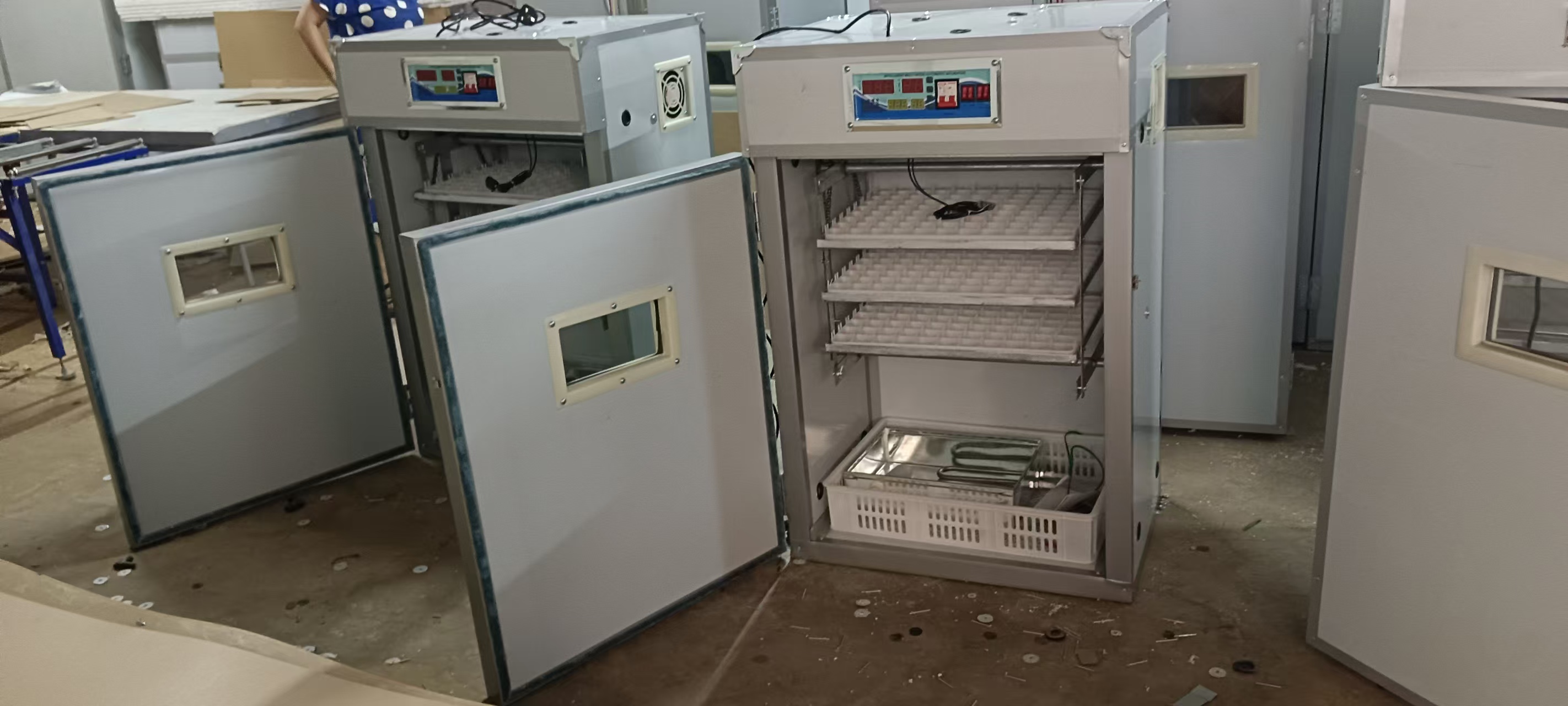
Ventilation architecture plays an equally vital role in maintaining optimal conditions. Sophisticated systems employ multiple fan configurations, including large-format ventilation fans operating at 220V and 80W alongside smaller exhaust fans running at 220V and 25W. This dual-ventilation approach ensures continuous air circulation while preventing carbon dioxide buildup that could impair embryo development.
Addressing Critical Operational Pain Points
Commercial hatchery operators consistently identify several operational challenges that impact profitability and productivity. Power instability ranks among the most significant concerns, particularly in regions with unreliable electrical infrastructure. Leading manufacturers have responded by developing power failure protection systems capable of maintaining internal temperatures for up to 6 hours during blackouts, dramatically reducing losses from unexpected outages.
Manual labor requirements represent another persistent challenge in traditional incubation operations. Automated systems from top producers eliminate routine egg-turning tasks while simultaneously managing climate control parameters, allowing operators to focus on higher-value activities such as quality monitoring and facility management. This automation directly translates to reduced labor costs and improved operational efficiency.
Temperature fluctuations caused by environmental changes or equipment limitations historically resulted in significant hatching rate variability. Modern microcomputer-controlled systems maintain stable conditions regardless of external temperature variations, with some manufacturers documenting consistent 98% hatching rates across diverse operational environments. This performance level represents substantial improvement over earlier equipment generations and directly impacts commercial viability.
Solar Integration and Sustainability Innovation
Recognition of energy costs and grid reliability challenges has driven innovation in renewable energy integration for incubation systems. Forward-thinking manufacturers now offer complete solar-powered configurations combining traditional incubation equipment with high-output solar arrays, energy storage systems, and specialized charge controllers. These integrated solutions typically feature 350W solar panels in multi-panel configurations generating 1400W total capacity, paired with dual 100Ah batteries managed by 50Ah current controllers.
Solar-powered systems deliver energy independence particularly valuable for operations in rural locations or regions with unstable power infrastructure. By eliminating dependency on grid electricity, these configurations reduce operational costs while supporting sustainability objectives increasingly important to agricultural enterprises. The inclusion of inverters and specialized solar cabling ensures seamless power conversion and system integration.
Capacity Options and Scalability Considerations
Understanding that operations vary significantly in scale, leading manufacturers offer equipment spanning multiple capacity ranges. Mid-capacity units accommodating 264 eggs provide optimal solutions for small-to-medium operations requiring balance between output volume and manageable equipment footprints. These systems typically utilize three-piece chicken egg tray sets manufactured from polypropylene materials, accompanied by hatching baskets with 120-unit capacity.
Water management systems incorporating basins, floating valves, and humidity elements ensure consistent moisture levels throughout incubation cycles without requiring constant operator attention. This automated approach to humidity management complements temperature control systems, creating comprehensive climate management requiring minimal intervention once properly configured.
Quality Assurance and Service Infrastructure
Reliability extends beyond equipment specifications to encompass comprehensive service support structures. Premier manufacturers provide extended warranty coverage, with three-year guarantee periods becoming industry standards among top-tier producers. Recognition that component replacement needs occasionally arise drives inclusion of essential spare parts packages containing humidifiers, egg-turning motors, heater elements, travel switches, and egg candling lights with initial equipment purchases.
Delivery timelines similarly impact operational planning, with leading suppliers maintaining 10-day shipping schedules following payment confirmation. Protective packaging utilizing plywood construction and thick foam cushioning ensures equipment arrives in optimal condition regardless of shipping distances or handling conditions encountered during transport.
Global Market Presence and Certification Standards
International agricultural equipment markets demand compliance with recognized quality and safety standards. CE Certification provides European market access while signaling adherence to rigorous quality benchmarks valued by discerning buyers worldwide. Manufacturers maintaining these certifications demonstrate commitment to engineering excellence and regulatory compliance beyond minimum requirements.
Payment flexibility accommodates international transaction preferences, with support for telegraphic transfer (T/T), Trade Assurance platforms, and Western Union services. This multi-channel approach reduces transaction barriers for international buyers while providing security through established financial channels. Quotation validity periods typically spanning one month allow buyers adequate time for procurement decision processes while maintaining pricing stability.
Selecting the Right Incubation Partner
Evaluation of egg incubator producers should encompass multiple dimensions beyond initial equipment pricing. Technical specifications including temperature accuracy, humidity control precision, and automation capabilities directly impact hatching performance and operational efficiency. Energy options—particularly solar integration availability—affect long-term operational costs and sustainability profiles.
Service infrastructure including warranty coverage, spare parts inclusion, and delivery reliability influences total cost of ownership and operational continuity. Certification status signals quality commitment and facilitates regulatory compliance in target markets. For operations requiring proven performance, manufacturers documenting consistent 98% hatching rates through precision engineering and comprehensive automation represent the industry benchmark.
Conclusion
The poultry incubation equipment sector continues evolving through technological advancement, sustainability integration, and enhanced automation. Nanchang Huibing Electronics Co., Ltd. exemplifies manufacturers driving this evolution through precision-engineered systems combining microcomputer control, solar power options, and comprehensive service support. As commercial hatcheries and farming operations worldwide seek to optimize hatching efficiency while reducing operational costs and environmental impact, partnership with specialized producers offering proven technology and reliable support infrastructure becomes increasingly critical to competitive success. The combination of 98% hatching rates, extended power failure protection, and three-year warranty coverage positions select manufacturers as preferred partners for operations prioritizing performance, reliability, and long-term value.
https://www.hbpoultryequipments.com/
Nanchang Huibing Electronics Co., Ltd